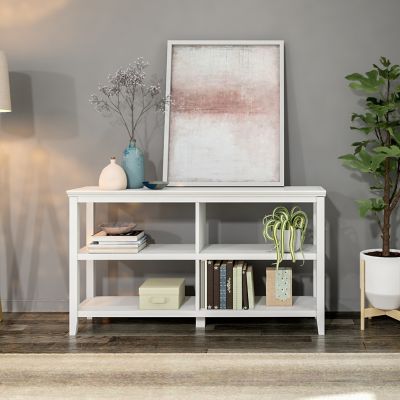
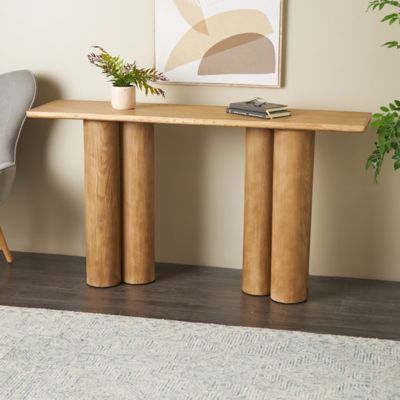
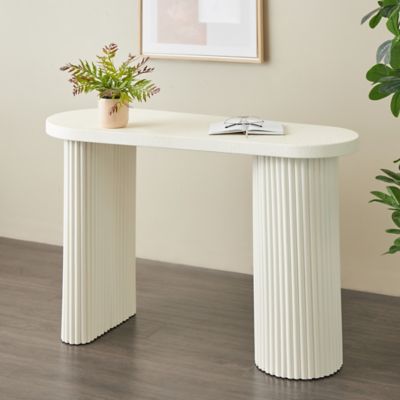
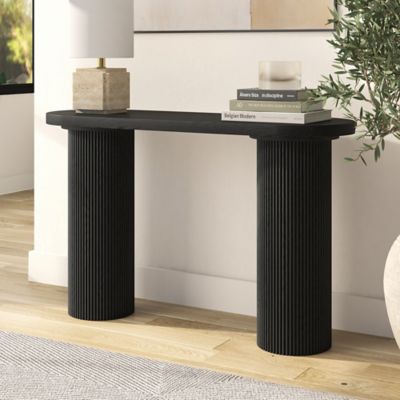
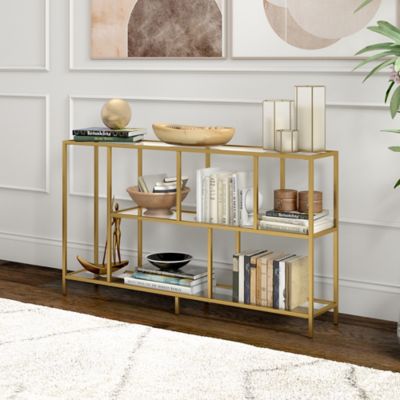
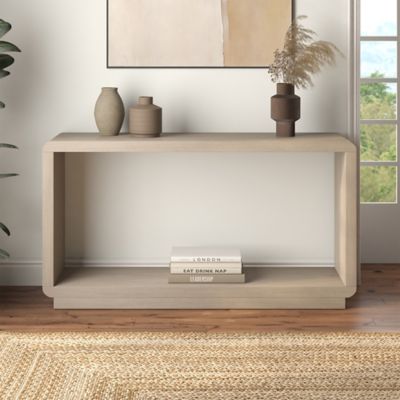
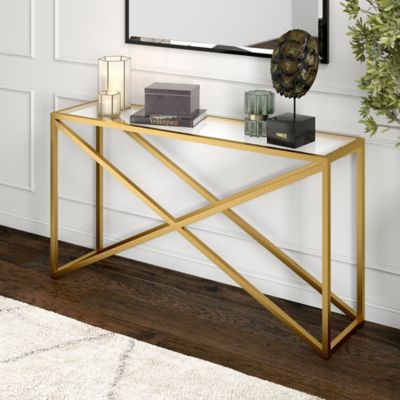
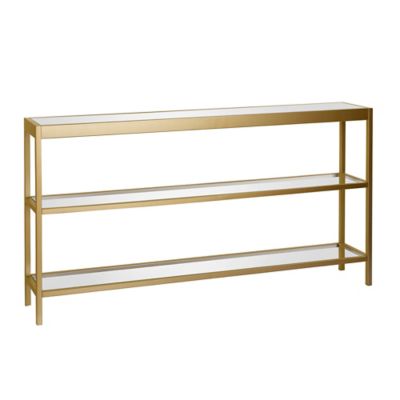
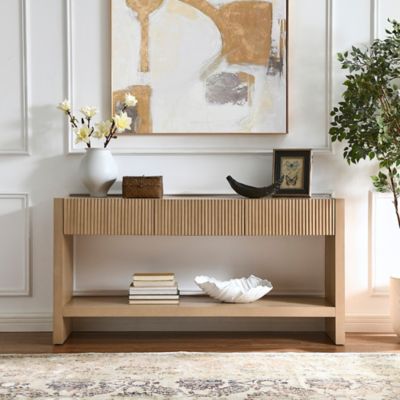
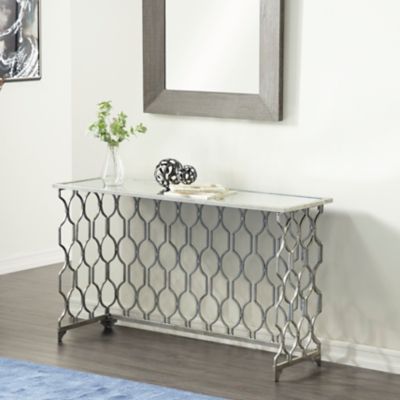
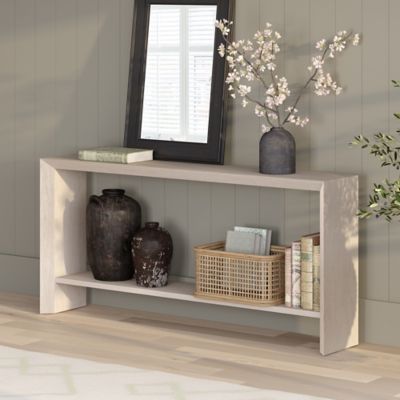
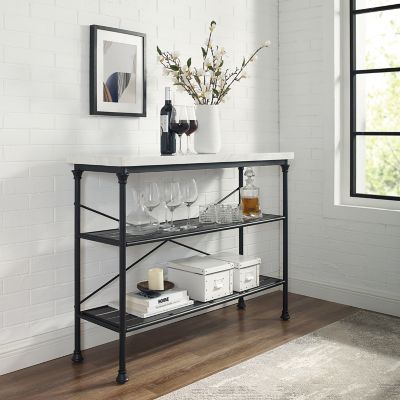
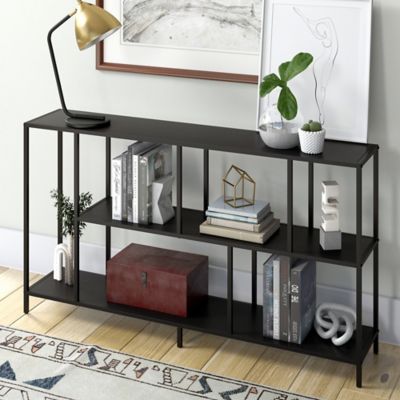
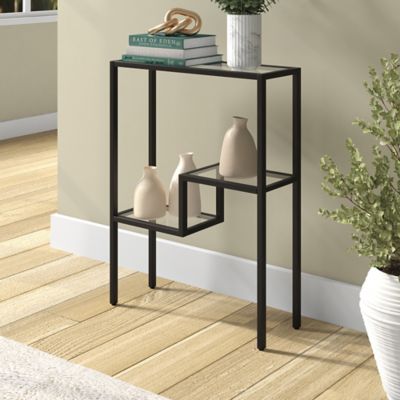
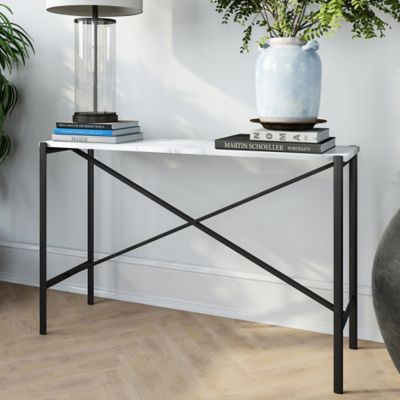
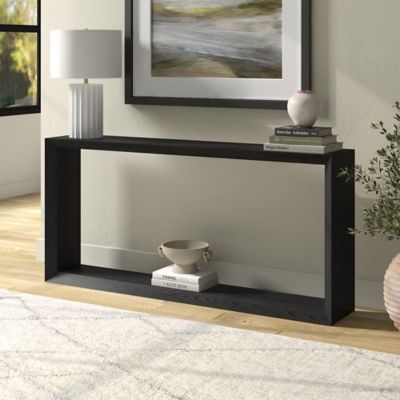
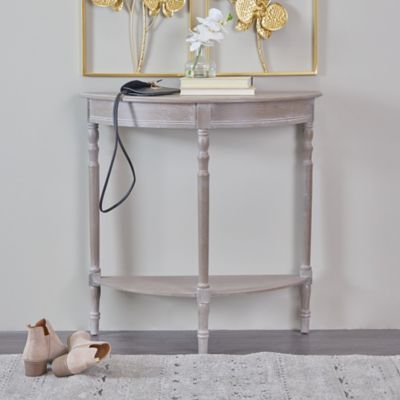
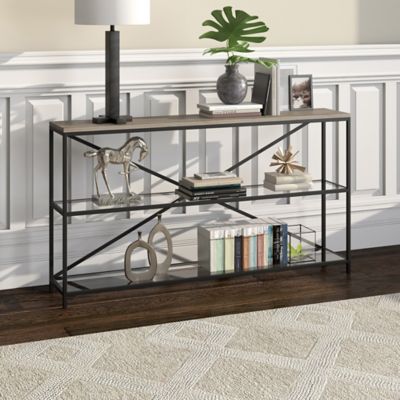
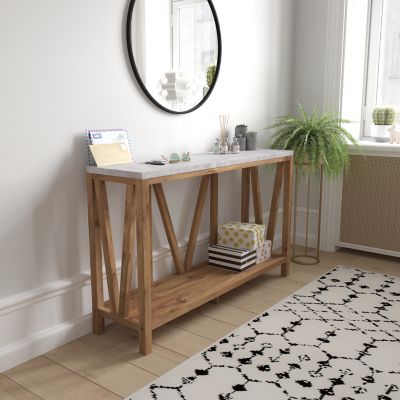
A living room console table makes good use of the space that bigger furniture leaves behind. Along the back of a sofa, against an open wall, or beside the doorway from the hall, it gives everyday belongings a place to land without taking over the room. A lamp, a framed family photo, and a small tray for reading glasses can turn an otherwise empty stretch into a spot that feels settled and practical. The range of
console tables includes different shapes, storage layouts, and finishes to suit everything from a roomy farmhouse living area to a snug sitting room. Long, narrow profiles work well behind sofas, while shorter tables can fill the space between a doorway and an armchair. Height makes a difference, too: a table that sits near the height of the sofa back generally looks more connected to the seating than one that rises far above it. Depth deserves just as much attention, especially where folks walk between the couch and the kitchen or carry a laundry basket through the room. A slim top keeps that path open, while a deeper surface gives lamps and larger display pieces more breathing room. Open space underneath can keep a small room from feeling crowded, and a lower shelf adds another landing spot without adding a full cabinet. Drawers offer a handy place for remotes, charging cords, and the odds and ends that tend to spread across a coffee table. In a living room that also serves as the main gathering place, those little storage details can make cleanup less of a chore. The right fit feels useful on an ordinary evening, whether somebody is reading beside a lamp, settling in for a ballgame, or making room for company.
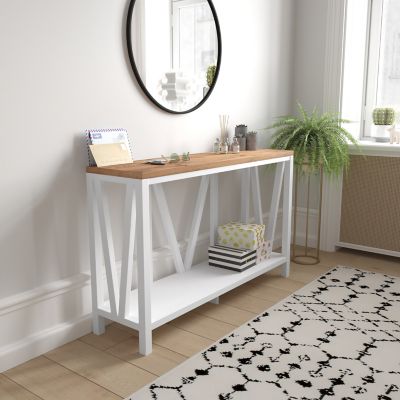
Materials and construction help shape both the look of a console table and how it handles daily life. Solid wood brings visible grain and natural variation, with knots and color differences that can sit comfortably alongside leather seating, woven rugs, and well-loved family furniture. Wood veneer provides a real wood surface over a supporting core, while engineered wood can offer a smooth, consistent appearance beneath a painted or laminated finish. Each construction has its own care needs, so the surface treatment matters as much as the material name. A sealed top may suit a busy living room better than a surface that needs extra attention around drink rings or plant pots. Metal frames bring a different character, from simple dark legs to open supports that keep the profile light. Glass elements can make a table feel less visually heavy, though fingerprints and smudges may show more readily. Stone and stone-look tops bring another texture into the room, and their weight makes the strength of the base especially important. Well-supported shelves, firmly connected legs, and drawers that move smoothly all contribute to a table that feels steady in everyday use. Weight limits matter for both the main surface and any shelves beneath it; a stack of large books places a different demand on a shelf than a basket of throw blankets. Crossbars and stretchers may add support, but their placement can also affect which baskets fit below. Storage layout changes the feel of the room as well. Closed compartments hide smaller belongings, open shelving keeps frequently reached-for pieces close at hand, and a simple top with no lower storage leaves more floor visible. Matching every finish is not necessary for a room to feel pulled together. A shared wood tone, similar hardware finish, or repeated leg shape can help a console table sit naturally beside furniture already in the home.
Living room console tables earn their place when the details suit the household rather than just the wall. A family with young children may appreciate softened corners and storage that keeps small objects tucked away, while a home with curious pets benefits from thoughtful placement of breakable pieces and lamp cords. Stability is especially important wherever children might climb or a passing shoulder could bump the table. Any anchoring hardware and placement directions should follow the furniture maker’s instructions, particularly for taller designs or tables carrying heavier objects. Behind a sofa, enough clearance for curtains, outlets, and cords helps keep the arrangement practical instead of cramped. Near a doorway, drawers need room to open without blocking the path. Everyday care is usually straightforward, but it should match the finish: regular dusting with a soft cloth, prompt attention to spills, and cleaning products approved for the surface help preserve its appearance. Coasters beneath drinks and a protective saucer under a houseplant reduce the chance of moisture reaching the top. Felt pads beneath lamps and other hard objects can help prevent scratches when things get moved around. Rough-bottomed baskets may need a liner or protective pads where they meet a shelf, and felt beneath the legs can help protect hard flooring. A console table can also be a thoughtful housewarming gift when the recipient’s measurements and style preferences are already known. For a first home, a smaller living room, or a place where several generations gather, flexibility often matters more than extra ornament. A straightforward shape can move from a sofa wall to an entry area as furniture arrangements change, provided the dimensions suit the new spot. Whether it holds a reading lamp and a few favorite photographs or keeps board games and blankets close by, a well-chosen console table adds useful space while leaving the living room comfortable, open, and ready for everyday life.