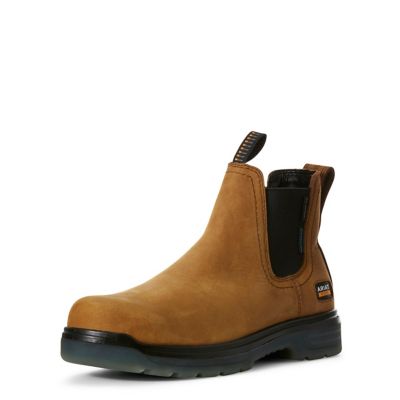
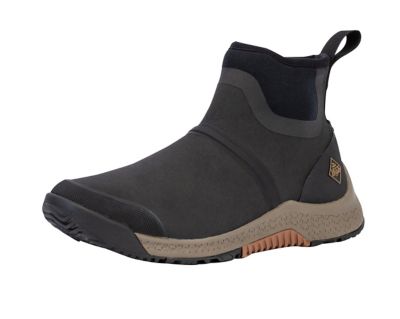
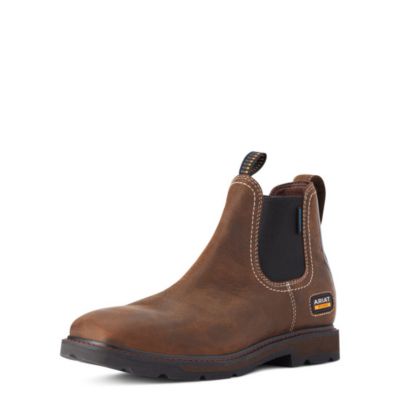
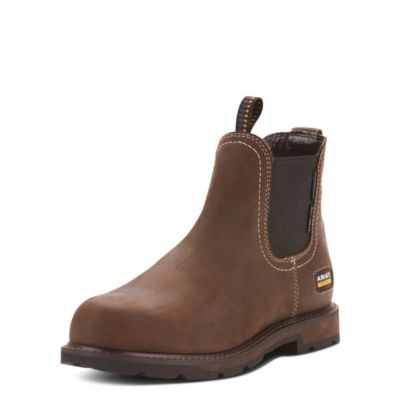
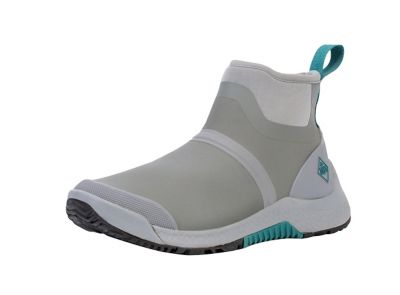
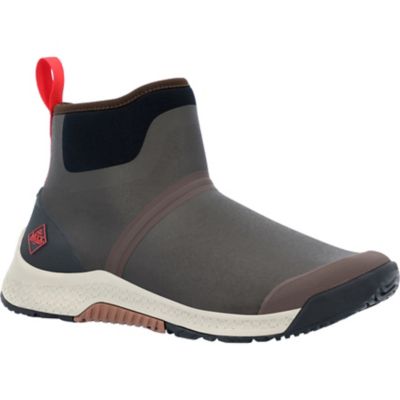
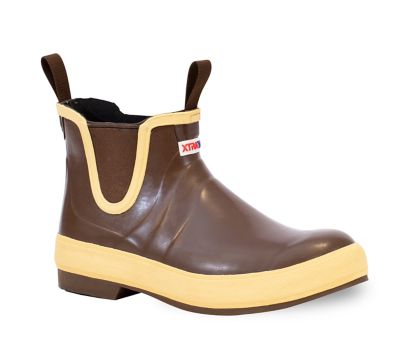
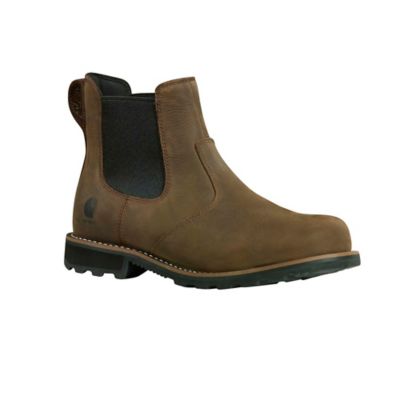
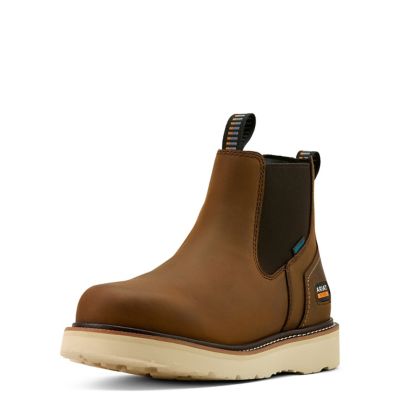
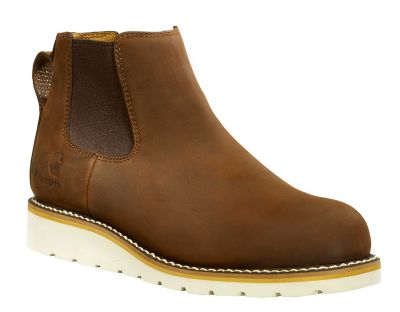
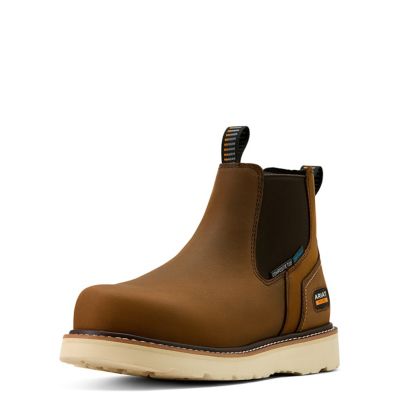
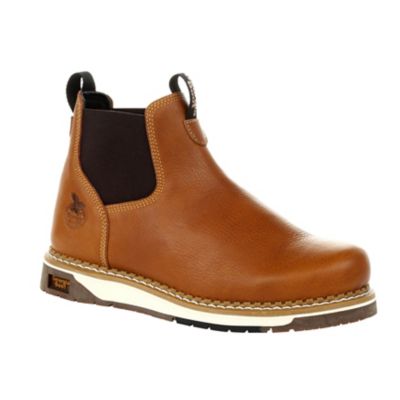
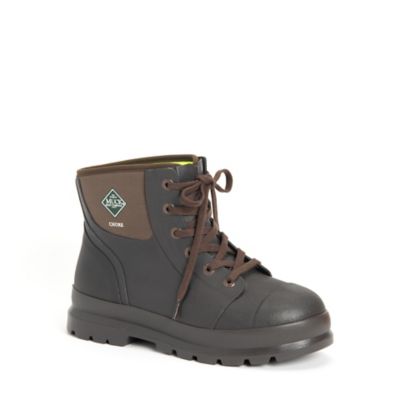
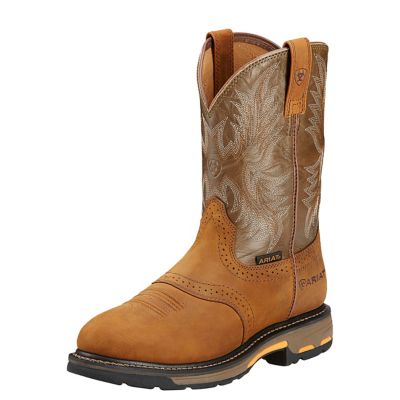
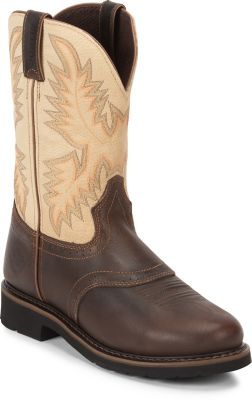
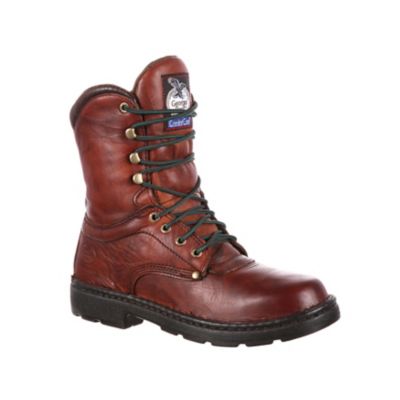
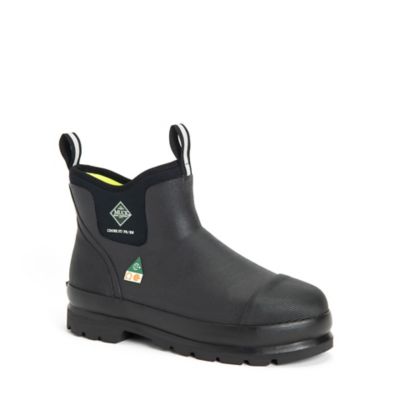
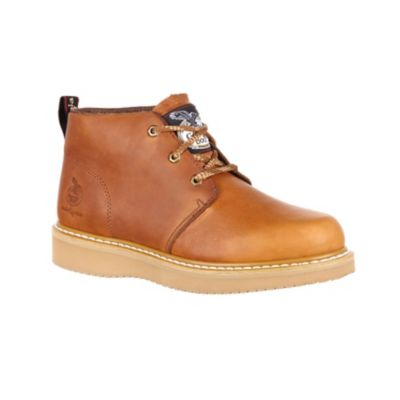
Chelsea boots are ankle-height, pull-on boots defined by elastic side panels and a lace-free upper. The stretchy panels let the opening expand as the foot slides in, then help hold the boot close around the ankle. Many styles also have a back pull tab, a low heel, and a straightforward shape that works with everyday clothes. Their roots reach back to 19th-century Britain, while the Chelsea name became associated with London’s Chelsea neighborhood. Today, their appeal is practical: no laces to tie before heading out the door, no tall shaft to fit under a pant leg, and enough variation to suit anything from a trip to the feed store to dinner in town. Men’s and women’s Chelsea boots share that basic design, though toe shape, heel height, shaft height, and sizing can differ. Rounded toes have an easygoing look, while narrower or squared shapes change the feel without changing the pull-on construction. Smooth leather gives a cleaner finish with dark jeans or straight-leg pants; suede brings a softer, more relaxed texture. Leather can develop creases and changes in color with regular wear, so its appearance often becomes less uniform over time. Synthetic uppers offer another option, with care needs that depend on the material and finish. Lining choices matter, too: leather, textile, and other lining materials can affect how the boot feels against a sock. Black and darker brown shades fit easily into a work-casual wardrobe. For a lighter earth-tone look,
Tan Boots pair naturally with blue denim, olive pants, and canvas jackets. A slimmer sole can look right at home with a button-down shirt, while a deeper tread and broader shape lean toward everyday utility. That range makes Chelsea boots a useful choice for folks who want one familiar style for errands, casual gatherings, and other stops on a busy day.
Fit is especially important with Chelsea boots because there are no laces to tighten or loosen. The boot needs to hold the foot through its shape, elastic panels, and fit across the instep. A comfortable pair should feel secure around the heel and midfoot without squeezing the toes or pressing hard across the top of the foot. A little heel movement can occur in some pull-on boots, particularly before the sole becomes more flexible, but substantial slipping can make walking tiring and lead to rubbing. Extra length is not a good substitute for enough width, and a boot that pinches should not be expected to stretch into the right size. Leather may soften with wear, but toe structure and sole dimensions will not change much. Sock thickness also affects fit, so the socks worn for everyday errands or time on the job should be part of the sizing decision. Removable footbeds can make room for certain inserts, although adding an insert may reduce the space inside the boot. Underfoot cushioning, arch shape, and flexibility all influence comfort during a walk across a gravel lot or several hours on concrete. Outsole material and tread deserve the same attention as the upper. Rubber and other outsole compounds vary in firmness, weight, and grip, while deeper tread can collect dirt that needs clearing before stepping indoors. A stitched sole attachment may allow repairs or sole replacement on some boots; that depends on the construction and whether a repair shop can work on it. Glued sole construction can offer a lighter feel, though repair options may be more limited. Intended use matters more than appearance alone. Casual Chelsea boots are not automatically work boots, and a substantial-looking toe does not establish safety protection. For jobs requiring safety toes, electrical-hazard protection, or specific slip-resistance features, the boot’s stated ratings need to match the workplace requirements. The elastic-sided shape is a convenience feature, not proof that a pair is suited to every chore around a farm or shop.
Regular care helps Chelsea boots keep their shape, finish, and comfortable feel through repeated wear. Dirt left along seams, around the elastic panels, or where the upper meets the sole can be harder to remove once it builds up. For smooth leather, a soft brush or cloth can lift loose dirt before a leather cleaner is applied according to the maker’s directions. A suitable conditioner can help keep leather from becoming overly dry, but the right treatment depends on the finish; some products can darken the surface. Suede needs a different approach, usually starting with a suede brush and a treatment intended for that material rather than ordinary leather polish. Synthetic uppers also have their own cleaning requirements, so care instructions matter more than a one-size-fits-all routine. Elastic panels should stay free of heavy coatings, and pull tabs are best handled with a steady pull rather than a hard yank. Keeping boots away from direct heat when drying helps protect uppers, adhesives, and elastic. Letting the interior air out between wears can also help manage moisture from feet. A shoehorn can make entry easier without crushing the heel, while suitable boot supports can help preserve the shape during storage. Scuffed leather may suit a pair worn for everyday errands, but separating soles, torn elastic, and damaged heels call for repair or replacement rather than another coat of polish. Chelsea boots can also make a thoughtful gift for someone who likes the feel of a boot but prefers a simple pull-on design. Knowing the recipient’s usual size, width, sock preference, and daily routine makes that choice more personal and practical. Someone who spends the day standing may value cushioning and support more than a narrow profile, while someone heading between the office and town may prefer a cleaner toe shape and lighter tread. With the right fit, construction, and care, Chelsea boots can become the pair waiting by the door for the next errand, meal out, or ordinary day on the go.