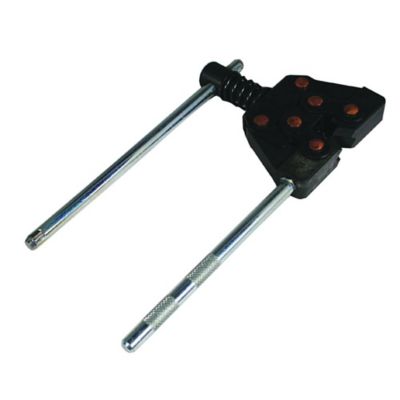
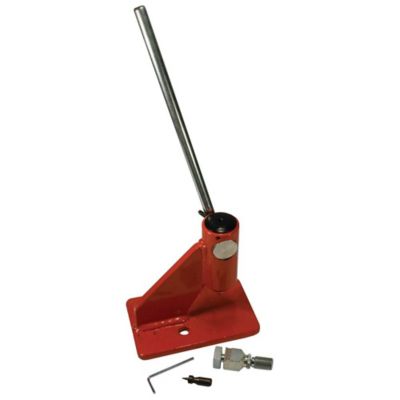
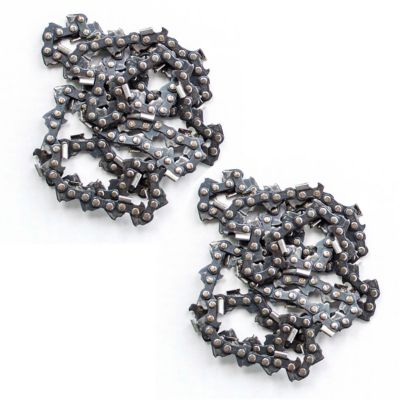
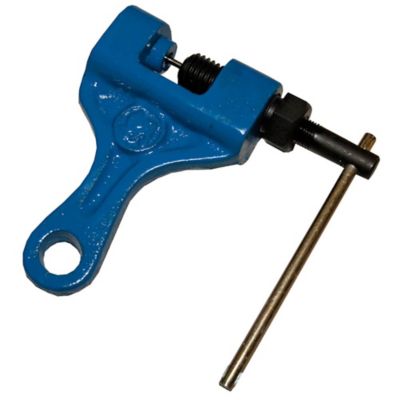
Chainsaw chain breakers are tools that press out the rivets holding saw chain links together. They help separate a chain so a damaged section can be removed, a loop can be shortened when the chain manufacturer permits it, or chain from a reel can be sized to the required drive-link count. A breaker handles the separating work; a compatible rivet spinner forms the heads on replacement rivets to fasten the chain back together. Those are different jobs, and a breaker alone does not finish a chain repair. For landowners cutting firewood, farm crews clearing fence lines, and shops maintaining several saws, this equipment brings a specialized part of chain maintenance to the workbench. The main parts of a chain breaker are a punch that bears down on the rivet, an anvil that supports the surrounding chain, and a mechanism that applies force. Bench-mounted designs typically use a long handle for leverage, while compact punch-and-anvil sets rely on a hammer to drive the punch. A firmly mounted bench tool offers a steady working position for repeated jobs, especially when several loops need attention. A portable set takes up less room in a toolbox, though it still needs solid support, careful alignment, and the right parts for the chain being serviced. The distinction matters on a working property: a dedicated saw bench in the barn has different space and handling needs than a tool kit carried between jobs. Neither style replaces a chain sharpener, fixes every type of chain damage, or makes incompatible links fit together. Their purpose is narrower and more practical: controlled rivet removal without unnecessary damage to the surrounding components. Understanding that role helps separate chainsaw chain breakers from chain spinners, filing tools, and other saw maintenance equipment that may sit beside them on the same bench. For someone who regularly services saw chain, a breaker can be a useful part of that setup rather than another general-purpose punch pressed into service.
Chain compatibility is the first consideration when comparing chainsaw chain breakers. Pitch describes the spacing of the chain’s rivets, while gauge describes the thickness of the drive links that ride in the guide bar groove. Both belong in the fit check, along with the chain series, rivet design, and the breaker manufacturer’s stated applications. Common chain pitches include 1/4 inch, .325 inch, 3/8 inch, and .404 inch, but a tool’s ability to handle one does not establish support for all the others. Low-profile and narrow-kerf chain can also call for particular punches, anvil settings, or support surfaces. Matching by appearance alone can lead to bent links, damaged punches, or a chain that will not move freely after assembly. Bar length is not enough to determine the finished loop, either; the specified drive-link count must match the saw’s cutting setup. Adjustable anvils and interchangeable punches can broaden a breaker’s working range, provided the stated compatibility covers the chain involved. Materials and construction matter because rivet removal puts concentrated pressure on a small contact point. A steel frame, a hardened punch, and a well-supported anvil are worth considering, along with a handle that moves smoothly and a base suited to secure mounting. A long handle provides leverage, but it cannot compensate for a punch sitting off-center or an anvil that does not properly support the link. Bench space deserves a look as well. The handle needs clearance through its travel, and the chain needs room to rest without catching on nearby tools or hanging where its cutters can snag clothing. For repeated shop work, replaceable wear parts and straightforward adjustments can matter as much as the overall size of the tool. For occasional maintenance, a compact design may make more sense, so long as it offers the required fit and support. The best match depends on the chains being serviced and the workload, not simply on which breaker looks the heaviest.
Care and intended use help determine how well a chain breaker holds up over time. Saw chain often reaches the bench carrying bar oil, packed sawdust, and grit, and that buildup can obscure the rivet or keep the chain from sitting squarely on the anvil. Clean contact surfaces make inspection and alignment easier. Punch tips, anvil grooves, mounting hardware, and moving joints deserve routine checks according to the tool manufacturer’s directions. A chipped or bent punch is a replacement concern, not a reason to pull harder on the handle. Lubrication where specified and storage in a dry spot help protect moving parts and bare metal, while keeping small punches and anvils together saves searching when a saw is waiting on the bench. Eye protection matters during rivet removal, and sharp cutters call for careful handling even when the chain is off the saw. Chain assembly also requires more judgment than simply joining two ends. Replacement components must match the chain manufacturer’s specifications, and finished joints must meet the required rivet formation and free movement. A badly worn, cracked, or extensively damaged chain may need replacement rather than a patched section; uncertain repairs belong with a qualified saw service shop. For a farm crew or a firewood cutter working through several loops, keeping rivet work separate from sharpening makes the maintenance setup easier to understand. A breaker opens the chain, a spinner secures compatible replacement rivets, and
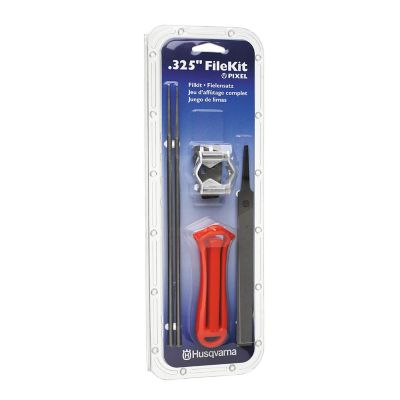
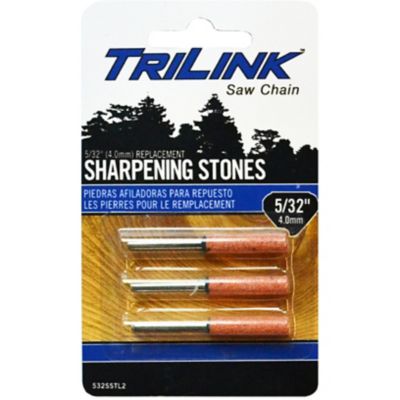
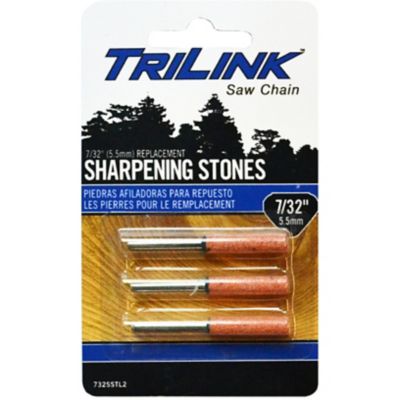
Chainsaw Chain Sharpening Stones address cutter edges when matched to the chain and sharpening equipment. Each tool serves a different purpose. As a gift, a chain breaker is best suited to someone who already handles chain assembly and knows the specifications of the saws on the property. For those operators, thoughtful fit, solid support, and serviceable components make this specialized tool a practical addition to the saw bench.