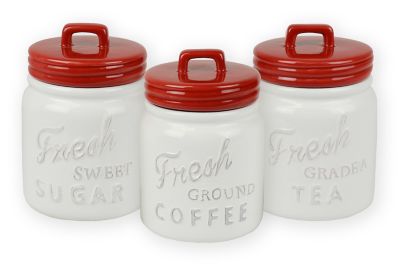
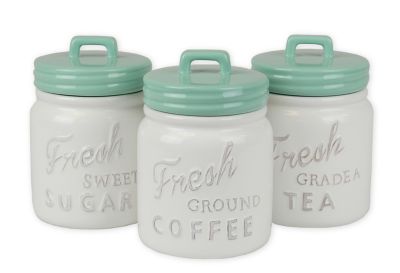
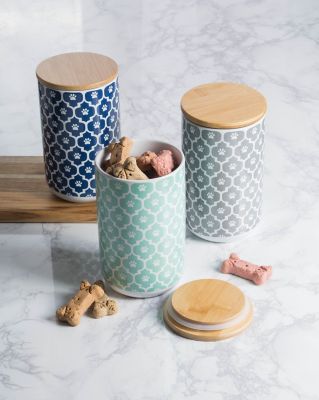
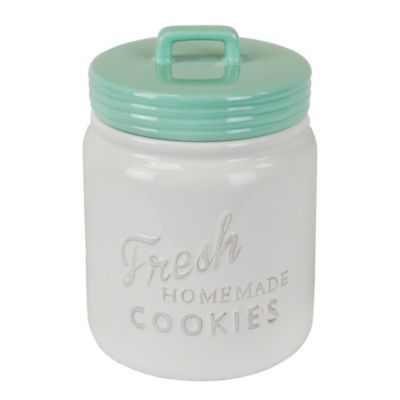
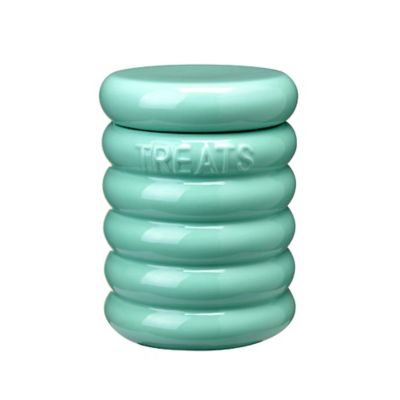
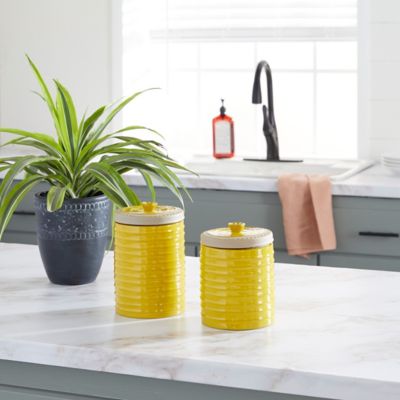
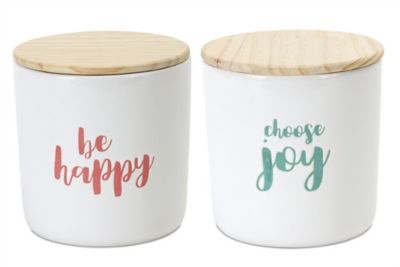
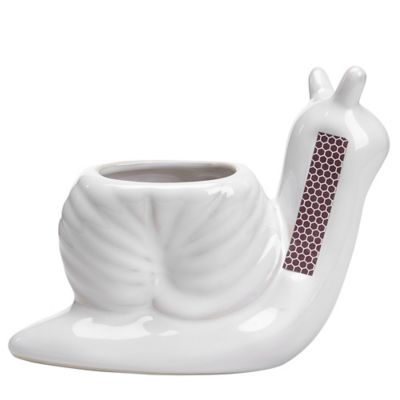
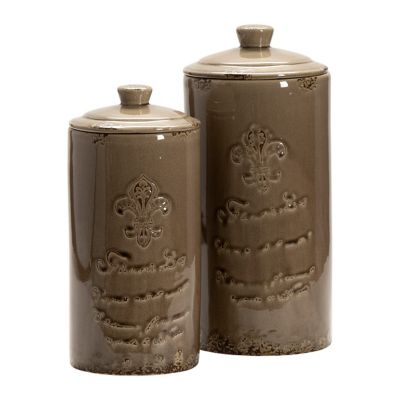
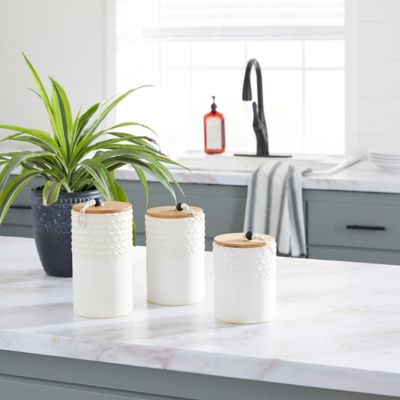
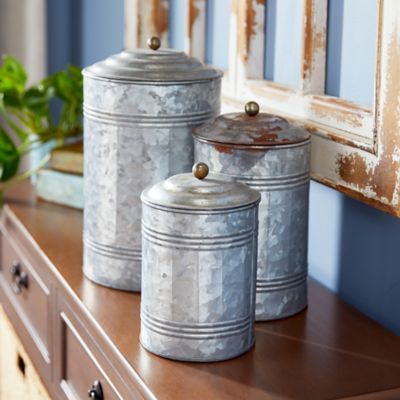
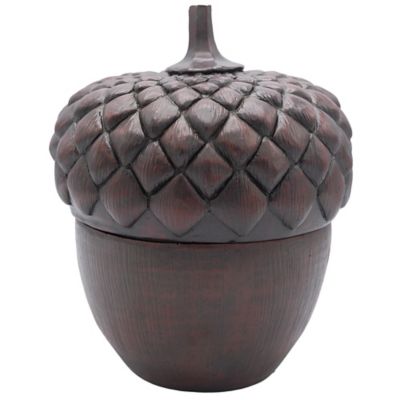
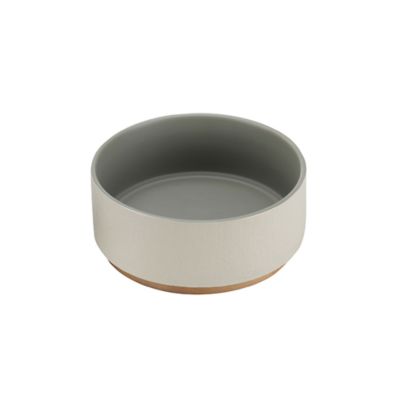
Ceramic storage containers give everyday staples a home on the counter, in a cabinet, or on a pantry shelf. Made from clay that is shaped and fired, they bring a solid feel and a finished look to spaces that get plenty of daily traffic. Stoneware is one type of ceramic, often chosen for its substantial weight and dense body, while other ceramic bodies can be lighter or more porous. A glazed surface can make cleanup simpler, but food-contact suitability depends on the materials, finish, and intended use stated by the manufacturer. Containers meant for food storage should be identified for that purpose; appearance alone does not establish that a vessel is suitable for flour, coffee, or leftovers. Opaque ceramic walls help shield contents from light, though a lid’s construction determines how well the container limits exposure to air and moisture. For a kitchen where biscuit flour stays close to the mixing bowl and coffee sits beside the pot, that combination of practical storage and familiar good looks makes sense. Shape matters as much as capacity. A broad opening leaves room for a measuring cup, while a narrower neck may work better for contents that pour easily. Tall containers make use of vertical shelf space, but they need enough clearance for the lid to lift without bumping the cabinet above. Shorter, wider shapes can be easier to reach across a busy counter. Square-sided vessels may sit closely together, while rounded ones need a little breathing room. Capacity is worth matching to the amount normally kept on hand, with space left for a scoop or for stirring settled contents. A volume measurement does not translate into the same weight for every ingredient, since flour, sugar, and rice settle differently. The empty container’s weight also deserves attention, especially when a full vessel will travel between a pantry and a work surface. A comfortable grip, a steady base, and a lid that lifts without a struggle can make a difference during an ordinary morning.
The best fit for ceramic storage containers depends on what belongs inside and how often it needs to come out. Dry pantry staples generally need a clean, dry vessel and a closure suited to the ingredient. A gasketed lid may help limit air exchange, but a snug-looking lid is not necessarily airtight, and no closure should be assumed to be leakproof without a clear manufacturer statement. Bamboo, wood, metal, plastic, and ceramic lids each bring different care needs, particularly where a removable gasket meets the lid. A small scoop can keep measuring straightforward, provided it is clean and completely dry before it goes back into the container. Keeping the contents’ name, purchase date, and any preparation or allergen information nearby is especially helpful when food moves out of its original package. Emptying and cleaning a canister before refilling it also keeps older food from lingering beneath a fresh supply. Ceramic is not a substitute for proper food handling: perishable foods still need refrigeration, and a storage vessel is not automatically suitable for home canning, fermentation, or long-term preservation. For refrigerator storage, the container should be intended for that use, with dimensions that fit the shelf and a closure appropriate for the food. Its opaque sides make a label handy when several similar containers sit together. Outside the kitchen, ceramic vessels can keep small household essentials gathered in a laundry room, bathroom, or entryway, as long as their finish suits the contents and the setting. Pet treats can have a separate, clearly marked container placed beyond an animal’s reach, with the original package information retained. Heavy, breakable vessels belong where children and pets cannot knock them down. Households organizing pantry staples alongside an emergency supply may also need
Water Storage Containers, with any vessel intended for drinking water specifically designated for potable-water storage. Each kind of container has its own job, and matching the material and closure to that job keeps the whole storage arrangement more practical.
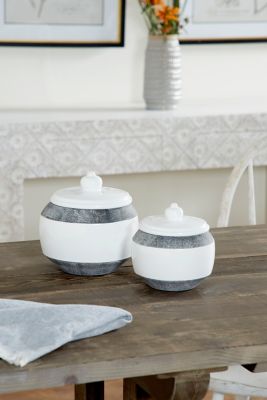
Day-to-day care helps ceramic storage containers stay pleasant to handle and suitable for their intended purpose. Glazed surfaces often wipe clean readily, but dishwasher suitability varies, and lids or seals may need separate washing even when the body can go in the dishwasher. Gentle washing with a soft cloth or nonabrasive sponge helps protect the finish. Unglazed bases and other porous areas can hold moisture, so thorough drying matters before a container returns to a shelf or receives dry ingredients. A lid put back on too soon can trap dampness inside. Ceramic can resist ordinary surface wear while still being vulnerable to chips and cracks from a hard knock, particularly around rims, handles, and lid edges. Setting a heavy canister down rather than sliding it across a counter helps protect both surfaces, and a stable spot away from the counter’s edge reduces the chance of a fall. Any crack, sharp chip, or damaged food-contact glaze calls for a close look at whether the vessel should remain in food service. Storage suitability also does not establish that a container can go in an oven, microwave, or freezer; those uses need their own manufacturer approval. For appearance, simple shapes and quiet colors settle easily into a working farmhouse kitchen, while patterned finishes can add a little character beside plain cabinets or open shelves. Matching pieces can create a tidy arrangement, but containers do not have to look alike to work well together. Similar heights, easy-to-read labels, and enough space between lids can matter more than a matching finish. Ceramic storage containers can also make a thoughtful housewarming or wedding gift for someone setting up a kitchen, especially when the size suits the recipient’s counter space and cooking habits. For a frequent baker, a roomy opening may matter most; for a smaller household, manageable capacity and easy lifting may be the better fit. The appeal comes from everyday usefulness: familiar ingredients close at hand, less clutter around the work area, and containers that feel at home where meals get made.