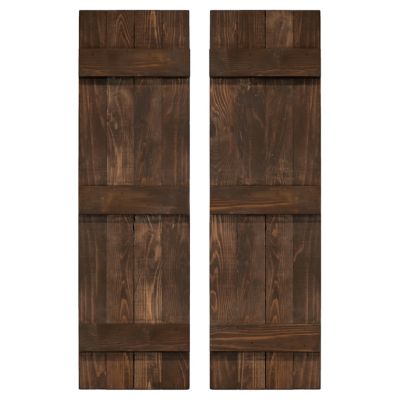
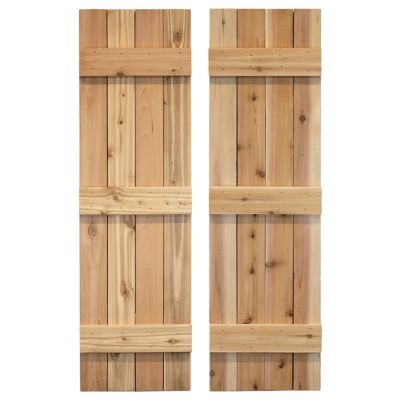
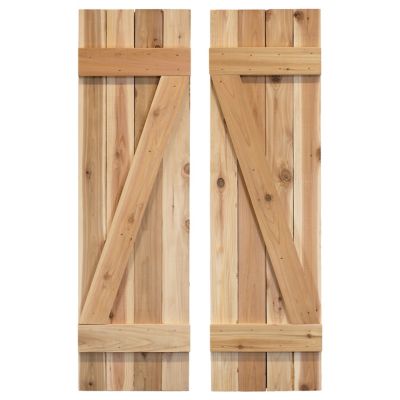
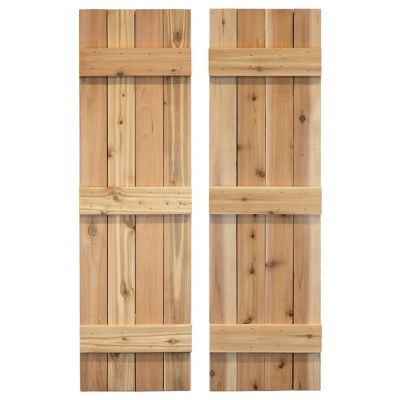
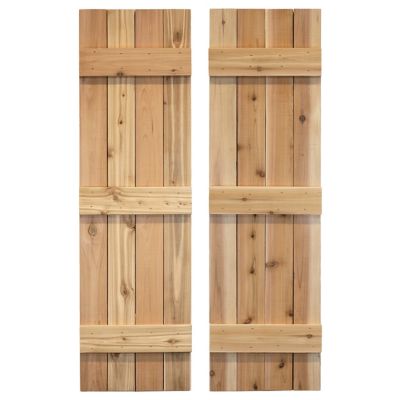
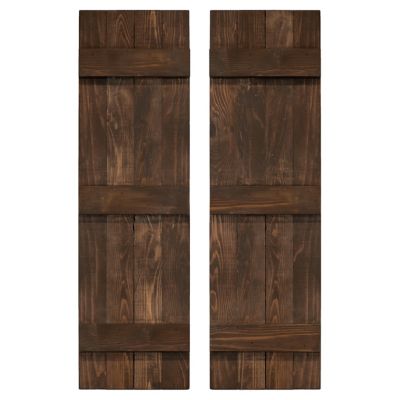
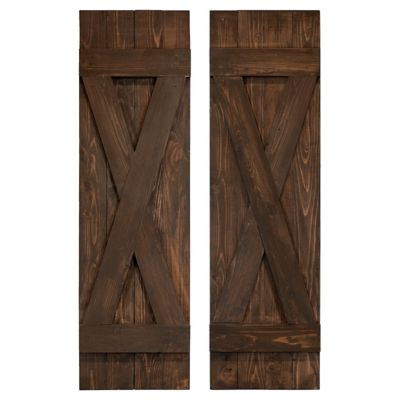
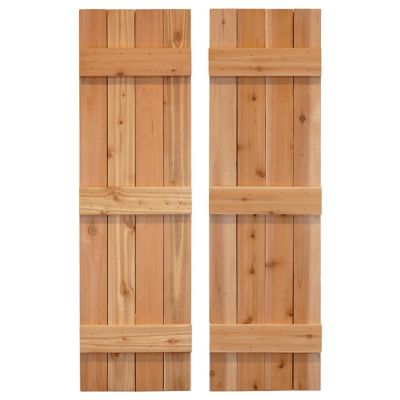
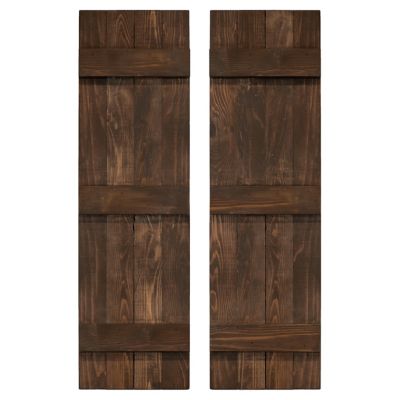
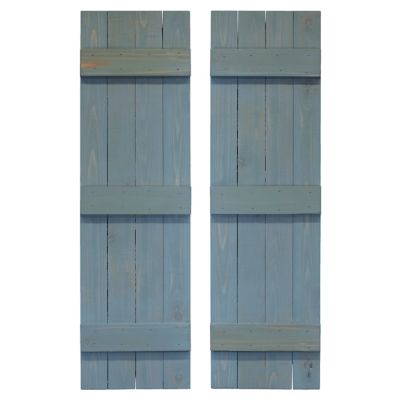
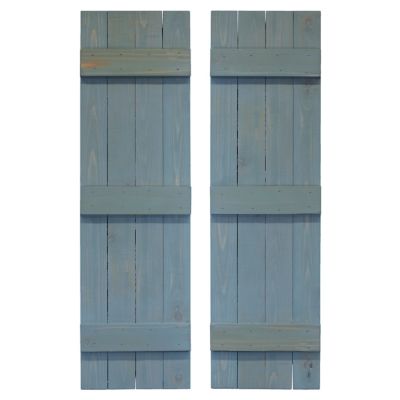
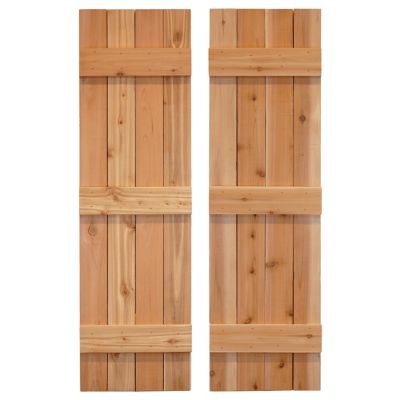
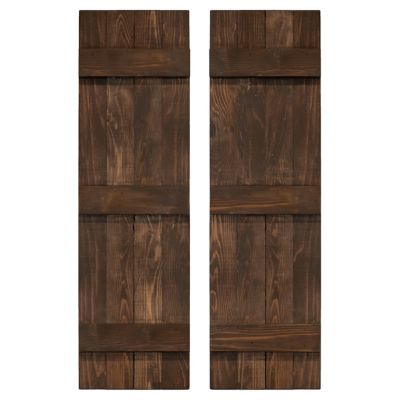
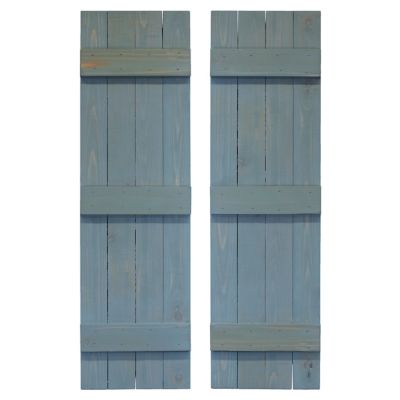
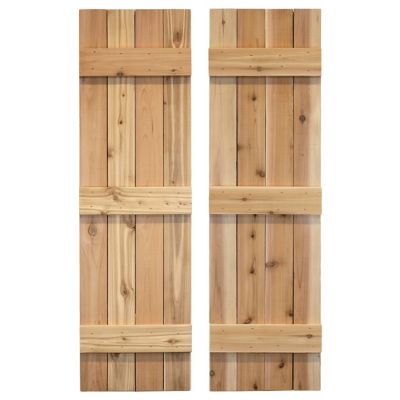
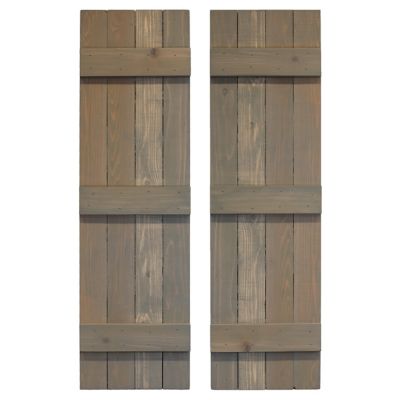
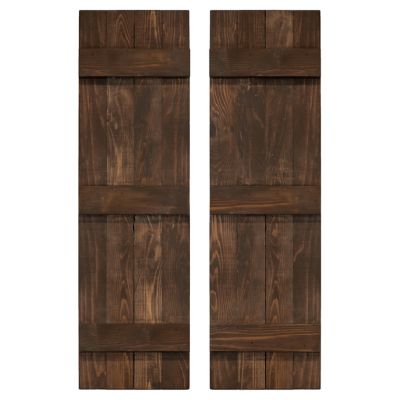
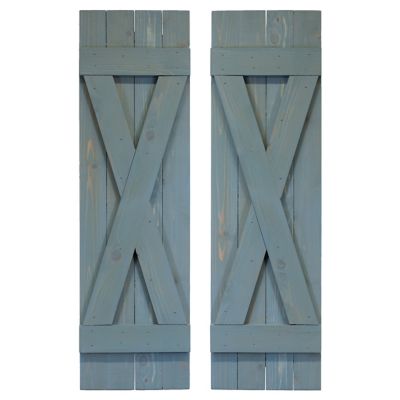
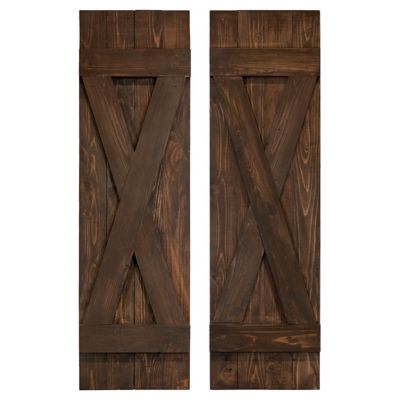
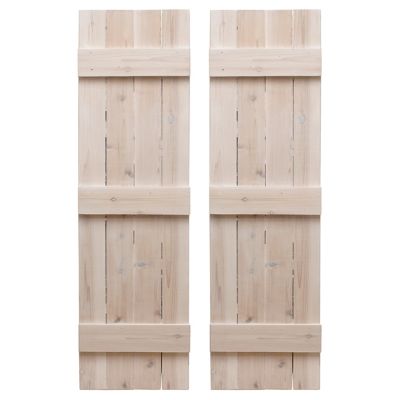
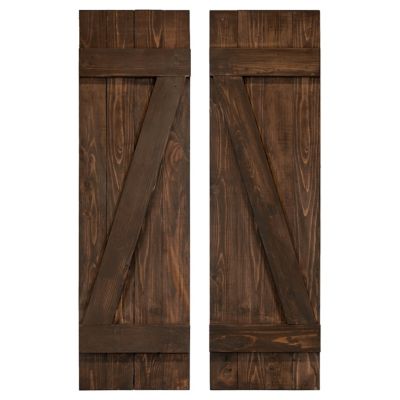
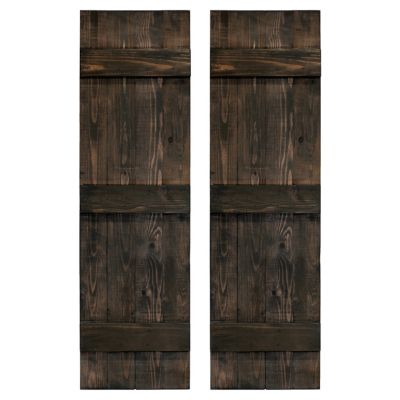
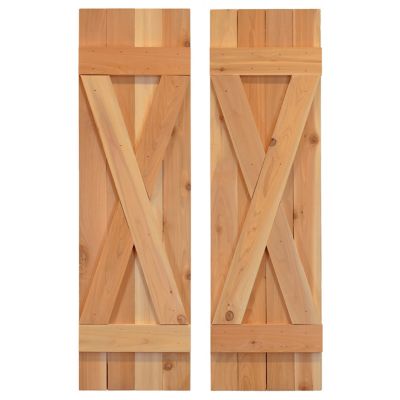
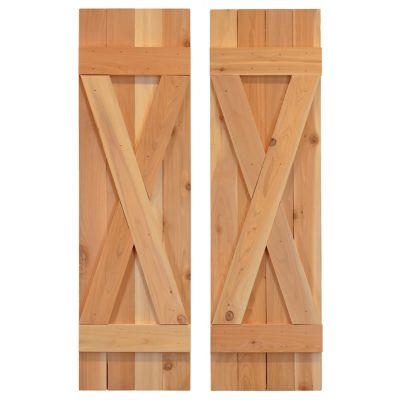
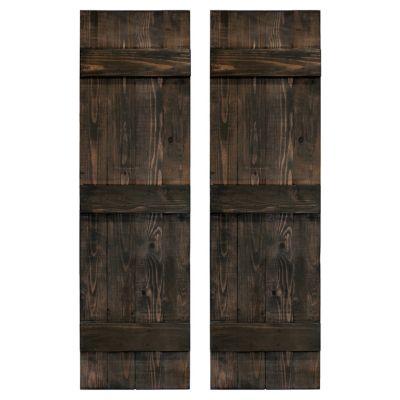
Cedar board and batten shutters bring the straightforward look of plank construction to exterior windows, with upright boards held together by horizontal battens. Their broad lines fit naturally alongside lap siding, brick, stone, and farmhouse porches, adding definition without making a house feel dressed up for company. Cedar is a common choice for this shutter style because it combines a relatively light weight with natural resistance to decay. Western red cedar is one species often associated with exterior shutters, though the wood species and construction details depend on the design. That natural resistance helps outdoors, but cedar is still wood: its appearance and service life depend on exposure, finishing, drainage, and upkeep. Board and batten designs generally fall into a few familiar patterns. Spaced boards leave visible gaps between the upright planks, creating a lighter, more open appearance against the siding. Joined or closed-board designs place the boards alongside one another for a more solid face. Some styles include an additional diagonal brace for a Z-shaped pattern, while framed versions add a border around the boards. Each changes the look of the window surround, even when the overall shutter dimensions stay the same. Two broad battens can keep the pattern simple, while additional crosspieces create a stronger visual rhythm across taller windows. Rough-sawn cedar brings out the texture of the grain and suits a weatherboard farmhouse or a cabin tucked along a tree line. A smoother face gives the same basic construction a tidier appearance on a painted cottage or ranch house. Knots, grain direction, and differences in wood tone can remain visible through a clear or translucent finish, so natural variation is part of the appeal rather than something every pair will match exactly. For homeowners comparing this plank style across a broader range of materials and finishes,
Board And Batten Window Shutters offers a related category to explore. Cedar’s particular appeal lies in its real wood texture and the way its simple construction pairs with everyday country homes.
The right fit comes down to more than finding a shutter that clears the window trim. Height, width, board spacing, and batten placement all affect how the shutters look from the driveway or across the yard. A narrow pair beside a wide picture window can look out of scale, while oversized shutters may crowd a porch post, downspout, or neighboring window. For shutters that actually close, the pair generally needs to cover the opening, with the clearances required by the frame and hardware. Fixed shutters do not have the same operating requirement, but proportions that suggest a workable pair often look more settled on the house. Consistent measuring points matter, especially on older homes where window openings may vary slightly from one room to the next. Trim depth, projecting sills, masonry surrounds, and uneven siding also influence mounting space. Intended use is another important distinction: many exterior shutters serve as stationary accents rather than working window covers. A board and batten shape alone does not mean a shutter can swing shut, provide security, or protect glass during severe weather. Those functions require appropriate construction, hardware, and, where applicable, tested ratings. Functional shutters also need room to swing and a way to stay secured when open. Hinges and holdbacks should suit the shutter’s weight, the wall construction, and the amount of offset needed to clear the trim. For fixed installations, attachment methods should follow the shutter manufacturer’s directions and suit the surface behind them. Cedar-compatible, corrosion-resistant fasteners matter because moisture and unsuitable metal can leave dark streaks on the wood. Stainless steel is often a good choice, particularly where exposure is demanding, though hardware requirements vary. Keeping water from collecting behind the boards matters just as much as the visible hardware. A sheltered front window beneath a deep porch roof faces different conditions than a gable-end window catching wind-driven rain, so placement deserves a place alongside appearance when comparing exterior cedar shutters.
Finish choices shape both the character of cedar shutters and the maintenance they will need down the road. A translucent exterior stain lets more grain show through, while a solid-color stain or paint creates a more uniform face. Natural cedar tones can warm up white siding and sit comfortably beside a gravel walk or timber porch posts. Darker finishes draw a stronger outline around windows, and lighter painted shutters can soften the contrast against brick or deep-colored siding. The same finish may look different on rough-sawn and smooth boards, and the wood’s starting color can influence the final result. Unfinished cedar typically weathers toward gray outdoors, but that change is rarely even across every surface. Sunlight, shade, roof overhangs, and splashback can leave one shutter lighter or darker than its mate. Weathering also does not eliminate the need to watch for moisture trouble. An exterior finish selected for cedar can help manage water absorption and sunlight exposure, although no coating makes wood maintenance-free. Paint systems commonly call for a suitable primer to help limit cedar tannin bleed; stain and sealer requirements depend on the coating. Coverage on edges, board ends, and other exposed surfaces is worth checking because those areas can take on moisture. Long-term care is usually a matter of gentle cleaning, periodic inspection, and renewing the finish when its condition calls for it rather than expecting one fixed schedule to suit every house. Dust from a nearby lane, pollen, and damp leaves can settle along battens, while sprinkler spray can repeatedly wet lower shutters. Harsh pressure washing may roughen the wood fibers, so a gentler cleaning method that follows the finish manufacturer’s recommendations is generally a better fit. During the cooler months, loose hardware, peeling coatings, and spots that stay damp deserve attention before repeated wetting and freezing add stress. For a farmhouse refresh, a cabin exterior, or a ranch house needing more definition around its windows, cedar board and batten shutters offer a grounded, familiar look. Well-matched proportions, suitable mounting, and realistic care expectations help that look remain part of the home for years to come.