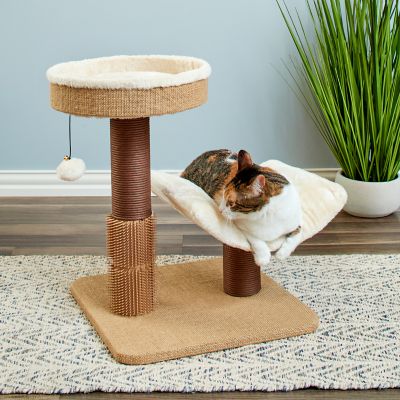
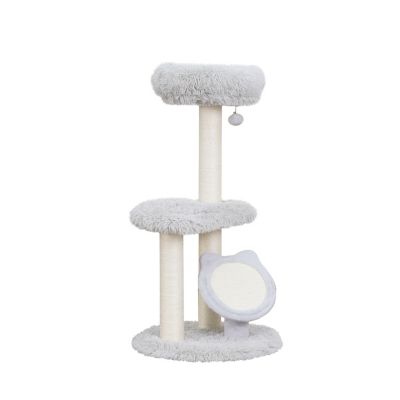
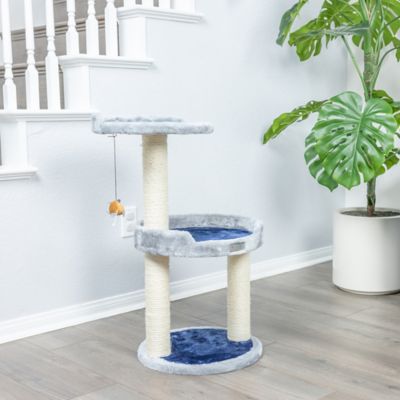
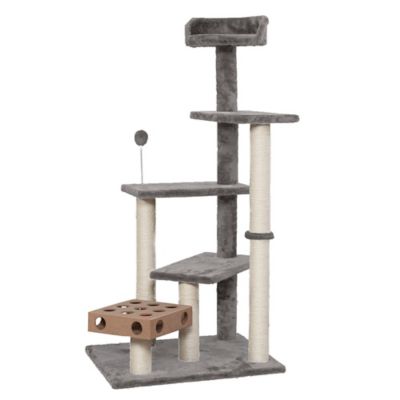
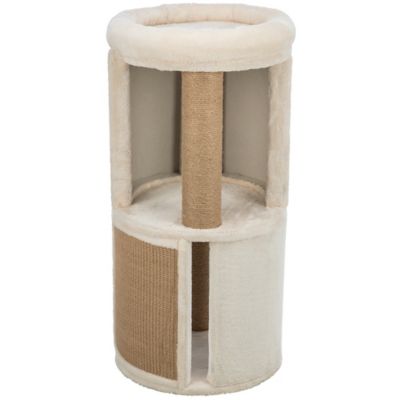
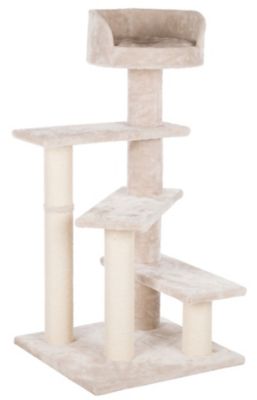
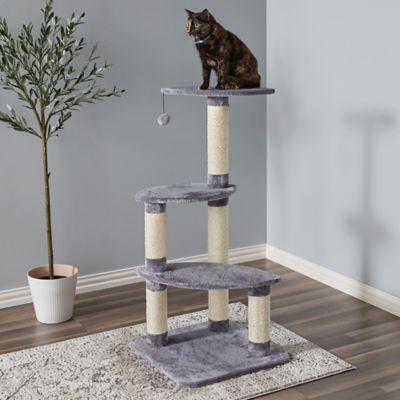
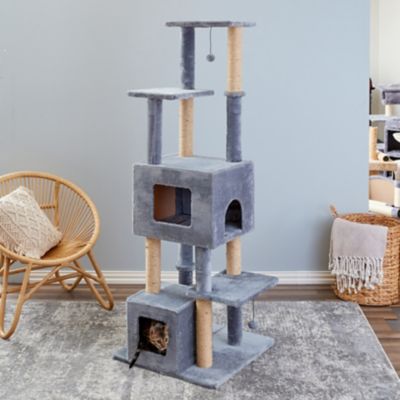
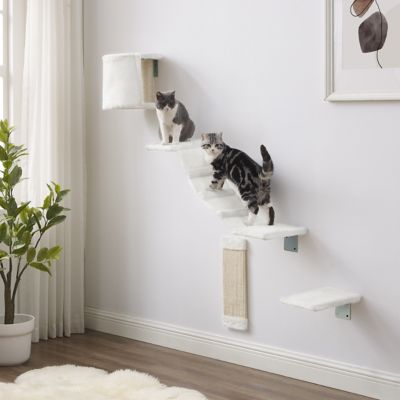
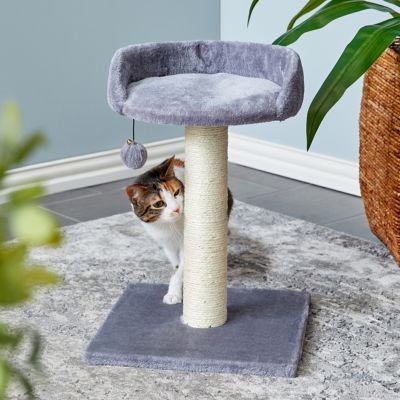
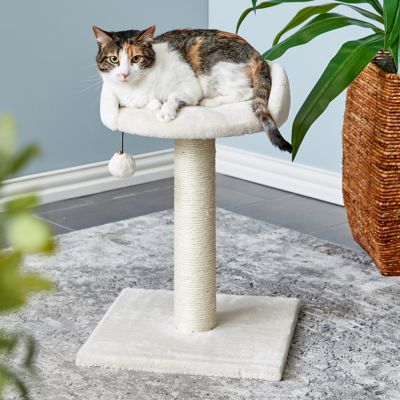
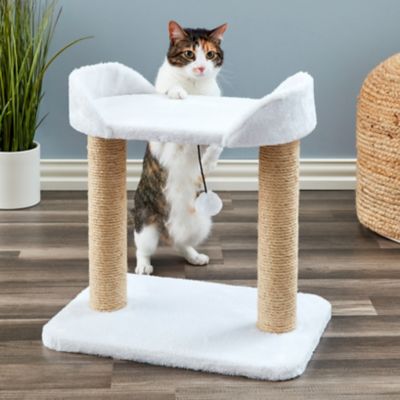
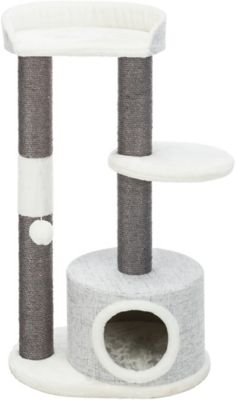
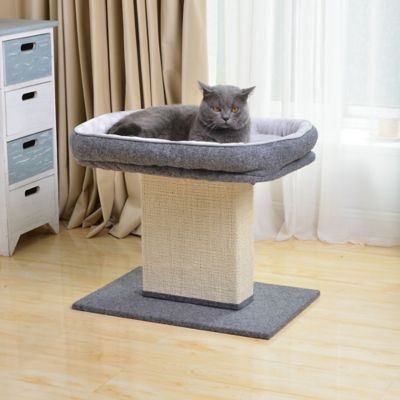
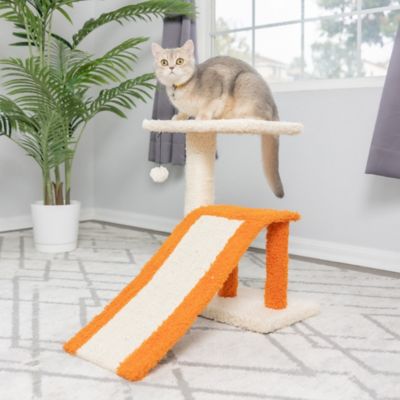
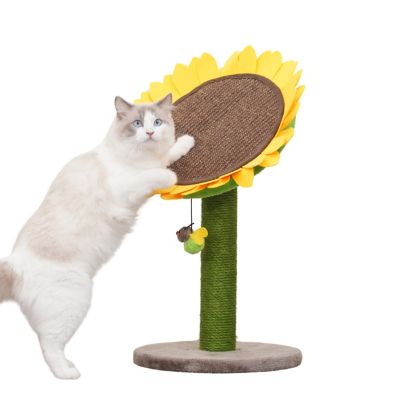
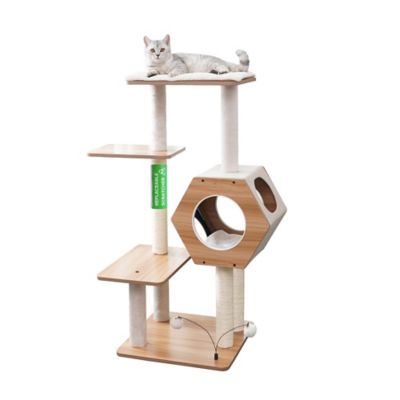
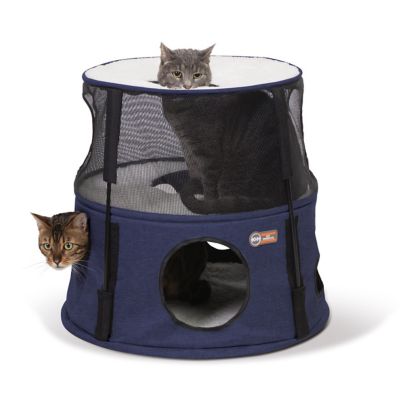
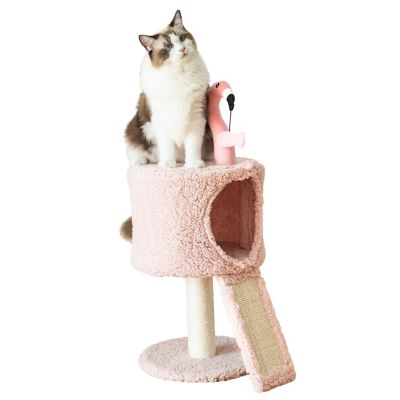
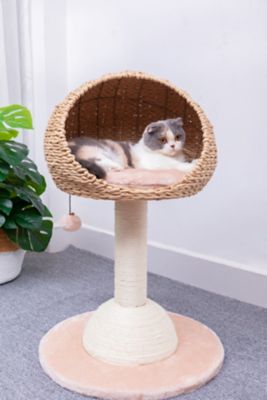
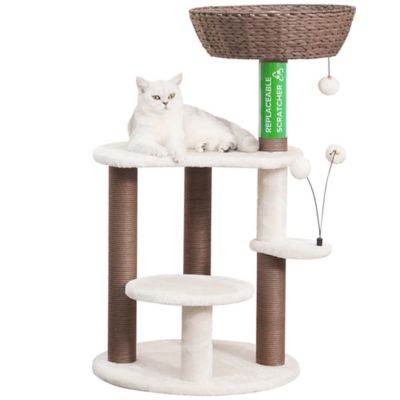
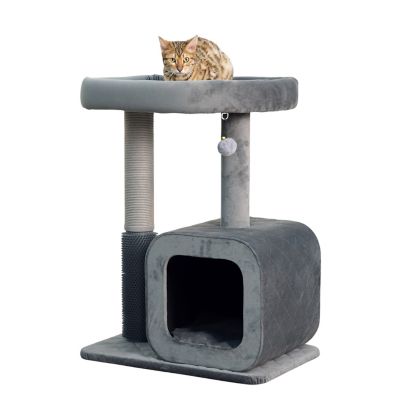
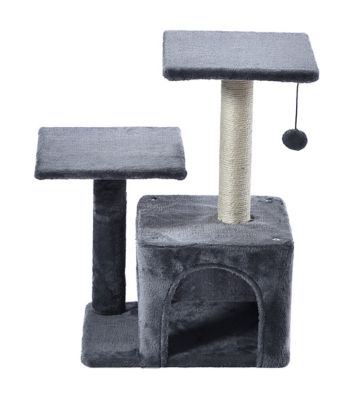
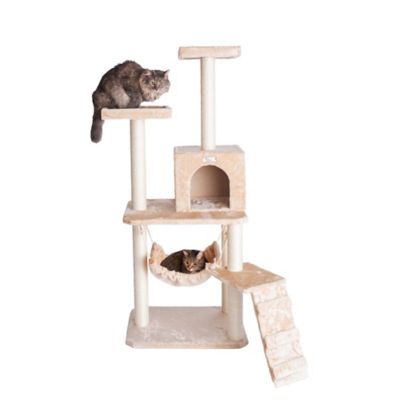
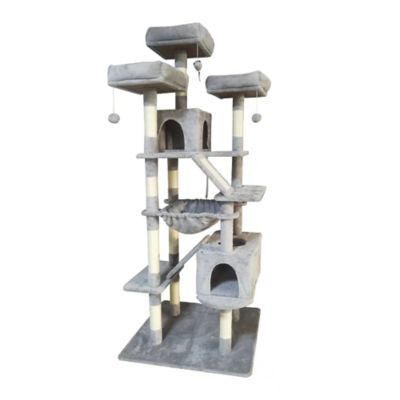
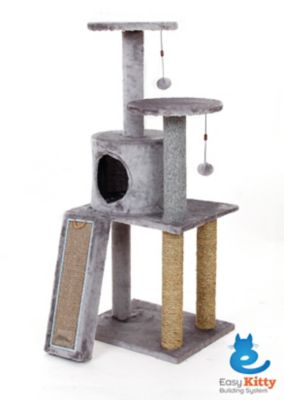
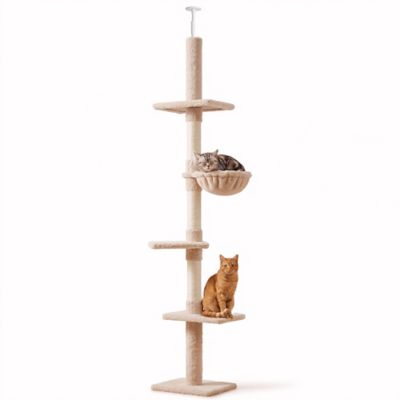
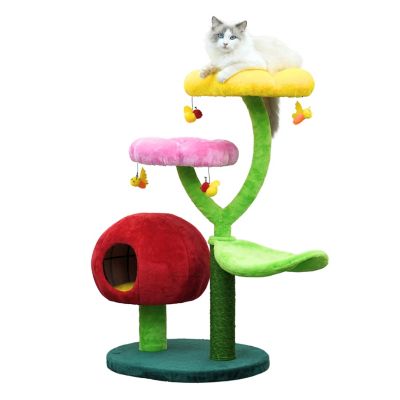
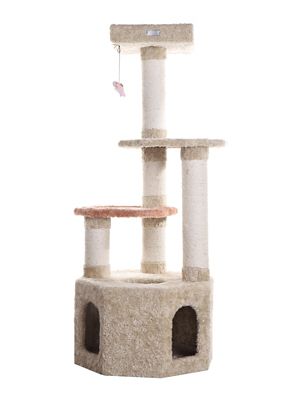
Cat trees for small apartments give cats a place to climb, scratch, nap, and watch the household without taking over the whole room. When floor space is limited, the best designs make use of vertical space instead of spreading wide across the floor. A narrow cat tree, corner cat tree, or compact tower can tuck beside a sofa, near a window, or into an unused room angle while leaving walkways clear. Look for a sturdy base and a layout that builds upward with staggered platforms, a cozy condo, and a top perch. This gives your cat several levels to explore in one small footprint. A perch near a window can become a favorite lookout for watching birds, passing cars, or leaves moving across the yard, while a covered cubby gives a shy cat a quiet place to settle down. Scratching surfaces are just as useful. Sisal-wrapped posts can give cats an approved place to stretch and work their claws, which may help keep them from turning to the arm of a recliner, the corner of a rug, or the legs of a kitchen chair. For especially tight spaces, consider a compact unit with a narrow base, a corner-friendly shape, or an adjustable floor-to-ceiling tension design. Tension-pole cat trees can provide plenty of climbing height with very little floor space, though they need to be installed according to the instructions and checked regularly for a snug, secure fit. Before bringing any cat tree home, measure the available area, including the space needed for your cat to jump up and land safely. Check the full height as well as the width and depth, and make sure the tree will not interfere with doors, vents, blinds, shelves, or ceiling fixtures. In a small apartment, a few inches can make the difference between a useful piece of cat furniture and one that becomes an obstacle. It also helps to think about how your cat already moves through the room. A climber that sits near a favorite chair or sunny window may see more use than one tucked into a forgotten corner, while placing it beside existing furniture can create a natural route from floor to perch.
Stability matters even more than height, particularly for active cats that launch themselves from the floor or race up the posts during a burst of evening energy. Choose a cat tree with a solid, well-balanced base, secure platforms, and posts that do not wobble when pressed. Larger cats, older cats, or homes with more than one cat may need stronger construction and broader platforms than a small kitten. A top perch should give your cat enough room to turn around and rest without hanging over the edge, and lower levels can make climbing easier for kittens, senior cats, or pets with limited mobility. If your cat is young and still learning the ropes, explore
Cat Trees For Kittens for designs suited to smaller bodies and early climbing habits. Multi-function cat trees are a practical choice for apartments because one piece can combine a scratcher, hideaway, play area, and resting spot. Soft fabric coverings can add comfort, while removable cushions or easy-to-clean surfaces are helpful when a cat tracks litter, sheds, or has an occasional hairball. Place the tree where your cat can enjoy everyday activity without being in the middle of foot traffic. Many cats like to be part of the action while keeping a little distance, so a spot near the living room often works better than a secluded closet. During warmer weather, a raised perch can offer a pleasant breeze and a view of an open window, while during cooler months a covered condo can feel like a snug retreat away from drafts. Cat trees also make thoughtful gifts for a new pet parent, someone settling into a first apartment, or a family looking to give an indoor cat more exercise and enrichment. They can be especially helpful in smaller homes where outdoor roaming is not safe or practical. Whether the goal is to protect furniture, add activity to a quiet room, or give a nervous cat a dependable place to observe from above, the right compact cat tree can fit neatly into apartment life while giving your pet a little territory of its own.