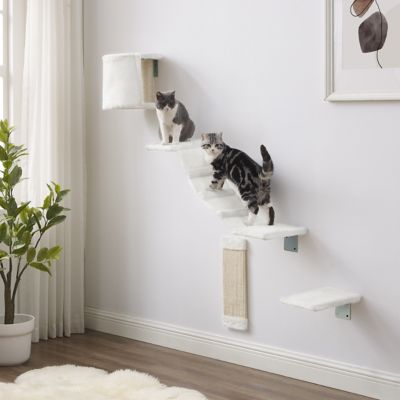
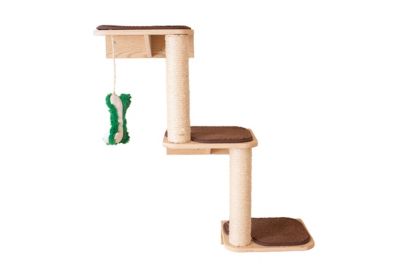
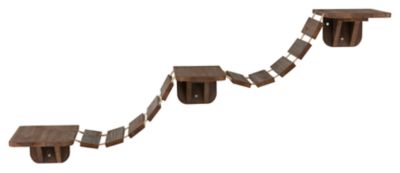
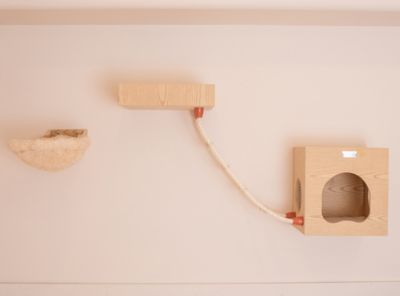
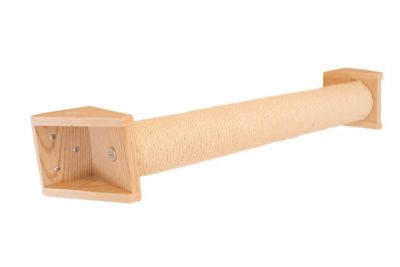
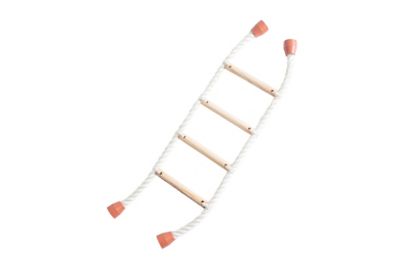
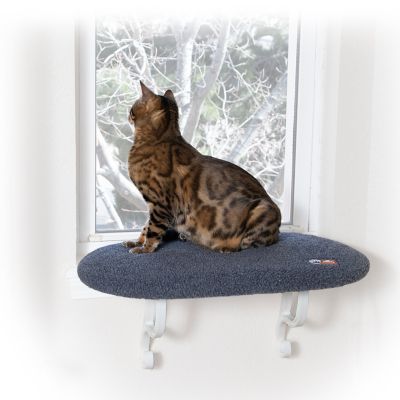
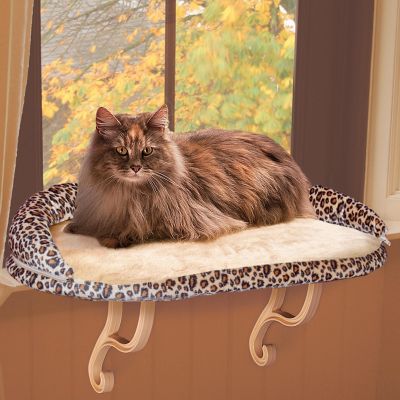
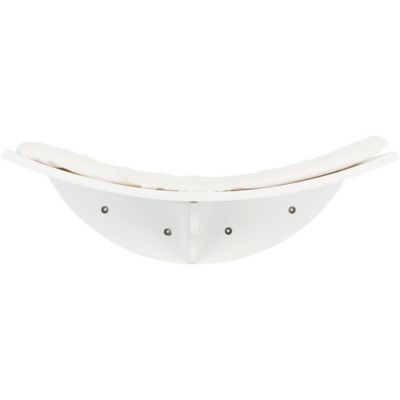
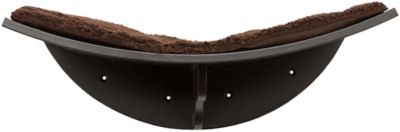
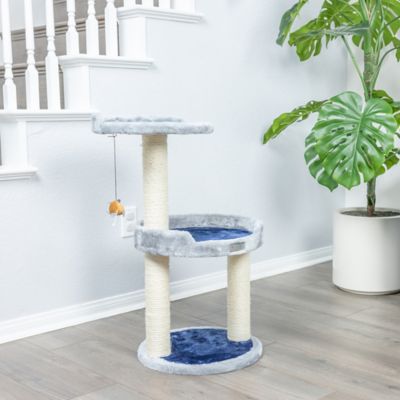
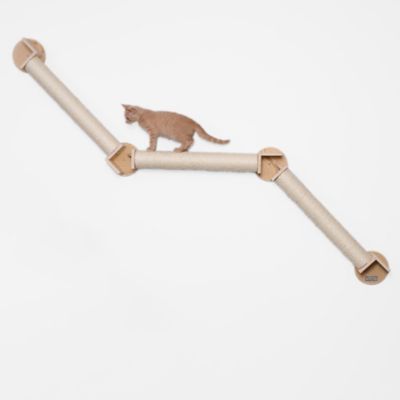
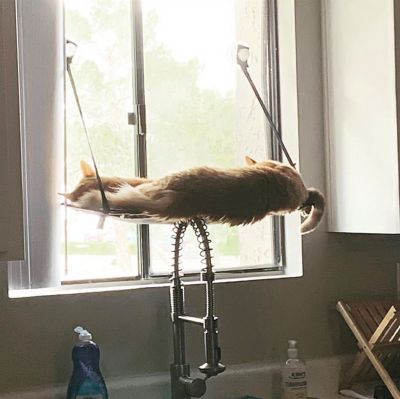
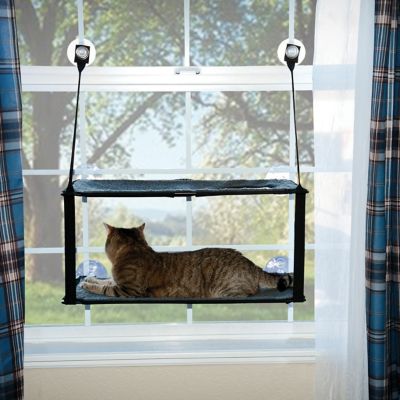
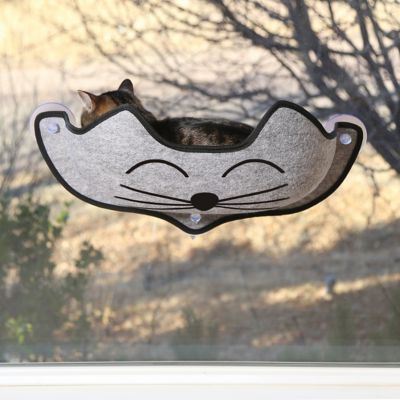
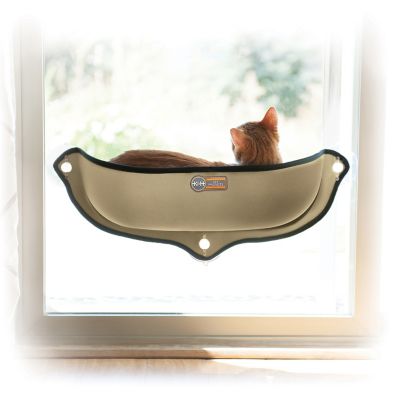
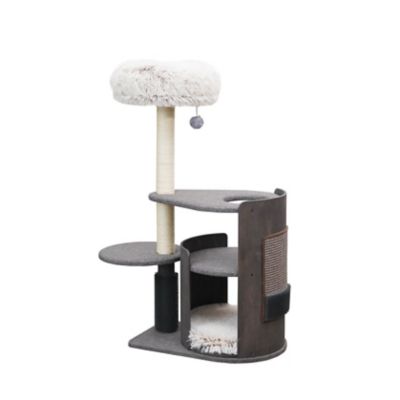
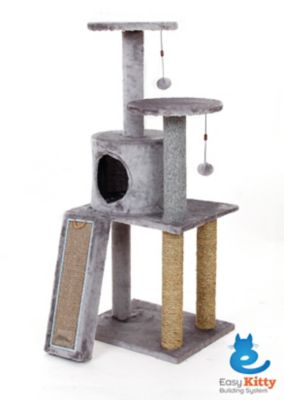
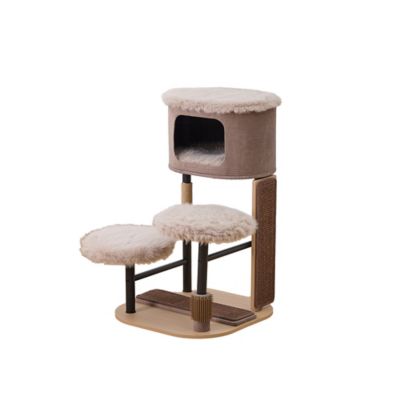
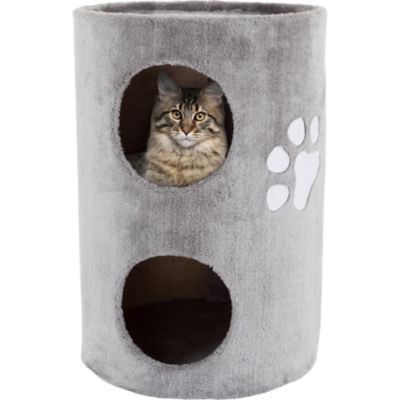
Cat climbers for walls give indoor cats a way to stretch, perch, play and keep an eye on the household from up high. Many cats naturally feel comfortable in elevated spots, whether they are watching birds through a window, keeping tabs on the dog, or settling into a quiet corner away from foot traffic. A wall-mounted climbing setup can make good use of vertical space in rooms where floor space is limited, including apartments, laundry rooms, porches that have been enclosed for year-round use, and spare rooms set aside for pets. Instead of taking up a wide patch of floor, wall climbers can build an upward path with shelves, steps, ramps, scratch surfaces and resting platforms. That extra height may be especially helpful for cats that like to get away from busy activity, as well as multi-cat households where each animal benefits from having its own place to relax. A young, energetic cat may use a wall route for climbing and leaping, while an older cat may prefer a lower platform that offers a steady step up to a sunny resting spot. When choosing a setup, consider your cat’s size, age, confidence and activity level, along with the wall space available. Larger cats need broad, sturdy platforms with enough room to turn around and settle comfortably. Shyer cats often do best with a simple layout near a quiet wall, while playful cats may enjoy several levels arranged like a little indoor trail. Think about where your cat already spends time. A wall near a favorite window can become a lookout, and a spot near the family room can let a social cat stay close without weaving through everyone's feet.
Secure installation is one of the most important parts of selecting cat climbers for walls. Look for climbing furniture made with dependable materials, stable brackets and surfaces that can handle regular jumping. The wall itself matters, too. Hardware should be suited to the type of wall and mounted according to the manufacturer's instructions, with fasteners attached to solid support when required. A shelf that feels secure under a hand may still shift when a cat launches onto it, so check every connection carefully before allowing your pet to climb. Arrange platforms with sensible spacing so your cat can move between levels without having to make an awkward stretch. Leave room around the climber for safe landings, and keep it away from ceiling fans, hot appliances, open stairwells, breakable decorations and windows that do not have secure screens. A washable cover or easy-to-clean surface can be useful in homes where muddy paws come in from a screened porch or barn-side entryway. Scratching areas add another layer of usefulness by giving cats a designated place to work their claws and stretch their shoulders. For cats that need more scratching options, a wall climber can pair well with
Cat Scratchers for Large Cats, especially when the scratching surface is placed near a favorite nap area or along a route the cat already travels. Introduce a new climber gradually by placing familiar bedding, a small toy or a few treats on the lowest level. Some cats will investigate immediately; others may circle it for a few days before deciding it belongs in their territory. Avoid forcing a nervous cat onto the structure, and inspect it from time to time for loose hardware, frayed fabric or worn scratching material.
Wall-mounted cat climbers can also make a thoughtful gift for a cat owner who enjoys creating a comfortable home for their pet. They suit new pet parents furnishing a first home, families welcoming a rescued cat, and longtime cat owners looking for a better way to use an empty wall. During the warmer part of the year, cats may spend more time near screened windows or on enclosed porches, and a nearby wall perch can give them a raised place to watch the yard without roaming outdoors. As the cooler months arrive, indoor enrichment becomes even more valuable when cats are less interested in lingering outside and the household spends more time indoors. A climbing arrangement near a window can turn an ordinary wall into a lookout over the garden, driveway or pasture, with changing light and passing wildlife providing gentle entertainment. In a home with children or other pets, an elevated perch gives a cat a retreat that feels separate without shutting the animal away. It is still wise to make sure the cat can get down easily and that the setup does not create a dead end where the pet could feel trapped. The best arrangement fits the room as well as the cat, blending into the household while offering real daily use. Measure the available wall area, note nearby doors and furniture, and plan a route that leaves walkways clear. Choose colors and textures that work with the room, but put sturdiness, comfort and cleanability first. With a well-planned layout and regular checks, cat climbers for walls can add exercise, mental stimulation and a cozy high perch to everyday life, giving your cat a place to climb after breakfast, nap in a patch of afternoon sun and settle in close to the family when the evening gets quiet.