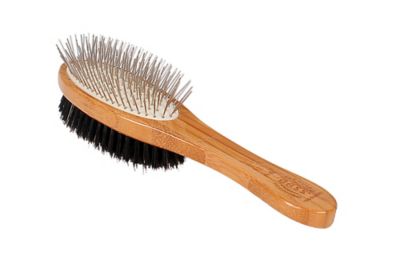
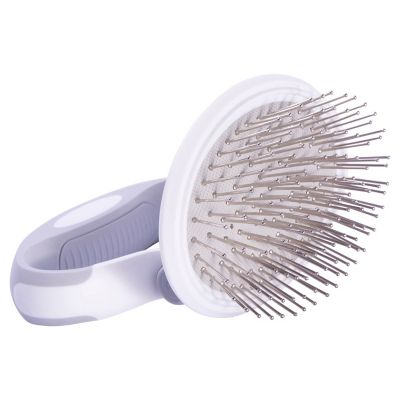
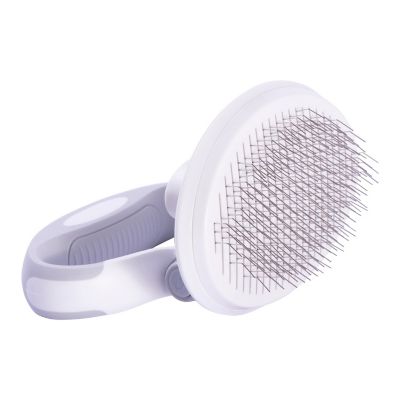
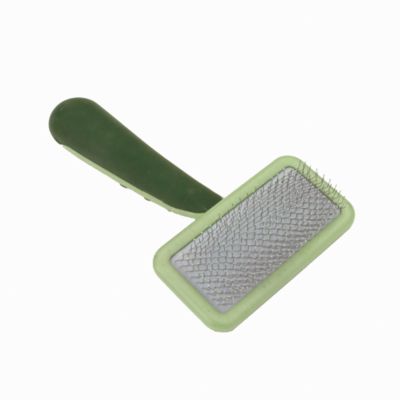
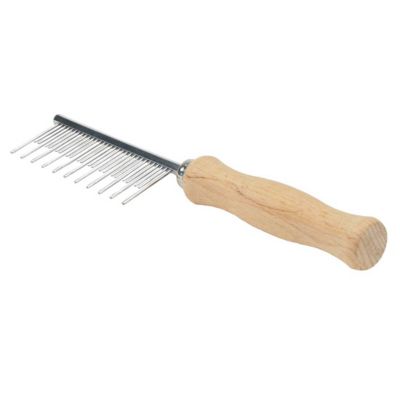
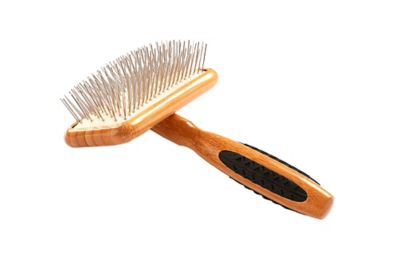
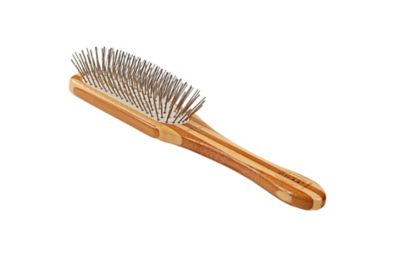
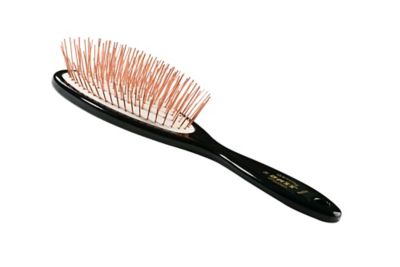
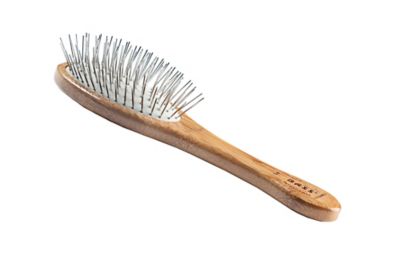
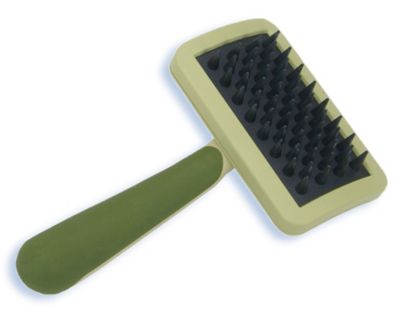
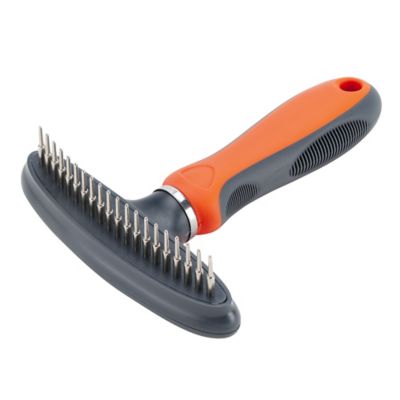
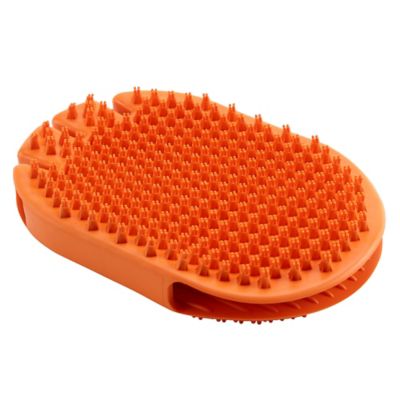
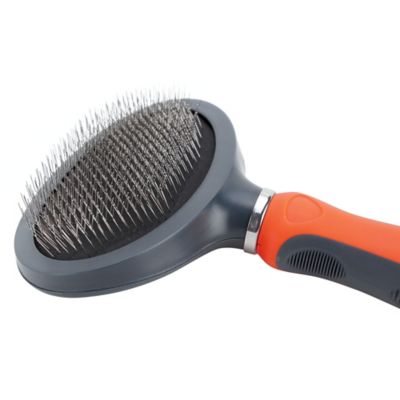
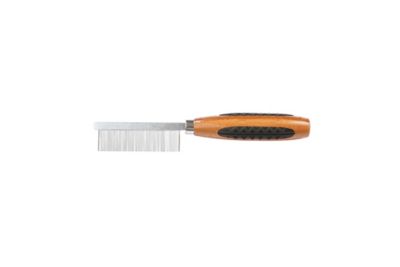
Cat brushes for long haired cats help keep flowing coats manageable, from the fluffy ruff around the neck to the feathered tail and thick fur behind the legs. For many long-haired cats, a slicker or pin brush paired with a metal comb makes a practical everyday grooming combination: the brush gathers loose hair and separates sections of coat, while the comb helps reveal tangles hiding underneath. The right match depends on coat density, hair texture, skin sensitivity, and how much brushing a cat will tolerate. A silky coat that lies close to the body needs a different touch than a dense coat with a plush undercoat. Slicker brushes have closely spaced, fine wire pins that catch loose fur and work through small snags, but their pin length and stiffness matter on a cat’s delicate skin. Light pressure is important, even when a brush feels gentle against a person’s hand. Pin brushes generally have more widely spaced pins and can suit longer, flowing hair, especially when the tips are smooth and the brush moves through the coat without tugging. Soft bristle brushes are better suited to smoothing the outer coat and gathering surface hair than reaching deep tangles. Stainless steel combs with both wide and narrow tooth spacing offer another way to check the coat, with wider teeth helping separate hair and closer teeth finding smaller knots. Rounded tooth tips and smoothly finished edges are worth considering wherever a tool may touch the skin. No single brush style handles every part of every long coat equally well. A broad brush head may cover the back comfortably, while a smaller head can be easier to control around the cheeks and chest. These differences make brush shape and working surface just as important as the label on the package. For a cat that spends evenings stretched across a chair cushion or curled beside a pair of chore boots, regular coat care also means less loose fur left behind around the house.
Long-haired cat grooming tools should fit both the cat and the person holding them. A brush that feels balanced in the hand is easier to control than one that requires a tight grip, particularly during frequent grooming sessions. Contoured handles and nonslip surfaces can help keep movement steady, while lighter tools may feel more comfortable for someone with stiff fingers. The brush head should allow gentle contact without pulling a large section of hair at once. Cats with fine coats, older cats, and cats that dislike handling may do better with a smaller working area and short sessions rather than a wide brush covering lots of ground. Many long-haired cats benefit from daily brushing, though the amount of attention needed varies with coat texture, activity, and the cat’s ability to groom itself. Friction-prone spots behind the ears, under the front legs, and around the hindquarters deserve attention because tangles can develop beneath a smooth-looking surface. A comb should pass through loose, untangled hair without a struggle; resistance is a reason to pause, not pull harder. For localized tangles,
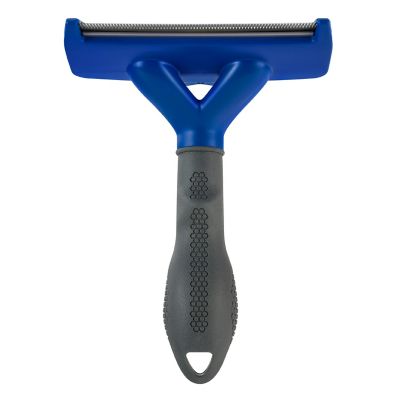
Dematting Combs For Cats include tools intended for a different job than ordinary coat brushing, and designs with cutting edges call for particular care. Tight mats, mats close to the skin, and tangles that cause pain are better handled by a professional groomer or veterinarian. Household scissors are not a safe shortcut because thin cat skin can be drawn into the mat and injured. Brushes and combs are for routine coat maintenance, not a substitute for help with sores, irritated skin, or a sudden change in grooming habits. A cat that stops reaching its back or hindquarters may need veterinary attention rather than a stronger brush. For cats that are comfortable being handled, a quiet spot, secure footing, and a few gentle passes can make grooming a calmer part of the day without turning it into a wrestling match.
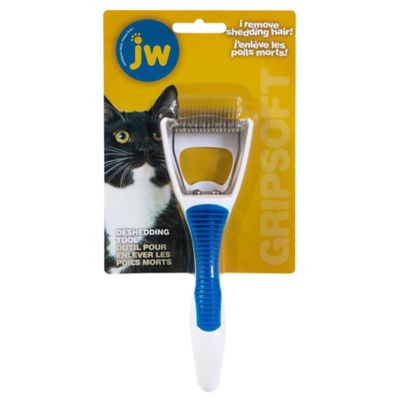
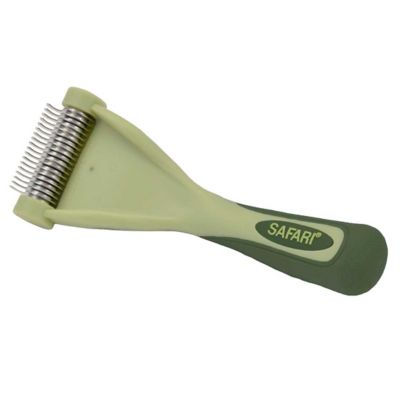
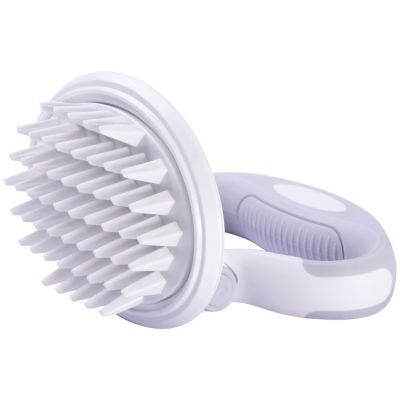
Materials and construction affect how a cat brush feels, how easily it cleans up, and how well it holds up to regular handling. Metal pins and comb teeth should stay straight and sit firmly in place, with no rough edges that could snag hair. Plastic brush bodies can keep weight down, while rubberized grips may offer a steadier hold; either way, seams and joints should feel secure. Cushion-backed pin brushes allow some movement at the brush surface, though that flexibility does not replace a gentle touch. Self-cleaning slicker designs make collected hair easier to release by moving a plate along the pins, a handy feature when loose fur builds up quickly. Simple brush designs have their own appeal, especially when there are fewer moving parts to inspect and clean. Care instructions matter because not every brush tolerates soaking, and moisture trapped behind a cushion or inside a handle can be hard to dry. Removing gathered hair after each session and cleaning the working surface as directed helps keep skin oils and debris from building up. Bent pins, loose teeth, cracked handles, and damaged tip coatings are reasons to replace a tool rather than keep brushing with it. Undercoat rakes and deshedding tools also deserve a close look at their intended coat type: some reach beneath the outer hair to collect loose undercoat, but repeated passes or too much pressure can irritate skin or damage hair. They are not interchangeable with a gentle daily brush, and manufacturer directions should determine their use. A useful grooming setup is often straightforward rather than crowded: a brush suited to the coat, a comb for checking through longer hair, and a clean place to store both. In a home with several cats, cleaning tools between animals is sensible, especially if one has a skin concern. For households welcoming a long-haired cat, well-matched grooming tools can also make a thoughtful practical gift. The best fit is equipment that feels comfortable, reaches the coat it needs to reach, and supports regular, gentle care.