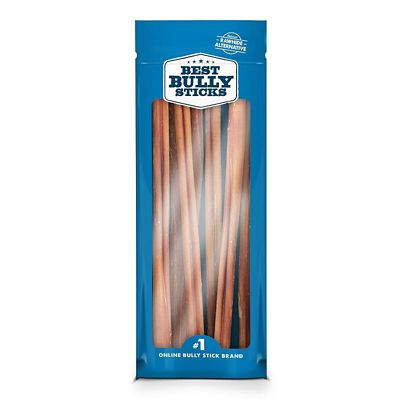
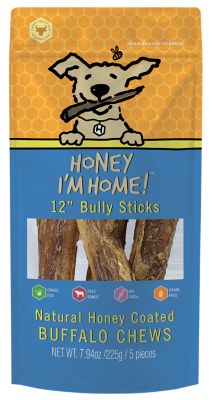
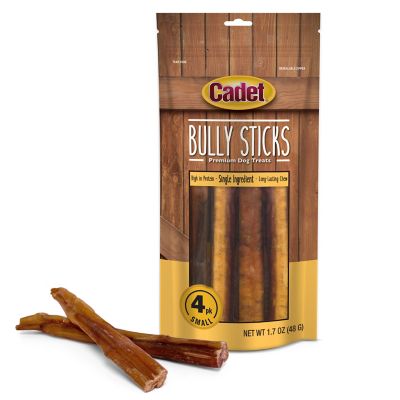
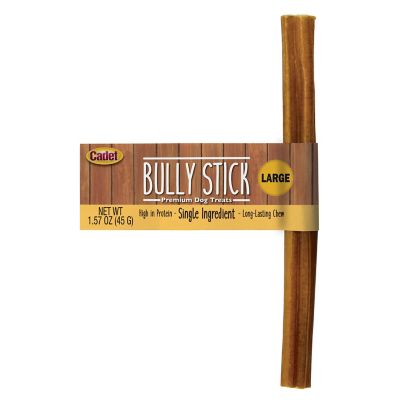
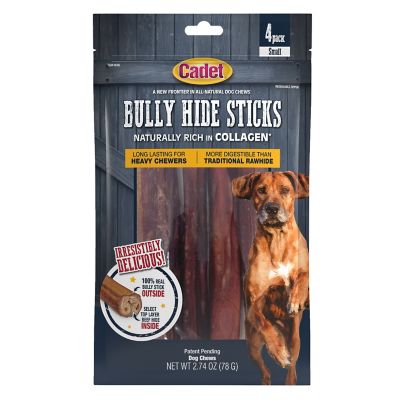
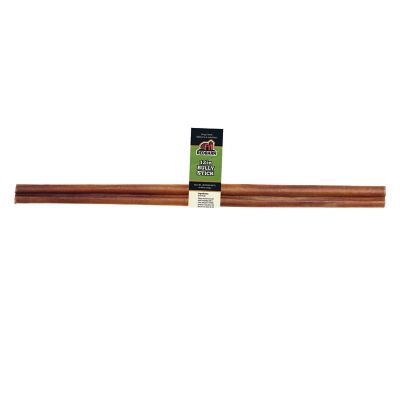
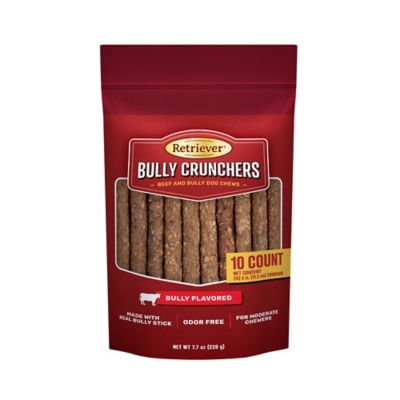
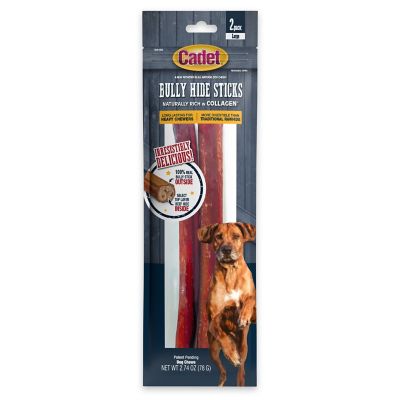
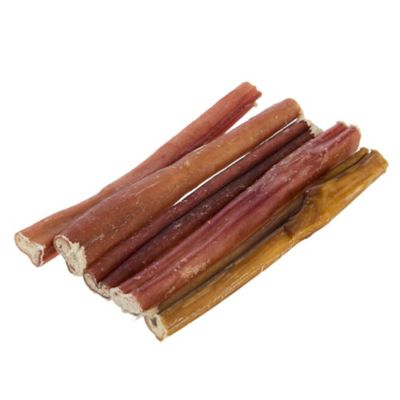
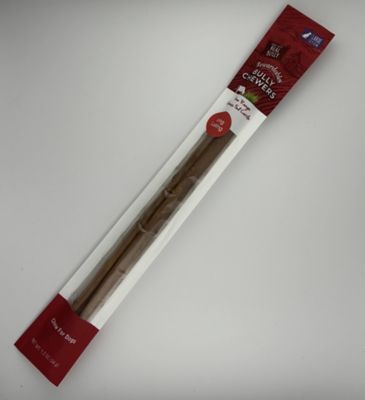
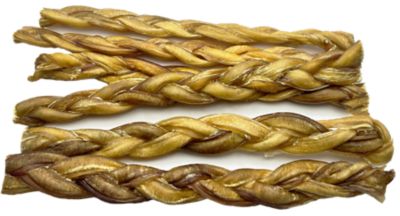
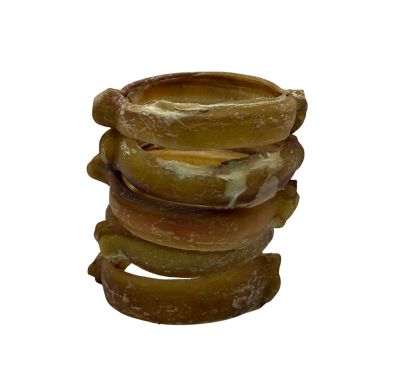
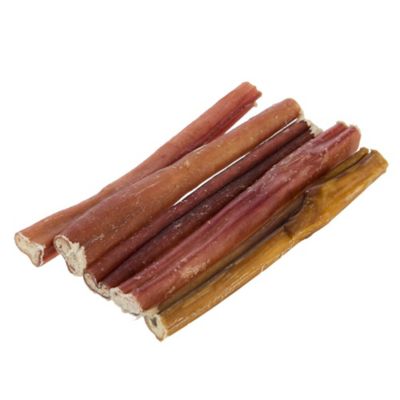
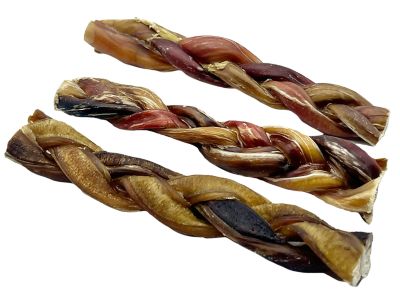
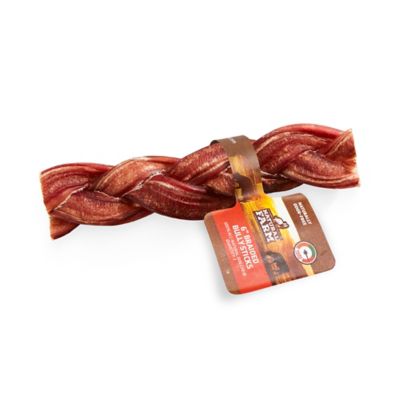
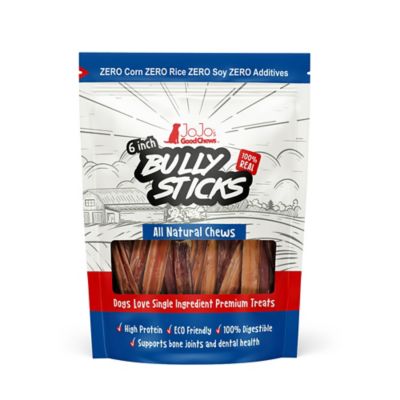
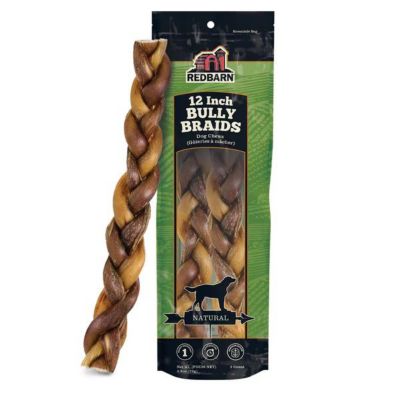
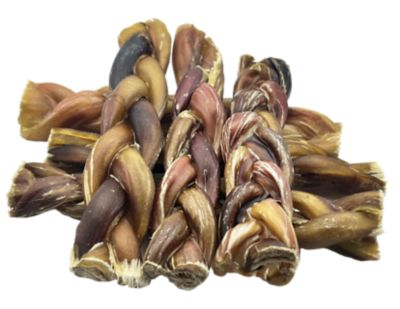
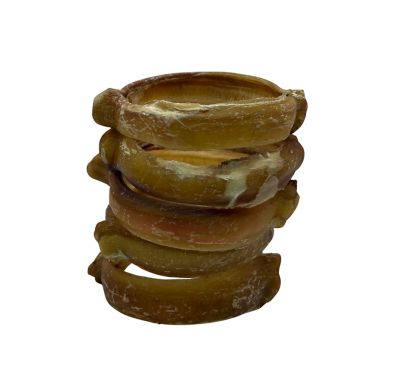
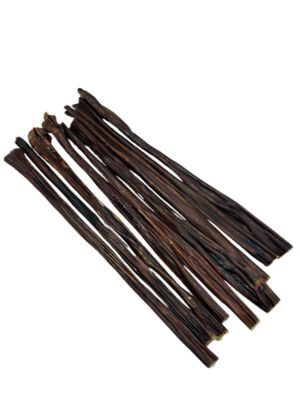
Bully sticks for dogs are edible chews made from dried beef pizzle, offering a firm, fibrous texture that gives dogs something satisfying to work on with their jaws. Unlike rawhide, which comes from an animal’s hide, bully sticks come from a different type of animal tissue and soften as a dog chews. Many are single-ingredient treats, though the ingredient statement is still the best place to check for added flavors or other ingredients. Their beef scent and chewy texture can appeal to dogs that enjoy settling down with a treat rather than finishing it in one bite. A dog stretched out beside your chair after chores may appreciate that kind of focused activity, especially when chewing is already part of its daily routine. Bully sticks provide animal protein and calories, but they are treats, not a replacement for complete and balanced dog food. Their appearance can vary because they come from an animal source: differences in color, thickness, shape, and scent do not necessarily mean two chews have different ingredients. Straight sticks offer a simple shape, while braided and curled styles give dogs different surfaces to grip and chew. Length and thickness both matter, and two sticks of similar length may provide very different chewing experiences if one is much wider or denser. How long a bully stick lasts depends on the individual dog, the chew’s dimensions, and how quickly the dog softens and breaks it down. A patient nibbler may spend a while working along one end, while a powerful chewer can make much faster progress. Low-odor varieties may be more appealing for indoor chewing, but reduced scent does not mean a chew is free of germs or suitable for every dog. Ingredient details, feeding directions, and package handling instructions help distinguish the features that matter for a particular household, whether the chew is meant for a small companion dog or a bigger dog that spends its days tagging along around the property.
The right bully stick gives a dog room to chew without being small enough to gulp down whole. Body size is part of that match, but chewing habits deserve just as much attention. A small dog that bites off chunks may need a different approach than a larger dog that slowly gnaws the same spot. Longer or thicker sticks can give some dogs more material to hold between their paws, while braided styles add layers to work through; neither shape makes a chew safe to leave unattended. Bigger and harder are not automatically better, particularly for dogs with sensitive mouths, damaged teeth, or a habit of bearing down hard. Puppies with developing teeth and older dogs with dental concerns may need a veterinarian’s input before getting firm chews. Supervision matters from the first bite through the last piece. As a bully stick becomes shorter, softer, or broken into chunks, the risk of swallowing a piece increases. The remaining end should be taken away before the dog can swallow it whole. A properly fitted chew holder may help keep an end out of reach, but it does not replace watching the dog, and its fit should be checked against the chew’s thickness. Although bully sticks are generally digestible, a large swallowed piece can still cause choking or a digestive blockage. Dogs that routinely gulp treats may be better suited to another type of reward recommended by their veterinarian. Chewing can provide enrichment and an outlet for normal behavior, but it is not a treatment for separation distress or persistent destructive chewing. The rubbing action may help remove some surface buildup from teeth, yet bully sticks do not replace toothbrushing, dental examinations, or professional care. A comfortable chewing session should look steady and relaxed, not frantic or painful. Bleeding, repeated gagging, or trouble swallowing are reasons to stop the session and seek veterinary advice.
Bully sticks fit best into a treat routine that accounts for the dog’s regular meals, activity level, and digestive tolerance. Treats generally should provide no more than 10 percent of a dog’s daily calories unless a veterinarian recommends otherwise, and a substantial chew can take up a meaningful share of that allowance. Calorie information on the package can help with portion planning, especially for smaller dogs or dogs working toward a healthier weight. A first chewing session is better kept brief so there is a chance to watch for loose stools, vomiting, or other signs that the treat does not agree with the dog. Beef-based chews are not a fit for dogs with a known beef allergy, and dogs on prescription diets or with a history of pancreatitis need veterinary guidance about treats. Fresh drinking water should be within reach during supervised chewing. A washable mat gives the dog a defined spot to settle and makes saliva and small bits easier to clean up afterward. In homes with more than one dog, separate chewing spaces can help prevent competition over a valued treat; even easygoing companions may guard something they want to keep. Storage and handling matter, too. Follow the package directions, keep unopened or dry chews protected from moisture and pests, and wash hands after handling them. A partially chewed stick has been exposed to saliva, so follow the maker’s directions for keeping or discarding it rather than dropping it back into a bag of untouched chews. Anything moldy, spoiled, or otherwise questionable belongs out of the dog’s reach. For households comparing beef-based treats,
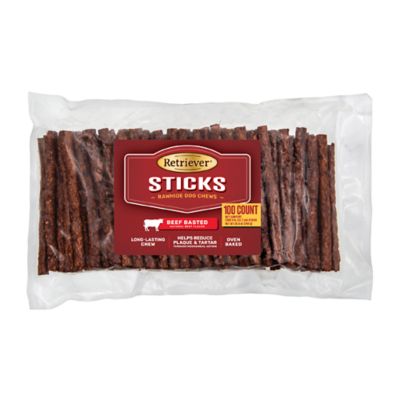
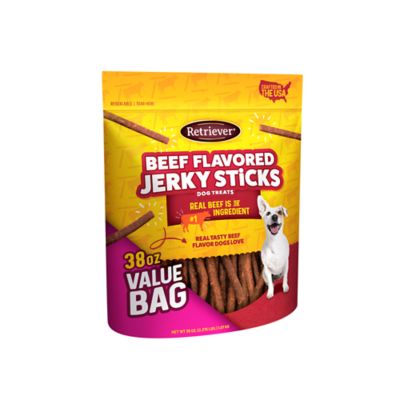
Dog Beef Sticks offers a related category to consider, with ingredient lists and feeding directions helping clarify whether a treat is intended for extended chewing or a quicker reward. Matching the texture, portion, and shape to the dog’s habits helps make treat time a comfortable part of everyday life, with close supervision keeping attention where it belongs.