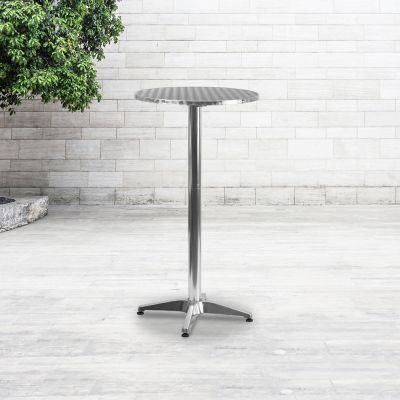
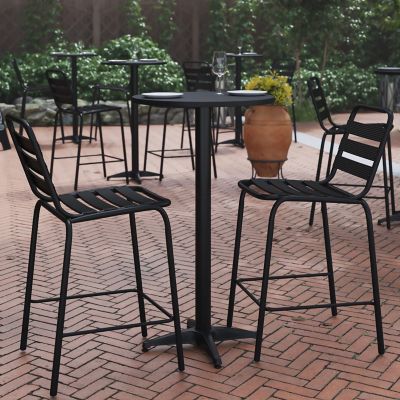
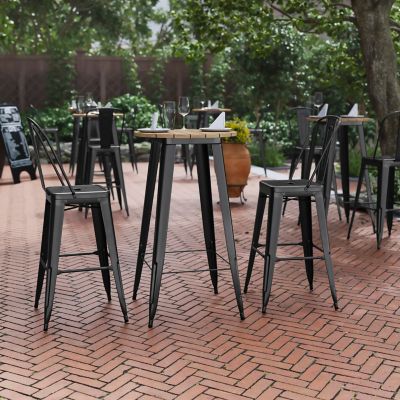
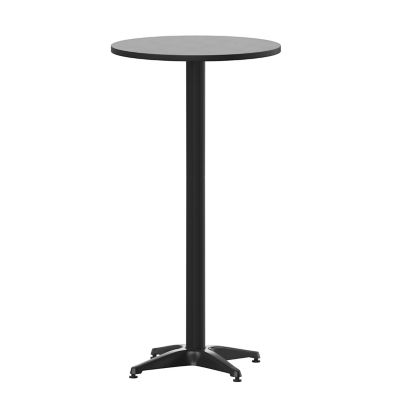
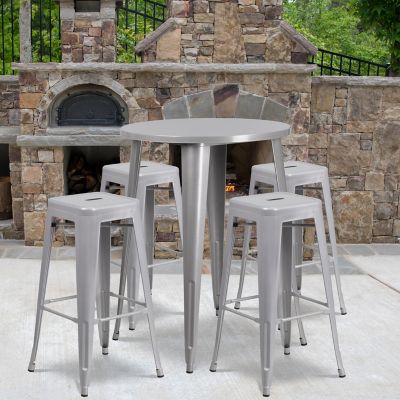
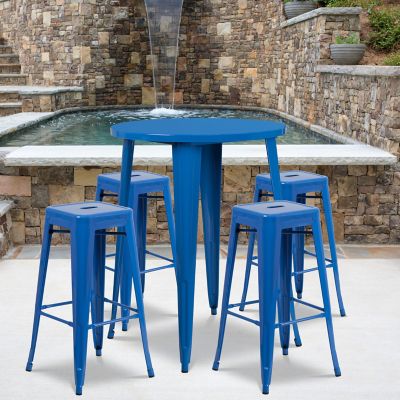
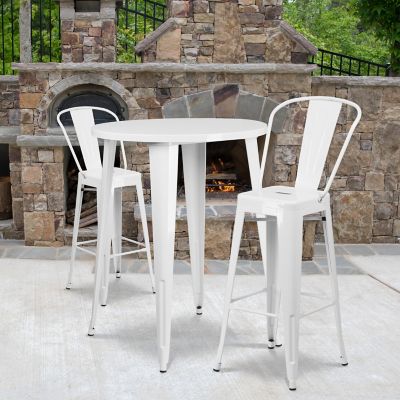
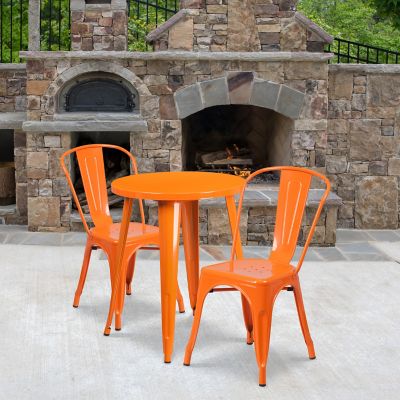
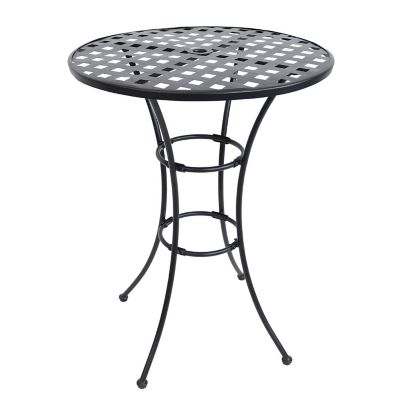
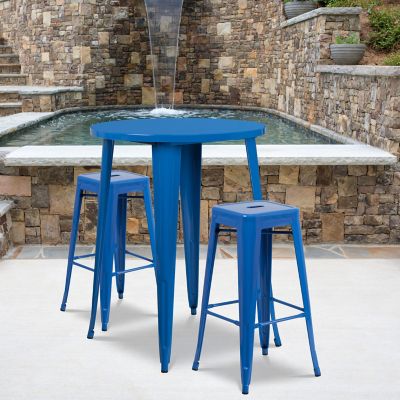
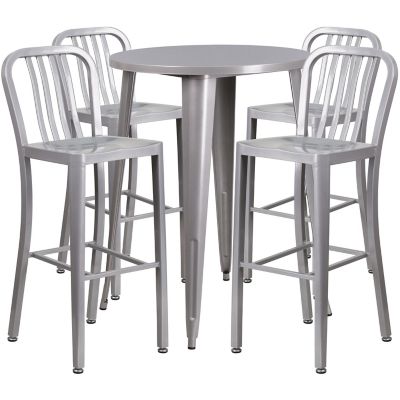
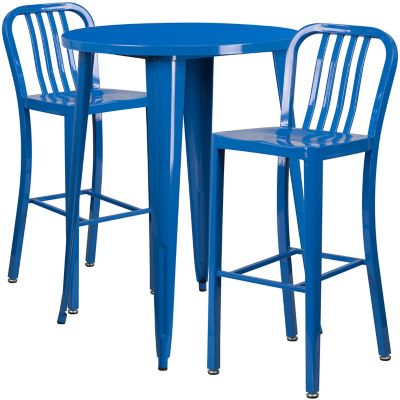
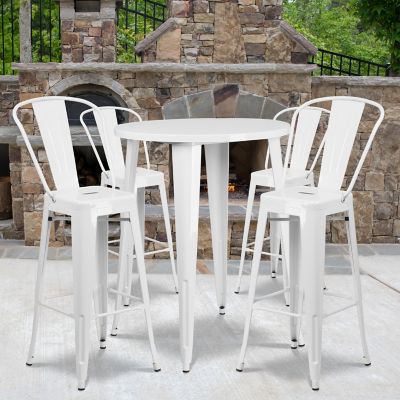
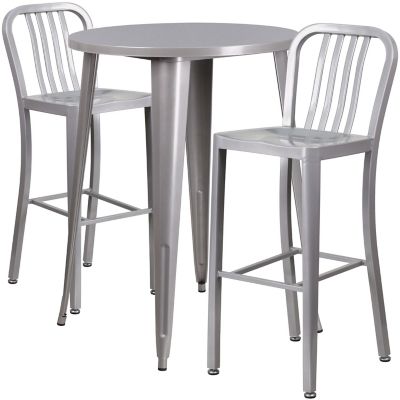
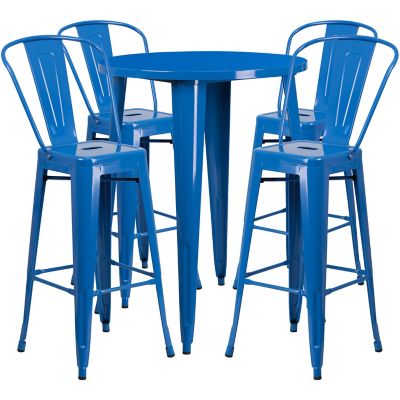
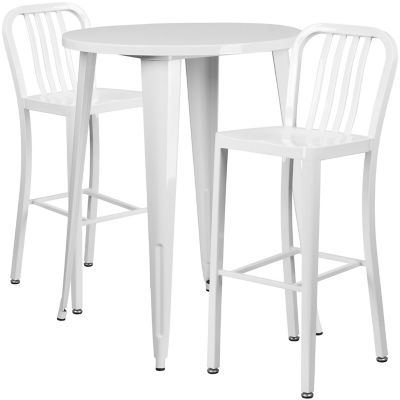
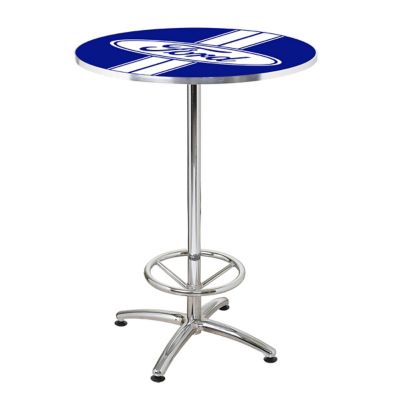
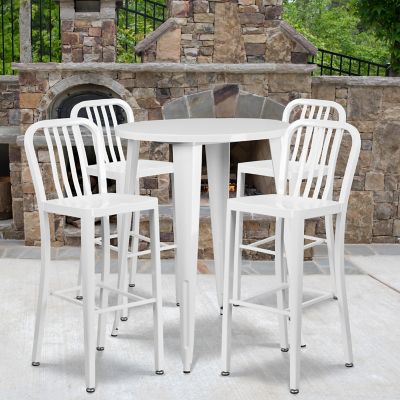
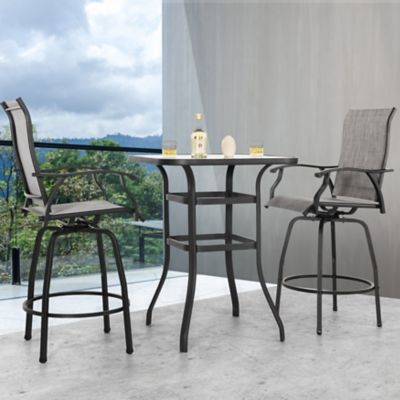
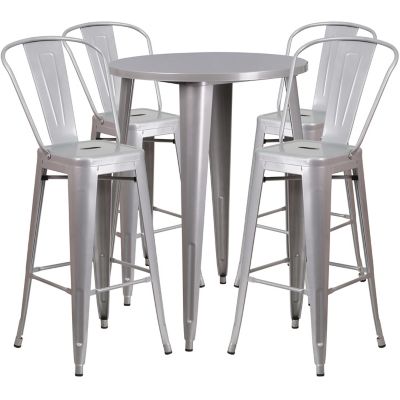
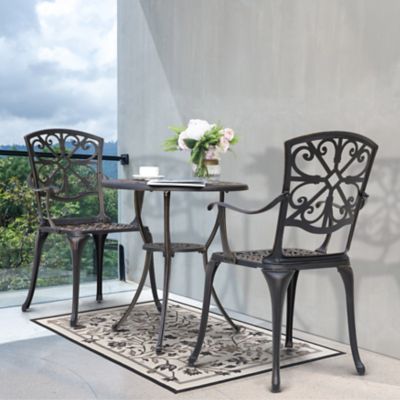
Bar height round tables typically stand 39 to 43 inches tall, with many designs measuring about 40 to 42 inches from the floor to the tabletop. That puts them above standard dining tables and counter height tables, making them a natural match for bar stools rather than ordinary dining chairs. A round top brings everyone toward the center, whether the table holds morning coffee in a farmhouse kitchen, sandwiches in a recreation room, or snacks beside a home bar. With no corners projecting into a walkway, the shape can work well in a smaller nook, though the full footprint still includes stools and room to move behind them. Tabletop diameter helps determine how a setup feels: a surface around 24 to 30 inches across generally suits two people sharing drinks or a light bite, while a round top around 36 to 48 inches across can give a small group more elbow room. Actual seating capacity depends on stool width, table legs, place settings, and anything kept in the center. A pitcher, serving bowl, or game board takes up space that might otherwise hold another place setting. Bar stools often have seats roughly 28 to 33 inches high, but the best match depends on the table’s underside, not just its listed overall height. About 10 to 12 inches between the seat and the underside of the tabletop generally leaves comfortable legroom; an apron or support rail can reduce that space. Counter height stools are usually shorter, so furniture labeled counter height and bar height is not automatically interchangeable. For everyday meals, a footrest and a supportive stool back can make a tall table more inviting. For a quick cup of coffee or a spot to visit while supper finishes, a simpler perch may be plenty. Well-matched proportions help keep the arrangement comfortable without crowding the room.
Materials give round bar height tables much of their character, while also shaping how they handle everyday wear. Solid wood brings visible grain and a substantial feel that fits comfortably alongside plank floors, painted cabinets, or simple country furnishings. Different wood species vary in hardness, and even a hard surface can show dents from dropped keys or scratches from something dragged across it. A protective finish helps, but coasters and placemats still have a place on a hardworking table. Wood veneer offers a real wood surface over a supporting core, while laminate provides a different construction with a surface that can be convenient for wiping away crumbs and small spills. Edges and seams deserve attention on either type, since standing liquid can reach the material underneath. Metal bases can give a tall table a clean, straightforward look, especially when paired with a wood top. Painted or powder-coated finishes add another layer between the metal and everyday contact, although chips and scratches may need attention according to the maker’s directions. Glass tops keep the view through a small room more open, but fingerprints, visible smudges, and the need to protect the edges are part of living with glass. Base design matters just as much as the tabletop. A center pedestal leaves fewer legs around the perimeter, which can make stool placement easier, but a broad pedestal foot may compete with feet and stool legs. Four-leg designs have a more familiar furniture profile, though crossbars and braces can affect knee room. A tall table needs a stable base and level footing; a heavier top alone does not guarantee steadiness. Adjustable feet can help compensate for small differences in a floor when that feature is part of the design. For a porch or patio, an outdoor-rated table is the appropriate starting point, since an indoor finish is not necessarily suited to that setting.
Everyday care is usually less about fuss and more about knowing what the surface can handle. A soft cloth, prompt spill cleanup, and cleaning products approved for the material help keep a round bar table ready for the next meal or gathering. Abrasive pads can scratch finishes, and too much water can work into joints or unsealed edges. Hot serving dishes belong on a suitable trivet, while felt pads beneath tabletop accessories help limit scuffs. Hardware also deserves an occasional check, particularly on a table that gets moved for company or pulled into the middle of a game room. Tight connections and contact with a level floor help prevent rocking, but no table should serve as a step stool or support someone sitting on its edge. In the room itself, enough clearance for a stool to slide back matters as much as the space around the bare tabletop. Roughly 36 inches between the table edge and a nearby wall or furnishing is a common planning starting point, with more space helpful where people need to pass behind seated guests. Door swings, cabinet drawers, and the path from the kitchen to the table can change what fits comfortably. Backless stools may tuck farther beneath the top, while arms and taller backs can remain in the walkway even after everyone gets up. For a coordinated arrangement,
Bar Height Dining Table Sets bring the table and seating together. A round bar height table can serve as a casual meal spot for a smaller household, a place for neighbors to settle in over coffee, or an extra gathering surface near the game on television. For households with young children or anyone who finds climbing onto a tall stool difficult, a lower dining surface may be a better everyday fit. Where the height suits the people and the space, the appeal is straightforward: a comfortable place to pull up a stool, set down a plate, and stay awhile.