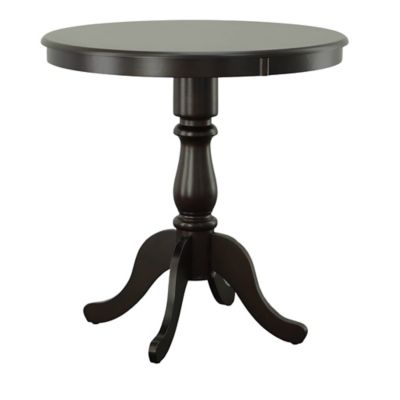
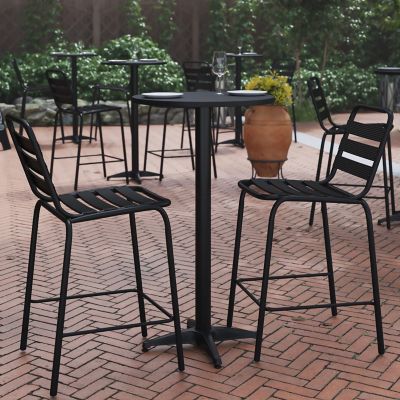
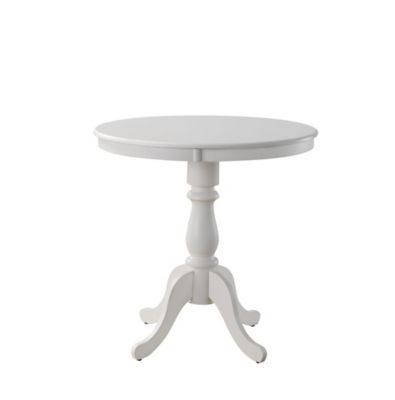
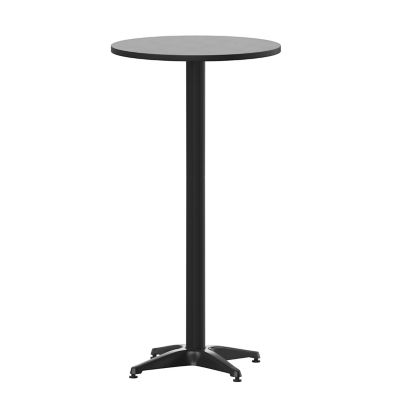
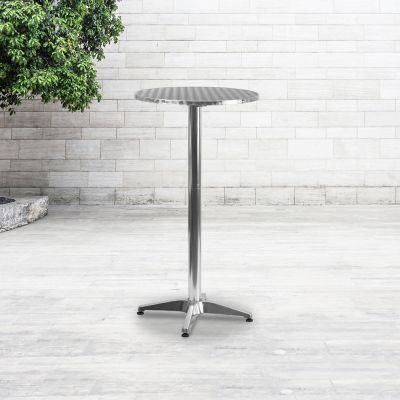
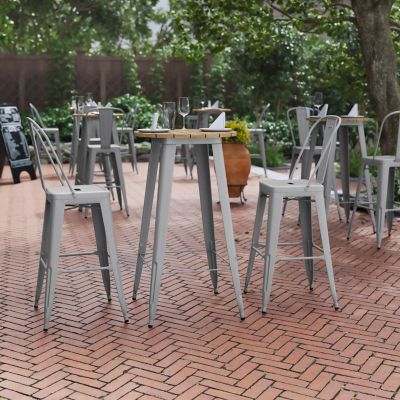
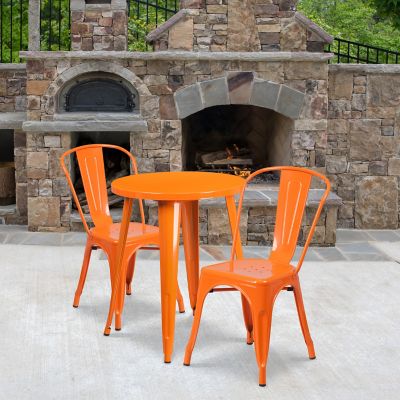
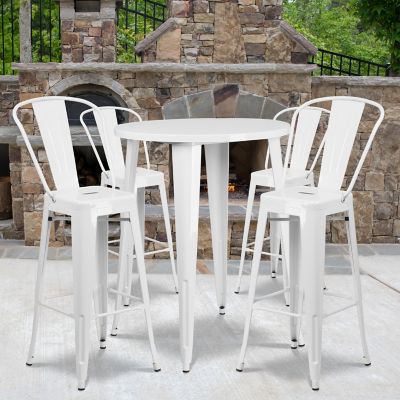
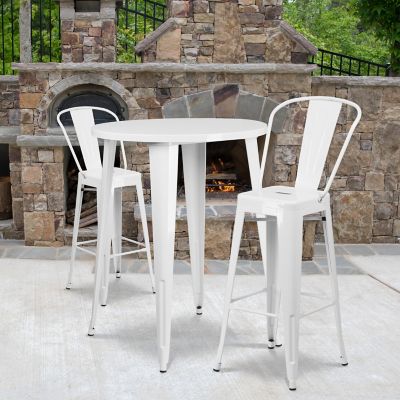
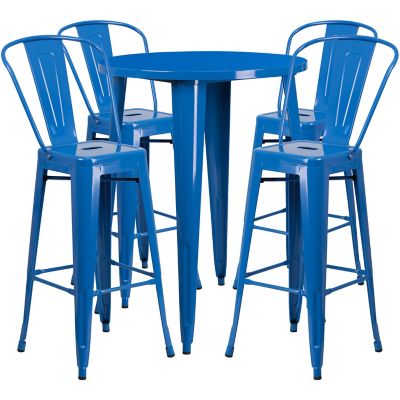
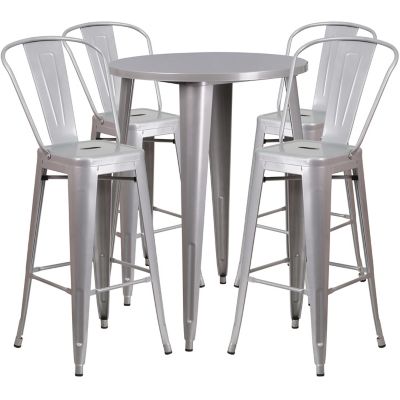
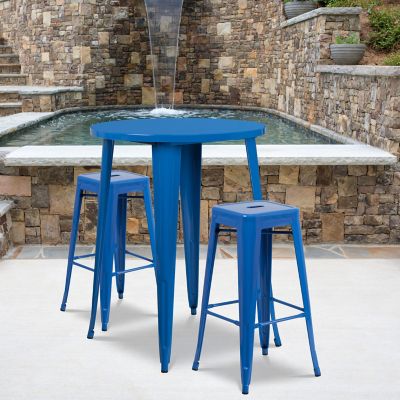
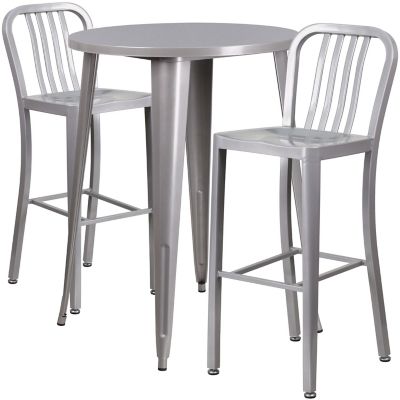
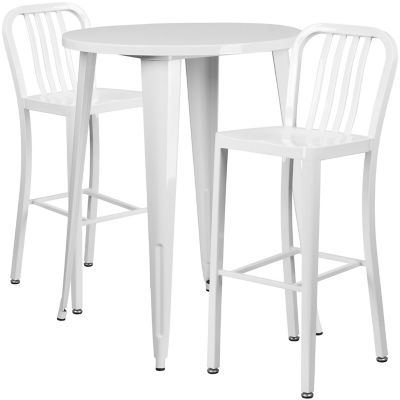
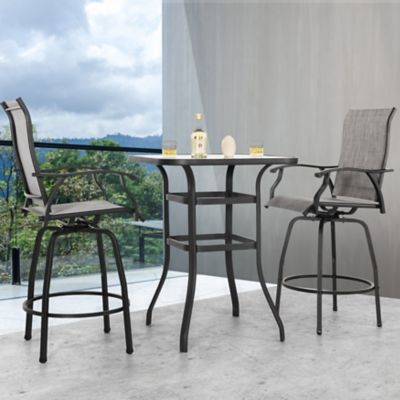
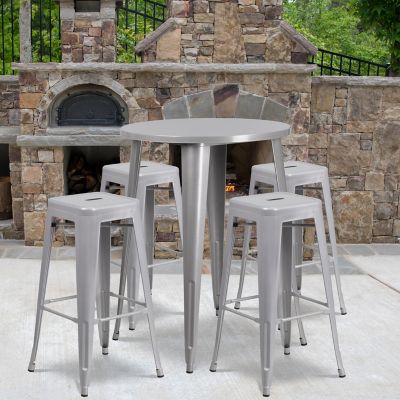
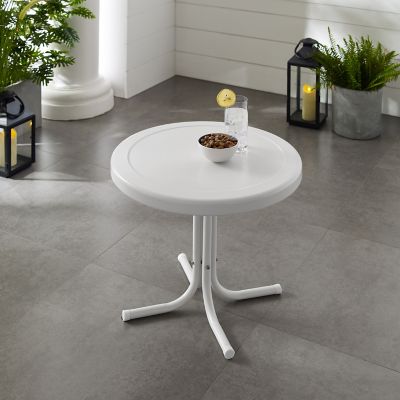
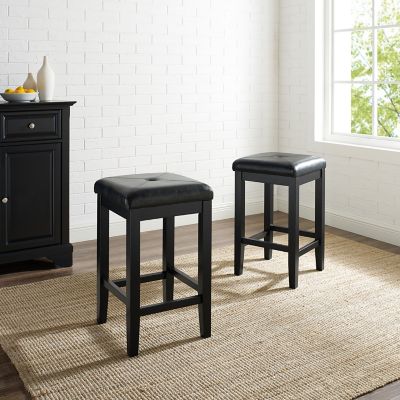
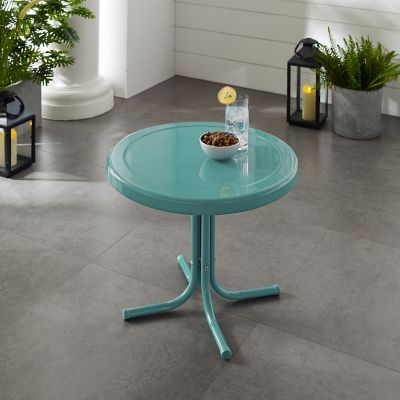
Small round bar tables bring an elevated eating or gathering spot to rooms where a full dining table would take up too much floor space. Many compact round tops measure about 20 to 36 inches in diameter, while true bar-height tables generally stand about 40 to 42 inches tall. Similar tables labeled counter height are usually about 34 to 36 inches tall, so the listed measurements matter more than the name alone. A top around 20 to 24 inches across suits a couple of drinks, a snack plate or a quick coffee break; a 30- to 36-inch top leaves more room for light meals and shared dishes. Seating capacity depends on the base, stool width and how much elbow room each person needs, not just the tabletop diameter. Two seats often make the most comfortable arrangement for a small round table, while some larger tops can accommodate additional seating without crowding. In a farmhouse kitchen, apartment breakfast nook or corner of a recreation room, the round shape keeps corners from jutting into the walking path and lets people face one another naturally. The table’s full footprint still includes its base and the stools around it. A broad pedestal can extend beyond what the tabletop suggests, and stools need room to pull out without blocking a doorway or cabinet. Leaving roughly 36 inches between the table edge and nearby walls or furniture is a helpful starting point, with more space wherever people need to pass behind someone seated. Bar stools commonly have seats around 28 to 30 inches high, though the best match depends on the actual underside of the table. About 10 to 12 inches between the seat and the underside gives knees room, with any apron or support frame taken into account. Backrests, armrests and footrests also affect how the setup fits together. A stool that slides neatly underneath can keep a narrow kitchen passage open between meals, while a backed seat takes more room but offers support for longer visits.
Materials give small round bar tables much of their character, and they also shape the care routine. Solid wood brings visible grain and a familiar feel beside wood cabinets, plank flooring or a well-loved kitchen bench. Grain patterns and color can vary from one board to another, and the finish determines how the surface handles everyday spills and wiping. Veneered and engineered-wood tops can offer a consistent appearance, but edges and seams deserve attention because lingering moisture may cause swelling or lifting. Metal frames suit straightforward spaces such as a shop break room, game room or kitchen corner, especially when the table needs to coordinate with steel shelving or simple stools. A painted or powder-coated finish acts as a protective layer, though chips and deep scratches can expose the metal beneath it. Glass tops have a lighter visual presence in a tight room and make crumbs and rings easy to spot. Where glass is part of the design, tempered glass is worth checking for in the specifications; the edge treatment and attachment points matter, too. Stone and stone-look surfaces bring another set of considerations, including weight, surface sealing where required and the right cleaning products for the material. A table’s staying power comes from the whole build rather than the top alone. Firm joints, a well-supported top and a base that sits evenly help keep an everyday meal from turning into a balancing act. Pedestal bases can free up knee space, while tables with several legs may provide separate openings for each seat. Neither arrangement automatically guarantees stability. Base width, table weight and the way the top attaches all play a part, particularly on a tall, narrow table. Adjustable feet can help on a slightly uneven floor, and floor-safe pads help protect the surface underneath. Assembly hardware needs to be tightened according to the directions, with an occasional check after the table has settled into regular household use.
The best setting for a small round bar table is often an overlooked patch of floor that already sits close to everyday activity. Beside a kitchen window, it can hold breakfast for two without taking over the room. Near a game-room wall, it gives snacks and drinks a landing spot separate from the playing area. In a finished shop lounge, it can make a comfortable place to sit down after chores, provided it stays clear of work equipment and busy walkways. A round top also works well for conversation because no one has to lean around a corner to see the other person. For anyone comparing a compact setup with something that offers more tabletop space,
Bar Height Round Tables provides a related category to consider while keeping the same elevated seating arrangement in mind. The intended use helps narrow down the details that matter: a breakfast spot needs room for plates and mugs, a game-night table benefits from a clear center, and a standing gathering spot may need fewer stools. Built-in shelves or a lower storage area can keep napkins and coasters close, but those features also take up space beneath the top. Tall seating is not the easiest fit for every household member, so a lower eating surface elsewhere may still be important. As a housewarming gift, a small table makes the most sense when the recipient’s room measurements and seating preferences are known. Everyday care is generally simple but should follow the finish instructions. Spills are best wiped up promptly with a soft cloth, while coasters and trivets help limit drink rings and heat marks. Abrasive scrubbers can scratch finishes, and soaking a surface can harm seams or exposed edges. Moving the table by its base rather than dragging it by the top helps protect its connections and the floor. With the right proportions and a little regular attention, a compact round table can earn its place as the spot for morning coffee, a quick supper or a good long chat.