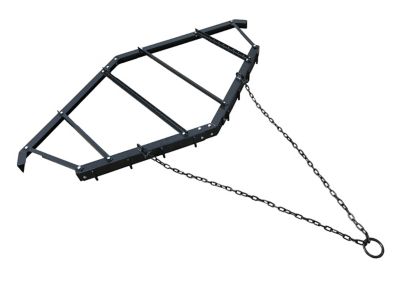
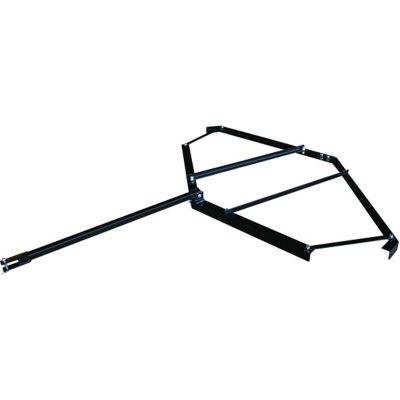
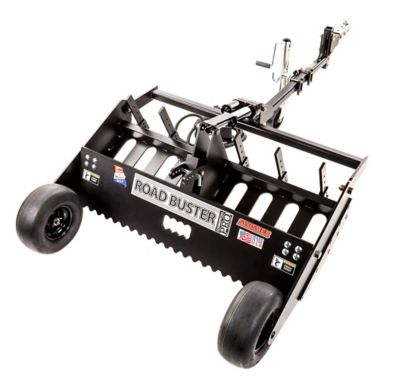
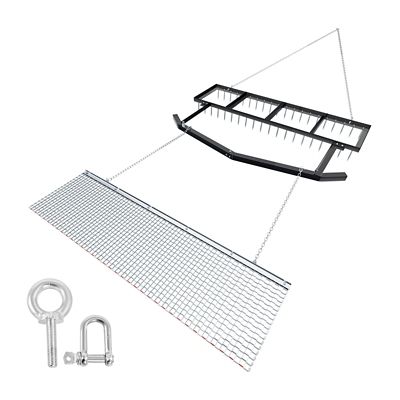
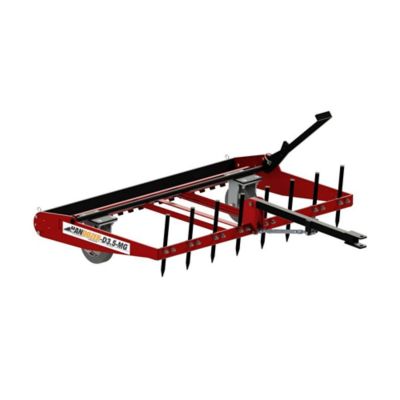
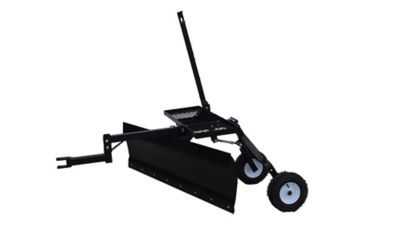
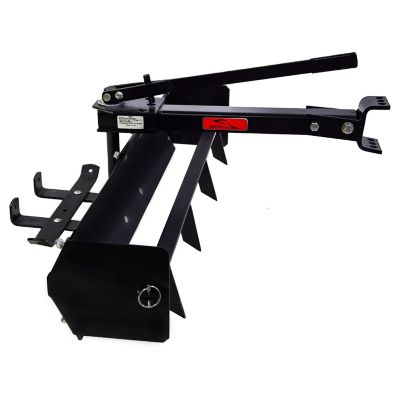
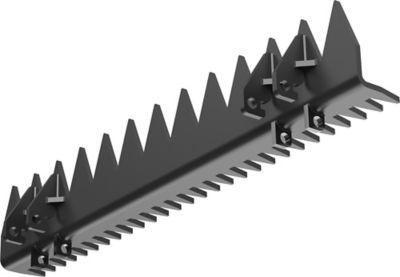
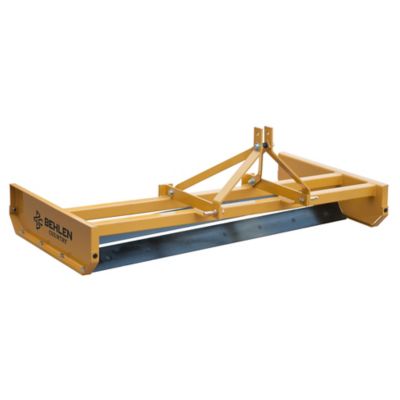
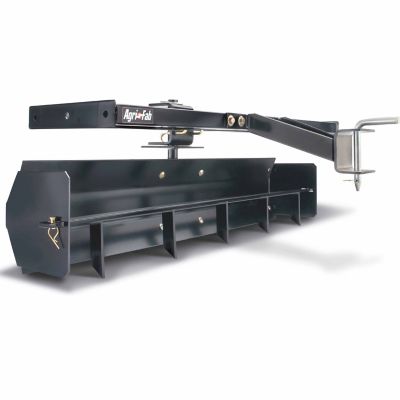
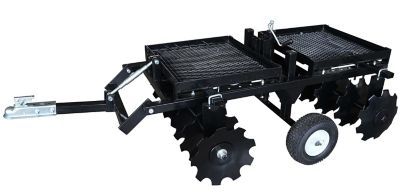
An ATV driveway grader is a tow-behind attachment that loosens and redistributes gravel to smooth washboard ridges, repair shallow potholes and ruts, and help restore the raised center, or crown, of a driveway. It’s meant for unpaved surfaces such as gravel lanes, parking pads, and farm roads, not for scraping asphalt or concrete. The kind of work a grader does depends on what’s touching the ground. Teeth can break up ridges in packed gravel and pull out some shallow-rooted weeds, while blades and leveling bars move loose stone from high spots into low ones and leave a more even surface behind. Think of the ripples that form where vehicles slow down for a gate, or the strip of gravel that builds up between two worn tire tracks. Both are places where there may be enough stone on the lane already; it’s just not where it needs to be. A shallow pothole with a firm rim can take more than a pass with a flat drag. Loose stone may settle into the hole without blending into the gravel around it, leaving the same hard edge for tires to hit. A grader with teeth and depth adjustment can loosen that rim so the fill and surrounding surface can knit together when compacted. On a crowned lane, the center sits a little higher than the sides so water can run off instead of collecting in the wheel tracks. A grader that can shift stone toward the center or follow the slope on either side of the crown gives you more control than one that simply drags flat. Grading can make good use of the gravel that’s already there, but it won’t replace missing stone, fix a soft base, or solve a drainage problem that keeps opening up the same hole.
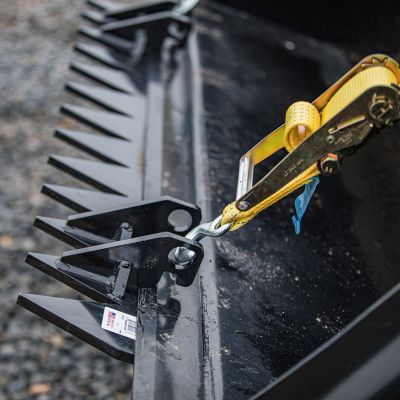
Fit starts with the ATV and the places it can get to. Compare the grader’s hitch style and connection height with the ATV’s setup, and check the vehicle’s towing and tongue-weight limits against the attachment’s working weight, including any ballast the grader is designed to carry. A grader that looks like an easy pull on level ground can put more load on the ATV once the teeth bite into packed stone or the blade starts pushing a ridge of gravel. Working width matters, too. A grader wide enough to reach past the ATV’s tire tracks can cover more ground in a pass, but a narrower frame may leave more room to turn at a fence corner or get through the opening between two gateposts. Two driveways of the same length can call for different setups if one is straight and open and the other bends around sheds or ends at a tight turnaround. Some designs ride on skids or wheels that help control how deep the working edge sits; others let the teeth and leveling edge be set separately. That difference matters on a place with both a packed lane and a parking pad topped with loose stone. Teeth that help break up one surface may dig farther than needed on the other. Steel is common for frames, teeth, and cutting edges, but those parts don’t all wear at the same rate. Gravel bears directly against the teeth and the bottom edge of a blade, so replaceable wear parts are worth a look if the grader will see regular work. Painted or coated steel can help protect the frame from rust, though the finish on surfaces that rub against stone will wear down. A sturdy hitch connection and adjustment points that are easy to reach can matter as much over time as the heft of the frame.
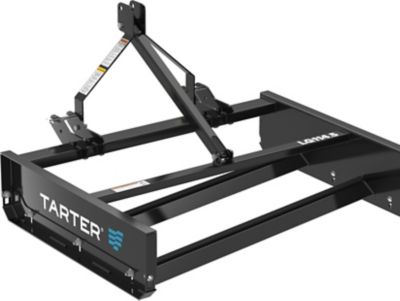
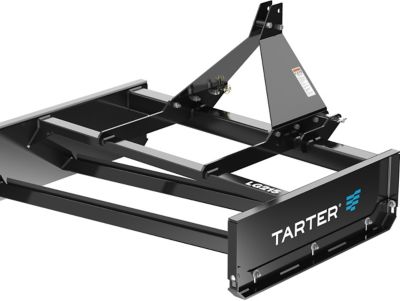
An ATV driveway grader fits the sort of upkeep that comes with a gravel lane to the house, a stretch of road between barns, or a pull-off beside an equipment shed. For a homeowner smoothing the same short drive now and then, a straightforward leveling setup may do the job with little to adjust. Someone looking after several stretches of lane may get more out of a grader that can be set to loosen packed spots in one section and skim loose stone in the next. It’s also worth thinking about the route between those jobs. A way to raise the working edge for transport can keep it from scraping places that aren’t meant to be graded, such as the concrete apron outside a garage. After a pass down a stony lane, clearing gravel and dirt from around the teeth, hinges, and adjustment points makes it easier to spot a bent tooth or a loose fastener before the next job. Cutting edges can wear unevenly, especially when the same side works along a shoulder over and over. Checking that edge and the hitch pin from time to time can help catch wear before it shows up as uneven grading or extra play at the connection. A dry place to park the attachment between jobs helps protect exposed steel, and pivots or adjusters should be cared for as the manufacturer directs. For work that calls for moving more material, cutting a shoulder, or taking advantage of a tractor’s three-point hitch,
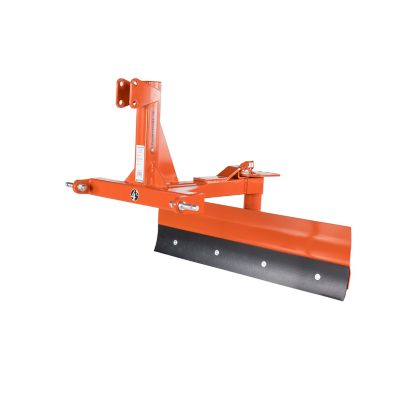
Tractor Rear Blades for Grading offer a different setup. An ATV grader makes sense when the gravel is mostly in place and the work is getting it back out of the tire tracks, off the edges, and into the spots that need it.