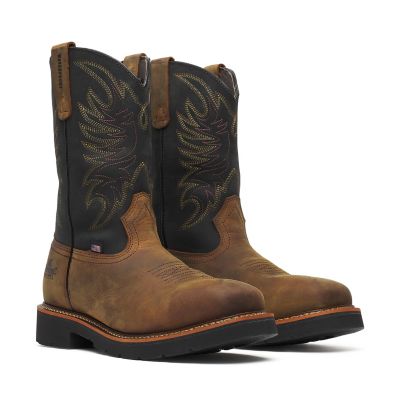
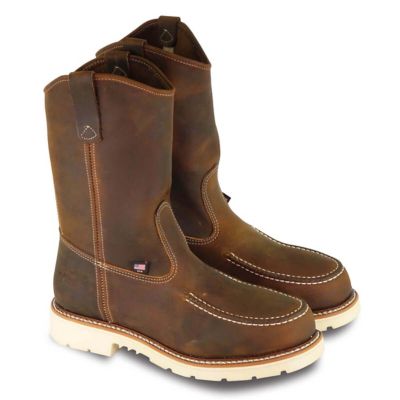
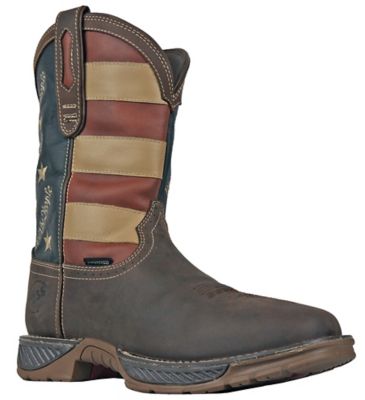
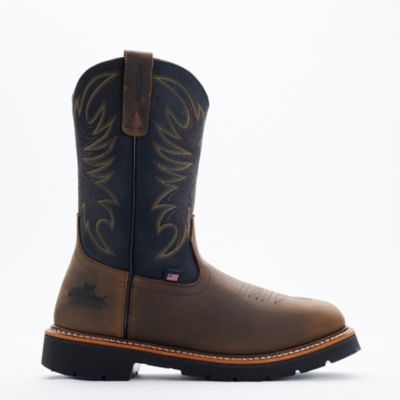
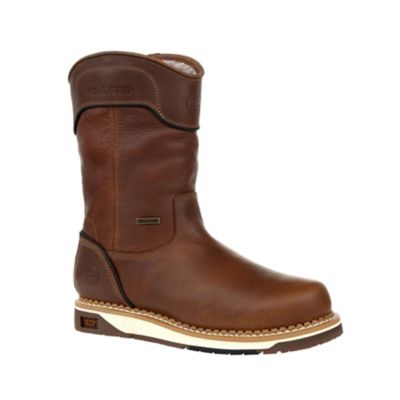
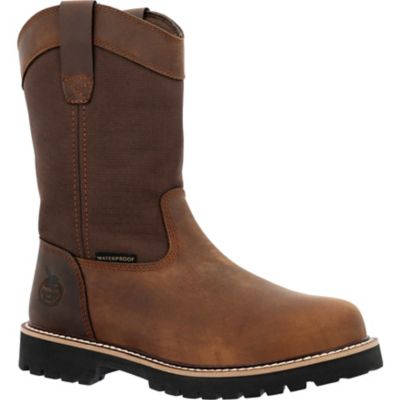
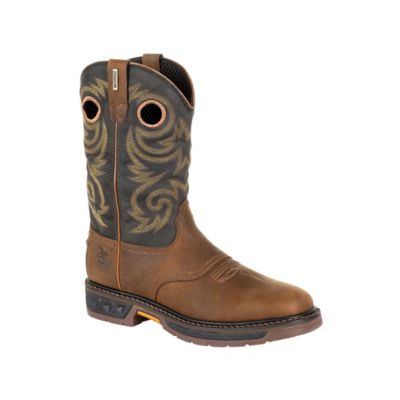
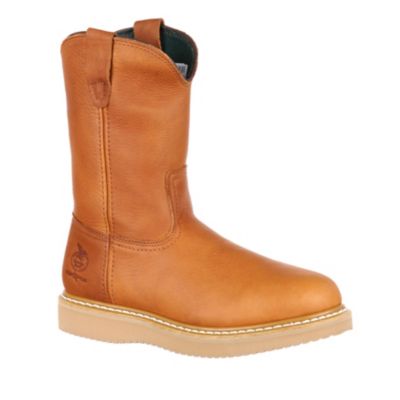
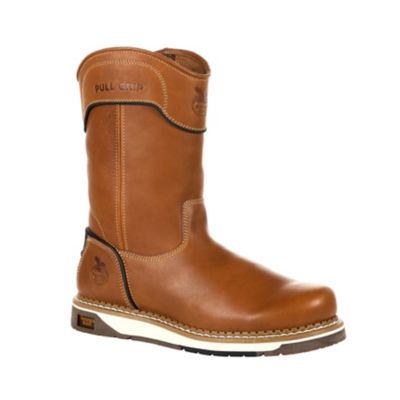
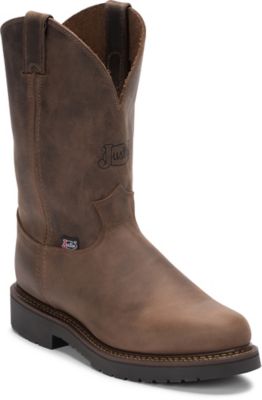
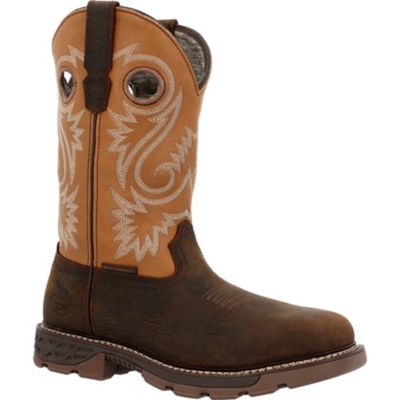
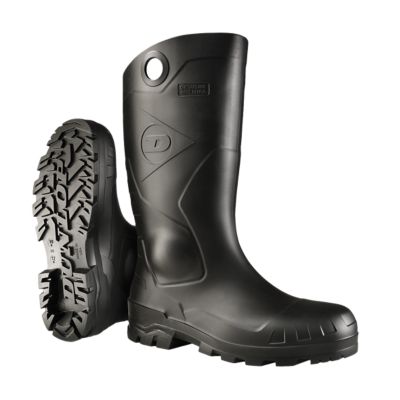
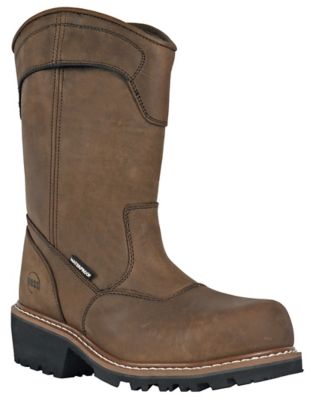
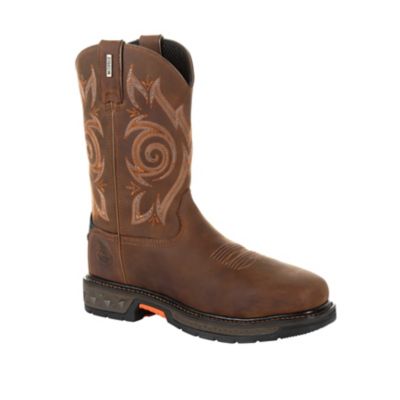
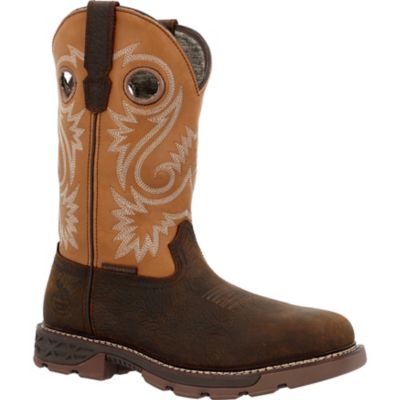
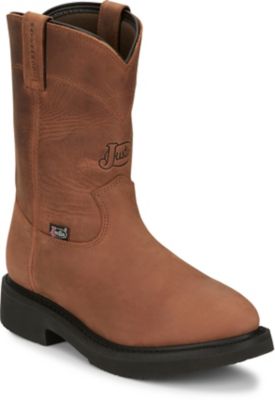
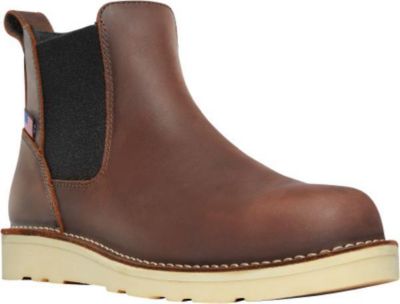
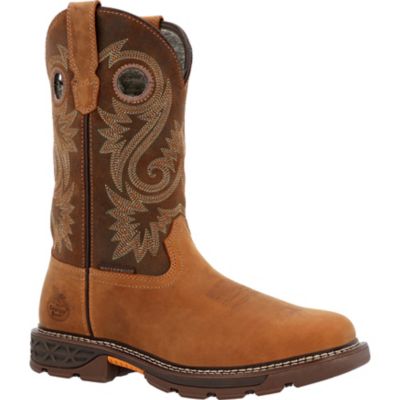
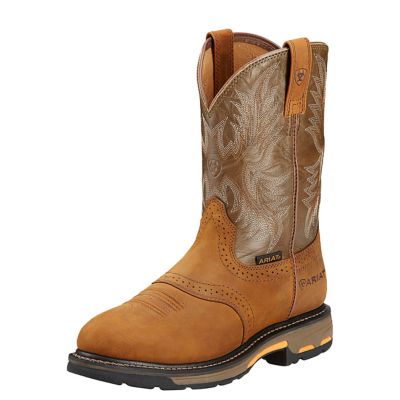
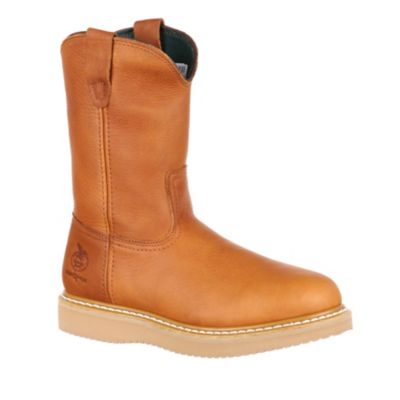
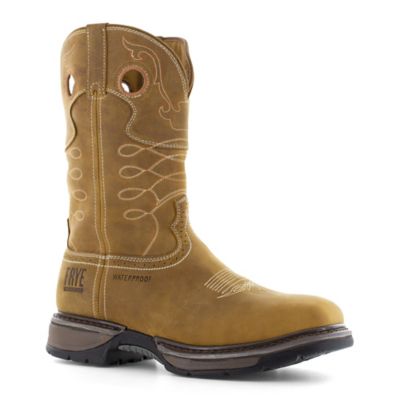
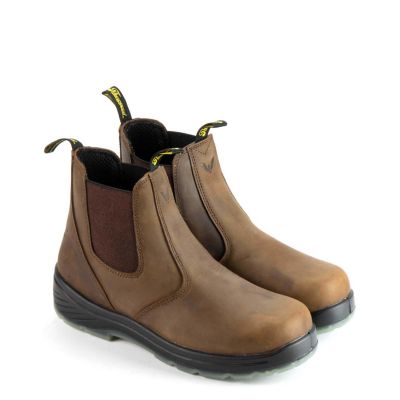
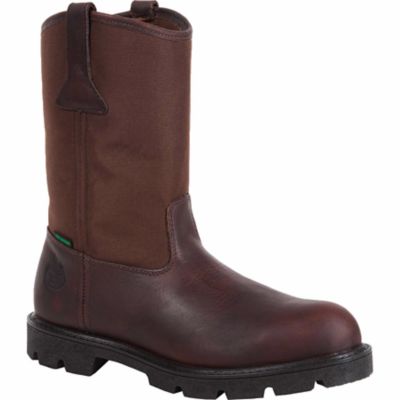
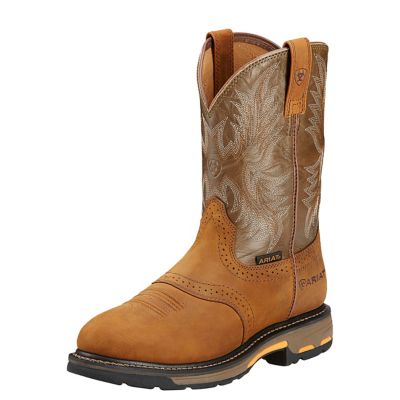
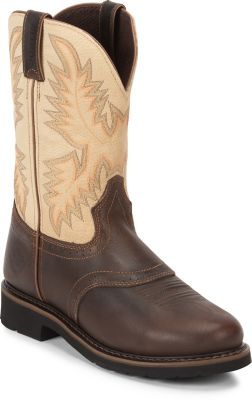
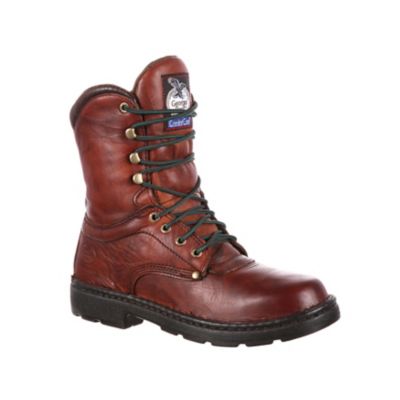
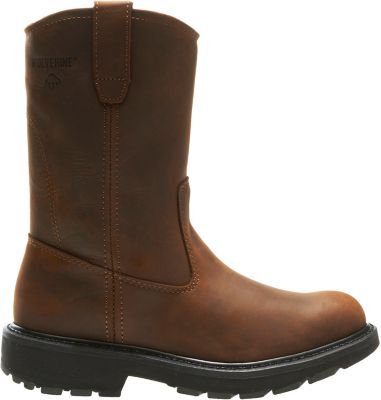
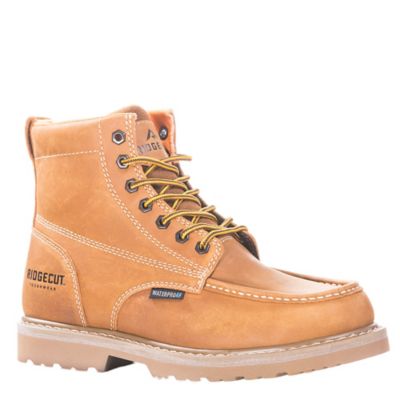
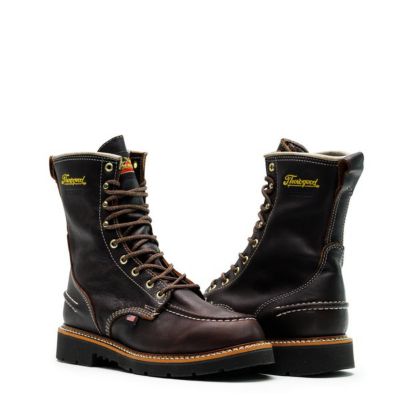
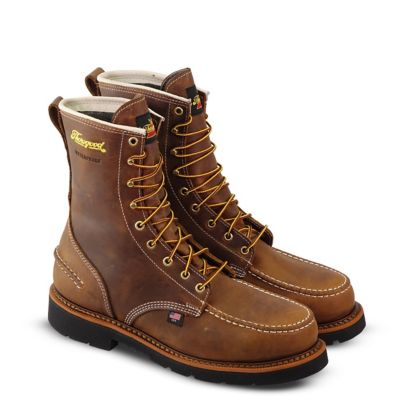
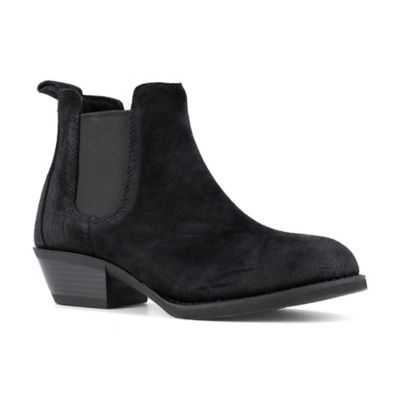
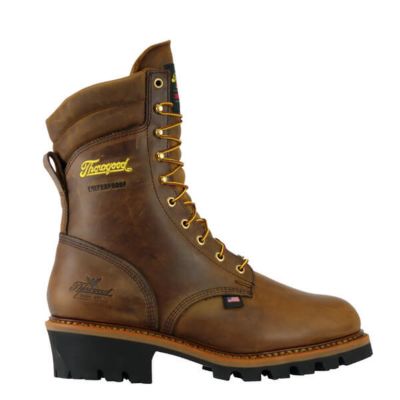
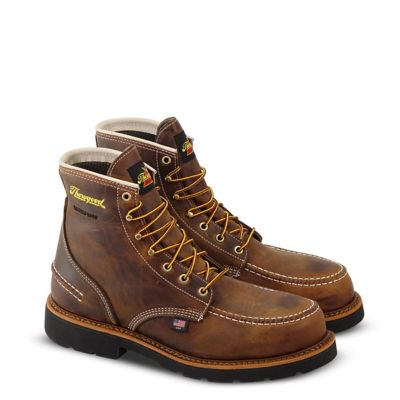
American-made pull-on work boots pair the easy entry of a slip-on design with the substantial build needed for days around the farm, shop, or jobsite. With no laces to tie, they make sense for folks moving between the feed room, equipment shed, and workbench, especially when the day involves putting boots on and taking them off more than once. Wellington silhouettes generally have a straightforward work-boot shape, while rancher styles may bring a taller shaft, a defined heel, and Western stitching. The important differences go deeper than appearance. Leather thickness, outsole design, footbed support, and construction all affect how a pair feels through hours of standing, walking, and climbing. Full-grain leather retains the hide’s outer grain and can develop creases and character with wear; oil-tanned finishes often have a broken-in look and benefit from care suited to their finish. Leather linings, fabric linings, and unlined interiors each feel different against a work sock, so the inside deserves as much attention as the outside. Country-of-origin wording matters, too. An unqualified “Made in USA” claim means the product is all or virtually all made in the United States. A statement such as “Made in USA with imported materials” describes a different sourcing arrangement, so the complete label provides a clearer picture than an American flag graphic alone. Construction details help round out that picture. Welted and stitchdown methods join the upper and sole through different approaches, and some designs allow a worn outsole to be replaced by a boot repair shop. Not every boot can be resoled, and repair options depend on its construction and condition. For ranch hands, mechanics, equipment operators, and property owners, these details connect the look of a boot to the work ahead. A pair meant for walking concrete floors may need a different sole and underfoot feel than one meant for climbing equipment steps or crossing uneven ground around a livestock pen.
Fit is especially important with American-made pull-on work boots because there are no laces to tighten across the instep. A comfortable fit holds the foot through the instep and heel without squeezing the toes or pressing hard across the top of the foot. A little heel movement can be normal in a new pull-on leather boot, but repeated rubbing, substantial lifting, or a foot that slides forward suggests the shape or size is not right. The correct length leaves room for toes to move without making the boot feel loose. Width matters just as much: going longer to make up for a narrow fit can place the ball of the foot out of line with the boot’s flex point. Trying boots with the socks and any orthotic inserts worn on the job gives a better sense of everyday fit. Safety-toe designs also need enough room from the start, since the protective cap will not stretch like leather. Steel and composite toe caps can both provide protection when the footwear meets the applicable safety standard; the marking on the boot, rather than the toe material alone, establishes its rating. Soft-toe boots suit tasks that do not require impact and compression protection, but they are not a substitute where protective footwear is required. Electrical hazard protection is another separate feature, intended as secondary protection under specified dry conditions, not permission to work around energized equipment. Outsoles deserve the same practical attention. Wedge soles spread ground contact across a broad surface and often appeal to workers spending hours on hard floors. Defined heels and more pronounced tread may better suit other tasks, depending on the work surface and workplace requirements. Oil resistance, slip resistance, and puncture resistance describe different properties; none should be assumed from an aggressive-looking tread. Water-resistant leather and waterproof construction are different as well. Around washdown areas or damp livestock alleys, a waterproof membrane or other specified waterproof system may matter more than a leather finish alone. Even then, water can enter over the shaft, and traction depends on the surface and what is on it.
Long service life comes from matching the boot to the task and giving the materials a little attention between shifts. Fine dust, feed residue, manure, and shop grime can collect around seams and welt edges, where a soft brush helps clear them away before cleaning. A damp cloth handles much of the surface dirt on smooth leather, while heavier buildup may call for a cleaner approved for that particular finish. Leather conditioner should suit the leather and be applied according to its directions; too much can leave the surface greasy or change its appearance. Suede and roughout need a different approach from smooth, oil-tanned leather. Boots that become wet during work should dry naturally away from direct heat, with removable footbeds taken out when the manufacturer permits. Keeping the shafts upright helps preserve their shape, and rotating between pairs gives the interiors time to dry between wearings. Small details are worth noticing before the next long day: separating seams, worn heel edges, packed tread, damaged pull loops, or an outsole that has begun to peel away. Uneven wear can change how a boot meets the ground, while a flattened footbed can make a familiar pair feel noticeably different by the end of a shift. Replacement inserts may help when they are compatible with the boot, but they should not crowd the toes or change the fit around a safety cap. For shoppers comparing footwear beyond the pull-on shape, the
American Made Men's Work Boots collection provides a broader starting point. Work boots can also make a thoughtful gift for someone starting a trade, taking on farm responsibilities, or replacing a well-worn pair. Knowing the recipient’s size, width, required safety features, and preferred shaft height matters more than guessing from appearance. The right pair fits the person as well as the work, whether that means standing at a repair bench, checking livestock, or stepping down from a tractor throughout the day.