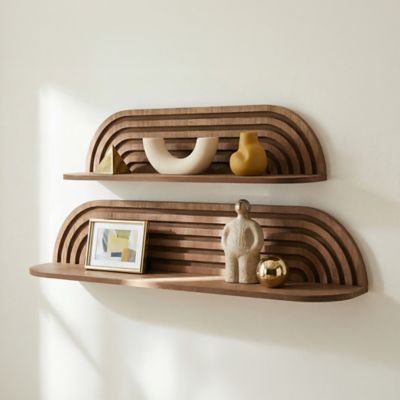
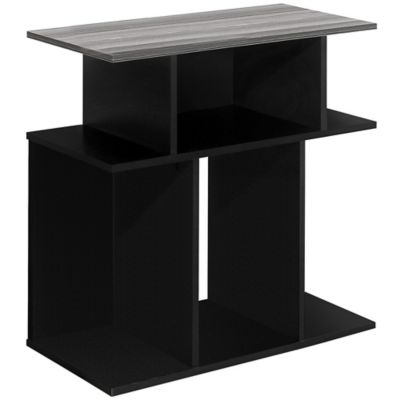
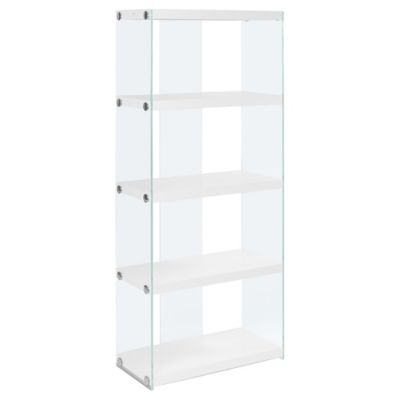
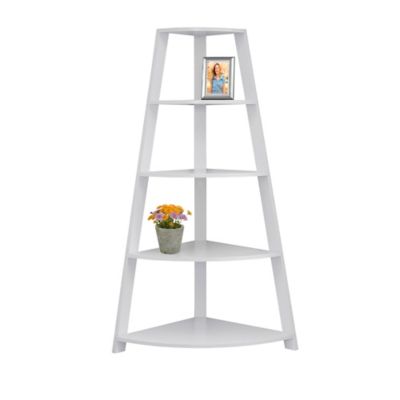
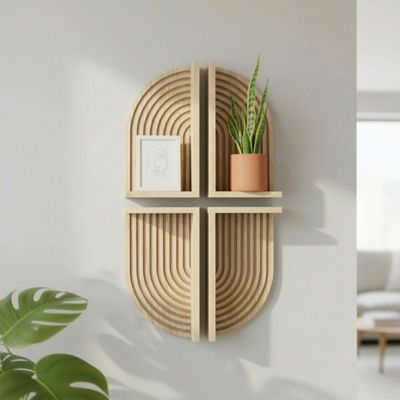
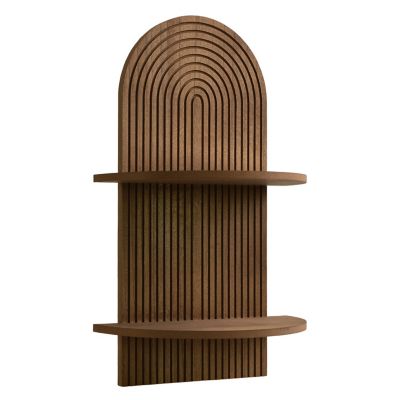
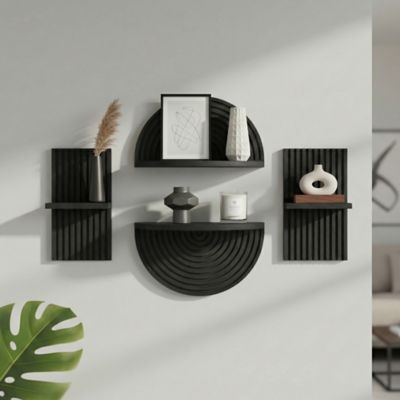
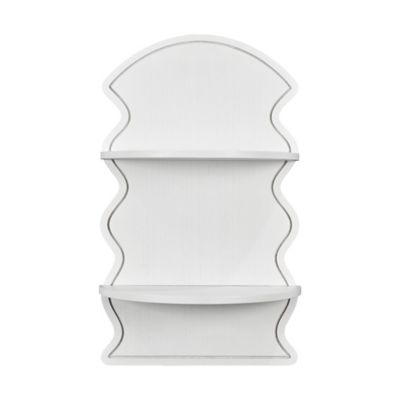
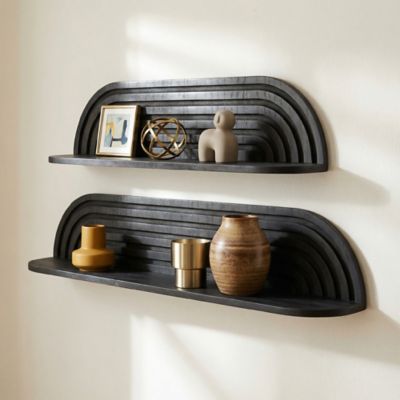
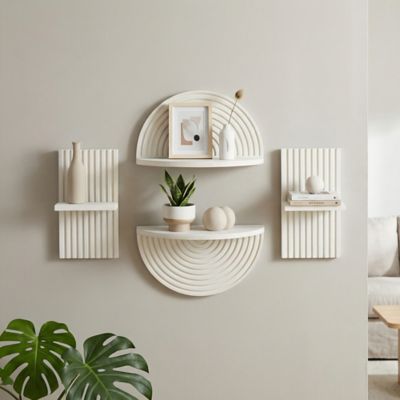
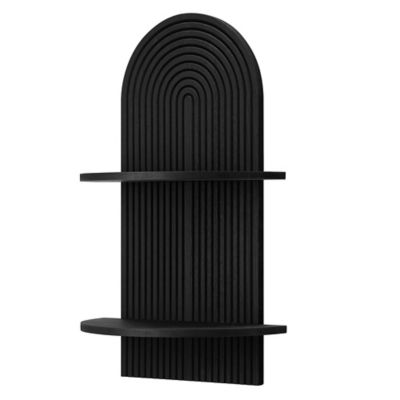
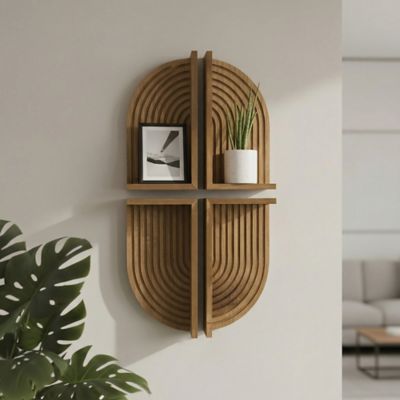
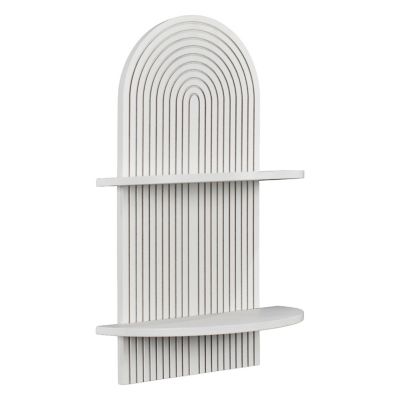
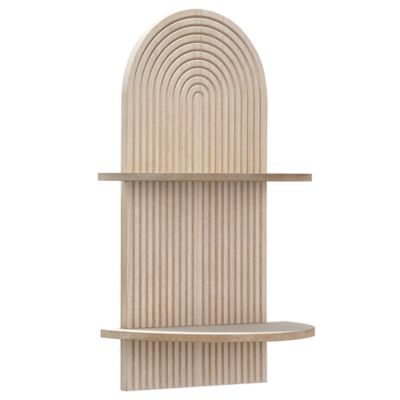
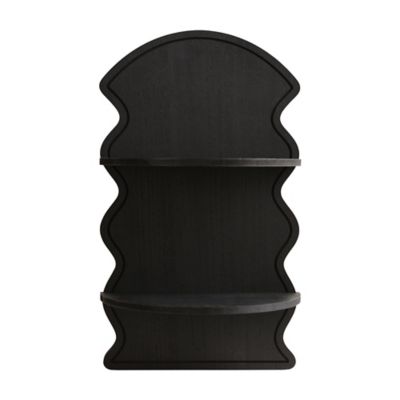
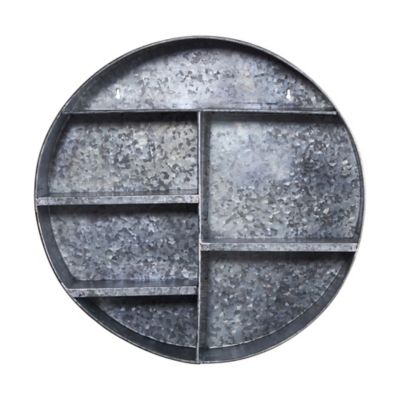
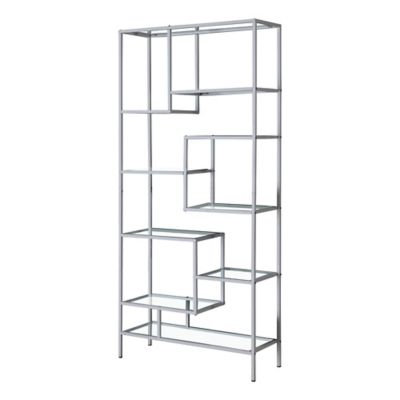
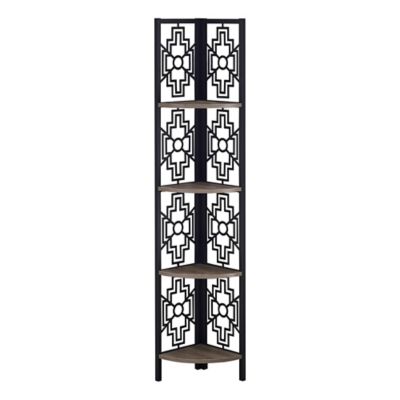
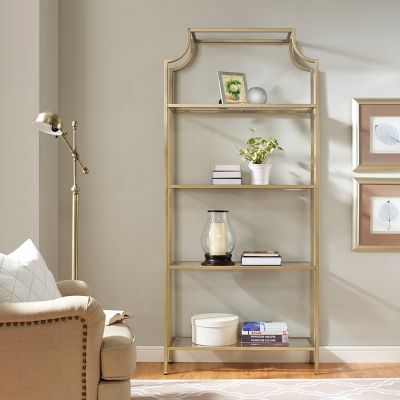
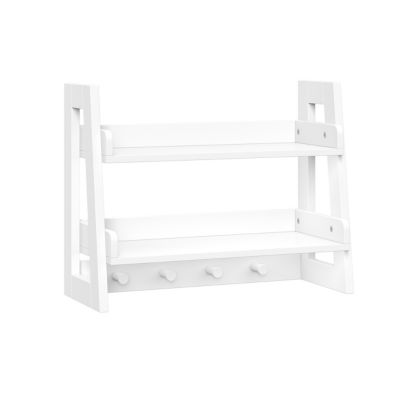
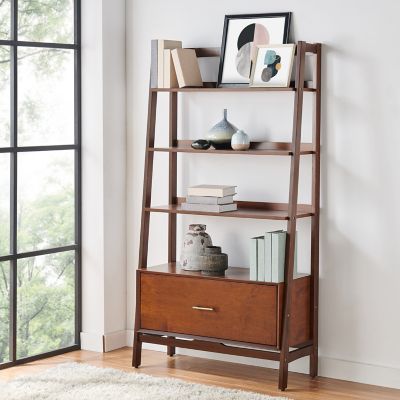
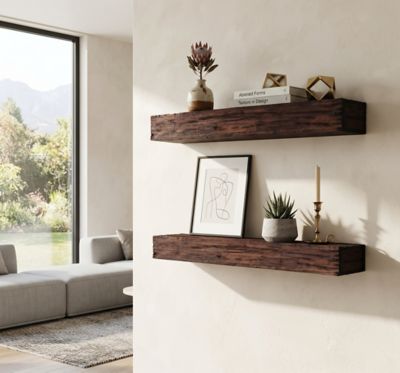
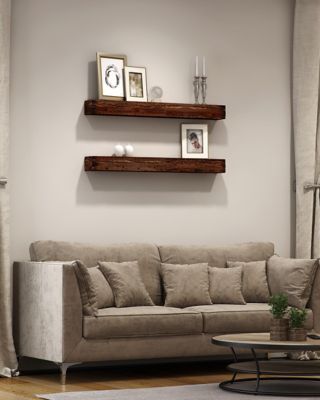
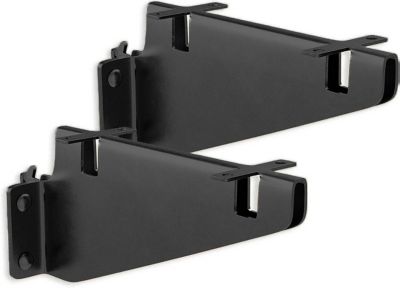
Accent shelves are wall-mounted shelves that give small belongings a place to sit while adding shape, texture, and interest to a room. They’re often chosen for displaying framed photos, keepsakes, small plants, or a short stack of books rather than handling the demands of full-size storage shelving. That makes them a good fit for a farmhouse kitchen, a living room with limited floor space, or an entryway where a few familiar things help the house feel like home. Floating shelves keep mounting hardware out of sight for a clean, simple look, while open brackets bring another material and a little more detail into the picture. Box shapes, intersecting compartments, and round or angular frames can give an otherwise plain wall a stronger focal point. Corner shelves make room for a display where two walls meet, and picture ledges offer a shallow resting spot for artwork and frames, with a raised front edge that helps keep them in place. Materials play a big part in how these shelves look and fit their surroundings. Solid wood brings visible grain and natural variation, with finishes ranging from pale and understated to deep brown. Engineered wood can offer a consistent surface and an even painted or wood-look finish, though exposed edges and moisture resistance deserve attention. Metal frames add crisp lines and pair easily with wood furniture, painted cabinets, and other household finishes. Woven accents bring a softer texture, especially alongside baskets or upholstered seating. In a home with plenty of knotty wood and sturdy furniture, a straightforward shelf can fit right in without competing for attention. A more open design can keep a small room from feeling crowded. Matching every finish isn’t necessary; repeating a wood tone, frame color, or simple shape can help the shelf look settled into the room. The best fit depends as much on what surrounds the shelf as on the shelf itself, including wall color, nearby trim, furniture height, and the belongings it will hold.
Size and placement make the difference between an accent shelf that earns its spot and one that gets in the way. Width matters, but depth is often the measurement that determines everyday fit. A shallow ledge may suit family snapshots above a bench, while a deeper shelf gives a small planter or a few books more room to sit fully supported. In a hallway or beside a doorway, a shelf that projects too far can crowd the walking path, especially when folks are carrying laundry or groceries. Above a desk, dresser, or kitchen counter, the space beneath the shelf needs to leave room for the work that happens there. Multiple tiers also need enough clearance between them for taller belongings, not just enough space to look balanced on an empty wall. Weight capacity is another practical consideration, since a row of hardback books or a watered plant can weigh more than it first appears. The shelf’s stated load limit, bracket design, mounting method, and wall construction all matter; a thick board alone doesn’t tell the whole story. Mounting hardware must suit the wall material and the manufacturer’s directions, and some installations call for fastening into wall studs. Hardware included with a shelf may not suit every wall. For homes with children or pets, secure mounting and placement away from climbing routes deserve particular attention. Heavy or breakable belongings are often better kept on lower, sturdier surfaces rather than overhead. Shelves near seating should leave comfortable headroom, and shelves above beds need especially careful consideration of what they hold and how they’re secured. Bathrooms and laundry areas bring another concern: moisture. A shelf intended for dry indoor rooms may not handle repeated dampness, and a wood-look surface doesn’t automatically mean water resistance. Material and finish details help determine whether a shelf belongs beside a sink, over a writing desk, or along a quiet living room wall. Those details matter more than simply filling an empty patch of space.
Once the size and construction suit the room, accent shelves offer plenty of room for personal touches without taking over the house. A few family photos beside a small crock can feel right at home above a dining bench. In a reading corner, a short row of books and one framed print can keep favorite things close without crowding the chair below. An entryway shelf can hold a small catchall for everyday essentials when its depth and weight rating allow, while a shelf in a guest room gives visitors a little space for personal belongings. Leaving some open space around a display makes individual pieces easier to see and gives hands room to lift them without bumping a neighboring frame. Taller belongings tend to sit more comfortably where they won’t hide everything behind them, and a mix of heights can keep a long shelf from looking like a straight row of odds and ends. Plants need a little extra thought: suitable light, a stable pot, and protection against drainage or condensation help protect both the shelf and the wall. Care depends on the materials and finish, but regular dusting with a soft cloth helps keep corners, brackets, and shelf edges tidy. Cleaning directions matter for painted surfaces, wood veneers, and metal finishes, since strong cleaners or soaking can leave marks or damage edges. Spills are best wiped away promptly, with the surface dried afterward. Mounting points and brackets also deserve an occasional check, particularly after rearranging the display or adding weight. Accent shelves can make a thoughtful housewarming gift when the recipient’s wall space, style, and mounting needs are known. For rooms that need a different layout or more storage space,
Interior Shelves offers a broader category to consider alongside smaller display-focused designs. A shelf that fits the wall, supports its contents, and feels at home with the furniture can become a useful part of daily life rather than just another thing to work around.