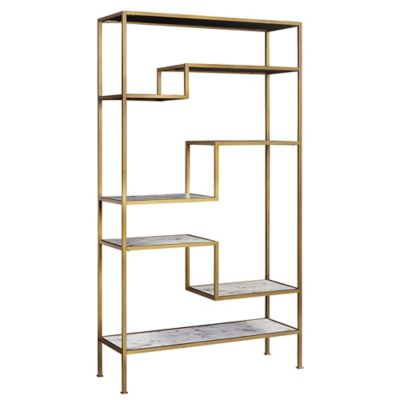
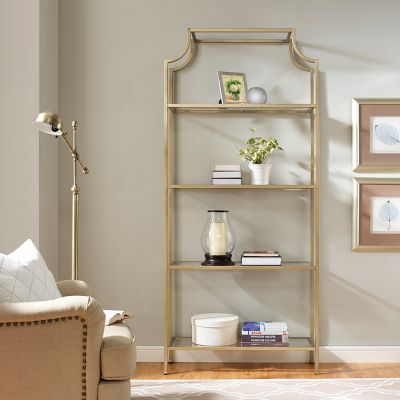
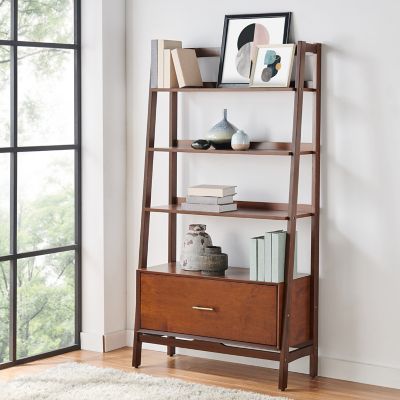
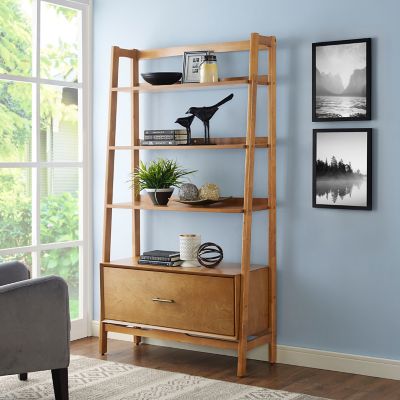
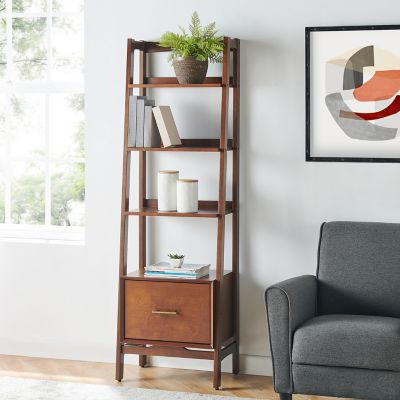
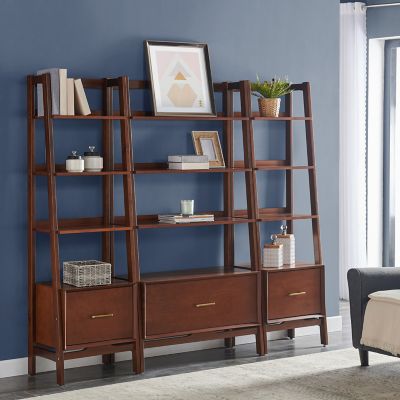
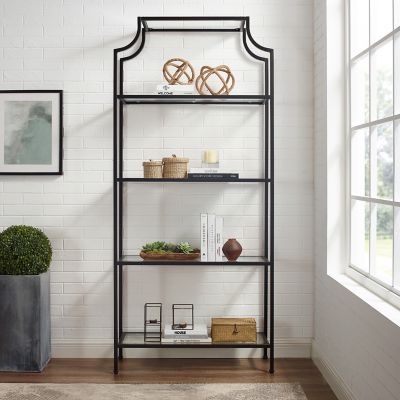
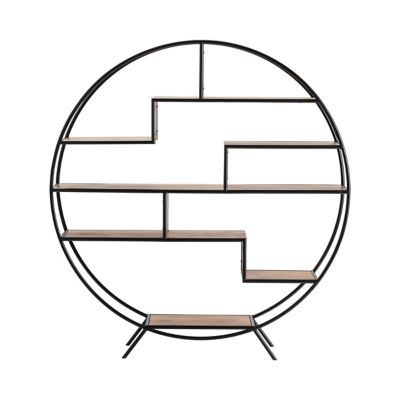
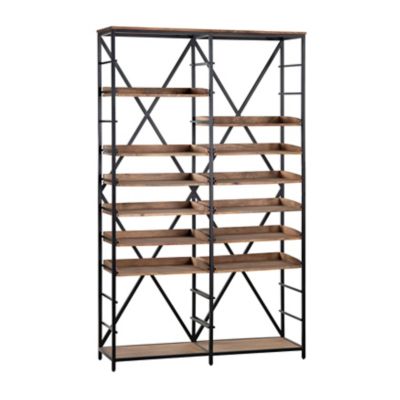
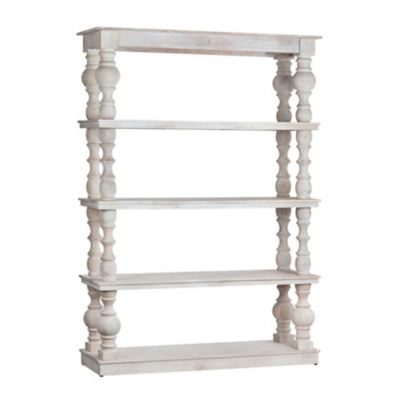
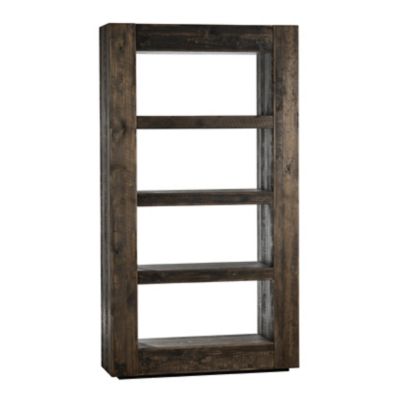
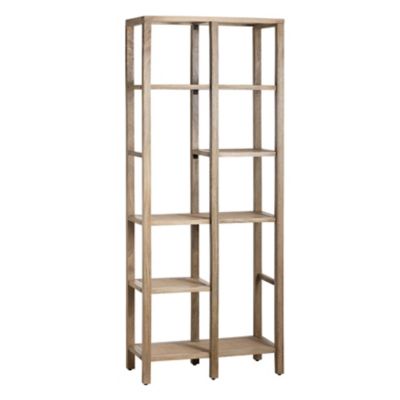
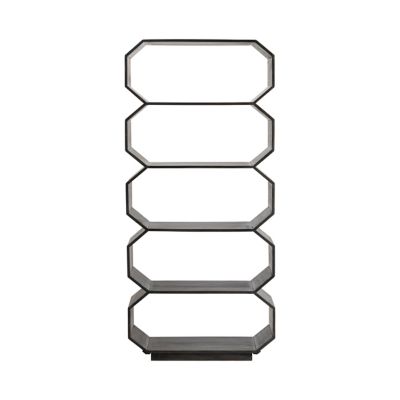
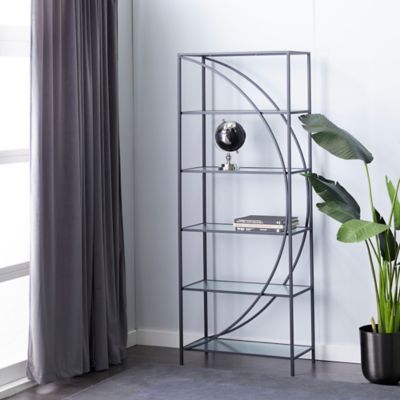
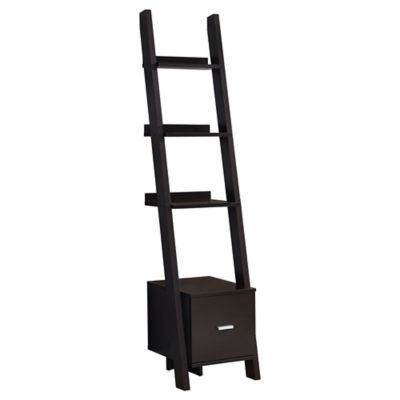
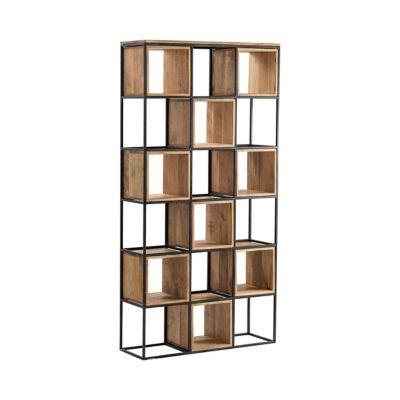
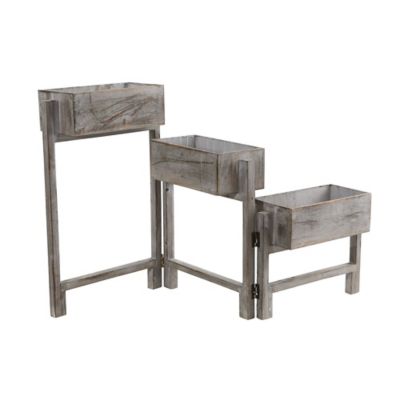
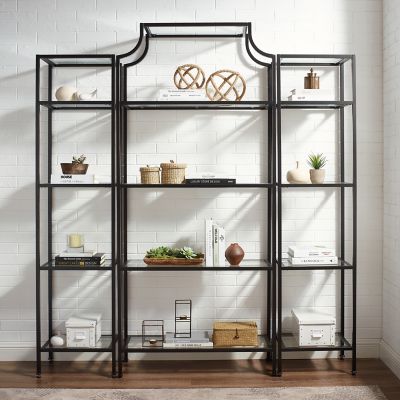
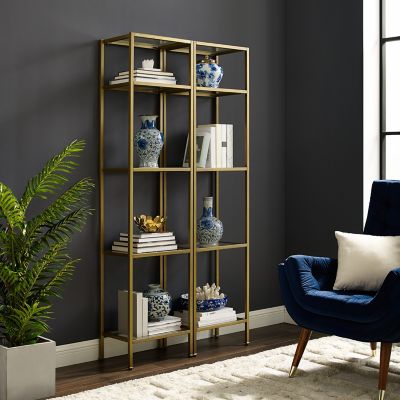
Etagere shelves are freestanding, open shelving units with two or more tiers for displaying belongings and keeping everyday essentials within reach. Most have open backs and sides, with a frame that leaves books, plants, pottery, and framed photographs visible rather than tucked behind cabinet doors. The style traces its roots to 18th-century France, but its appeal is straightforward in any home: it adds shelf space without the visual weight of a fully enclosed bookcase. In a farmhouse living room, a small apartment, or an office just off the kitchen, that open construction lets the wall behind the shelves remain part of the room. Etagere shelving often has a lighter-looking frame than a traditional bookcase, though appearance alone says nothing about how much weight it can support. Materials help set both the look and the practical limits of the piece. Wood shelves bring grain and warmth alongside a plank table or a well-loved reading chair, while metal frames can complement simple hardware and clean-lined furniture. Glass shelves allow light to pass through and give smaller displays a less crowded appearance, but fingerprints and dust tend to show readily. Engineered wood offers another construction option, with surface finishes and edge treatments that affect how it handles daily contact and spills. Mixed-material designs pair different surfaces, such as wood shelves with a metal frame, for a balance of warmth and structure. Finish matters, too: a textured surface may be less likely to show small marks, while a smooth, glossy finish makes smudges more noticeable. Straight uprights, arched tops, and stepped profiles give these open shelves different shapes without changing their basic purpose. The best match is a piece whose construction, shelf layout, and finish suit both the room and the belongings it will hold, whether that means a few family keepsakes or a practical mix of reading material and baskets.
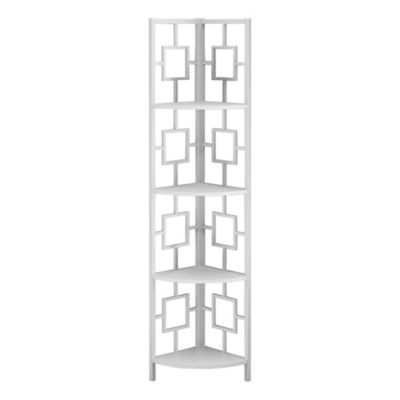
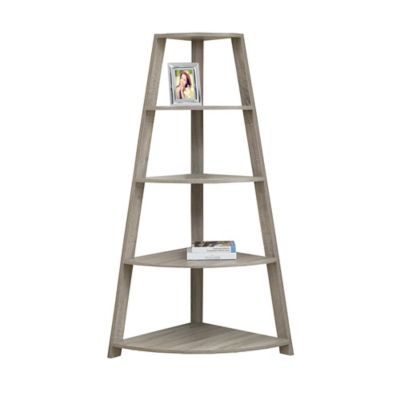
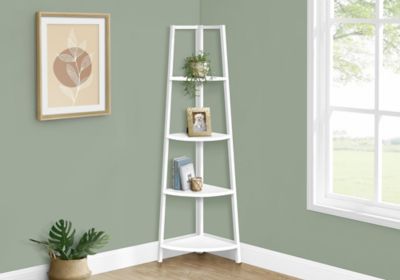
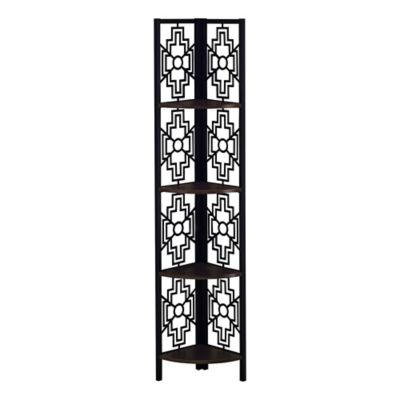
A good fit starts with the entire space around an etagere, not just the patch of floor beneath it. Height, width, and depth all matter, especially beside a doorway, along a narrow hall, or near a chair that needs room to pull out. A tall, shallow frame can add storage along a small wall, while a wider unit may sit more comfortably beside a sofa or across an open stretch of room. Corner etagere shelves can make something of an overlooked nook, provided the footprint clears nearby trim and furniture. Baseboards can keep a frame from sitting flush against the wall, and outlets, switches, and air vents should remain accessible. Shelf spacing deserves as much attention as overall dimensions. A tall pitcher, a framed photograph standing upright, and a row of hardbacks each need different clearance. Fixed shelves establish a set arrangement; adjustable shelves, where offered, provide more flexibility as storage needs change. On tapered designs, upper shelves may be shallower than lower ones, so measurements at the base do not tell the whole story. For baskets, allow enough space to grasp the sides or handles and lift them out without scraping the shelf above. Weight limits are another important distinction. Check both the rating for each shelf and any overall limit, since a row of books or a large ceramic planter can weigh more than its size suggests. A load rating may also depend on weight being spread evenly across the surface. Heavier belongings belong lower down, with lighter displays above, while the entire unit should stand level with all feet firmly supported. Assemble and anchor shelving according to the manufacturer's directions, using hardware appropriate for the wall construction. Open shelves can attract climbing children and curious pets, making proper anchoring especially important. Even a frame that feels steady when empty needs careful setup before it becomes part of a busy household.
The everyday usefulness of etagere shelves comes from keeping the arrangement easy to live with. Near a reading chair, lower shelves can hold books while an upper tier gives a photograph or small piece of pottery some breathing room. In an entryway, baskets can gather mail, leashes, and other loose belongings without leaving everything on display. In a home office, open tiers can keep reference books close at hand, with containers grouping smaller supplies. A dining area may benefit from space for serving pieces, as long as each shelf can carry the load and frequently handled belongings sit at a comfortable height. For spaces where sorting and quick access matter more than display,
Organizer Shelves provide another shelving category to consider. Etagere shelving works especially well when there is a balance between storage and open space: a tightly packed frame can lose the airy look that makes this style appealing. Grouping a few belongings together and leaving clear stretches of shelf also makes cleaning less of a chore. Care depends on the materials, so the manufacturer's cleaning directions should come first. A soft cloth is a sensible starting point for routine dusting; harsh scrubbers and unsuitable cleaners can damage finishes. Wipe spills promptly, avoid leaving moisture along engineered-wood edges, and keep cleaning liquid from pooling around joints. Glass surfaces need a cleaner approved for the shelf and any surrounding finish. Felt pads beneath pottery can help limit scratches, while watertight saucers beneath plants help protect shelves from watering spills. An open frame does not make a shelving unit suitable for a porch or other outdoor setting unless it is rated for that purpose. With regular attention to joints, fasteners, and surface care, etagere shelves can remain a useful part of the room for years. They can also make a thoughtful housewarming gift when the recipient's space, storage needs, and preferred finishes are known, giving favorite belongings a place to land without taking over the room.