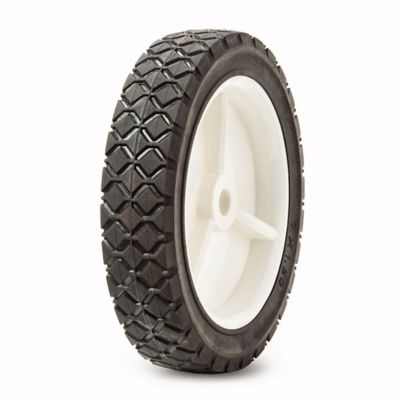
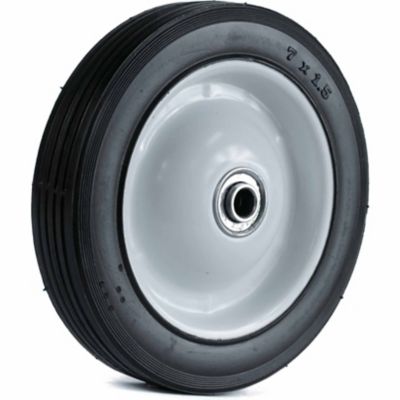
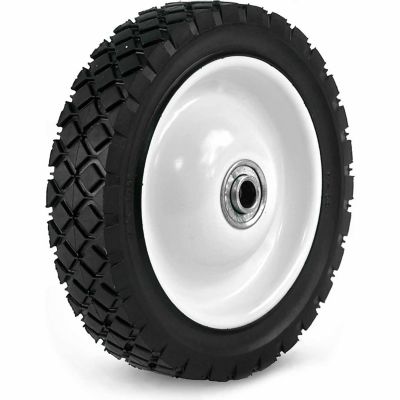
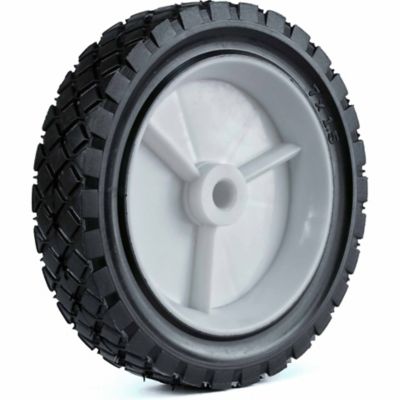
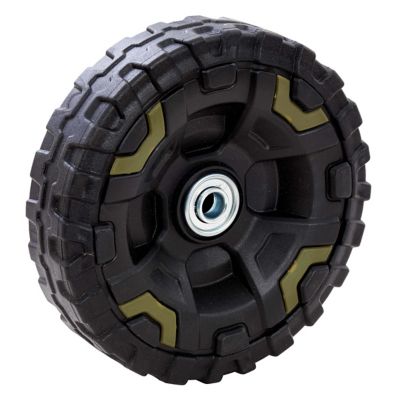
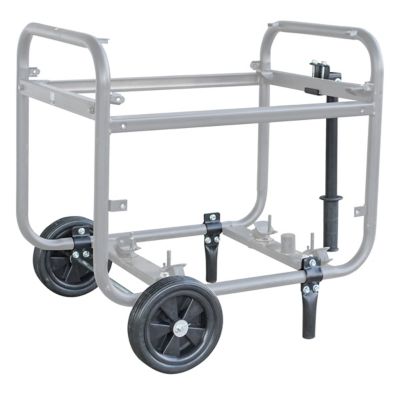
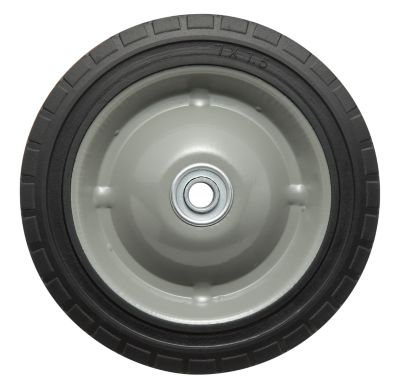
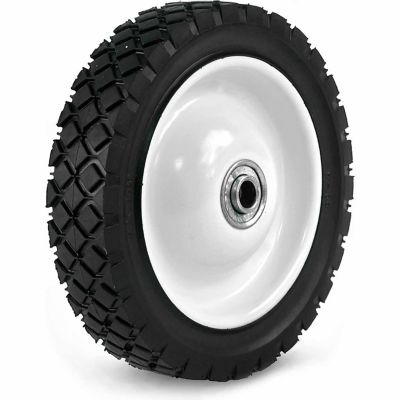
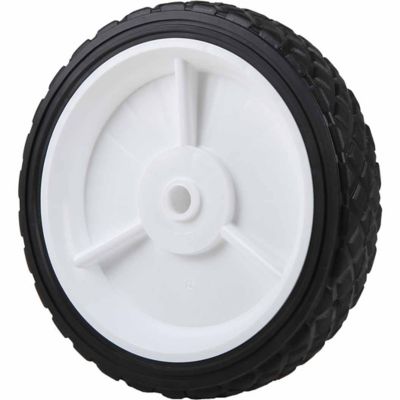
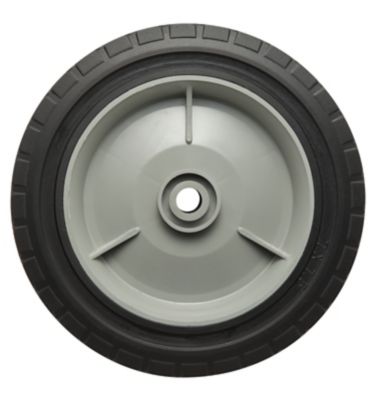
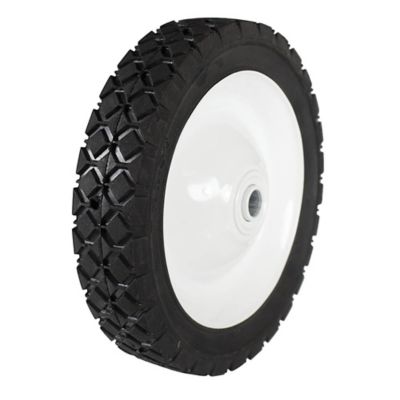
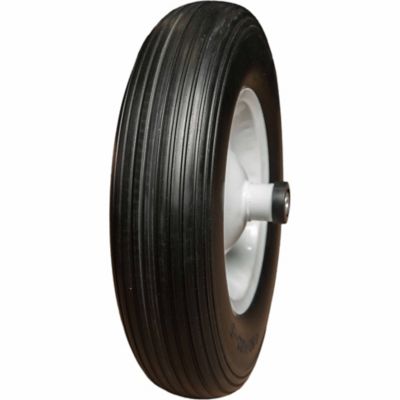
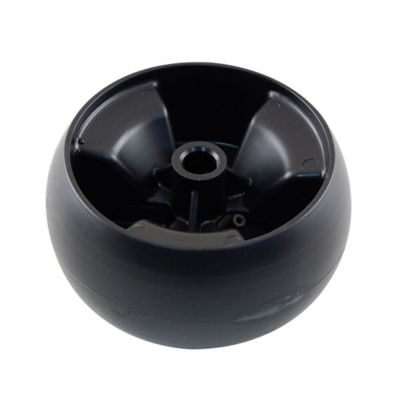
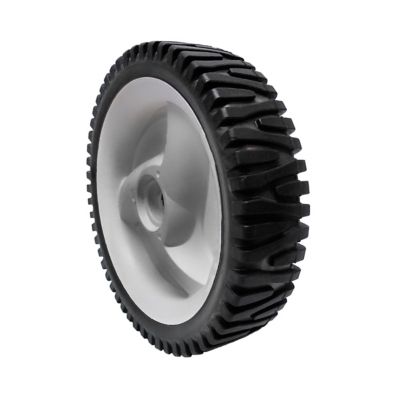
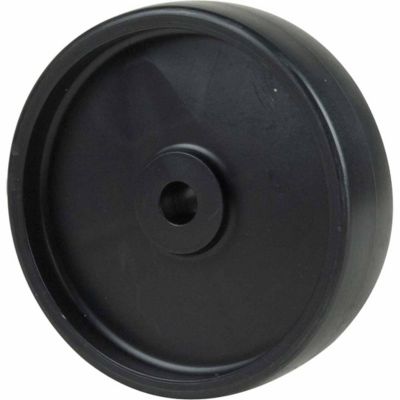
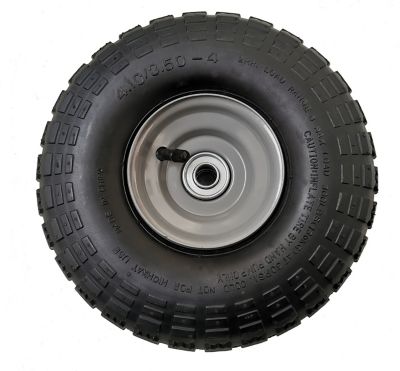
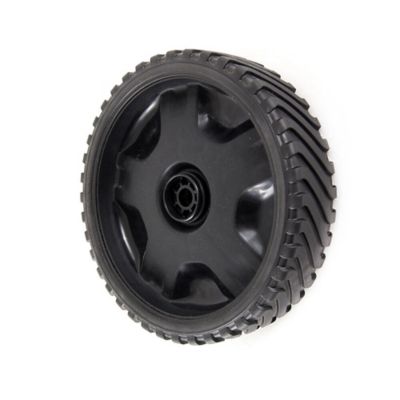
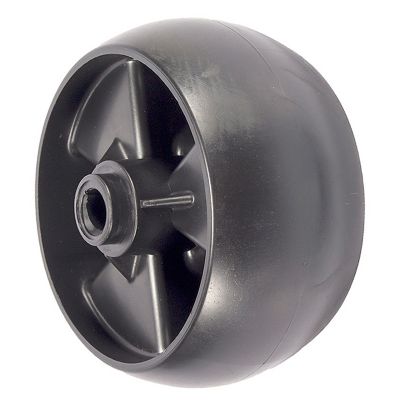
A 7-inch wheel can make a big difference when a mower drags across the yard or a small cart rattles its way out of the shed. Common on compatible walk-behind lawn mowers, utility carts and other light-duty rolling equipment, these wheels help keep everyday chores moving without replacing the whole piece of equipment. The 7-inch measurement generally refers to the outside diameter of the complete wheel, including its tire or tread, rather than the hub alone. That diameter is only part of the fit, though. Wheel width, axle bore, hub length and hub placement all affect whether a replacement sits where it belongs and turns freely. The axle bore is the opening through the center of the wheel; it needs to match the equipment’s axle or mounting bolt. Common small-equipment bore sizes include 3/8 inch and 1/2 inch, but the equipment specifications determine the right match. Hub length describes the distance across the hub along the axle, which affects the space needed between the frame and the retaining hardware. A centered hub places the mounting section more evenly within the wheel, while an offset hub extends farther to one side. That difference matters beside a mower deck, cart frame or support bracket, where even a small change can leave a tire rubbing instead of rolling. For homeowners keeping a push mower going, folks tending a garden or anyone maintaining chore equipment around a small acreage, a properly matched replacement wheel can bring back smoother handling. It can also help equipment track more evenly when the original wheel has a cracked hub, worn tread or a wobble at the axle. A wheel that looks close from across the workbench may still have the wrong mounting dimensions, so the original equipment specifications and the replacement wheel’s listed measurements are more useful than appearance alone. Matching those details helps preserve the clearance and operating position the equipment was built to have.
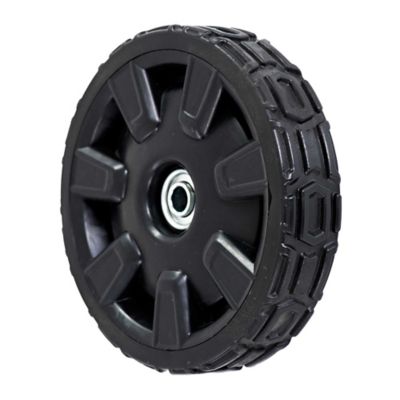
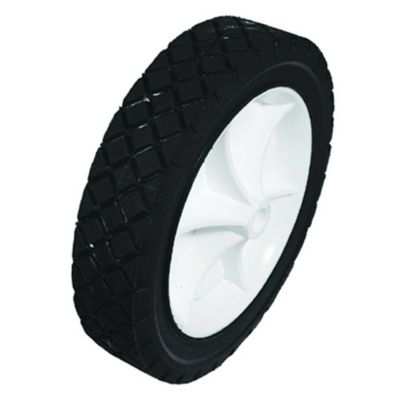
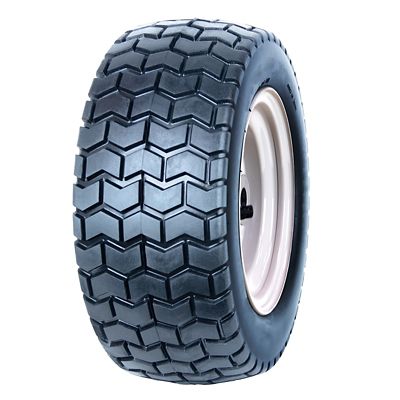
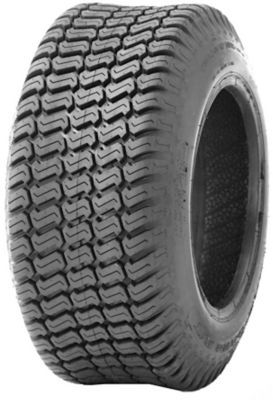
Materials and tread shape influence how 7-inch wheels feel under a load and how they handle the ground between the barn, driveway and garden gate. Solid rubber tires offer a rolling surface without an air chamber to maintain, making them worth considering where thorns, nails or sharp bits of debris are a concern. Plastic wheels and wheels with molded polymer hubs can keep weight down and avoid rust on those components, while steel hubs provide a different construction option for equipment that calls for them. Neither material alone tells the whole story: the wheel’s load rating, tire construction, bearings and intended application matter together. Rubber compounds vary in firmness, and softer tread may cushion small bumps better than a hard rolling surface, though performance depends on the particular construction and load. A smooth or lightly patterned tread generally suits firm, even surfaces, while a more pronounced tread can provide grip on grass or loose ground. Narrow wheels fit tight spaces and certain mower designs, but they can settle into soft soil more readily than a wider wheel carrying a similar load. For a cart crossing packed dirt and then a concrete floor, both ground conditions deserve attention. Bearings and bushings affect rolling effort, too. A wheel with ball bearings can turn smoothly when its mounting and load match its specifications; a plain-bore or bushing design may suit simpler, lighter-duty equipment. Load capacity is usually listed per wheel, not as a promise for an entire cart or machine. Equipment weight, cargo, uneven weight distribution and bumps all affect the demands placed on each wheel. Crossing a threshold with a loaded cart can put more stress on a wheel than rolling the same load across a level floor. The equipment maker’s requirements remain the best starting point, especially where a mower wheel includes drive teeth or another feature that must engage with the machine. Free-rolling replacements and drive wheels are not automatically interchangeable, even when their outside diameters match.
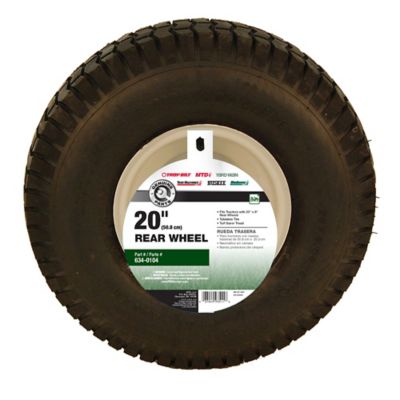
Good fit also helps a replacement wheel hold up through repeated trips across the yard and long stretches in the shed. A wheel mounted too tightly may bind, while excess space along the axle can let it shift from side to side. Washers, spacers, axle bolts and retaining clips are part of that fit, and their placement should follow the equipment manufacturer’s directions. Wear elsewhere can shorten a replacement wheel’s service life: a bent axle, damaged mounting bracket or badly worn bolt may keep a new wheel from running straight. On lawn equipment, maintaining the specified wheel diameter also helps preserve deck position and the intended cutting-height adjustment. Moving to a larger diameter is not simply a way to gain easier rolling; it changes clearances and can alter the way equipment sits and handles. For equipment designed around a larger outside diameter,
10 Inch Wheels are a separate size category to consider against the same axle, hub, width and clearance requirements. For equipment calling for a 7-inch wheel, sticking with the specified size keeps the focus on the right fit rather than an improvised change. Routine care is straightforward but still important. Grass wrapped around an axle, gritty soil packed near a bearing and damp debris against a metal hub can all cause trouble over time. Removing buildup and allowing equipment to dry before storage helps protect moving parts, especially during the cooler months when mud and wet leaves tend to follow a cart indoors. Lubrication needs depend on the wheel design; sealed bearings and serviceable bearings do not necessarily call for the same care. Following the manufacturer’s maintenance directions helps avoid adding grease where it is not needed or overlooking a fitting that requires attention. Periodic checks for loose hardware, tread damage and side-to-side play can catch wear before a wheel starts scraping the frame. With the right dimensions, suitable construction and a little regular attention, replacement wheels help familiar equipment stay ready for mowing, moving supplies and the next round of chores.