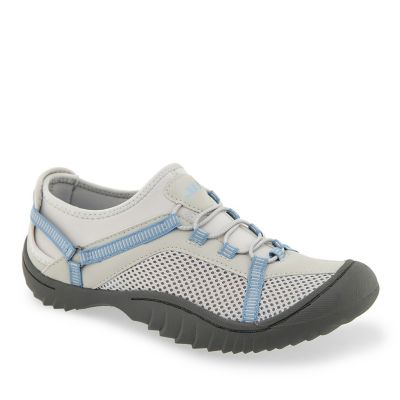
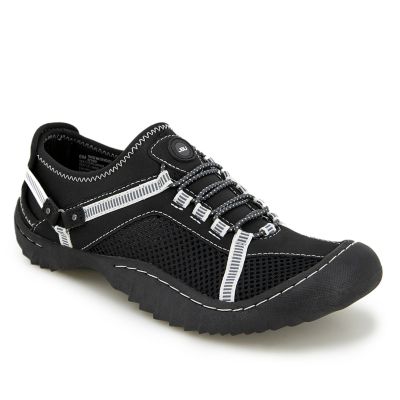
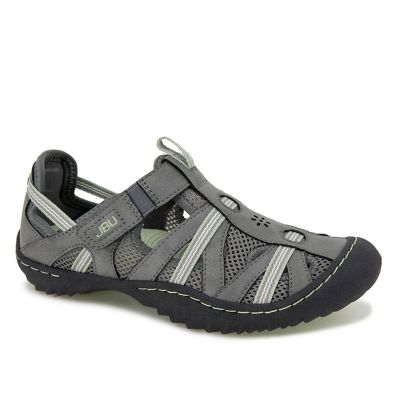
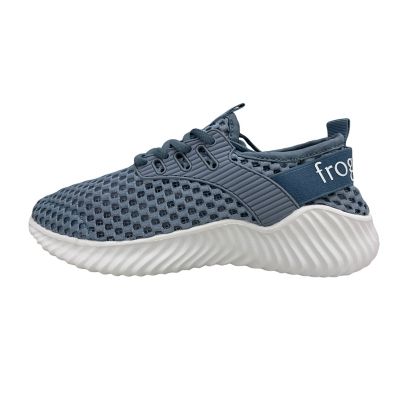
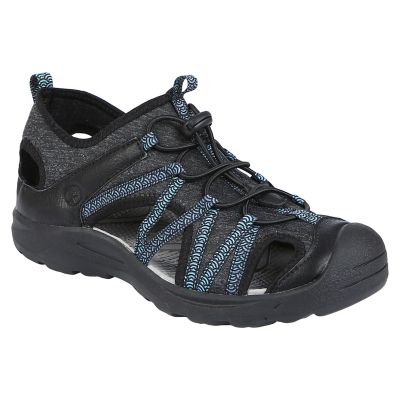
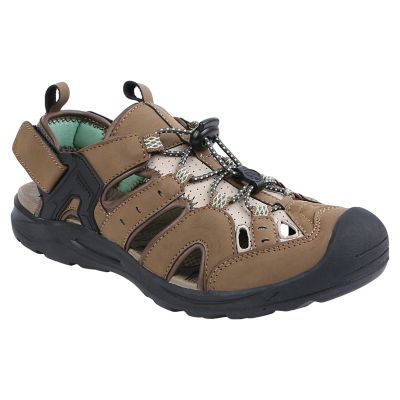
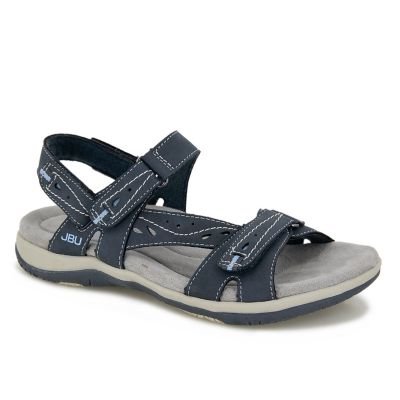
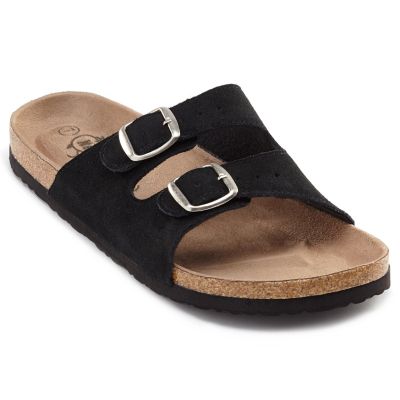
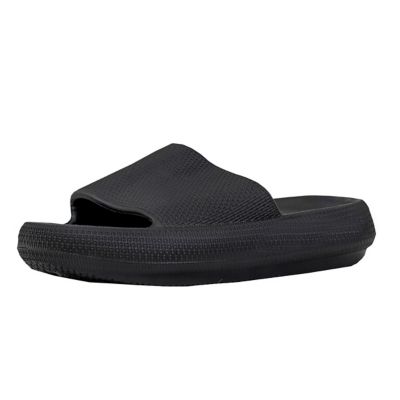
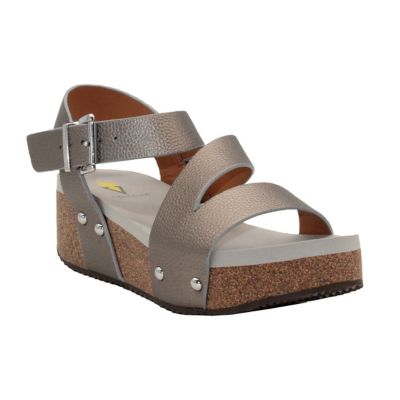
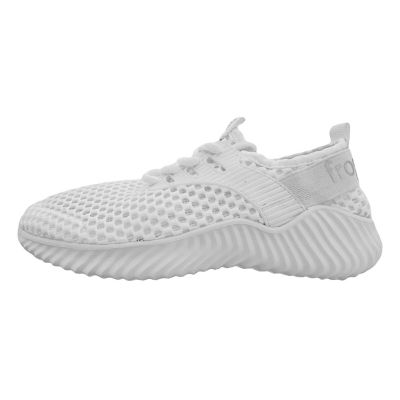
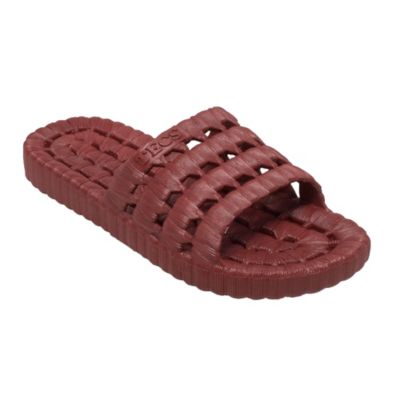
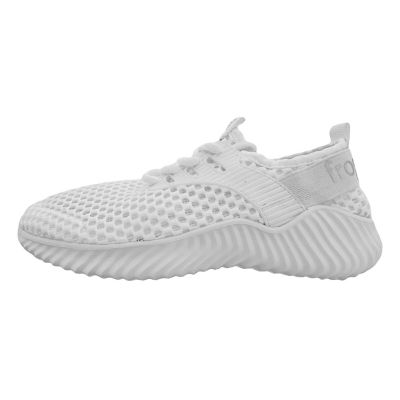
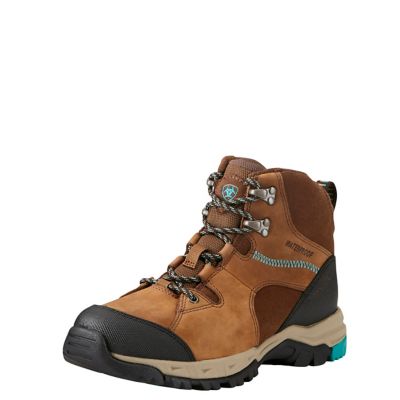
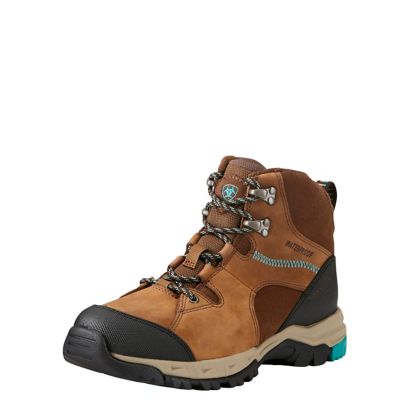
Women's water shoes for hiking combine water-friendly materials, drainage and trail-oriented traction for routes that move between creek crossings, gravel banks and dirt paths. The most useful features depend on the ground underfoot: a secure fit helps keep the shoe in place, a protective toe area adds coverage around rocks, and an outsole suited to mixed terrain supports the transition from water to trail. These shoes make sense for walks along a fishing creek, short hikes to a swimming hole and campground paths that lead down to a river landing. Unlike waterproof hiking footwear, which is designed to keep outside moisture from entering, many water shoes let water flow through the upper or escape through drainage openings. That difference matters when a route includes repeated crossings or stretches of shallow water. Mesh and synthetic textile uppers generally hold less water than heavily padded constructions, though drying time varies with the materials, padding and surroundings. Open panels allow plenty of flow, while finer mesh offers more coverage against small debris without necessarily keeping every grain of sand out. Underfoot, rubber composition and tread shape both affect traction. Deeper lugs can help on loose dirt, while closely spaced grooves and more surface contact may suit flatter, wet surfaces. No tread makes slick algae, submerged stones or muddy banks slip-proof, so steady footing still matters. For a mostly level shoreline walk, a flexible sole may feel comfortable and easy to move in. A rockier route calls for more underfoot structure and protection from sharp edges. Water shoes aren't all built for the same mileage or load, either. A pair suited to a short creekside ramble may not provide the support needed for a long hike with a loaded pack. The right match starts with the actual route, including how much time will be spent walking, wading and climbing back onto uneven ground.
Fit is especially important when moving water, loose gravel and sloping banks are part of the outing. Women's hiking water shoes should feel secure around the heel and midfoot without squeezing the toes or creating pressure across the top of the foot. Enough room for natural toe movement helps on longer walks, but extra length can let the foot slide forward on a descent. A wet shoe that twists around the heel can feel quite different from one that stays close through each step. Lace systems, adjustable straps and stretch collars offer different ways to hold the foot, and their usefulness depends on foot shape and the amount of adjustment needed. Elastic laces can make on-and-off changes simple at a creek crossing; a traditional lace system may allow more adjustment across separate parts of the upper. Loose lace ends and dangling straps can catch on brush or rocks, making tidy closures a practical detail. Closed-toe constructions provide coverage when stepping between stones, although a soft fabric toe doesn't offer the same protection as a reinforced toe bumper. Heel shape, arch contour and cushioning also influence how a shoe feels after the first stretch of trail. A thin, flexible footbed gives a closer feel for the ground, while a more structured midsole puts additional material between the foot and rough surfaces. Neither approach suits every walker. For folks who prefer socks, enough interior room helps prevent bunching, and sock materials that shed moisture tend to make more sense than fabrics that stay heavy when soaked. Barefoot wear calls for attention to interior seams, collar edges and any spots that rub once the lining is wet. Feet can change in size over the course of a walk, so a little adjustment room is useful. These details matter whether the outing involves walking beside family members at the creek, carrying a fishing rod down a rocky bank or following a trail between paddling stops.
Construction and care play a big part in how well water-friendly hiking footwear holds up to repeated outings. Reinforced areas around the toe and heel can help with abrasion where shoes brush against rocks, roots and rough ground. Stitching, bonded seams and the connection between the upper and outsole also deserve attention, especially for routes with frequent bending and scrambling. A lightweight mesh shoe may pack easily beside a change of clothes, but a more substantial upper can offer additional coverage on brushy approaches. Drainage openings are useful only when water can move through them, and fine silt or packed mud can slow that flow. After a day along the creek, rinsing away grit helps keep it from working against fabric, seams and closures. Sand tucked beneath a footbed can rub with every step, so removable insoles make it easier to clear debris when the shoe's construction allows it. Care directions vary by material; a gentle rinse and air-drying are often more appropriate than a washer or dryer unless the manufacturer says otherwise. Opening the closures and setting removable footbeds apart can help moisture escape from the interior. Direct heat can affect certain foams, adhesives and synthetic fabrics, so drying beside a heater isn't a good shortcut. Before another outing, checking for worn tread, loose stitching and stones caught in drainage channels helps reveal changes that could affect comfort or footing. Fully drying footwear before putting it away also helps keep lingering moisture from becoming a storage problem. For trips centered on sand rather than rocky approaches,
women's water shoes for the beach offer another category to consider, with attention to shoreline comfort and coverage. Hiking-focused water footwear puts greater emphasis on the stretches between water access points, where roots, gravel and uneven banks add different demands. A pair can also make a thoughtful gift for someone who enjoys creek walks, paddling trips or campground exploring, especially when their size, preferred fit and usual terrain are already known. Matching those everyday habits matters more than choosing by appearance alone.