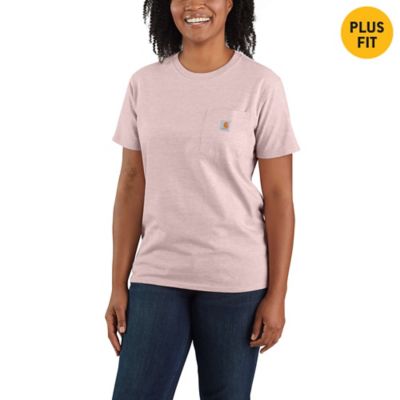
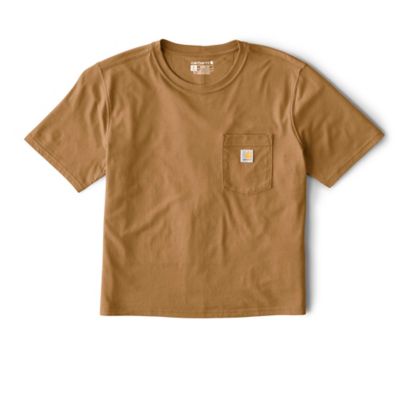
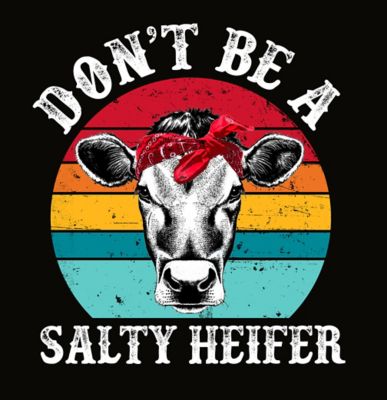
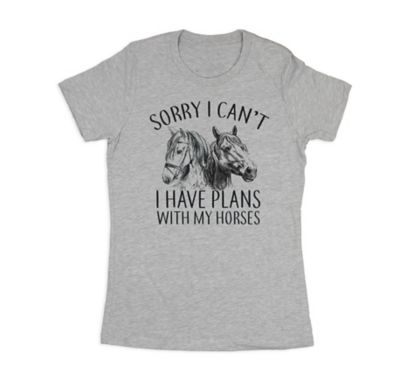
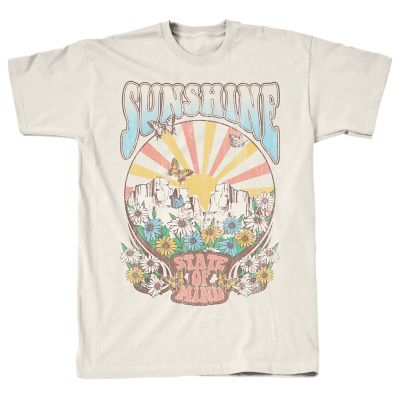
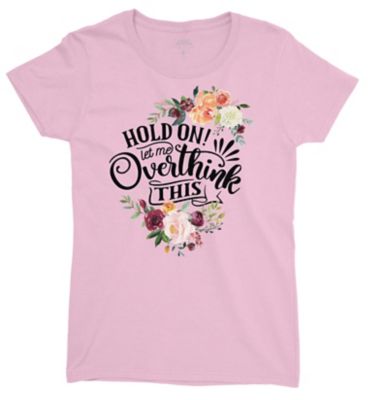
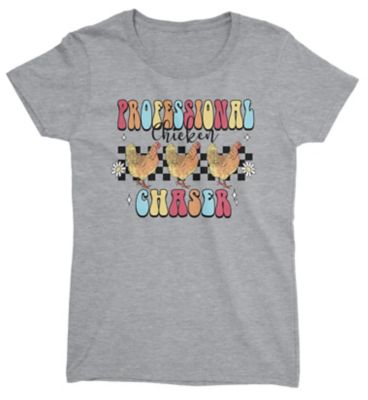
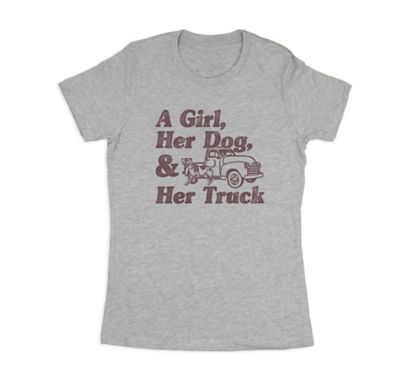
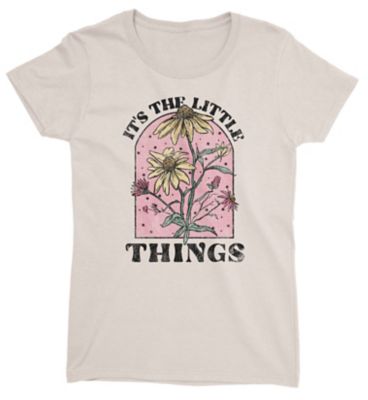
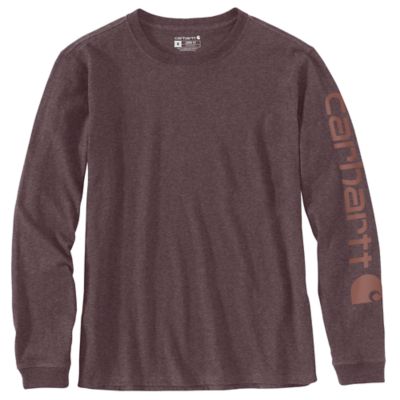
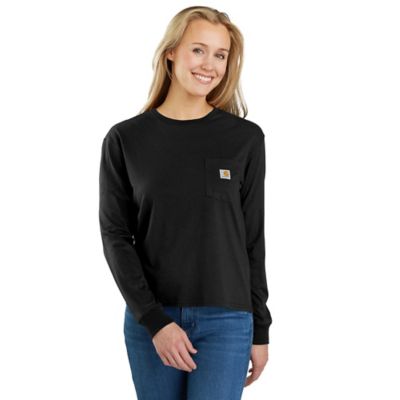
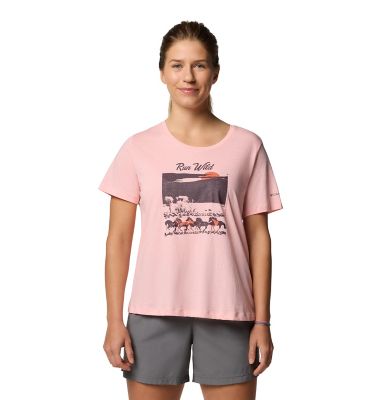
Women’s t-shirts are everyday knit tops that work just as well with jeans and boots as they do with leggings or a pair of work pants. Plain tees keep an outfit simple, while graphic t-shirts bring in a little personality through artwork, lettering, or farm-and-country themes. The main differences come down to fabric, neckline, sleeve length, and fit, with each detail changing how a shirt feels through a full day. A fitted tee sits closer to the body and slips neatly beneath an overshirt, while a relaxed fit gives more room through the chest and middle without necessarily adding much length. An oversized t-shirt has a roomier shape overall, often with dropped shoulders and wider sleeves. Those distinctions matter when reaching across a fence rail, carrying a feed bucket, or settling in for a long drive. Crewneck t-shirts have a rounded neckline that provides more coverage across the upper chest. For a more open neckline,
Women's V Neck T-Shirts offer an angled shape that pairs easily with a simple necklace or an unbuttoned flannel. Neither neckline determines the fit of the rest of the shirt, so the shoulder, chest, and hem measurements still matter. Short sleeves leave the arms free for everyday tasks, while long-sleeve t-shirts provide more arm coverage without the structure of a woven shirt. Cap sleeves and elbow-length sleeves fall between those familiar shapes. Hem length makes a difference, too: a shorter tee meets a higher waistband with less fabric to tuck, while a longer hem gives extra coverage when bending or stretching. Straight hems suit an untucked look, and curved hems can sit neatly over jeans. A shirt that feels comfortable standing still should also allow an easy reach forward and overhead, without pulling hard across the back or riding up more than expected.
Fabric plays a big part in how women’s tees wear from the first cup of coffee to the last chore. Cotton is a familiar choice for its soft feel and ability to absorb moisture, though a damp cotton shirt can take longer to dry than some synthetic blends. Cotton-polyester blends combine cotton’s feel with polyester’s tendency to dry faster and resist some wrinkling. The balance varies with the fiber percentages and knit construction, so two blended shirts can feel quite different in the hand. Rayon and modal can add a softer drape, allowing the fabric to fall closer to the body rather than hold a boxy shape. A small amount of spandex or elastane adds stretch, which can make a closer-fitting tee easier to move in. Stretch also depends on the knit itself; a ribbed t-shirt often has more give across the body than a similarly weighted smooth jersey knit. Fabric weight affects coverage and layering. Lightweight jersey sits comfortably beneath another shirt without much bunching, while a more substantial knit may provide greater opacity and a firmer shape. Lighter colors can reveal an underlayer more readily, especially when the fabric stretches across the chest or shoulders. Smooth seams, even stitching, and a neckline that lies flat all contribute to everyday comfort. Shoulder seams that land where intended help a shirt hang properly, whether the design has a standard shoulder or a dropped one. Ribbed neckbands and reinforced shoulder seams can help a tee keep its shape through repeated wear and laundering, although fabric and care still influence the result. For barn chores and hands-on work, room to bend and reach matters more than an extra-close silhouette. For errands, casual gatherings, or an afternoon at home, drape and softness may take priority. A well-chosen tee should suit the job without needing constant tugging at the sleeves, neckline, or hem. Close-fitting layers also tend to sit more smoothly beneath bib overalls, while a roomy standalone tee offers a different feel.
Women’s t-shirts earn their place in a regular rotation because they are easy to pair, layer, and wash, but the care label remains the best starting point for keeping each fabric and print in good shape. Cotton can shrink, particularly with higher wash and dryer heat, and some blended fabrics need gentler handling than their everyday appearance might suggest. Washing with similar colors helps limit color transfer, while turning a graphic tee inside out reduces direct rubbing against its printed surface. Lower dryer heat or air-drying, when the label allows, can help limit shrinkage and wear on stretch fibers. Pulling a damp shirt gently back into shape before drying can help the hem and side seams settle evenly. Printed areas generally need protection from direct ironing, and stain treatments should suit both the fabric and the care instructions. A little attention to cuffs, underarms, and neckbands helps keep a favorite tee ready for another round of wear without treating it like special-occasion clothing. Fit is easier to judge from body measurements than from a size letter alone, since a medium in one cut may feel different from a medium in another. Bust, waist, and hip measurements help explain how a shirt will fall, while garment length shows whether the hem will reach the preferred spot. A fuller cut through the middle, extra length, or more sleeve room can make the difference between a tee that stays in the drawer and one that gets worn often. Solid colors make easy partners for patterned overshirts, and graphic tees can be the main detail in an otherwise simple outfit. For a gift, a familiar neckline, favorite color, and known fit preference offer a practical starting point. A woman who likes a roomy chore shirt may not want the same cut she wears tucked into jeans for dinner. That everyday connection to how someone dresses makes a t-shirt a thoughtful, useful choice for a sister, friend, partner, or mom.