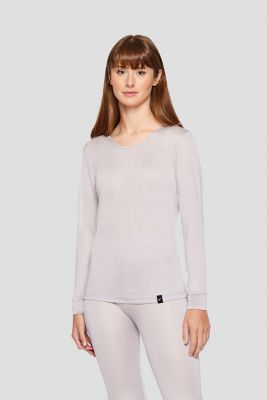
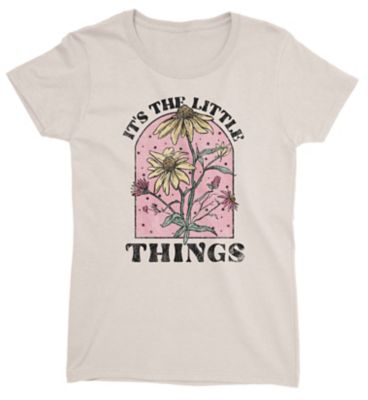
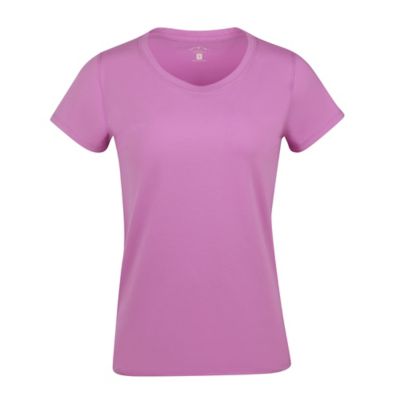
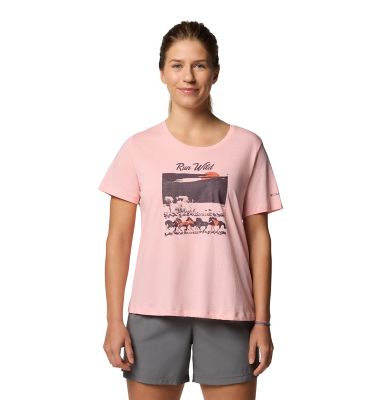
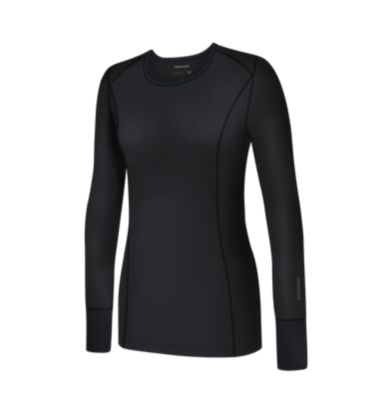
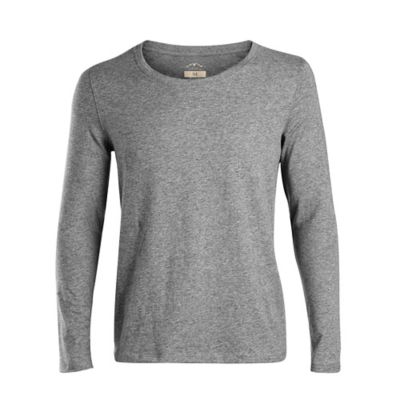
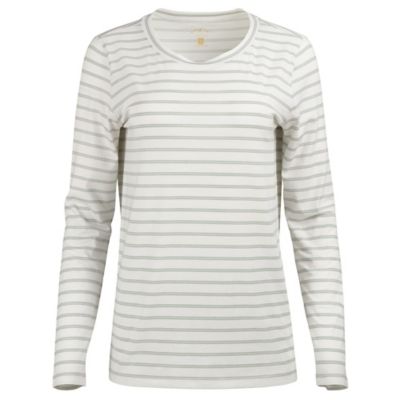
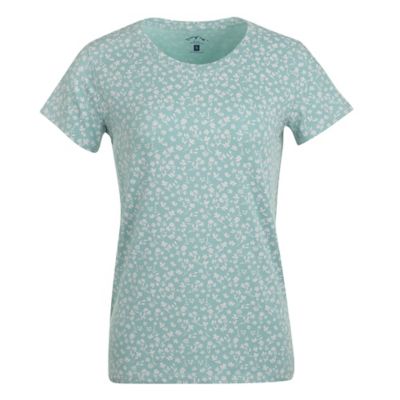
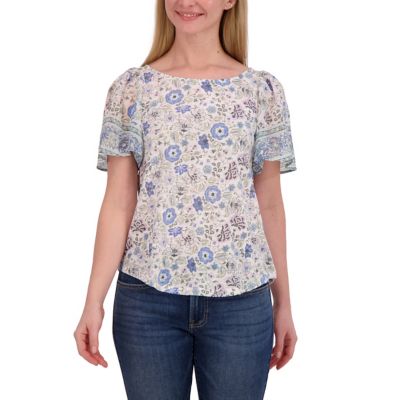
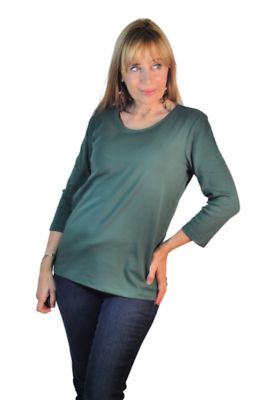
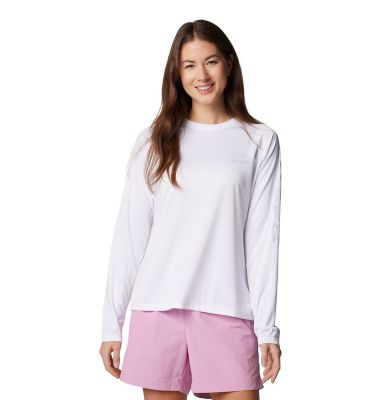
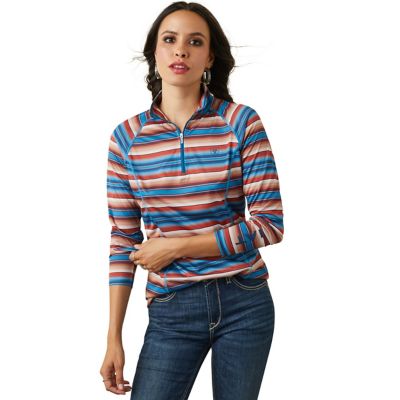
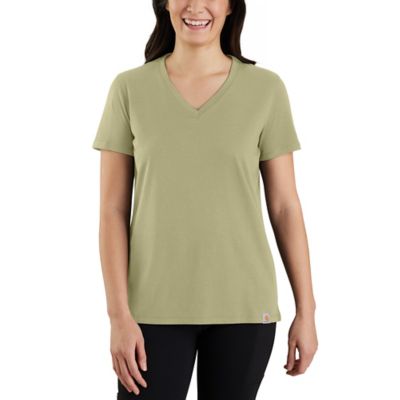
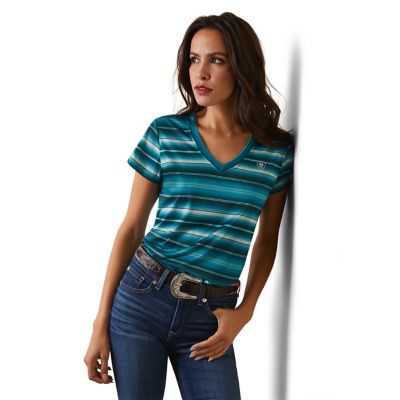
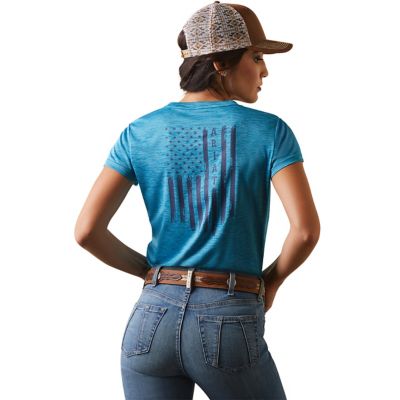
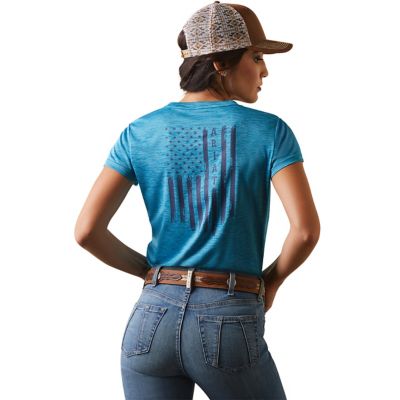
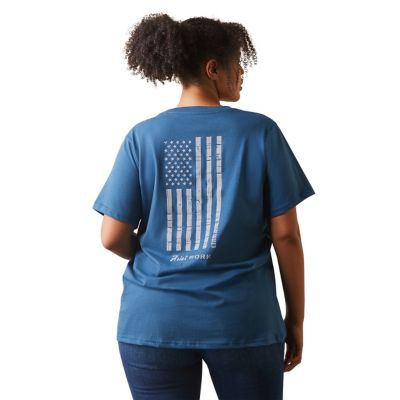
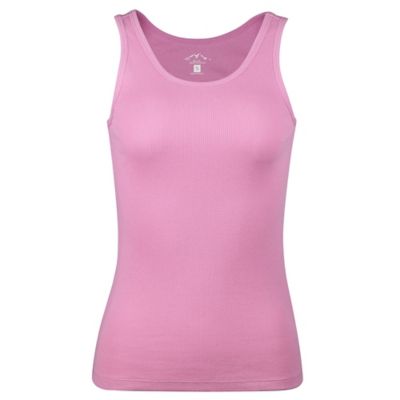
Women’s scoop neck T-shirts are an easy starting point for getting dressed, whether the day calls for a feed-store run, an afternoon in the garden or supper with the family. The rounded neckline sits lower than a traditional crew neck, leaving a little more room around the collarbone without the pointed shape of a V-neck. That open shape can feel less restrictive at the throat and works well beneath a flannel shirt, cardigan or zip-front sweatshirt during the cooler months. Not every scoop has the same depth, though. A shallow curve offers more coverage for bending over flower beds or reaching into the back of a pickup, while a deeper scoop has a more open look for casual outings. Neckline width matters, too: a wider opening may sit closer to the shoulders, so bra strap placement is worth considering along with the cut. Fit through the shoulders and chest does just as much for everyday comfort as the neckline itself. Shoulder seams that sit near the edge of the shoulder generally give a more structured fit, while dropped seams create a roomier silhouette. A close-fitting tee slips neatly beneath other layers, and a relaxed cut leaves space through the middle for sitting, lifting and moving about. Neither needs to feel tight across the upper back when reaching forward. Length makes a practical difference when the day involves more than sitting still. A longer hem provides extra coverage with leggings or when stretching to a high shelf, while a hip-length shirt pairs easily with jeans and can be tucked without leaving too much fabric at the waistband. Side slits, curved hems and straight hems each change how a tee hangs over the hips. For a comfortable everyday fit, compare garment measurements with a favorite shirt rather than relying on a size letter alone, especially when switching between fitted and relaxed shapes. The best match should feel comfortable standing up, sitting down and reaching overhead, not just look right on a hanger.
Fabric gives a scoop neck tee much of its character, from the way it hangs to how it feels beneath a jacket. Cotton is a familiar choice for its soft feel and ability to absorb moisture, making it comfortable for errands, porch sitting and lighter chores. Cotton knit can also hold onto dampness, so a shirt worn during an active afternoon may take longer to dry than one made with certain synthetic blends. Cotton and polyester blends often balance a familiar, soft hand with quicker drying and less wrinkling, though the exact feel depends on the fabric’s weight and construction. A small amount of elastane or spandex adds stretch, which can help a closer-fitting shirt move with the body and recover its shape. Rayon-containing blends tend to have a fluid drape, creating a softer line under an open sweater or over a waistband. Those fabrics may call for gentler laundering, so fiber content and care directions are worth reading together. Fabric weight matters just as much as the blend. A lightweight tee makes a handy layer beneath heavier shirts, but pale colors and thin knits may let an underlayer show through. A medium-weight knit often provides more coverage on its own without feeling as substantial as a sweatshirt. Ribbed fabric has visible vertical lines and natural give, while a smooth jersey knit has a flatter surface and a familiar T-shirt feel. The neckline’s construction deserves a look as well. A neatly attached neckband, even stitching and seams that lie flat can make a difference in comfort and how well the shirt holds its shape through repeated wear. For someone who spends part of the day outdoors and part inside, a scoop neck tee can serve as a comfortable base layer as temperatures change. It is everyday clothing rather than protective workwear, however; jobs involving sparks, chemicals or machinery call for clothing suited to those hazards. Around moving equipment, loose hems and hanging layers need particular attention.
A scoop neck T-shirt earns its place in a regular clothing rotation by working with pieces already in the closet. With straight-leg jeans and boots, it makes a simple outfit for town; beneath a button-front work shirt, it adds a soft layer that is easy to keep on when the outer shirt comes off indoors. A fitted tee can balance roomier pants, while a relaxed tee pairs comfortably with closer-cut bottoms. Solid colors are straightforward to mix with plaid, denim and patterned skirts, and a textured knit can add interest without a print. The open neckline also leaves room for a small necklace or scarf, provided those accessories suit the day’s activities. For a similar everyday shirt with more coverage at the base of the neck,
women’s crew neck cotton tees offer another neckline to consider. Keeping either style looking its best starts with the sewn-in care label. Cool water and a gentle wash can help limit fading and unnecessary stress on many knits, while turning shirts inside out helps reduce rubbing against the visible surface. Washing tees apart from rough fasteners and exposed hook-and-loop closures can help prevent snags. Treat a splash of coffee or a spot of garden dirt promptly with a method appropriate for the fabric, and check that the mark is gone before applying dryer heat. High heat can shrink some cotton garments and affect stretch fibers, so follow drying directions rather than assuming every T-shirt can handle the same setting. Reshape the neckline gently after washing and avoid pulling a wet shirt by its neck opening. Folding lightweight knits can also prevent the shoulder bumps that some hangers leave behind. As a gift, a scoop neck tee makes the most sense when the recipient’s preferred size, neckline depth and usual fit are known. For a sister who likes an easy layer under flannel or a friend who reaches for soft basics after a long shift, those small preferences matter more than choosing a color alone.