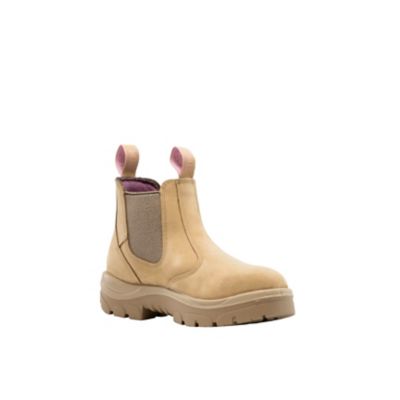
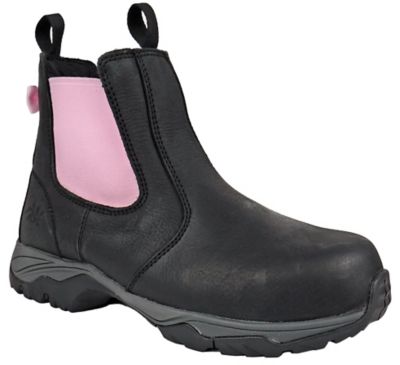
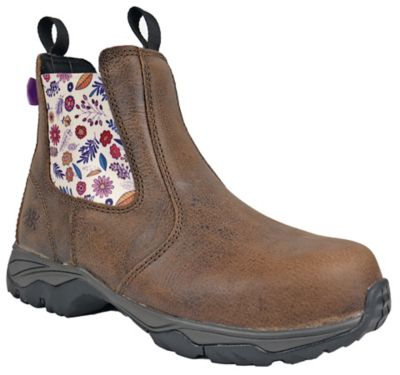
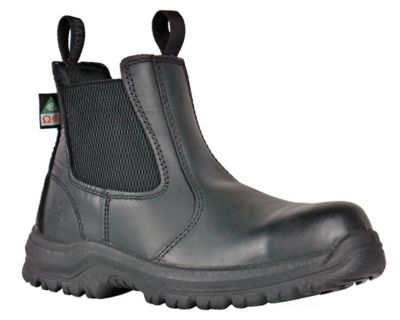
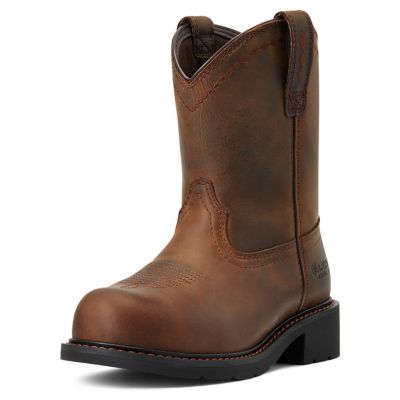
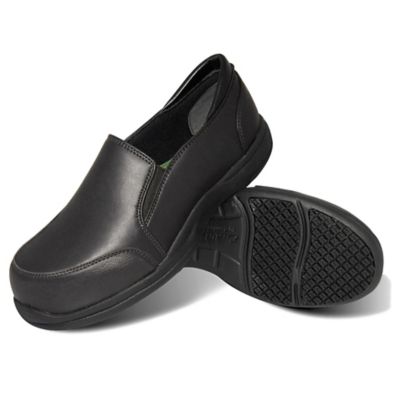
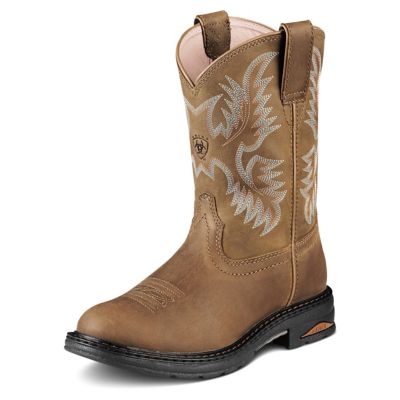
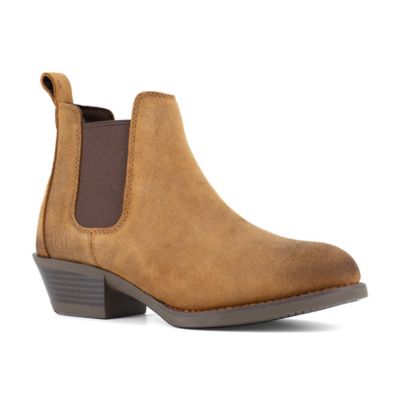
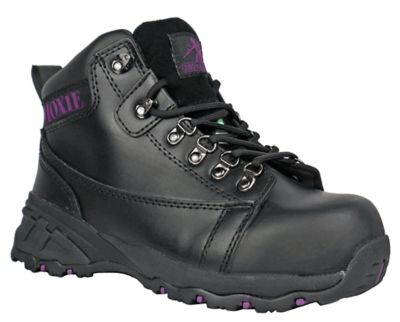
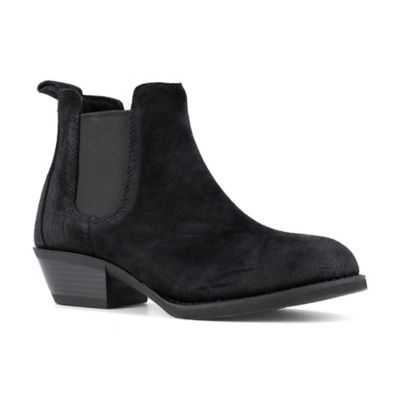
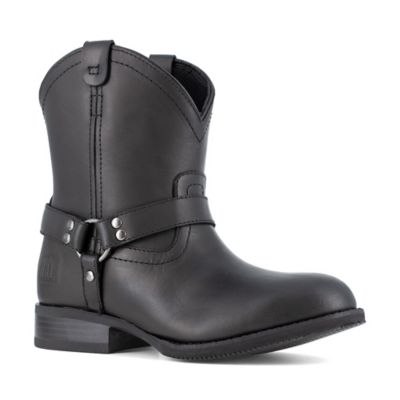
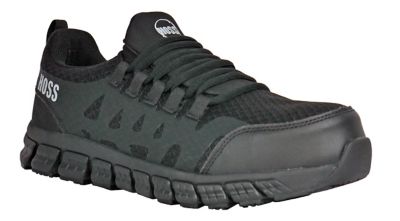
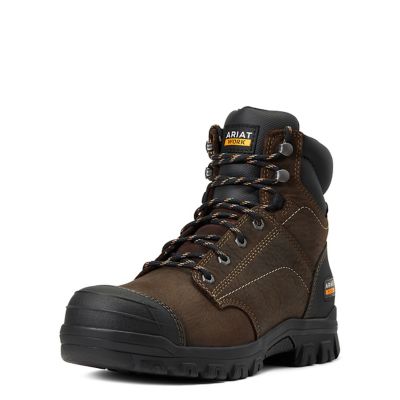
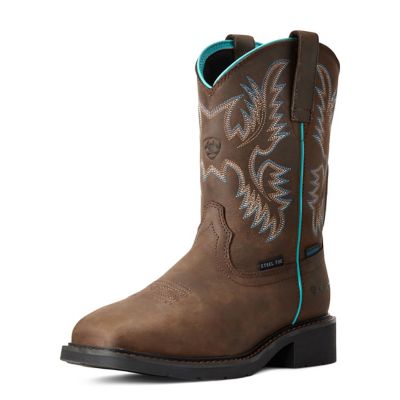
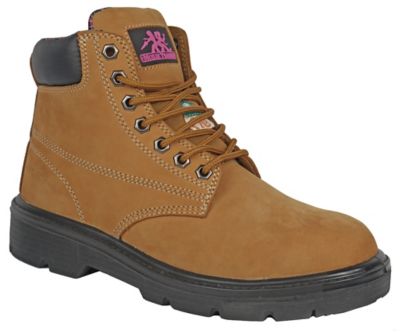
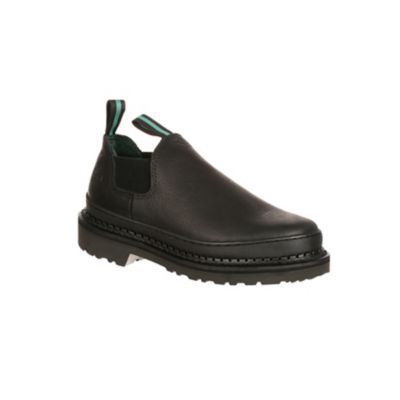
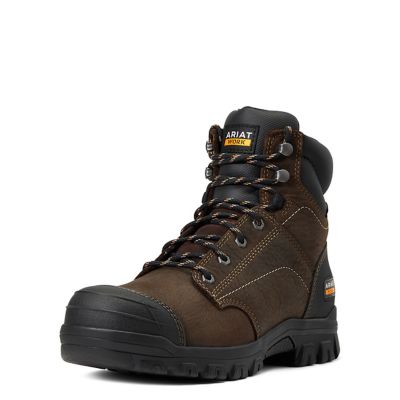
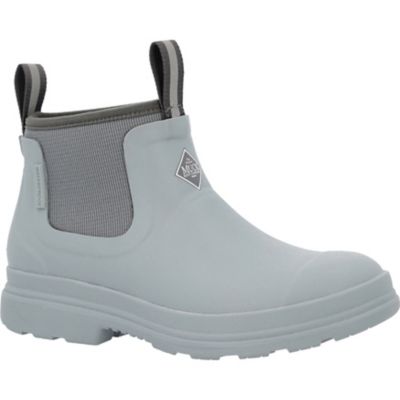
Women’s slip-on safety boots bring work-ready protection to a pull-on design that skips the laces and gets you out the door with less fuss. They’re a practical fit for women handling feed sacks, moving materials around a shop, tending livestock, or spending long shifts on their feet. The category includes ankle-height styles with stretch panels and taller pull-on boots that cover more of the lower leg. Shorter shafts can feel less restrictive when crouching beside equipment, while taller shafts provide added coverage around brush, bedding, and kicked-up dirt. That easy-on shape is only part of the story, though. Safety footwear needs to match the hazards of the job, whether that means a protective toe, a particular outsole rating, or another feature required by an employer. Steel, alloy, and composite safety toes offer different combinations of weight and construction, but the material alone doesn’t establish the protection level. The boot’s marked safety standard and manufacturer’s specifications are what matter when comparing impact and compression protection. A soft-toe pull-on work boot isn’t a substitute when a safety toe is required. Likewise, a sturdy-looking upper doesn’t establish puncture resistance, and electrical hazard protection applies only to footwear specifically rated for that purpose and under the conditions of that rating. For someone unloading fence supplies or working near rolling carts, these distinctions matter more than the shape of the toe or the stitching on the shaft. Women’s work boot designs also vary in heel shape, instep volume, and overall width, so a women’s size isn’t simply a smaller version of another boot. The right combination feels secure through the heel and midfoot while leaving room for the toes to rest naturally. From barn aisles to workshop floors, slip-on safety boots fit into a working wardrobe because they pair straightforward entry with protection tailored to the task.
Materials and construction have a lot to do with how women’s slip-on safety boots feel after several hours of chores. Leather uppers can soften with wear and respond well to care appropriate for their finish, while synthetic materials vary in flexibility, weight, and cleaning needs. Rubber and other waterproof shell constructions can make sense around wet bedding or muddy pens, depending on the boot’s stated features and intended use. Water-resistant leather and a waterproof boot aren’t the same thing: a waterproof design may incorporate a membrane or sealed construction, and water can still enter over the top of the shaft. During the cooler months, insulation can help on outdoor rounds, but heavily insulated footwear may feel too warm during an active shift inside a heated building. Breathable linings and moisture-managing work socks help address the dampness that comes from perspiration as well as changing conditions. Underfoot, cushioning helps soften repeated steps, while a supportive midsole and stable heel can make a difference when carrying a load across uneven ground. A shank can add support through the arch, although its material and design vary by boot. Outsole patterns deserve a close look, too. Deep lugs can help bite into loose ground, but they may carry mud into a shop; other tread designs suit firmer surfaces and are easier to brush clear. Slip-on describes how the boot goes on, not how it performs on a slick floor. For related footwear with that feature in mind,
Women's Slip Resistant Work Boots offer another category to consider alongside the safety features a job requires. Slip resistance depends on the outsole, the surface, and contaminants such as water, oil, or manure, so no boot eliminates the chance of a fall. Oil resistance is also a separate property from slip resistance. Matching those details to the ground underfoot makes more sense than expecting one pair to handle every farm, shop, and worksite condition equally well.
Fit is especially important with women’s pull-on safety boots because there are no laces to snug up before a long walk to the far gate. Stretch panels, pull tabs, shaft openings, and instep shape all influence how easily a foot enters and how securely it stays in place. Some pull-on designs allow a little heel movement when new, but repeated rubbing, excessive lifting, or a foot sliding forward points to a fit problem rather than something to simply work through. The safety toe should leave clearance above and around the toes without pinching when kneeling or walking downhill. Unlike the surrounding leather, the protective toe cap won’t stretch to make more room. Trying boots with the socks intended for work gives a better sense of space, especially when thicker socks come into rotation during cooler weather. Feet can swell over a long day, so room for natural movement matters as much as that first step across the floor. Removable footbeds can offer flexibility for approved replacement insoles, but adding a thick insert may crowd the toe area or change how the heel sits. Any insert changes should follow the manufacturer’s guidance, particularly with footwear carrying specialized safety ratings. Once the fit and features line up, regular care helps preserve comfort and extend the boot’s working life. Brushing away dried mud keeps grit from collecting around seams, and cleaning off manure or other residue promptly helps protect materials from prolonged exposure. Leather needs cleaners and conditioners suited to its finish; rubber, synthetic uppers, and waterproof membranes may call for different treatment. Boots should dry with airflow away from direct heat, which can damage leather, adhesives, and other components. Checking tread, seams, stretch panels, and the inside lining can reveal wear before it turns into a rough day on the job. A boot that has taken a heavy impact or shows damage to its protective components needs assessment and replacement according to manufacturer guidance, even if the outside still looks serviceable. For women balancing barn work, property upkeep, and demanding shifts, the best match is footwear built around their actual tasks, foot shape, and everyday conditions.