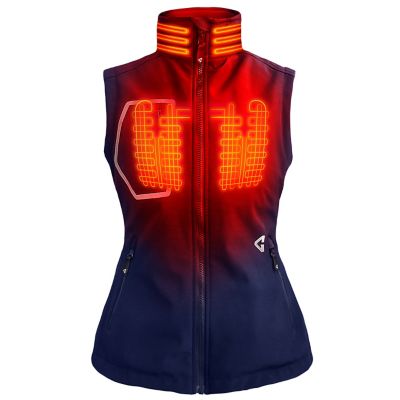
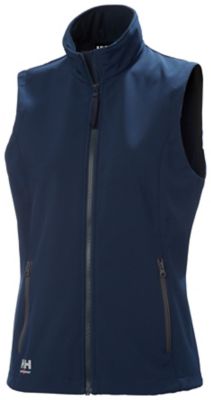
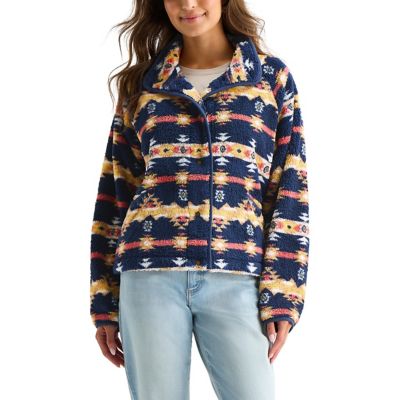
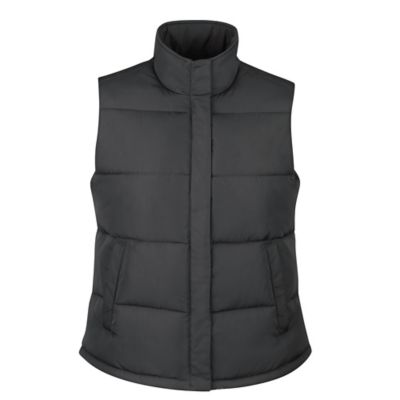
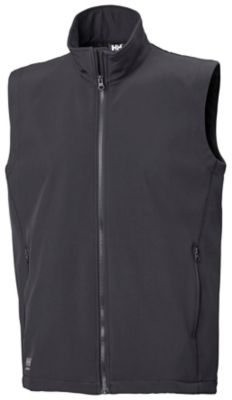
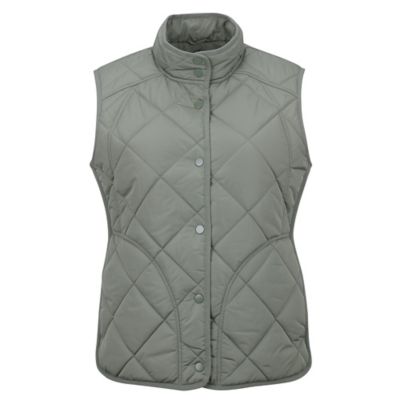
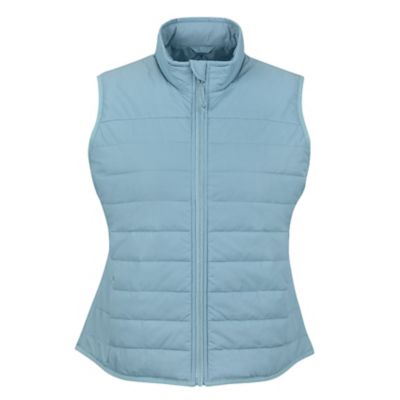
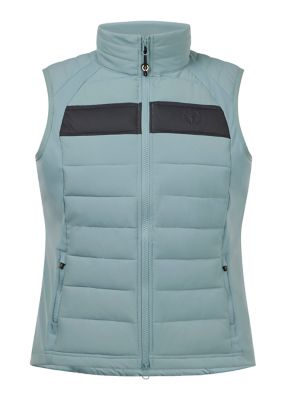
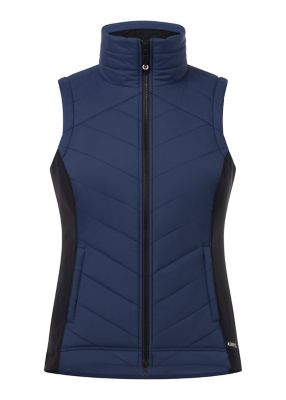
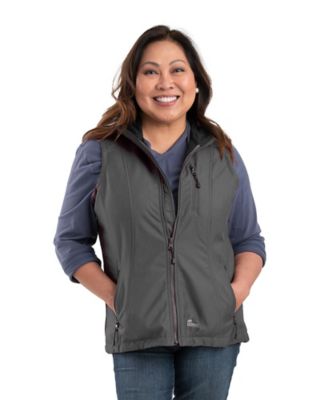
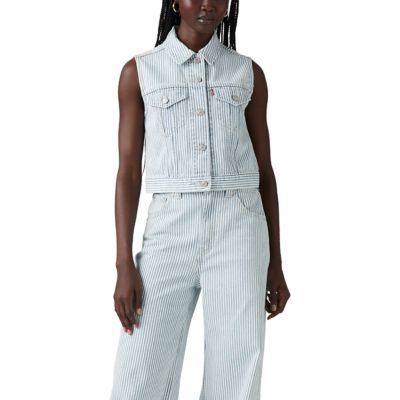
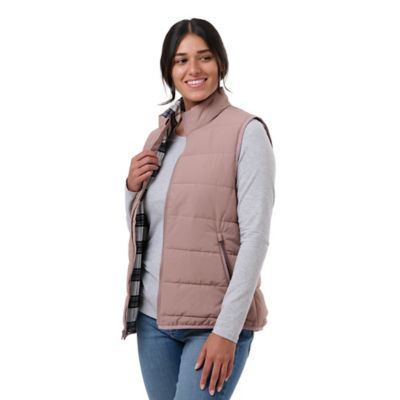
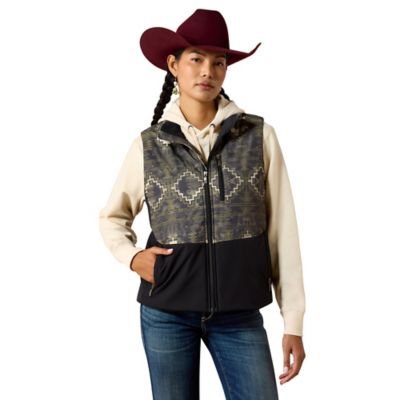
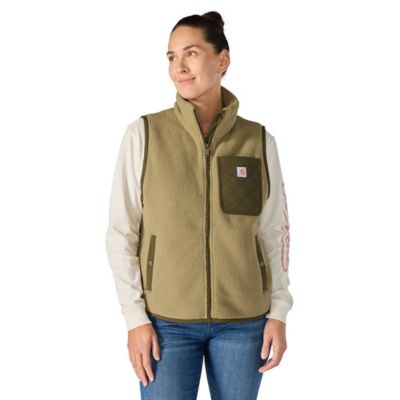
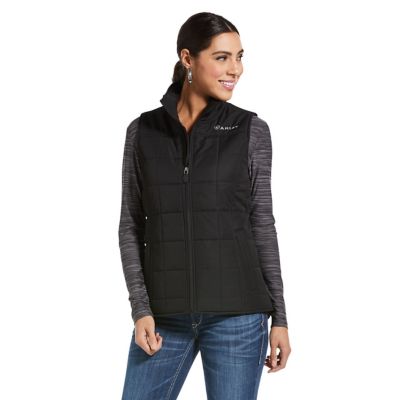
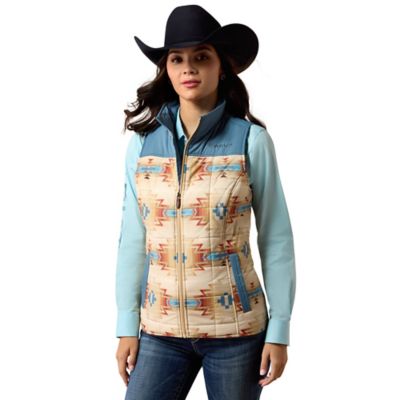
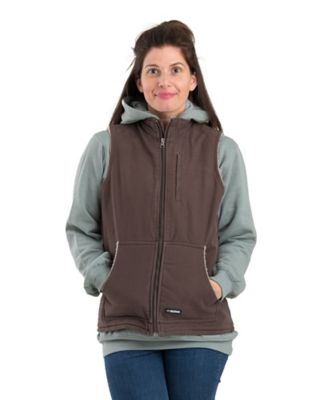
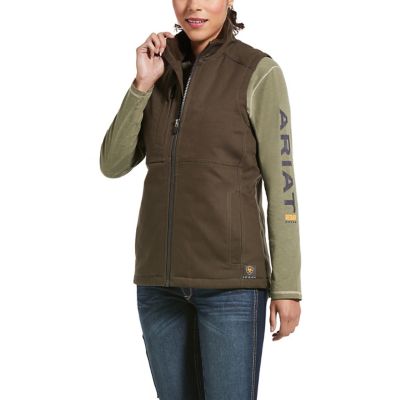
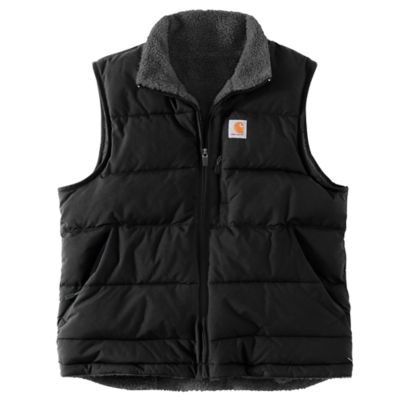
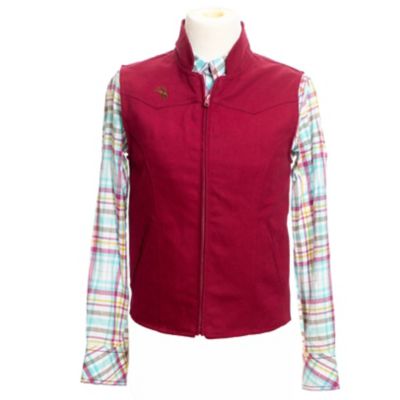
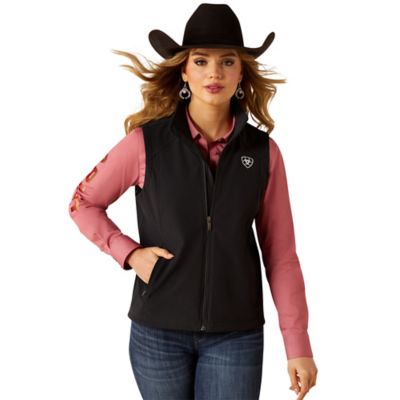
Women's navy blue vests are sleeveless layers that range from fleece and quilted puffers to sweater knits and structured button-front styles. Their appeal comes from a simple combination: coverage through the torso, room for the arms to move, and a deep blue color that pairs easily with everyday clothes. Navy works alongside faded denim, tan work pants, gray sweatshirts, and checked shirts without making an outfit feel too matched. Over a white tee, it looks clean and straightforward; with a plaid button-down and boots, it fits right into a day split between the barn and town. Different cuts give the same color a different feel. A quilted vest has stitched sections that help hold its filling in place, while a smooth fleece vest offers a softer, more relaxed surface. Sweater vests bring knit texture, and a woven button-front shape can look a little more dressed up without calling for a whole change of clothes. For women who spend time tending animals, working around the property, or driving between stops, the sleeveless shape leaves elbows and forearms free for the job at hand. It can also sit comfortably beneath an outer layer when the two pieces have enough room to work together. Length changes the look and feel, too: a hip-length hem pairs naturally with jeans, while a longer back hem adds coverage when bending toward a feed pan or reaching across a fence rail. Shorter silhouettes can sit neatly above a higher waistband rather than bunching against it. Navy's subdued look makes stitching, pocket placement, and fabric texture more noticeable than a bold print would. That gives details such as a stand collar, ribbed edge, or shaped side seam a chance to define the vest without making it hard to pair with the rest of a working wardrobe.
Fabric and construction make a real difference in how a women's navy blue vest feels through a full day. Polyester fleece has a soft, brushed surface, and its thickness can range from a thin layering fabric to a denser pile. Cotton canvas and other tightly woven shells have a firmer hand that suits work-focused shapes, while nylon or polyester shells often give quilted styles a smoother finish. Cotton in a sweater-knit blend can lend a familiar feel, while fibers such as polyester or nylon can affect stretch, drying time, and shape retention. A puffer vest holds insulation between its shell and lining; the fill, stitching pattern, and panel depth all influence how much space it takes beneath another garment. A smooth lining can slide more easily over a flannel shirt, while fleece lining adds a plush surface inside. Fit matters just as much as fabric. The shoulder seams should sit comfortably rather than pulling toward the neck or dropping so far outward that they interfere with arm movement. Across the chest, the front closure should lie flat without strained stitching or gaps between buttons. Armholes need enough space for the shirt underneath, but an overly open cut can leave extra fabric standing away from the body. Reaching forward as though holding a steering wheel, lifting an arm toward a shelf, and sitting down all reveal things that standing still can miss. A slightly shaped waist may give a closer silhouette, while a straight cut leaves more room through the middle. Adjustable tabs or drawcords, where present, can change how the hem sits. Pocket details deserve the same attention: deeper openings help contain everyday carry, zip closures keep small belongings enclosed, and chest pockets put a pen or folded note within reach. A phone can pull on a shallow pocket, so both pocket dimensions and placement matter. Reinforced pocket corners, neatly finished seams, and a zipper that travels smoothly are useful construction details for a vest that will see regular wear around gates, tools, and truck seats.
Care needs depend on the entire garment, not just the outer fabric. A navy fleece vest, a cotton canvas vest, and an insulated vest may each call for different washing and drying methods, so the sewn-in care label is the best starting point. Closing zippers and fastening hook-and-loop tabs before washing helps keep those parts from catching on neighboring fabric. Empty pockets also spare the load from stray feed, grit, and forgotten paper. Washing navy with similar dark colors helps limit visible color transfer, and avoiding more heat than the label permits can help protect the fabric and trim. Fabric softener may not suit certain fleece or performance fabrics, and insulated construction can require particular drying steps to keep its fill evenly distributed. Knit vests may need reshaping and flat drying rather than hanging from the shoulders. Between washes, a small mark may need only spot cleaning when the care instructions allow it; rubbing hard at one spot can leave a noticeable change in the surface. Closet storage matters, too, especially for knits that can stretch on a narrow hanger or padded styles compressed beneath a heavy stack. For shoppers who prefer a soft interior,
Women's Fleece Lined Vests offer another way to compare lining construction, coverage, and everyday layering fit. Navy vests can also make thoughtful gifts for women who enjoy horseback riding, gardening, caring for livestock, or simply wearing practical layers on errands. The most helpful gift details are the recipient's measurements, usual shirt thickness, preferred hem length, and favored closure—not just the size printed on another garment. Someone who carries a phone while doing chores may appreciate secure pockets, while someone who spends long stretches seated may favor a hem and zipper that do not press into the lap. Those small preferences often determine whether a vest becomes the layer hanging by the door, ready for the next trip out.