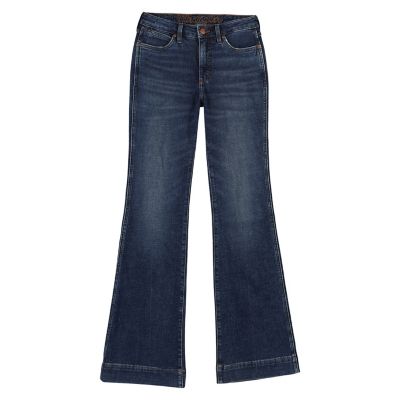
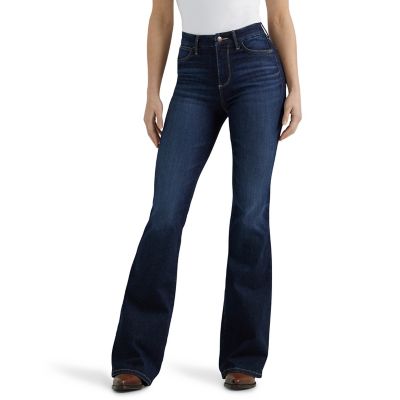
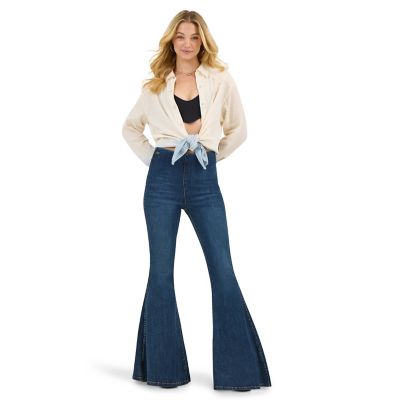
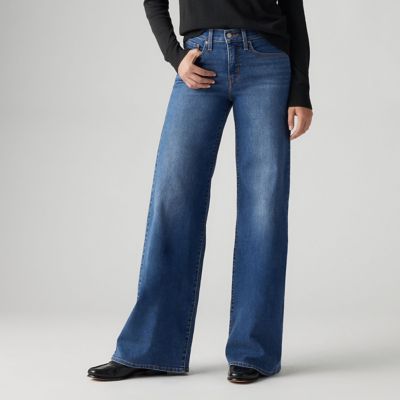
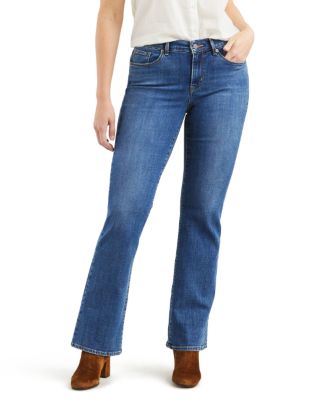
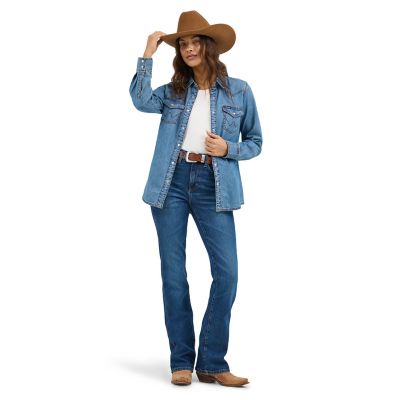
Women’s high-rise flare jeans sit high on the waist, fit closer through the hips and thighs, and widen from around the knee toward the hem. That combination gives them their familiar shape: a defined waist up top and a broader leg opening that falls over boots or shoes. The flare is generally more pronounced than a bootcut, though the amount of width varies by cut. For women who like their denim fitted without a narrow ankle, this style brings a different feel to everyday dressing. It works with a tucked-in T-shirt for a feed-store stop, a snap-front shirt for an afternoon in town, or a blouse for dinner after a long day. The higher waistband can help keep a tucked shirt in place, while the wider lower leg leaves room over many boot shafts. A comfortable fit depends on more than the number on the tag, though. Front rise, back rise, waistband shape, and room through the seat all affect how jeans sit when standing, sitting, or bending. A pair that feels good at the waist should also leave enough room across the hips without pulling hard at the fly or pockets. Curvier proportions may call for more room through the seat with a closer waist, while a straighter build may suit a different waistband shape. Inseam matters just as much because the hem helps define the flare. With boots, the leg should fall smoothly over the footwear rather than bunch heavily at the ankle or catch beneath the heel. With lower shoes, a shorter length may make more sense. Petite and tall proportions also involve where the knee shaping begins, not just how much fabric reaches the floor. Shortening an especially long pair can remove some of the widest part of the leg opening, changing the overall look. Thinking about the shoes worn most often helps narrow down a length that feels natural from the first step out the door.
Denim fabric plays a big part in how women’s high-rise flare jeans feel throughout the day. Cotton gives denim its familiar texture, while the weave, fabric weight, and fiber blend influence how firmly it holds its shape. All-cotton denim often feels more structured at first and can soften with wear, but it offers less give than a blend containing stretch fibers. A small amount of elastane, also called spandex, lets the fabric move more easily when climbing steps, settling into a truck seat, or reaching down to tie a boot. Stretch content alone does not tell the whole story; the construction of the fabric also affects how it stretches and returns to shape. A soft, flexible pair may feel easy from the start, while a firmer pair can create a more defined outline through the hip and thigh. For shoppers comparing that added give,
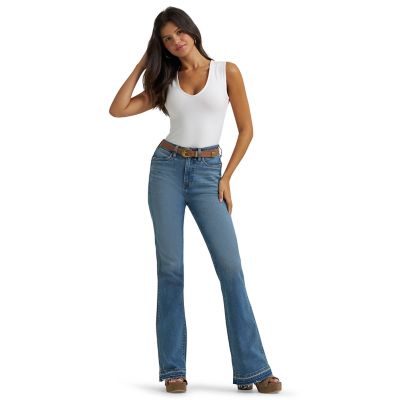
Womens Stretch Flare Jeans offers another way to explore flared denim. The right balance depends on whether the jeans are mainly for errands, everyday wear, or getting dressed for a night out. Midweight denim can offer substance without feeling overly stiff, while heavier fabric may feel more substantial at seams and waistbands. Pocket construction, stitching around belt loops, and finishing along the inside seams are details worth a closer look, especially when jeans will see frequent wear. Smooth seams can make a difference during long stretches of sitting, and pockets should lie comfortably rather than pull open across the hips. Wash and finish change the appearance, too. Deep blue or black denim creates a cleaner-looking outfit with a tucked shirt and belt, while lighter washes and fading give the same flared shape a more relaxed feel. Distressed areas add texture, but open sections provide less coverage and may not suit every task. The best match is a pair whose fabric and finish fit the way the day actually unfolds.
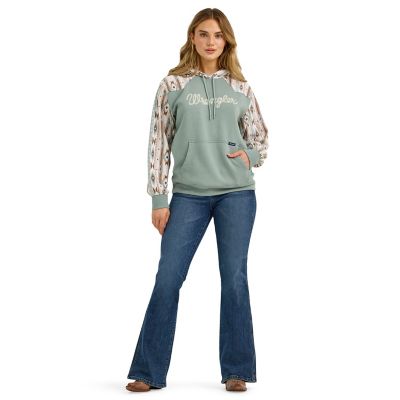
High-rise flares earn their place in a regular denim rotation because they pair easily with clothing that already has a job in the closet. A close-fitting knit top shows the higher waist, while a relaxed shirt can be tucked in fully or just at the front without hiding the shape entirely. A belt adds definition, but the waistband should fit comfortably without needing to be cinched tight. Shorter jackets leave more of the waist visible; longer layers create a looser outline over the fitted upper leg. Western boots are a natural companion, though work-inspired boots, low-profile shoes, and other everyday footwear can also fit the look when the hem length works. For a day split between light chores and town errands, enough room to walk, sit, and bend matters more than a snug appearance in the mirror. Wide hems still need to stay clear of moving equipment, and everyday denim should not take the place of task-specific protective clothing. These jeans can also make a thoughtful gift for someone who already favors a high waist and flared leg, especially when her preferred size, inseam, and stretch level are known. Keeping the fabric in good shape afterward starts with the care label, since blends and finishes can call for different treatment. Turning jeans inside out before washing helps limit friction on the visible surface, and washing with similar colors helps manage dye transfer. Cool water and a gentle cycle may suit many pairs when the label allows them. Measuring detergent rather than pouring freely can help prevent residue, and avoiding unnecessary washing can reduce repeated stress on the fabric. For stretch denim, high dryer heat may be harder on elastic fibers, so follow the stated drying directions and reshape the legs while damp when appropriate. A quick check for loose stitching, worn hems, or a loosening button can catch small repairs before they become bigger ones, helping a favorite pair stay in the rotation.