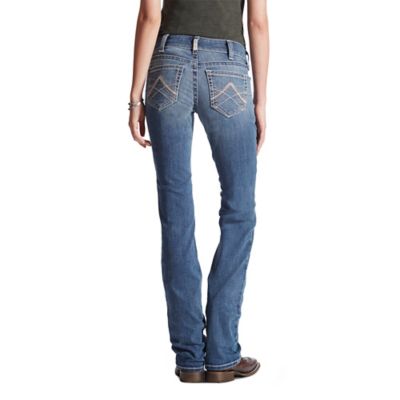
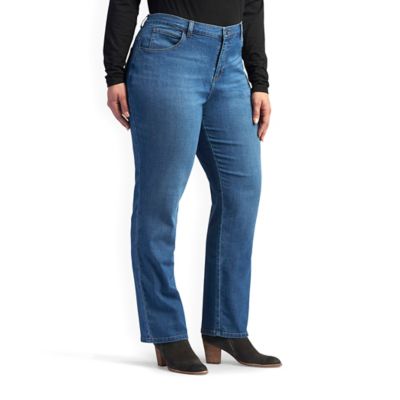
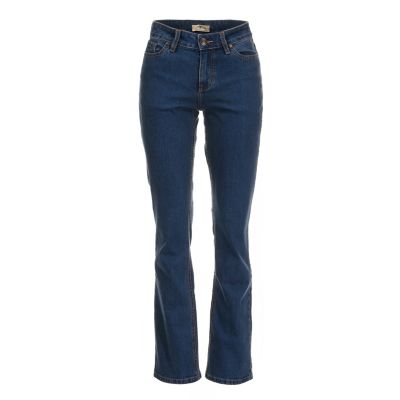
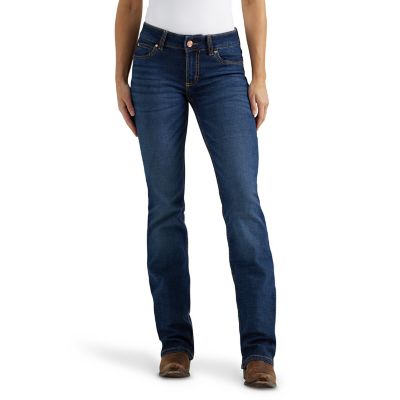
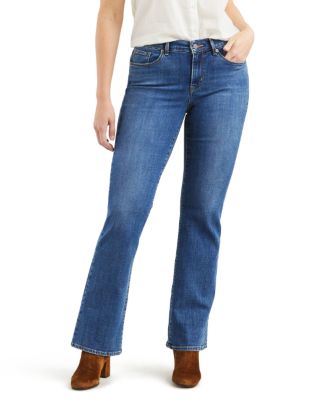
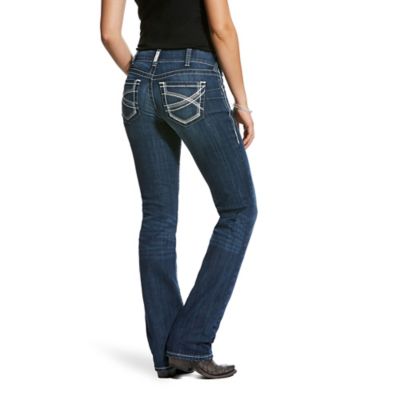
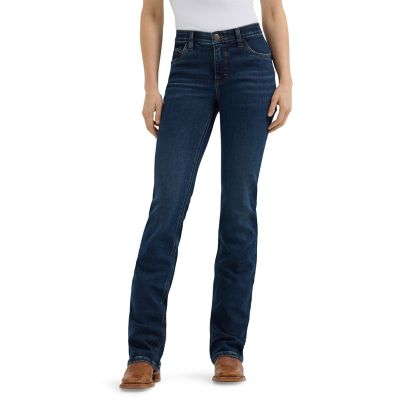
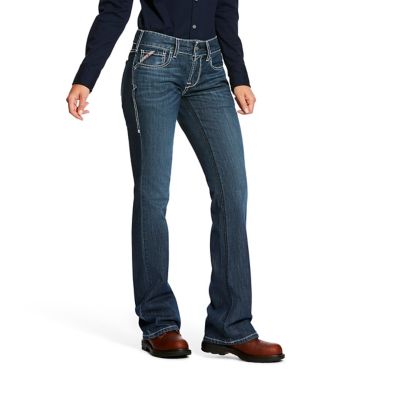
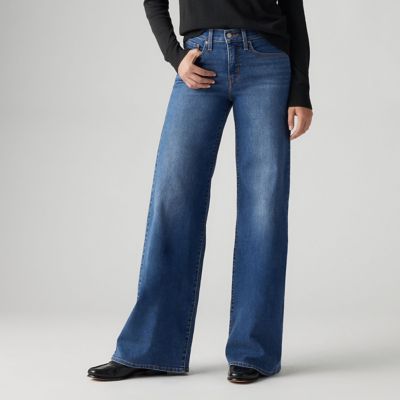
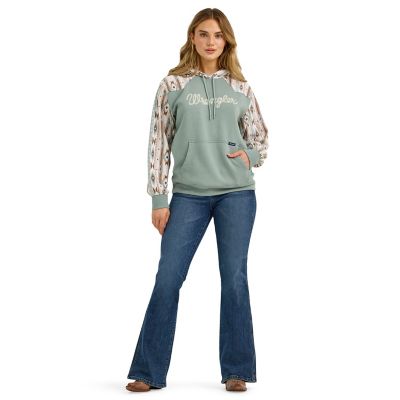
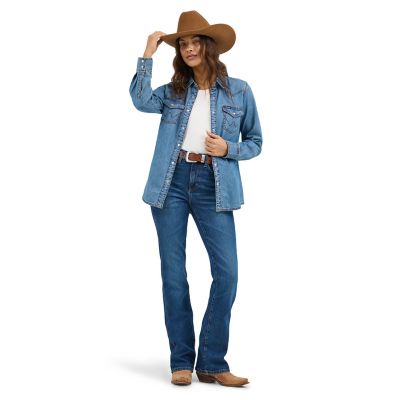
Women's mid-rise jeans sit between low-rise and high-rise styles, with a waistband that typically lands about 1 to 2 inches below the belly button. The exact position depends on torso length, body shape and the jean's cut, so the same rise can sit differently from one person to another. That in-between placement suits women who like coverage through the hips without a waistband that reaches as high on the torso. For everyday wear, the right fit stays comfortable while sitting in the truck, bending to fill a feed bucket or walking across the fairgrounds. The waistband should rest comfortably against the body rather than pinch at the sides or leave a large gap at the back. Through the seat and thighs, enough room to move matters just as much as the size on the tag. Deep pulling lines across the front pockets or a waistband that slides down can signal a mismatch in size or cut. A contoured waistband can help accommodate a smaller waist and fuller hips, while a straighter cut may suit a figure with less difference between waist and hip measurements. Front-rise measurements, waist and hip measurements, and inseam length offer a clearer picture of fit than size alone, especially when comparing different denim cuts. Rise and leg shape are separate features: mid-rise jeans can have slim, straight, bootcut, relaxed or flared legs. A straight leg keeps a fairly even line from knee to hem, while a bootcut opens slightly below the knee to make room around a boot shaft. Relaxed cuts allow more room through the seat or thigh, and slim cuts sit closer to the body. These differences matter when jeans need to move easily through a full day rather than simply look right while standing still. A comfortable mid-rise fit should let the wearer sit down, take a long step and bend at the knees without constantly tugging the waistband back into place.
Fabric plays a big part in how women's mid-rise jeans feel from the first wear to the end of the day. All-cotton denim generally has a firmer feel and gradually softens with wear, while denim blended with elastane or spandex offers stretch for reaching, squatting and climbing steps. Cotton blends may also include fibers that affect softness, weight or shape retention. Fiber percentages help explain the fabric, but stretch recovery matters, too: jeans should give with movement without becoming loose at the knees or seat after a few hours. Heavier denim can feel more substantial for chores and frequent wear, while lighter-weight fabric may drape more softly and feel less restrictive. Fabric weight alone does not tell the whole story about how long jeans will hold up. Well-secured belt loops, even stitching and reinforcement at pocket corners can make a difference where the fabric takes repeated strain. Pocket placement and depth are worth a look, especially for anyone who likes to keep small essentials close. A phone tucked into a back pocket can affect comfort when sitting, and shallow front pockets may not hold much once the wearer bends down. For work around the property, a clean finish without open distressing keeps more fabric between the skin and everyday scrapes, though ordinary jeans are not a substitute for task-specific protective clothing. Beyond chores, the same mid-rise silhouette works with a tucked plaid shirt, a simple knit top or a blouse for supper in town. Bootcut and flared hems can fall neatly over Western boots, while straight legs pair easily with lace-up boots or casual shoes when the leg opening allows. For a higher waistband paired with a wider lower leg,
Women's High Rise Flare Jeans offer another silhouette to consider. The difference comes down to where the waistband rests and how much room the leg has below the knee, not simply the size.
Inseam length deserves attention alongside rise, since the right hem depends on both the leg shape and the footwear worn with it. A pair that looks just right with a taller boot heel may drag beneath a flatter shoe, wearing through the back edge and picking up dirt along the way. Straight and slim legs usually need less extra length than wider flared hems, but the best length is one that clears the ground and feels comfortable with the intended shoes. Care also affects how mid-rise denim fits and wears over time. The garment's care label is the best starting point because cotton content, stretch fibers and finishes can call for different handling. Turning jeans inside out before washing helps limit surface abrasion and fading, and washing with similar colors helps prevent dye transfer. New dark denim can rub color onto light upholstery or footwear, so any dye-transfer notice deserves attention before the first wear. Treating a small stain promptly may spare the whole pair an extra wash, while fastening the zipper helps keep it from catching other garments in the load. High dryer heat can contribute to shrinkage and put strain on stretch fibers; air-drying or a lower-heat setting may be appropriate when the care label allows it. Empty pockets before laundering, and check hems, belt loops and pocket edges now and then so small repairs do not turn into larger tears. For a gift, a familiar waist size, inseam and preferred leg cut are more helpful than guessing from appearance, especially when the recipient already has a pair that fits well. Whether the day includes errands, time in the barn or a family get-together, women's mid-rise jeans offer a familiar middle ground between lower and higher waistbands, with fabric and fit choices that make room for different bodies and everyday routines.