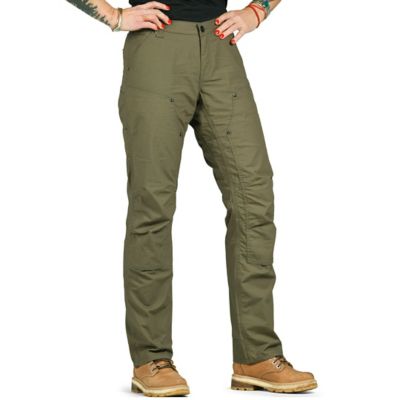
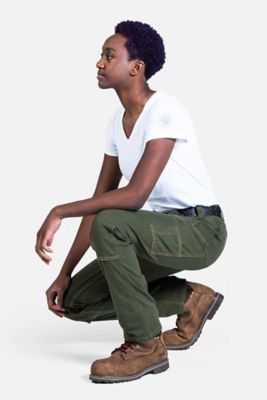
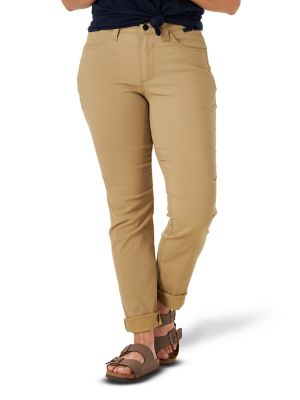
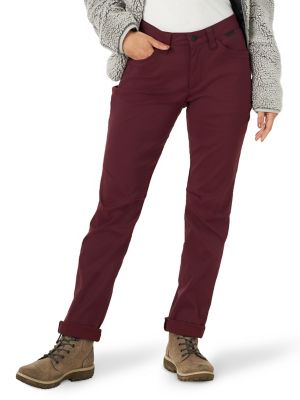
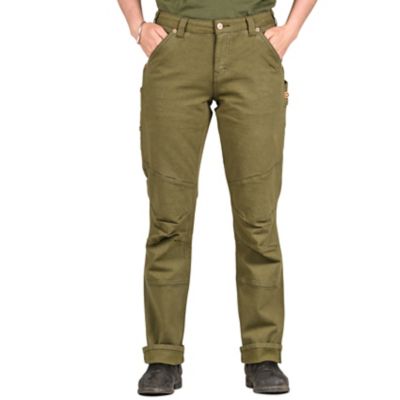
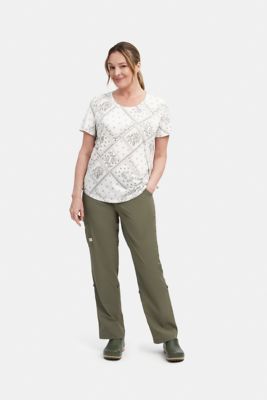
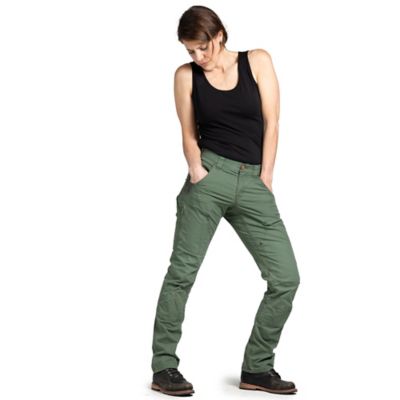
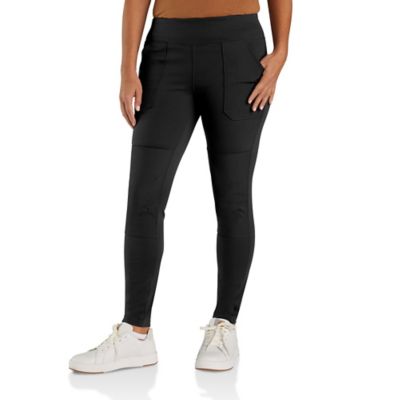
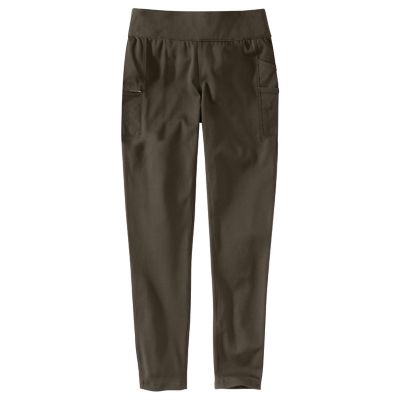
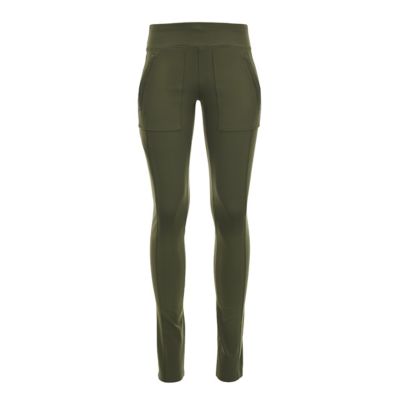
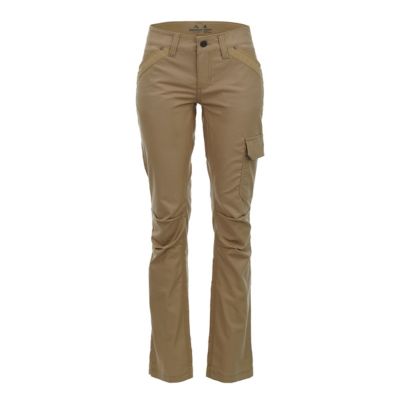
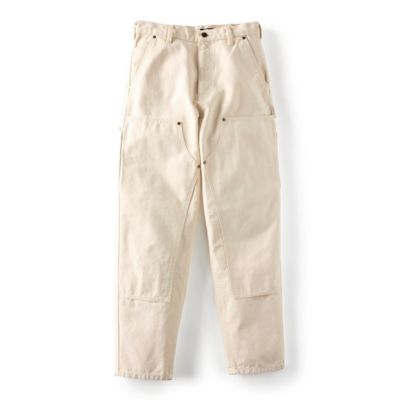
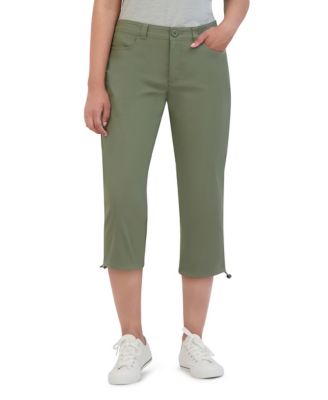
Women's green hiking pants fit right in on a wooded trail, along a creek bank, or on the path between the barn and the back pasture. Green offers plenty of range without calling much attention to itself: olive has an earthy look, deep forest green pairs easily with neutral shirts, and softer sage shades bring a lighter touch to an everyday outdoor outfit. The color works just as well with a well-worn pair of hiking boots as it does with trail shoes, making these pants a practical option for women who spend their free time exploring close to home or heading farther down the trail. Beyond color, the way a pair moves makes a big difference. Stepping over a fallen limb, climbing a tall rock step, or crouching beside a pack puts different demands on the seat, knees, and waistband than walking across level ground. A little extra room through the hips and thighs can keep the fabric from pulling, while shaped knees and a gusseted crotch can allow a fuller stride without adding loose fabric everywhere else. A close fit should still leave room to bend and sit comfortably, and a relaxed fit should stay clear of boot heels and trail obstacles. Waist rise matters, too, especially when a backpack's hip belt sits across the same area. A smooth waistband can feel less bulky beneath that belt, while an adjustable waist can help keep pants in place through repeated bending and climbing. Length deserves the same attention as waist size. A hem that stacks heavily over shoes may drag or catch, while a shorter inseam can expose more of the ankle than intended. Straight, tapered, and articulated leg shapes each have their place, depending on footwear and how much room feels comfortable. For women with longer legs, shorter frames, or fuller hips, garment measurements and fit descriptions offer a clearer picture than a size label alone.
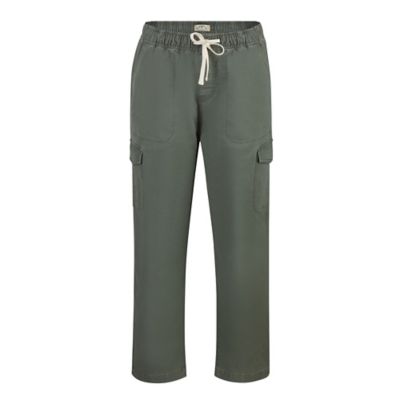
Fabric gives women's green hiking pants much of their character, from the feel against the skin to how they handle a full day of movement. Nylon and polyester fabrics are common in outdoor pants because they can be light to carry and resist the rubbing that comes from pack straps, rough benches, and repeated contact with trail surfaces. Construction matters alongside fiber content; a tightly woven fabric may feel quite different from a softer, more open weave, even when both share similar ingredients. Ripstop fabric has a reinforcing grid intended to help limit the spread of small tears, though it still needs care around sharp branches and rough rock. Stretch blends containing elastane can make high steps and deep bends easier, especially in a slimmer cut. Cotton blends may appeal to women who like a familiar, softer hand for casual walks and everyday tasks, but they generally hold moisture longer than many synthetic fabrics. For longer outings, fabric that moves perspiration away from the skin can help reduce that damp, clingy feeling beneath a pack or behind the knees. Smooth inner seams and a comfortable waistband are worth noticing for the same reason: small points of friction tend to become more noticeable over several miles. Pockets add another layer of practicality, particularly when a phone, folded trail map, or small notebook needs a place within reach. For women who prefer extra storage,
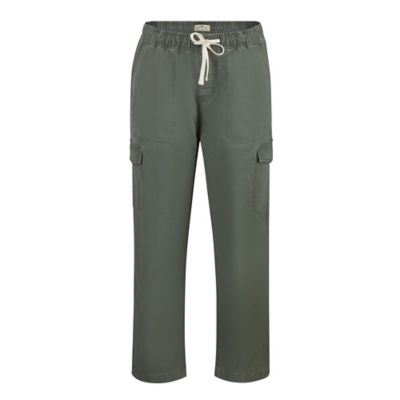
women's hiking cargo pants offer another style to consider alongside simpler pocket layouts. Pocket placement affects comfort as much as pocket count. A loaded thigh pocket can swing against the leg, and a back pocket may press against the body while sitting. Zippered or flap closures can help keep small belongings contained, while low-profile pockets may sit more comfortably beneath a pack belt. Reinforced pocket openings, tidy stitching, and secure fasteners also help support repeated wear.
The best match comes down to the kind of days these pants will see. A woman taking a short loop with her dog may prefer a soft waistband and enough pocket space for keys and a phone, while someone spending hours on uneven ground may put more weight on freedom of movement, seam placement, and fabric that stands up to brush. Green hiking pants can also suit campground chores, birdwatching walks, outdoor photography, and trips that mix time on the trail with stops in town. Olive and moss shades pair naturally with cream, gray, brown, navy, and black, so putting together an outfit does not take much fuss. A plain T-shirt, an easy-fitting button-front shirt, or a simple pullover can each work without making the pants feel limited to one activity. Care habits help preserve both the fit and the finish. The garment's care label is the starting point, since stretch fibers, fabric treatments, and different blends may call for different washing and drying methods. Emptying pockets, brushing away loose dirt, and fastening closures before washing can keep grit and hardware from working against the fabric. Turning pants inside out may help reduce surface rubbing, and treating a small stain promptly can keep it from becoming harder to remove. High dryer heat can be tough on certain stretch blends, so air drying or a lower setting may be appropriate when the label allows it. Small snags, loose threads, and worn seams are easier to address before another long outing puts more strain on them. For a gift, green hiking pants make sense for a woman who enjoys walking local trails, exploring public lands, or spending much of her day outdoors. Knowing her usual inseam, preferred rise, and favorite fit is more helpful than guessing from her general clothing size. Those everyday details are what help a pair feel comfortable from the first stretch of trail to the ride back home.