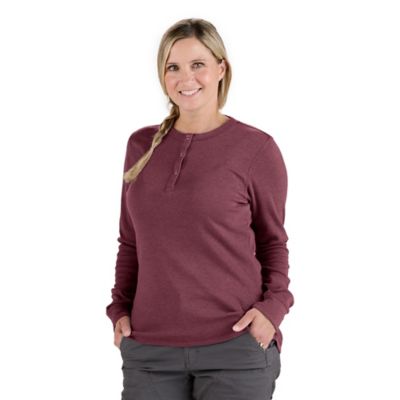
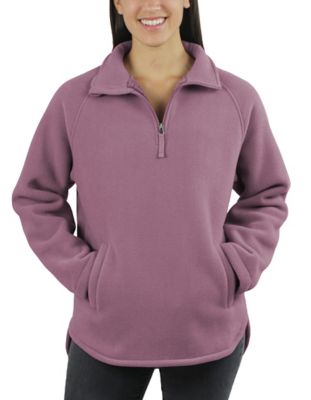
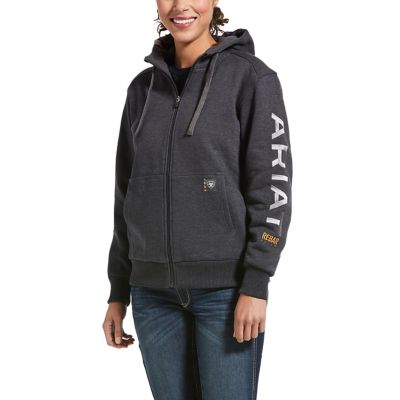
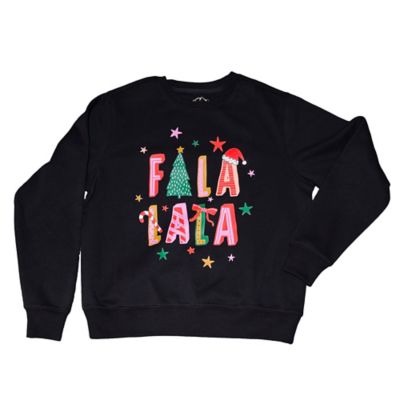
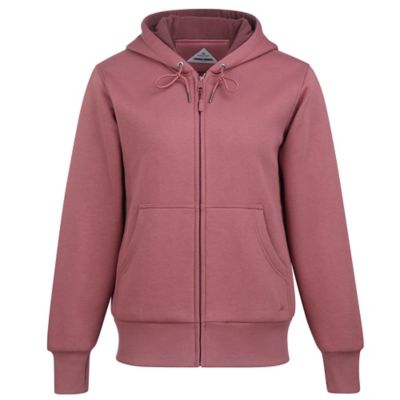
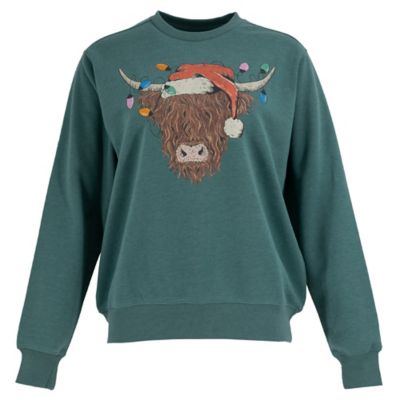
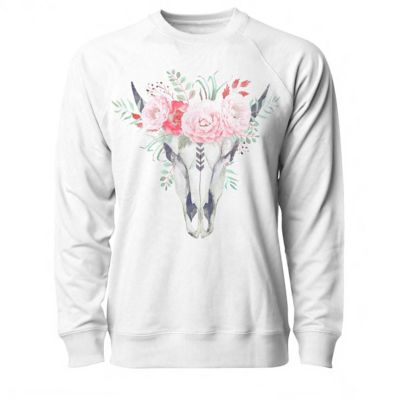
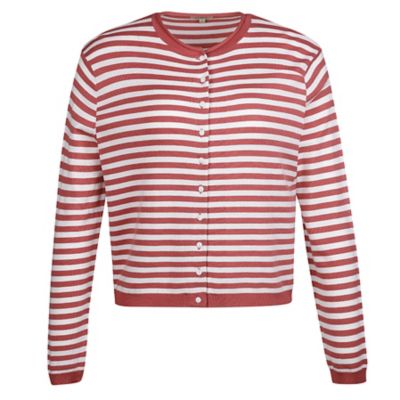
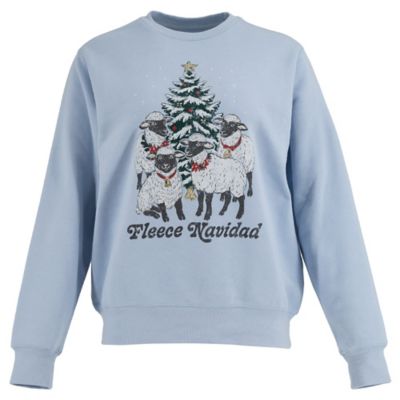
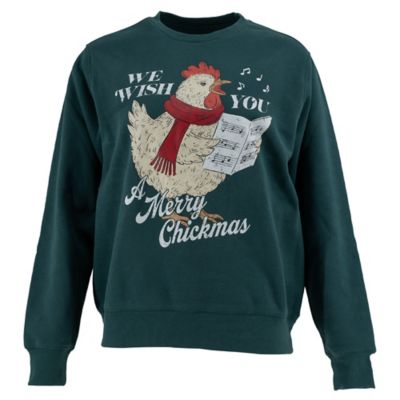
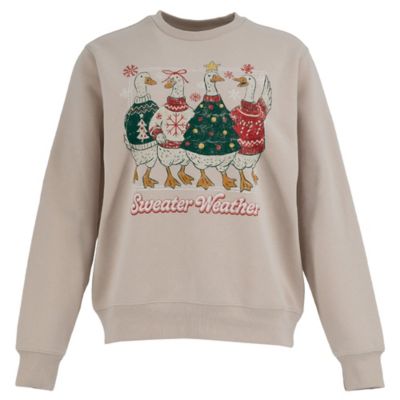
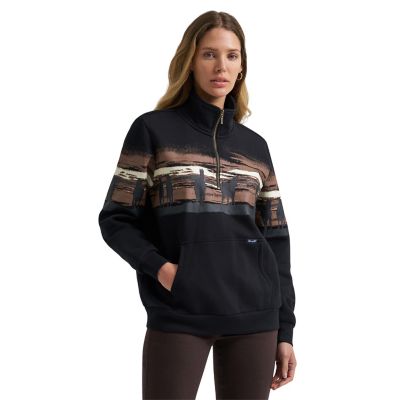
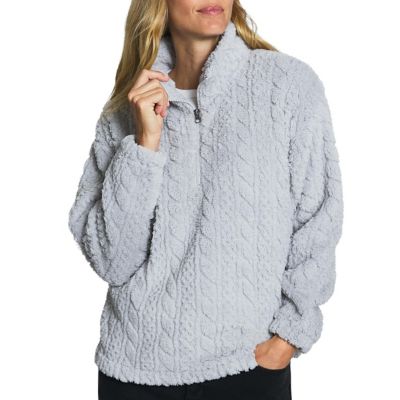
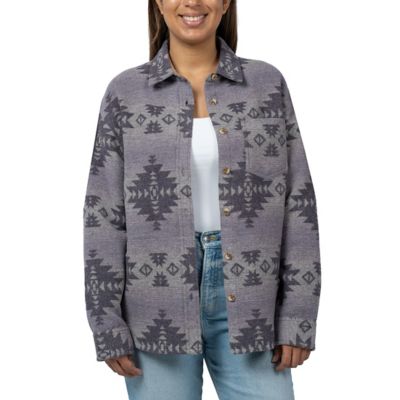
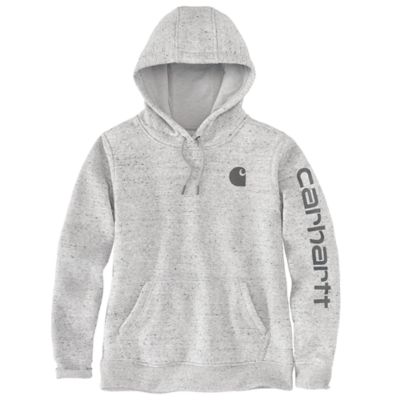
Winter tops for women include thermal shirts, fleece pullovers, flannel shirts, sweatshirts, and sweaters that bring warmth to everyday outfits and cold-weather workwear. The right feel depends on the fabric, its weight, and how the top fits into a full outfit. A lightweight knit can sit comfortably beneath a vest or chore coat, while a thicker sweatshirt or sweater adds insulation for slower-paced jobs and time outdoors. Cotton feels soft against the skin and works well for casual wear, indoor tasks, and short trips outside, though it holds moisture and takes longer to dry than many synthetic fabrics. Polyester fleece offers warmth without much weight and generally dries faster than cotton, making it practical for a day that moves between the house, barn, and truck. Wool can provide warmth while helping manage moisture, and wool blends may combine that feel with stretch or easier care, depending on their construction. Flannel gets much of its familiar softness from a brushed surface; a heavier weave generally feels warmer than a thin one, but fabric weight alone does not tell the whole story. A loosely knit sweater can let a breeze through, while a tightly woven shirt may offer more coverage without as much loft. That difference matters on a frosty porch or a breezy walk to the mailbox, where an outer layer that blocks wind can make a bigger difference than simply adding another thick shirt. Breathability matters, too. Hauling feed, carrying firewood, or cleaning stalls can build body heat quickly, so winter clothing needs to suit both the temperature and the amount of movement involved. Soft textures and familiar colors make these tops easy to wear beyond chore time, whether the day includes a trip into town, a family meal, or an evening spent by the kitchen table. Warmth is part of their appeal, but comfort through all those small changes in pace is what makes a winter top earn its place in the weekly rotation.
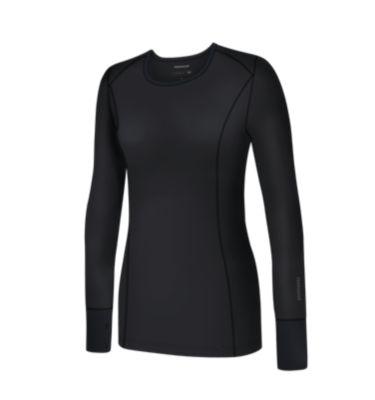
Fit plays a big part in how comfortably winter layers work together. A base layer generally sits close to the body without squeezing, helping it fit beneath another shirt without bunching at the elbows or waist. For that first layer,
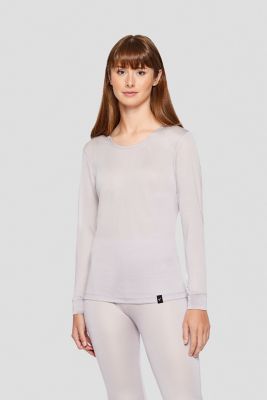
Women's Thermal Tops offer a starting point for building an outfit around next-to-skin warmth. Smooth, lightweight fabrics tend to slide beneath other layers more easily, while waffle-knit textures can add a little loft. A midlayer needs enough room for the shirt underneath, but extra fabric can become cumbersome inside a fitted coat. Shoulder seams, sleeve shape, and stretch all affect movement when reaching across a truck seat, lifting a feed scoop, or carrying a basket of laundry. Longer hems can help keep the lower back covered when bending, and a hem that tucks in comfortably can limit gaps between layers. For women who prefer an untucked shirt, a straight or gently curved hem offers coverage without a lot of fabric gathered at the waistband. Necklines change both comfort and styling: crewnecks sit neatly beneath many jackets, mock necks provide more coverage, and quarter-zip styles make it easier to release heat after an active stretch. Button-front shirts offer similar flexibility and can serve as a light outer layer over a knit top indoors. Cuffs that stay in place help keep sleeves out of the way, while roomy sleeves may feel better over a long-sleeve base. Pockets can be handy for warming hands during a pause outside, although their placement affects how smoothly a top fits beneath a coat or bib overalls. Around moving equipment, a closer fit and secured cords are sensible choices. The best combination leaves room to move, keeps layers from pulling against one another, and feels comfortable seated as well as standing. Trying a reaching or bending motion is often more revealing than judging fit from a still pose.
Everyday wear also puts fabric and construction to the test. Repeated rubbing beneath overall straps, along a coat zipper, or at the edge of a work surface can leave different marks than occasional wear around the house. Even stitching, firmly attached buttons, and cuffs that spring back into shape are useful details to consider for a top that will see frequent wear. Heavier fabric is not automatically better for every job; a lighter shirt that layers easily may be more comfortable for active chores, while a substantial sweatshirt can feel right for a quiet morning on the porch. Care requirements deserve the same attention as softness. The garment label provides the starting point for washing and drying, especially with wool, textured knits, and fabric blends. Turning tops inside out can help limit surface rubbing in the wash, and keeping rough fasteners away from softer fabrics can reduce snags. High dryer heat may cause shrinkage or affect stretch, while some sweaters need reshaping and flat drying to maintain their fit. Fleece can collect lint from towels, and knit fabrics may develop pills where they rub against other clothing. Those little details matter when choosing between an easy-care workday top and a sweater meant for gentler wear. Color and pattern have a practical side as well: darker shades and plaids can make small marks less noticeable, while lighter colors bring a softer look to jeans or corduroy pants. Winter tops also make thoughtful gifts for women who spend their days caring for animals, working outdoors, commuting, or keeping a busy household moving. Familiar sizing, a favorite neckline, and a fabric that suits her routine usually matter more than a bold style change. A soft pullover for relaxed evenings serves a different purpose than a close-fitting thermal for time outside, but both can become familiar favorites. With the right balance of warmth, movement, and manageable care, a winter top fits naturally into the work, errands, and downtime that fill a cold-weather day.