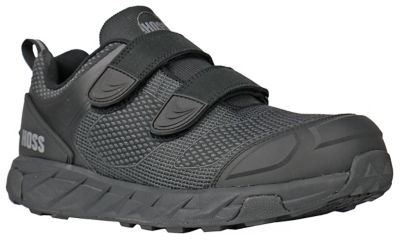
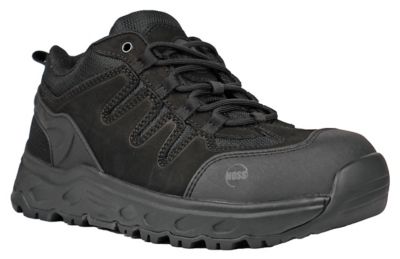
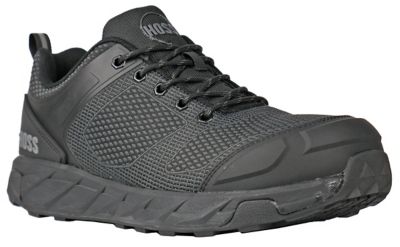
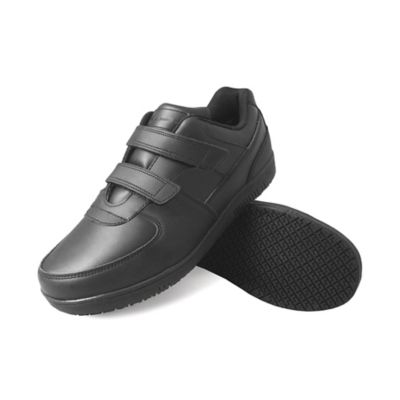
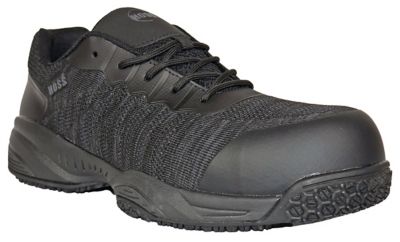
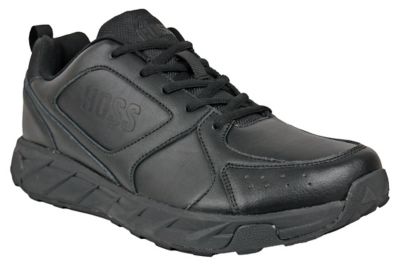
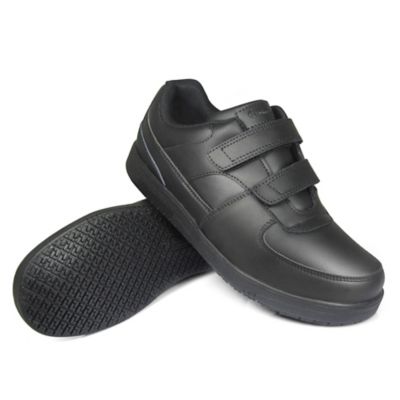
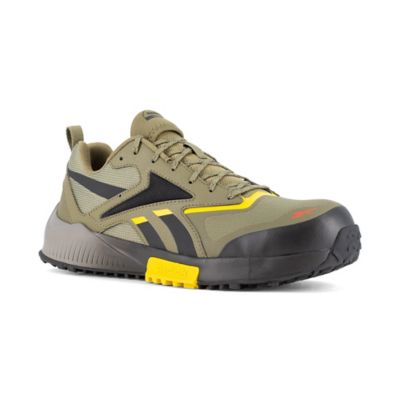
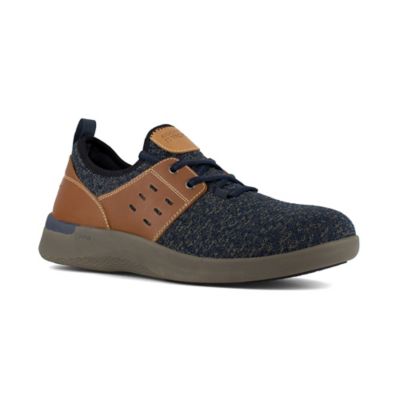
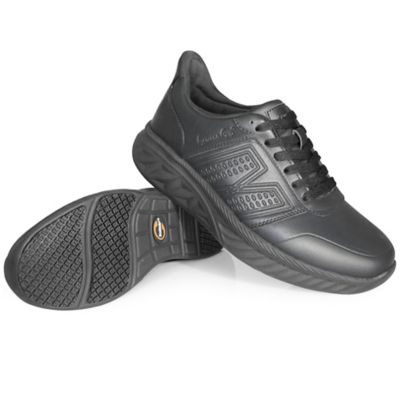
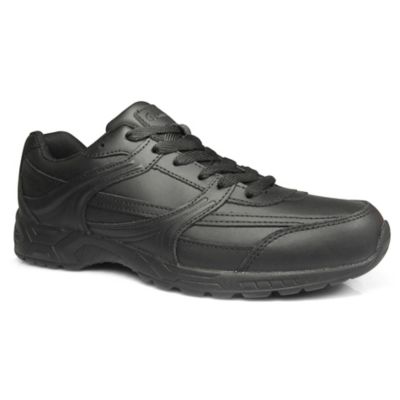
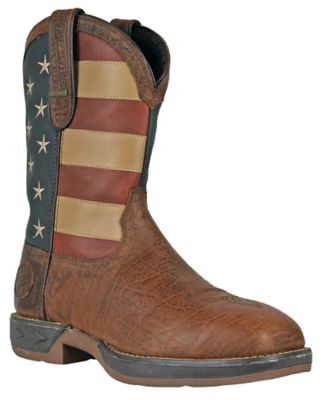
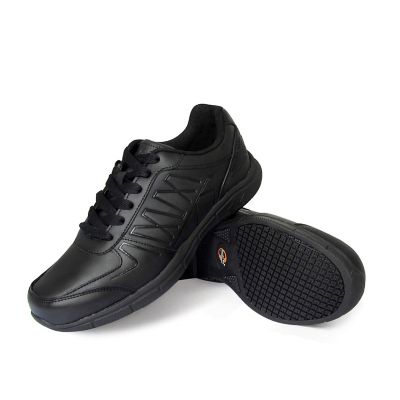
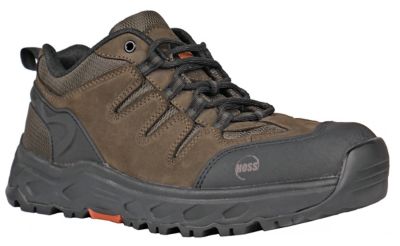
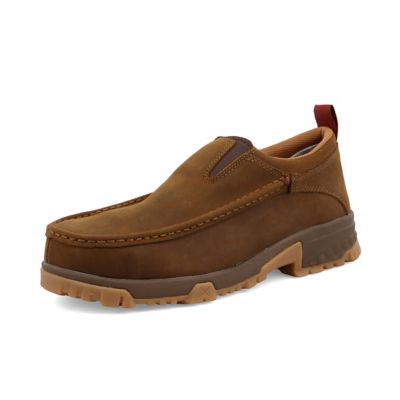
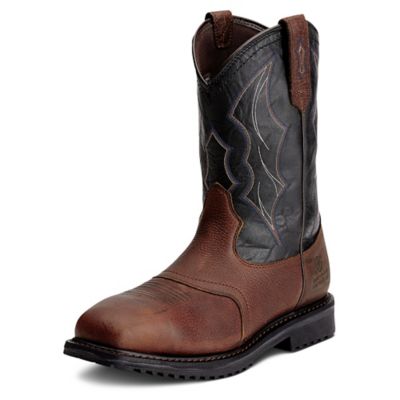
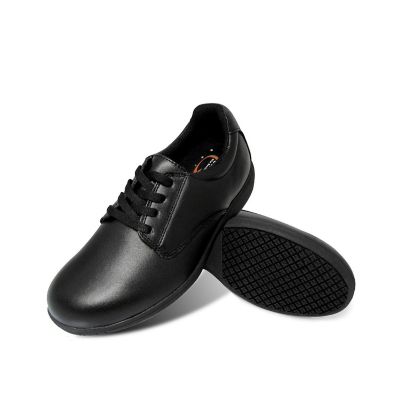
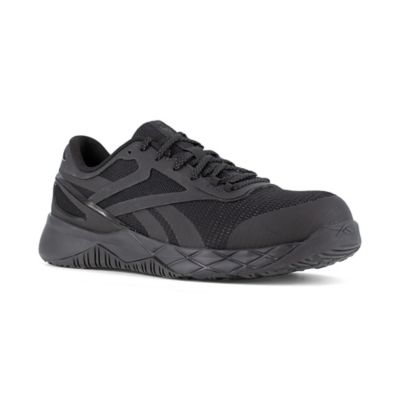
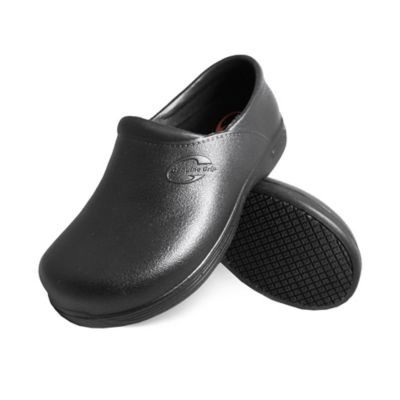
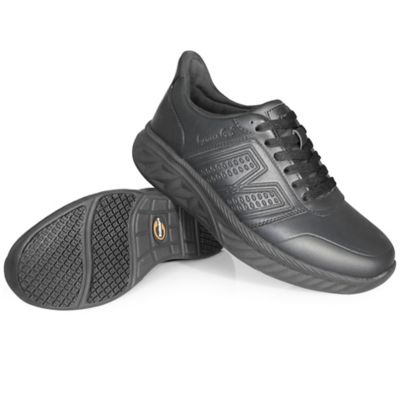
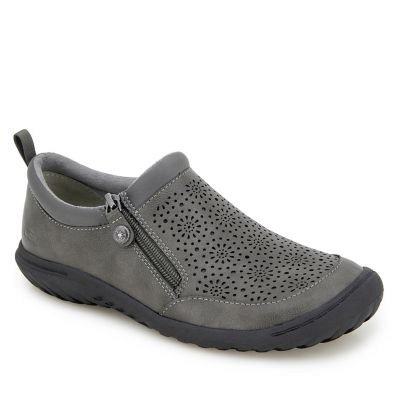
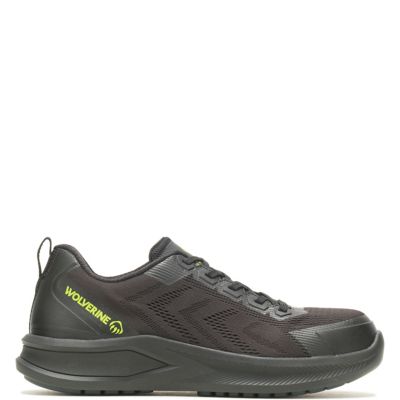
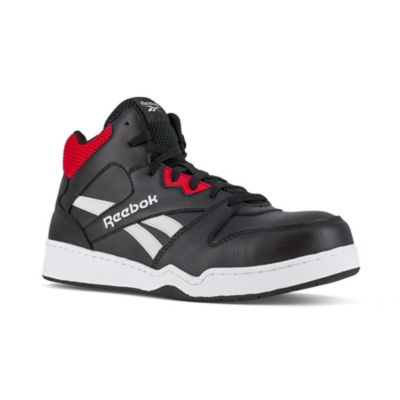
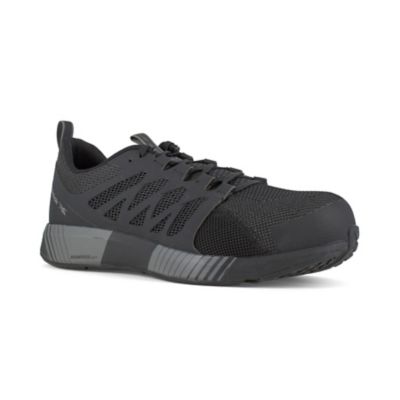
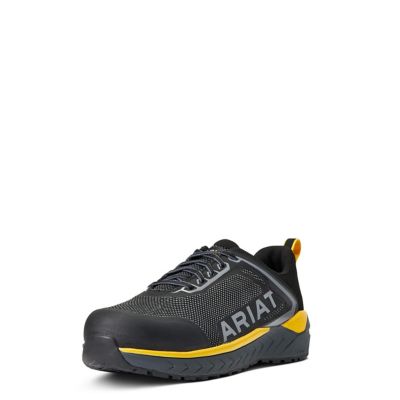
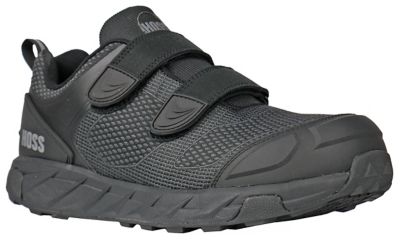
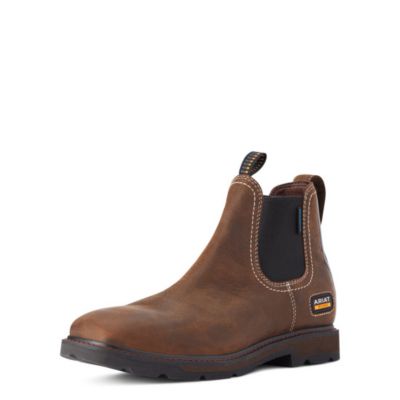
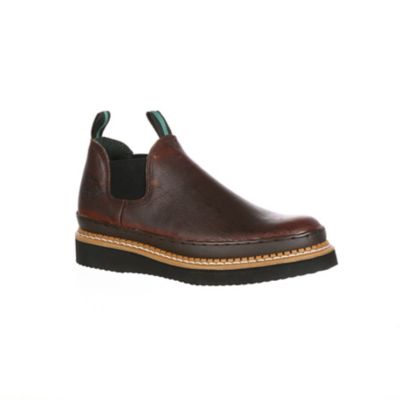
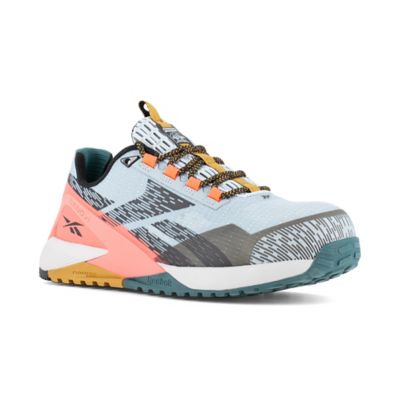
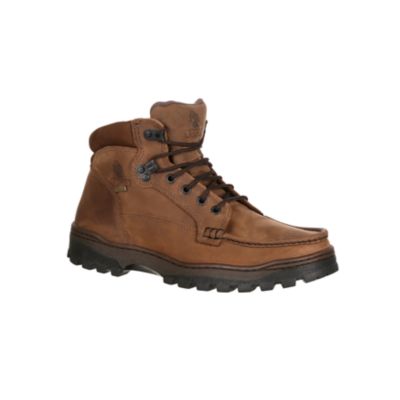
Wide width slip resistant shoes pair a roomier fit with outsoles designed to help maintain traction on the surfaces found in many workplaces. That combination matters when a shift means carrying trays across a dining room, stocking shelves on concrete, or moving between a break room and a busy warehouse floor. A wide fit gives broader feet more space across the forefoot, while a slip-resistant outsole helps address footing on certain slick surfaces. Neither feature replaces the other: a roomy shoe can still lack the traction a job calls for, and a slip-resistant shoe can still pinch if its shape is too narrow. Wide and extra-wide labels describe fit, but the measurements behind those labels vary among manufacturers and between men's and women's sizing. In many men's sizing systems, 2E indicates wide and 4E indicates extra wide; women's wide sizing often starts at D, with 2E indicating extra wide. The size chart for the footwear remains the best reference. Toe-box shape matters just as much as the width marking, especially for feet that spread at the toes or need clearance around the big-toe joint. A rounded front may feel different from a tapered one even when both carry the same width designation. Enough room to wiggle the toes, a heel that stays seated, and an upper that does not squeeze the sides of the foot all contribute to a comfortable fit. Going up in length alone may leave the heel sliding without providing space where it is needed. For folks who spend most of the day standing, the aim is room without looseness, so the foot does not shift with every turn. Food service workers, healthcare staff, custodial crews, and retail employees may all have reasons to look for this combination, though each workplace can set different footwear requirements. These shoes can also make sense for everyday chores on hard surfaces when their construction matches the task, rather than deep mud, rough pasture, or other conditions better suited to boots.
The outsole is where slip-resistant work footwear earns its place, but there is more to it than deep grooves or a rugged appearance. Rubber compounds, tread layout, and channels that move liquid away from the contact area all influence how a sole performs. Performance also depends on the floor and what is on it: water on tile presents a different challenge from cooking oil near a fryer or dust on a smooth shop floor. Documented slip testing, including any stated test standard and surface conditions, provides more useful information than appearance alone. No outsole makes every surface safe, and slip resistance does not mean protection from ice. During the cooler months, wet entry mats, tracked-in leaves, and damp thresholds still call for a steady pace and clear walkways. Upper materials bring their own tradeoffs. Leather can provide structure and a surface that is generally easier to wipe down than open mesh, although seams and finishes affect care and moisture protection. Synthetic uppers may offer a smooth, low-maintenance surface, while textile and mesh panels can allow more airflow during warm indoor shifts. Breathable construction is not necessarily a good match for frequent splashes, and water resistance is not the same as waterproof protection. A kitchen worker dealing with spills may value a closed, easy-clean upper, while someone walking dry indoor aisles may put more weight on ventilation and flexibility. Closure style affects day-to-day wear, too. Laces allow adjustment over the instep, which can help when one foot needs a little more room than the other. Slip-on designs offer convenience, but they still need a secure heel and enough hold through the midfoot. Cushioned midsoles can soften the feel of hard floors, while a stable base helps keep that cushioning from feeling overly soft underfoot. Slip resistance is separate from safety-toe protection, puncture resistance, and electrical hazard ratings; any of those features should match the employer's requirements rather than be assumed from the shoe's work-ready appearance.
Comfort over a full shift comes from how these details work together, not simply from a thick footbed. A person standing at a service counter may appreciate steady support under the heel and arch, while someone covering long warehouse aisles may prefer a shoe that bends comfortably at the ball of the foot. The right amount of flexibility lets the foot move without making the shoe feel flimsy or forcing the toes to grip to keep it in place. Trying footwear with the socks normally worn on the job gives a better sense of the space inside, particularly when thicker socks come out during cooler weather. Feet can swell through the day, so a fit that feels snug first thing in the morning may feel tighter near the end of a shift. Removable insoles may leave room for an appropriate replacement insert, but that insert can change heel height and toe clearance. A wider shoe is not automatically deeper, and an orthotic needs enough space without lifting the heel out of its secure position. For a broader look at roomy footwear for different job settings,
Work Shoes For Wide Feet connects that fit consideration with everyday work demands. Keeping footwear in working shape also means paying attention to what happens after the shift. Flour, grit, and other debris can pack into outsole channels, while grease can leave a film that calls for cleaning according to the maker's directions. A soft brush or damp cloth may suit routine cleanup, depending on the material; machine washing should never be assumed safe. Letting shoes air-dry away from direct heat helps protect uppers, adhesives, and cushioning. Reinforced stitching and protected toe areas can help with everyday scuffs, but even well-built footwear needs regular checks. Flattened tread, separating soles, cracked uppers, or cushioning that no longer rebounds can signal that a pair is nearing replacement. Room for the toes, a secure heel, suitable traction, and straightforward upkeep make a practical combination for long days when there is still plenty to get done.