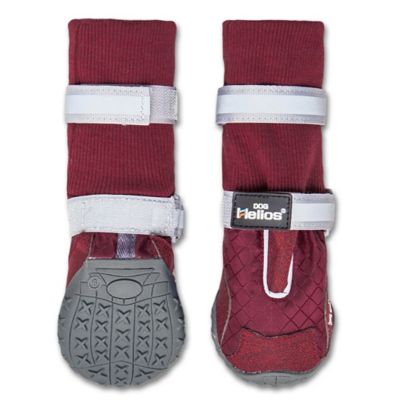
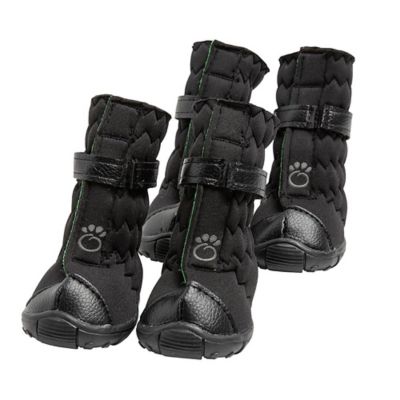
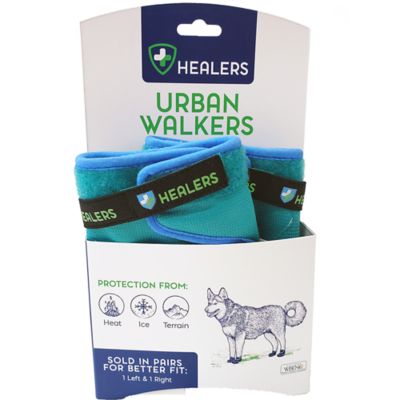
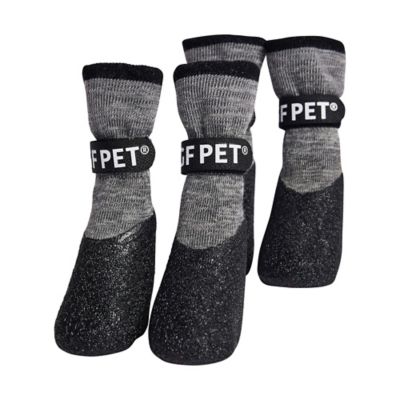
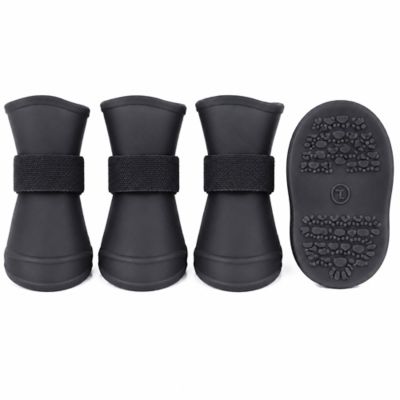
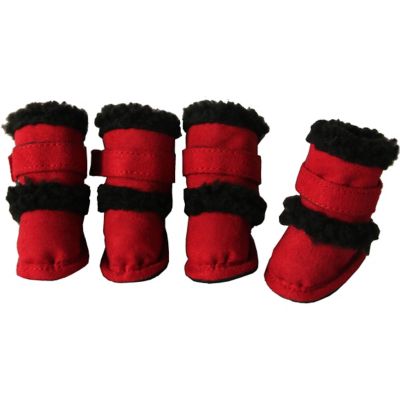
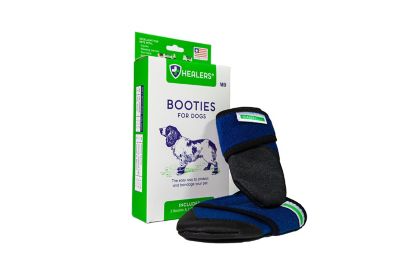
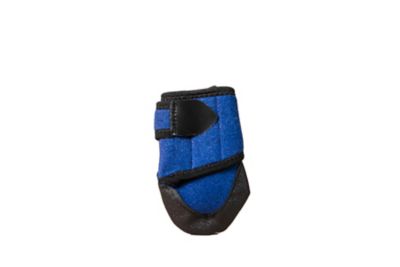
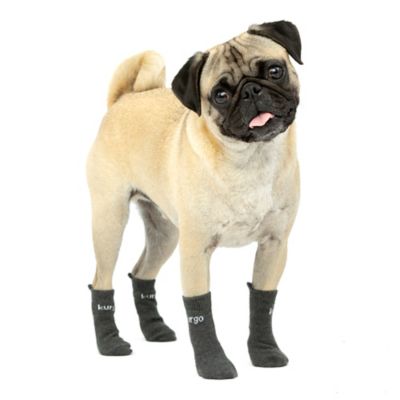
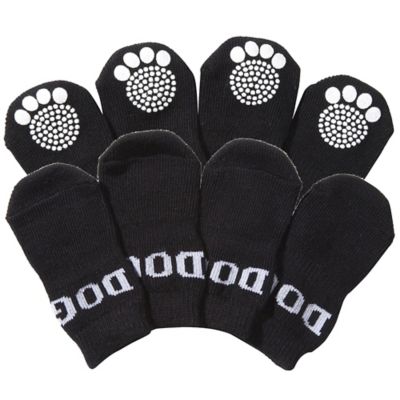
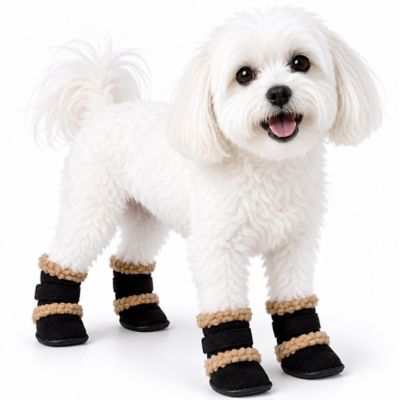
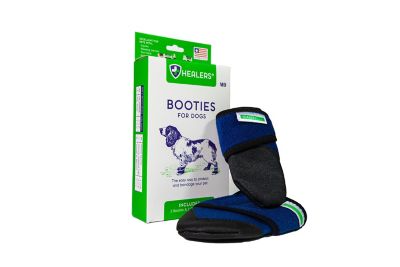
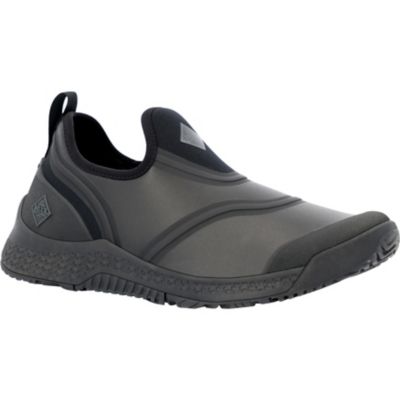
Water-resistant dog shoes help limit paw contact with wet grass, muddy ground, slush, and surface residues such as road salt. They put a layer between a dog’s feet and the ground during walks down a gravel drive, trips along a damp trail, or outings across a salted sidewalk. Water-resistant construction sheds moisture or slows its entry, but it does not necessarily keep paws dry through deep puddles, standing water, or a long stretch of heavy rain. Waterproof footwear generally offers a stronger barrier, though the height of the opening, seam construction, and closure still matter. Even a waterproof upper cannot stop water from coming in over the top. Common materials include nylon, polyester, coated fabrics, and rubber or similar flexible sole materials. A smooth outer surface may shed mud more readily, while reinforced areas around the toes can help handle contact with rough ground. Sealed seams can reduce places where moisture seeps through, and a taller cuff may provide more coverage against splashes. Exposed mesh can allow airflow, although it may also let moisture enter more easily than a fully covered upper. Those differences matter when comparing footwear for a quick walk across wet grass with shoes intended for longer outings on damp ground. Underfoot, tread patterns can add grip, but performance depends on the surface, the sole material, and the dog’s movement. Deep lugs may suit loose dirt, while a more flexible sole can bend more readily with the paw. No tread makes slick ice or a wet floor risk-free. Water resistance also does not establish protection against hot pavement; that calls for footwear specifically designed for heat exposure, along with careful attention to ground conditions. For everyday use, the right balance is enough coverage for the outing without making each step feel stiff or heavy. A dog taking a short walk near the house may have different needs from one covering uneven paths beside a pasture.
Fit has as much to do with comfort and moisture protection as the fabric itself. Dog shoes need room for the toes to spread naturally under weight, with enough hold around the leg to keep the sole beneath the paw. A loose shoe can twist sideways, catch on uneven ground, or slip off in mud; one that is too tight can rub or restrict circulation. Paw length and width provide a better starting point than breed or body weight alone. Measurements taken while a dog stands on the paw account for its natural spread, and the footwear’s sizing directions help determine whether nail length belongs in that measurement. Front and rear paws may differ in size, so a matching fit across all four feet is not something to assume. Shape matters, too: a broad paw may need a different toe area than a narrow one, even when both measure the same length. Adjustable straps, wide openings, and flexible cuffs can make getting shoes on less of a wrestling match at the back door. Closures should hold securely without pressing against a dewclaw or trapping long fur. Enough coverage around the opening can help keep out grit, while excess fabric may bunch or rub. Reflective details can make the shoes easier to notice in low light, though they do not replace other visibility gear. Some dogs settle into footwear quickly; others need short, supervised stretches on familiar ground before wearing it for a longer walk. An exaggerated high step can happen at first, but persistent limping, chewing, or refusal to move deserves a fit check rather than a longer outing. For older dogs or dogs with mobility concerns, flexible soles and suitable traction may be useful considerations, but shoes are not a substitute for veterinary care. Existing sores, swelling, or paw injuries call for advice about whether covering the foot is appropriate. The goal is footwear that stays in place while allowing a comfortable, natural stride.
Care and construction both influence how well water-resistant dog shoes hold up to regular outings. Mud, sand, and small stones can collect inside, turning a protective layer into a source of rubbing. Road salt and other de-icing residues can cling to the outside or enter through the cuff, so removing shoes after the walk and checking the paws remains important. Cleaning directions vary by material: some footwear tolerates machine washing, while other designs call for a gentle hand wash or a wipe with a damp cloth. Manufacturer care directions are the best reference for detergents, washing methods, and drying. Air-drying away from direct heat helps avoid damage to coatings, adhesives, and flexible components when that method matches the care label. Shoes need to dry inside as well as outside before another long stretch of wear, since trapped moisture can soften skin and contribute to irritation. Between outings, a look at the tread, seams, toe area, and straps can reveal wear before a shoe starts slipping or leaking. Flattened tread, split material, loose stitching, or closures packed with fur can change how the footwear performs. Tough outer fabric helps with abrasion, but no dog shoe is meant to withstand chewing or sharp hazards such as broken glass and exposed metal. Supervision and sensible route choices still matter around the yard, along the road, and near outbuildings. For households managing muddy paws at the door, shoes can be one part of the routine alongside a paw towel and a washable resting area.
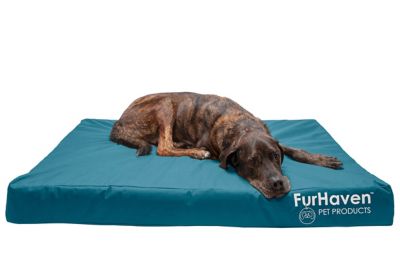
Water Resistant Dog Beds offer another way to manage everyday dampness where a dog settles after an outing, though bedding also needs regular cleaning and drying. Dog footwear can make a practical gift for someone who spends plenty of time outside with a four-legged companion, provided the dog’s measurements and needs are known. The most useful choice comes down to the ground underfoot, the length of the outing, and a fit the dog can move in comfortably.