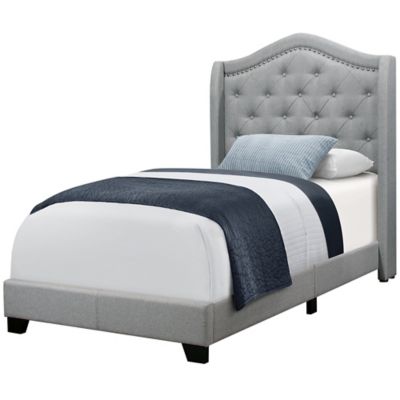
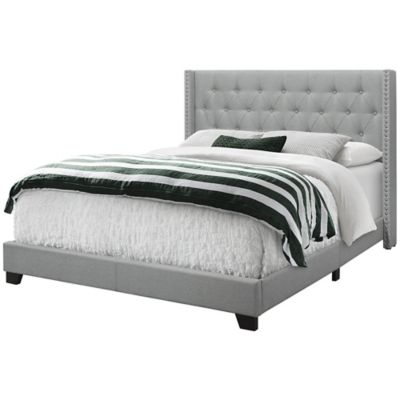
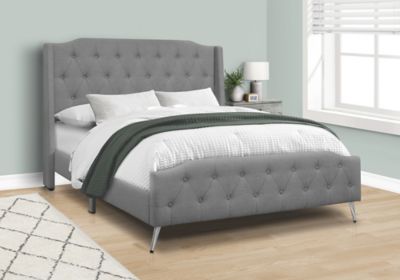
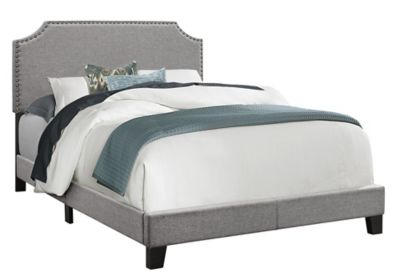
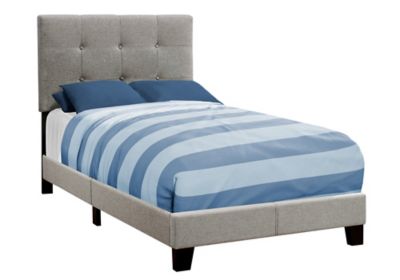
Tufted headboard bed frames pair a padded, upholstered headboard with a frame that supports the mattress, either on a platform base or on a foundation-compatible structure. Tufting draws the covering inward at repeated points, often with buttons or stitching, creating recessed patterns across the padding. Diamond, square, and channel patterns give the headboard different looks, from a tall, cushioned centerpiece to a simpler backdrop that fits easily beside a wooden nightstand. The appeal goes beyond appearance: an upholstered headboard puts a padded surface behind the pillows for reading, watching television, or settling in after a long day. That padding does not replace proper back support, but it can make the bed feel more inviting than a bare wall behind the mattress. The frame beneath the upholstery matters just as much as the fabric on top. Solid wood, engineered wood, and metal can appear in different parts of the same bed, with rails, brackets, slats, and center supports working together to carry the mattress and sleepers. The upholstery may be woven fabric, a velvet-like textile, leather, or a leather-look material, each with its own feel and care requirements. A tightly woven covering has a different texture than a plush surface, while a smooth covering changes how light falls across the tufting. Color also affects how the bed sits in the room. Oatmeal, gray, brown, and other quieter shades can sit comfortably alongside quilts, checked bedding, and natural wood furniture without making the space feel too busy. Darker upholstery creates a stronger outline, while lighter fabric makes seams and tufting easier to see. Headboard shape adds another layer of character: straight edges keep the profile simple, curved tops soften the outline, and winged sides bring the upholstery forward around the pillows. In a main bedroom, guest room, or older teenager’s room, these details let the bed feel finished without needing a lot of extra furniture.
A good fit starts with more than the mattress size printed on the label. Tufted headboard bed frames can extend beyond the mattress because of padded rails, thick headboards, or projecting wings, so the full assembled width and length matter when planning a room. A queen mattress may fit the sleeping needs of two adults, for example, but the surrounding frame still needs enough space for nightstand drawers, closet doors, and a clear path to the doorway. Mattress height changes the look, too. A thick mattress and foundation can cover much of the tufting, while a thinner mattress may leave more of the headboard exposed. An adjustable headboard can offer some flexibility, but its available positions and attachment requirements depend on the frame. Platform construction generally supports a compatible mattress without a separate box spring when the slats or deck meet the mattress maker’s requirements. Other frames need a foundation or box spring to provide the intended support and finished height. Slat spacing, center rails, support legs, and stated weight limits deserve close attention, particularly for larger mattresses or beds shared by two people. A mattress warranty may set its own support requirements, and the frame’s weight rating should be read with any stated allowance for the mattress and foundation in mind. For an adjustable base, compatibility needs to be confirmed rather than assumed; some upholstered surrounds can accommodate one, while others have support structures that cannot be removed. The height of the sleeping surface also affects everyday comfort. A lower bed can keep the room feeling open, while a higher surface may suit someone who finds getting up from a low seat difficult. Underbed clearance determines whether storage bins fit and whether a vacuum can reach beneath the rails. Assembly details count as well, from getting a large headboard through a narrow stairwell to placing center support feet firmly on the floor. Secure connections, the correct hardware, and an even setup help limit shifting and noise during everyday use.
Upholstery brings its own practical considerations, especially in a bedroom shared with pets or a household where the bed doubles as a reading spot. Fabric texture, tuft depth, and the number of seams all affect how easily lint, hair, and dust collect. Deep button recesses need more attention than broad, flatter panels, and a winged headboard has extra edges to clean. A vacuum upholstery attachment can help lift loose debris when the care instructions allow it, while a soft brush attachment can reach around seams without dragging hard edges across the covering. Spills are best addressed promptly according to the fabric care label, since adding too much water or the wrong cleaner can leave marks or affect the padding underneath. Smooth leather-look coverings often call for a different cleaning approach than woven upholstery, and neither should be treated as automatically stain-resistant. Pillows placed between the sleeper and the headboard can reduce direct contact with hair products and skin oils, though the covering will still need regular attention. In a guest room, a tufted frame can give the bed a welcoming look while leaving the rest of the space straightforward: a bedside light, a place for a suitcase, and enough room to walk around comfortably. For a child’s room or a compact spare bedroom,
Twin Size Platform Bed Frames provide a related category to consider when a smaller sleeping footprint makes sense. In a larger bedroom, a wider upholstered headboard can visually anchor the bed beside substantial dressers or nightstands. Whatever the room size, long-term satisfaction depends on the whole setup rather than tufting alone. A suitable mattress, properly supported frame, manageable upholstery care, and enough clearance for daily routines make the difference between a bed that simply looks inviting and one that fits comfortably into everyday life.