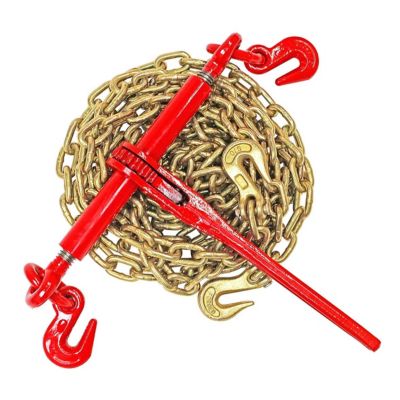
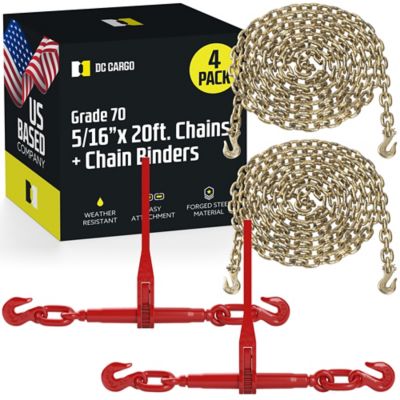
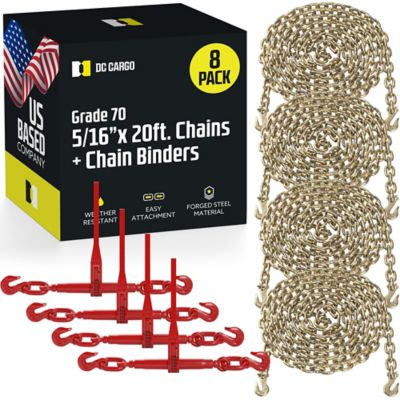
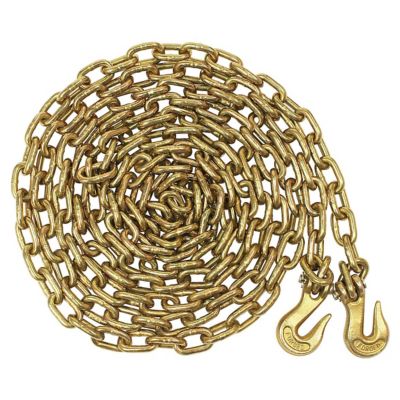
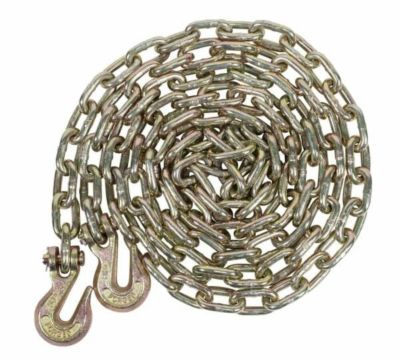
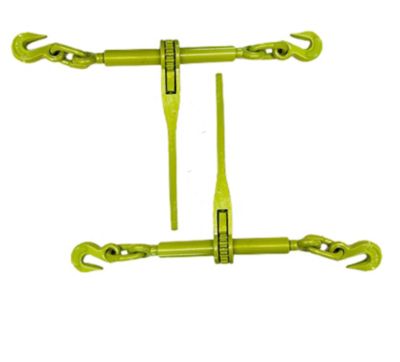
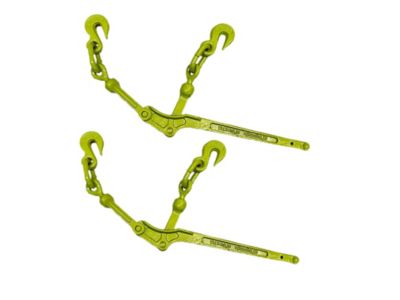
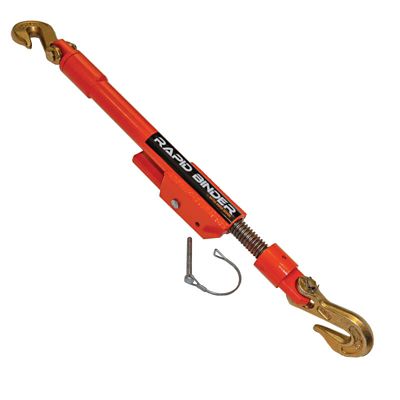
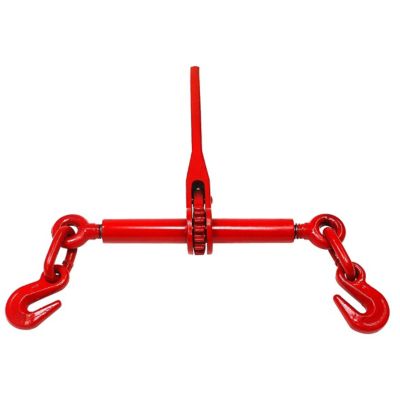
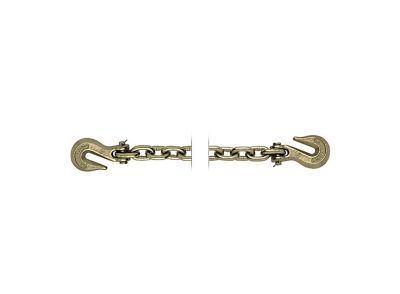
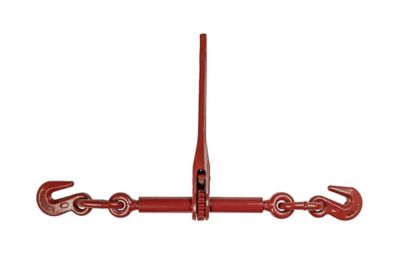
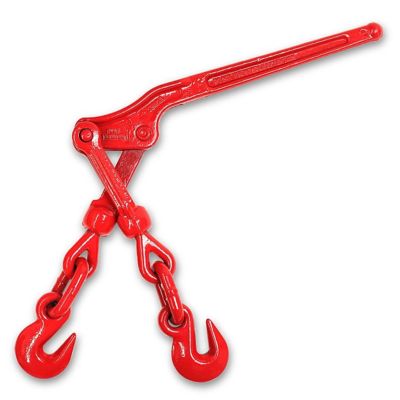
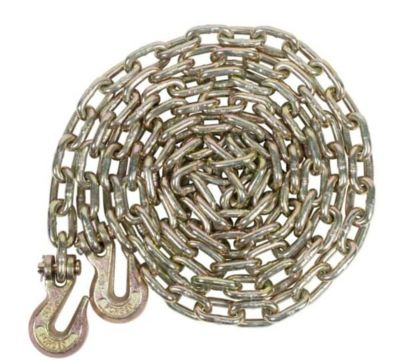
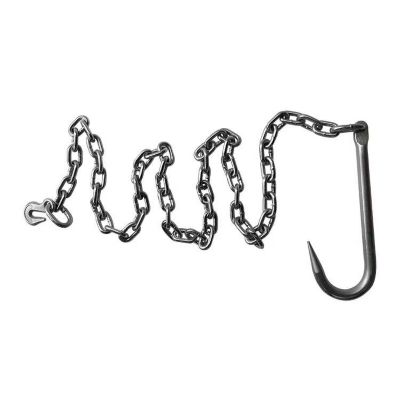
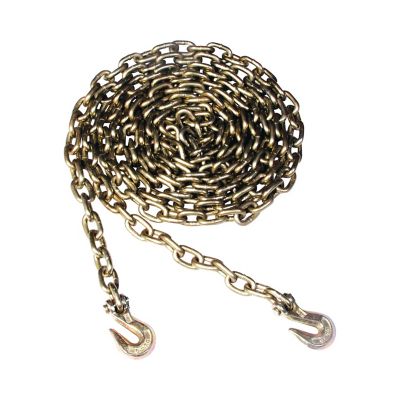
Transport chain and binder kits pair rated steel tie-down chains with mechanical load binders to secure equipment, machinery, and other heavy cargo on trucks and trailers. The chain connects the load to suitable anchor points, while the binder takes up slack and applies tension. Together, these components help keep cargo from shifting during travel when they’re properly matched to the load and arranged for the job. They’re a practical fit for farmers moving tractors between properties, contractors hauling equipment to a jobsite, and trailer owners transporting implements or machinery attachments. A tractor headed down a county road and a piece of construction equipment headed onto the highway both need securement suited to their weight, shape, and attachment points. Grade 70 transport chain is a common choice for cargo tie-downs, while some setups feature alloy chain rated for transport applications. The chain’s grade, diameter, markings, and working load limit matter more than appearance alone. Heat-treated steel provides the strength needed for these demanding jobs, and finishes such as zinc plating can help resist corrosion. A finish does not establish a chain’s grade or replace readable identification. Kits may pair chain with ratchet binders or lever binders, and the right style depends on the cargo, trailer layout, and operator’s handling needs. Ratchet binders tighten through a geared mechanism, allowing tension adjustments without swinging a long handle through a full arc. Lever binders work through an over-center action and require particular attention to handle movement and stored tension. Neither style makes up for an undersized chain or a weak trailer attachment. Transport chain and binder kits belong in cargo-securement work; the assembly should not be assumed suitable for overhead lifting, towing, or vehicle recovery. Those jobs call for equipment specifically rated for that purpose. For everyday hauling, the value of a matched setup is straightforward: chain, hooks, and binders that work together, with clearly stated ratings and enough reach for the trailer and cargo.
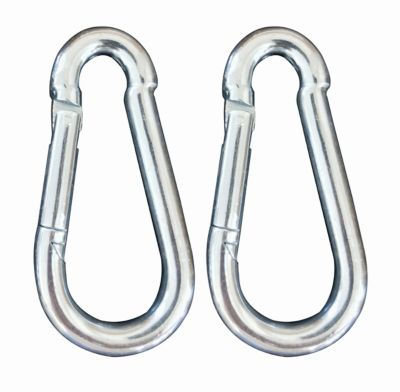
Fit starts with more than choosing a chain that reaches across the trailer. Chain diameter must fall within the binder’s stated compatibility range, and hooks need to engage the intended chain or attachment point as their design requires. Grab hooks, for example, are designed to engage a compatible chain link, while other hook styles serve different connection needs. Hook shape, throat opening, and any retention feature all affect how the assembly connects. Chain length also changes how a setup handles in real hauling situations. A low attachment point on a compact tractor creates a different path than a tie-down point tucked behind a large implement frame. Too little length can prevent a suitable connection, while unnecessary extra chain leaves more loose material to manage. Binder take-up range determines how much slack the mechanism can remove, so chain length and binder travel need to work together. Handle clearance matters, too, especially near trailer rails, tires, fenders, and closely spaced equipment. Working load limit is the rated working capacity of a component under specified conditions; it is not the same as breaking strength. An assembly is limited by its lowest-rated component, and the securement arrangement affects how its capacity applies to the cargo. A higher-rated chain cannot increase the rating of a lower-rated binder, hook, connector, or anchor point. When a setup calls for additional connecting hardware,
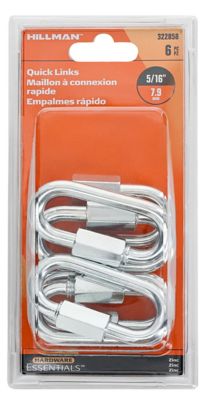
Heavy Duty Chain Connectors belong in that same compatibility check, with attention to grade, size, connection style, and working load limit. A kit alone does not establish how many tie-downs a particular load needs. Cargo weight, equipment design, tie-down angles, attachment locations, and applicable cargo-securement rules all play a part. That distinction matters when hauling a machine with movable attachments or parts that require separate restraint. Well-matched equipment supports a sound securement plan rather than replacing one, whether the trip runs a few miles between fields or covers a long stretch of highway.
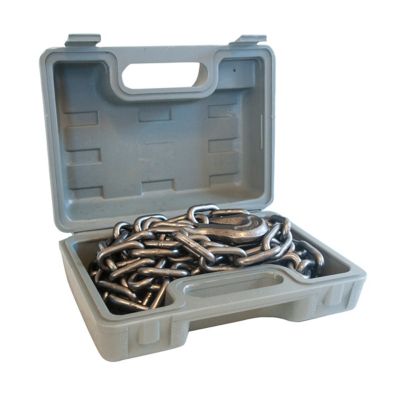
Construction details make a difference once chains and binders become part of the regular hauling routine. Forged hooks, clearly marked components, and mechanisms that operate smoothly are worth attention because these parts face repeated tension, handling, and contact with trailer surfaces. Ratchet binder threads and moving parts need care according to the manufacturer’s directions, including the specified lubrication where required. Dirt packed into a mechanism can interfere with operation, while corrosion can make inspection harder and affect the condition of steel components. Cleaning away grit and allowing equipment to dry before storage helps keep the assembly easier to handle and inspect. Hanging chains or keeping them organized in a suitable carrier also cuts down on tangles and keeps heavy hooks from rolling around the trailer deck. A binder should not need an improvised handle extension to work; any accessory or operating method must be permitted by its manufacturer. Before hauling, inspection includes the full chain length, hooks, binder body, threads, pins, and other connection points. Stretched links, cracks, bent hooks, excessive wear, damaged threads, or missing identification are reasons to take the affected component out of service for evaluation under the manufacturer’s criteria. Field welding or bending a damaged part back into shape can compromise its rating. Contact points deserve a look as well, since a chain bearing against an unsuitable edge can damage the cargo or the securement equipment. Loose chain ends and binder handles need restraint in accordance with the equipment instructions and applicable rules. Loads can settle after travel begins, making securement checks part of the hauling routine rather than a one-time task at the loading spot. For farm owners, equipment operators, and contractors, a sensible transport chain and binder setup combines suitable ratings with manageable handling, readable markings, and straightforward upkeep. The goal is equipment that fits the trailer, connects properly to the load, and supports careful hauling trip after trip.