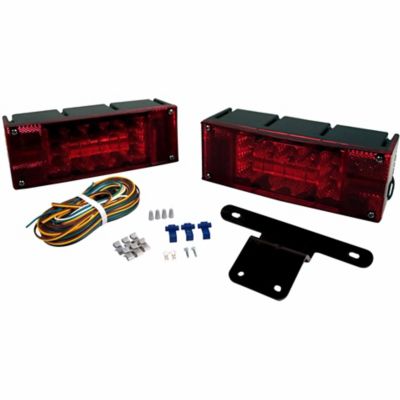
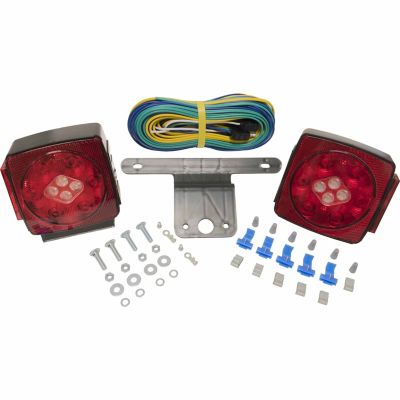
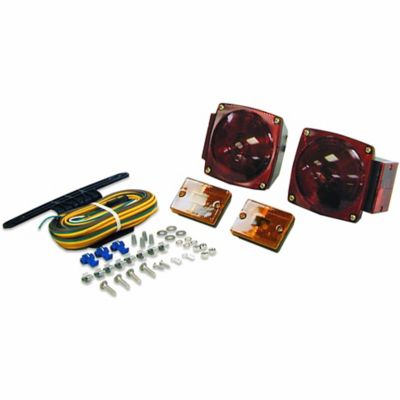
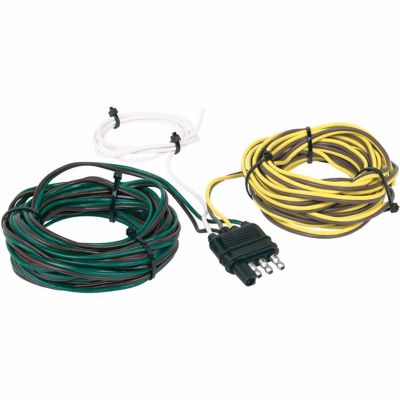
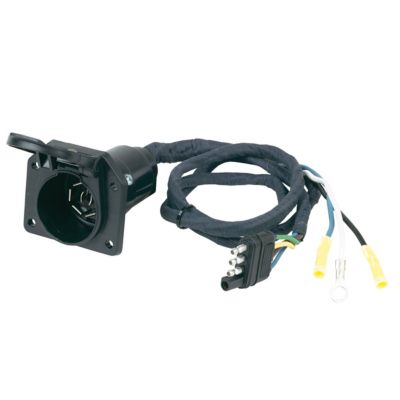
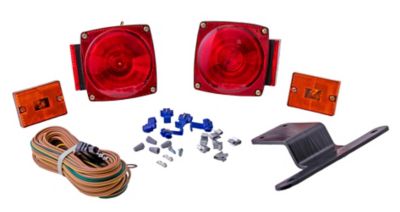
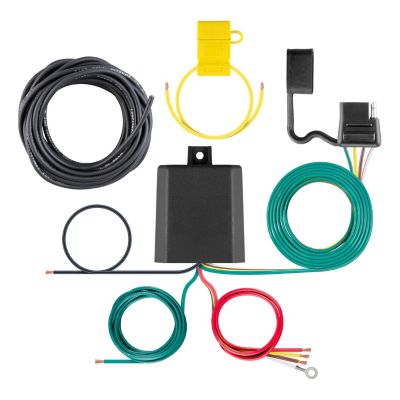
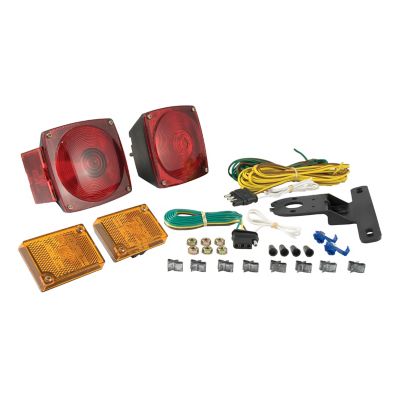
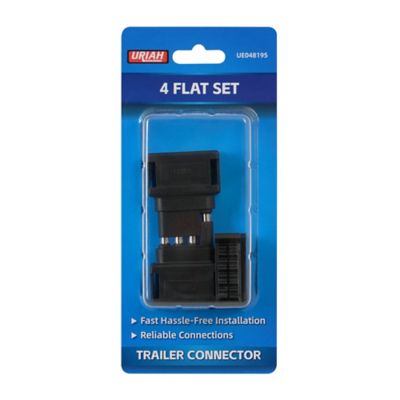
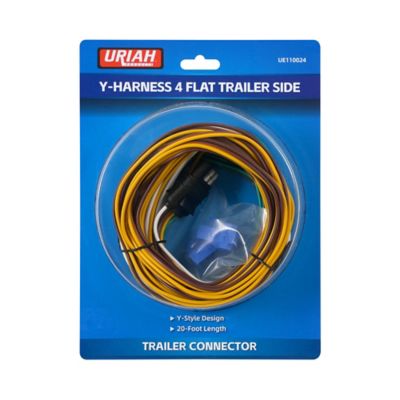
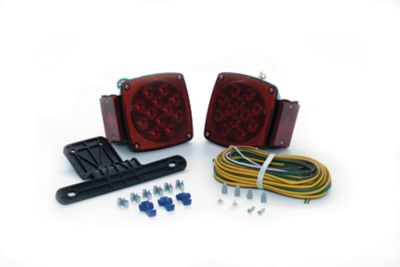
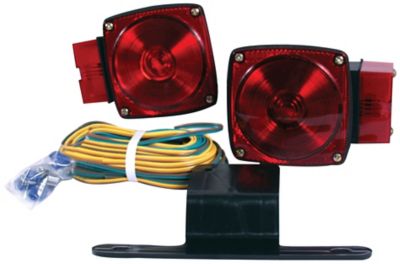
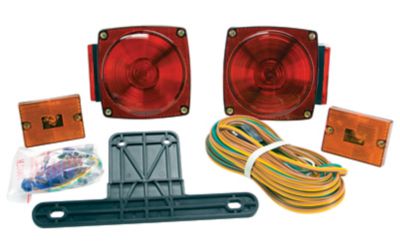
Trailer light wiring kits connect a tow vehicle’s electrical signals to a trailer’s running lights, brake lights, and turn signals, helping other drivers see the trailer and understand what’s happening ahead. A standard 4-way connection carries four circuits: a ground, running lights, a combined left brake and turn signal, and a combined right brake and turn signal. That setup handles basic lighting on many utility, boat, and small cargo trailers, whether the load is a mower headed to another property or fencing supplies headed back to the farm. A kit may include a wiring harness and connectors, while a complete lighting kit may also include lamps, mounting hardware, and other connection pieces. Checking the listed contents helps distinguish a harness replacement from a more complete lighting overhaul. The connector needs to match the tow vehicle’s socket and the trailer’s electrical needs, not simply the shape of the trailer. A basic 4-way connection does not supply electric trailer brakes, a separate reverse-light circuit, or auxiliary power. A properly wired 7-way connection can support additional functions, although electric brakes also need a compatible brake controller and the appropriate wiring. An adapter can connect certain plug styles, but it cannot create a circuit the vehicle does not provide. Many trailers less than 80 inches wide have straightforward lighting layouts; trailers 80 inches wide or wider generally require additional clearance and identification lighting. Those additional lamps can share the running-light circuit, so width alone does not determine which connector belongs on the trailer. Length, trailer type, and applicable lighting requirements matter, too. For someone replacing cracked wiring on a small equipment trailer or sorting out lights on a livestock hauler, the best fit starts with the existing connector, lamp arrangement, and required functions. A vehicle-side harness and a trailer-side harness serve different jobs, even when their plugs look familiar. Knowing which side needs attention keeps the purchase focused on the actual repair.
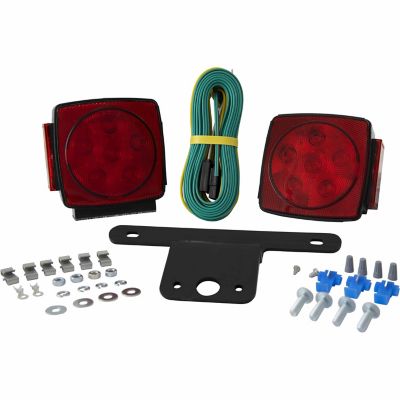
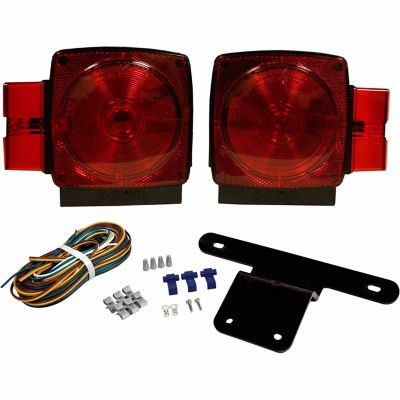
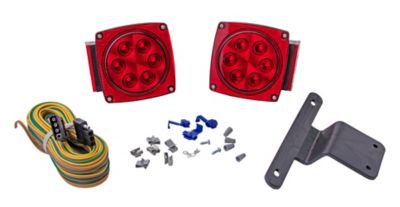
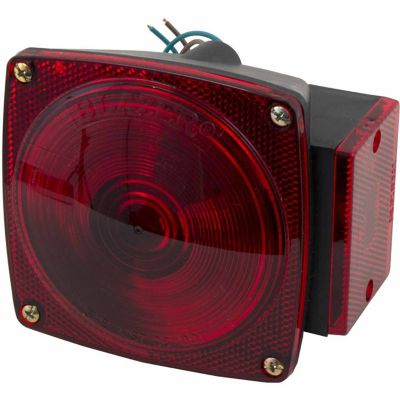
Harness length, wire construction, and connection protection all matter once the wiring leaves the tongue and runs along the frame. The listed length needs to accommodate the actual routing path, including branches to both rear lamps and any side markers, rather than just the distance from the coupler to the tailgate. There also needs to be enough slack near the hitch for normal turns without leaving a loop hanging close to the pavement. Stranded copper wire bends around frame members and handles movement better than a rigid conductor, while insulation helps protect the electrical path from abrasion and incidental contact. Wire gauge should suit the circuit load and overall run, especially when several lamps share a circuit. Protective loom, grommets, and properly positioned clips help keep wiring away from sharp steel edges, moving suspension parts, and places where equipment can pinch it. On a trailer carrying brush, lumber, or a side-by-side, tucked-away wiring has less exposure to snagging and cargo damage. Connections deserve the same attention as the main harness: sealed connectors and properly installed adhesive-lined heat-shrink splices can limit moisture intrusion, while exposed wire joints invite corrosion and intermittent operation. A sound ground connection is just as important as the power feed. Paint, rust, or a loose connection at a frame ground can contribute to dim lamps or one light reacting when another signal operates. The hitch ball should not be the intended electrical ground path. For kits that include lamps, housing dimensions, mounting-hole spacing, bracket style, and clearance around the trailer frame affect fit. LED lamps generally draw less current than incandescent lamps, but the kit still needs to work with the vehicle’s trailer-lighting system. Boat-trailer applications call for particular attention to the stated water-exposure rating. A sealed-looking housing is not automatically intended for submersion, and the lamp, connectors, and wiring joints each need protection suited to that job. Manufacturer ratings and installation requirements matter more than appearance.
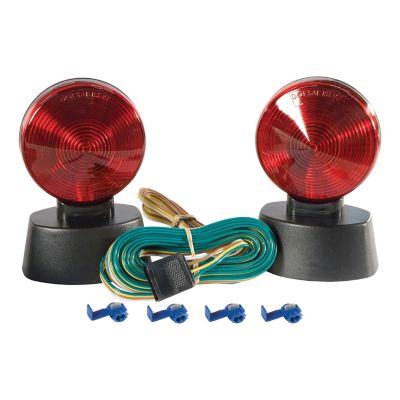
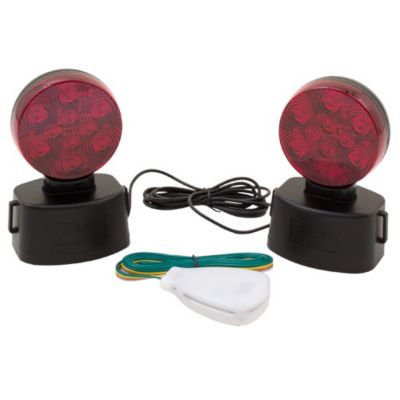
For everyday towing, a well-matched trailer light wiring kit helps keep a trailer ready for feed runs, equipment moves, and trips between properties. Farm owners, contractors, boat owners, and folks hauling tools or recreational equipment all benefit from lighting that works consistently without a tangle of patches at the tongue. An enclosed cargo trailer may need wiring branches for several marker lamps, while an open utility trailer may have a simpler layout with rear combination lamps and side markers. Replacement work is also a chance to consider how the trailer gets loaded. Lamps tucked near ramps, stake pockets, or the rear edge of a deck need mounting locations that preserve visibility without putting the wiring directly in the path of tires or shifting cargo. Care is mostly about keeping connections secure, preventing chafing, and catching damage before a trip. A walk around the connected trailer can confirm that running lights, brake lights, and both turn signals operate as expected; one glowing lamp does not confirm that every circuit works. Plug pins should stay free of debris and corrosion, and the connector should have a protected resting place when the trailer is parked. Loose harness sections, cracked insulation, and rubbed spots near frame openings deserve attention before they become broken circuits. If a trailer moves between several tow vehicles, matching connector arrangements and checking each vehicle’s lighting response can help separate a trailer problem from a vehicle-side issue. For temporary towing arrangements,
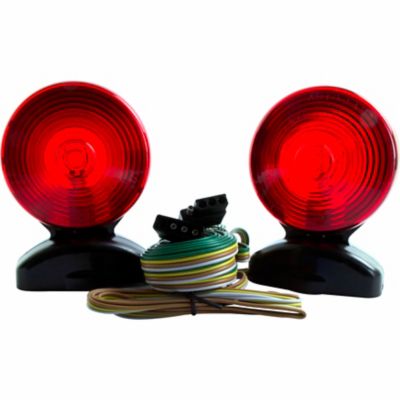
Magnetic Trailer Light Kits offer another mounting approach when the trailer has suitable steel attachment surfaces. Secure attachment, unobstructed lamp visibility, correct placement, and safe wire routing still matter, and a temporary setup does not remove applicable lighting requirements. Whether the job calls for replacing a worn harness or refreshing the lighting from tongue to tail, the goal stays practical: clear signals, protected connections, and a setup that suits the trailer’s work.