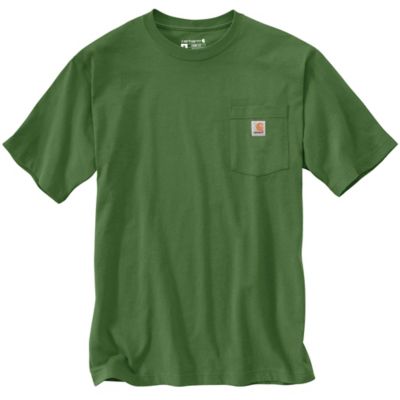
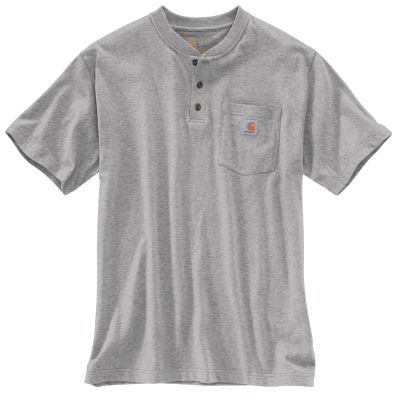
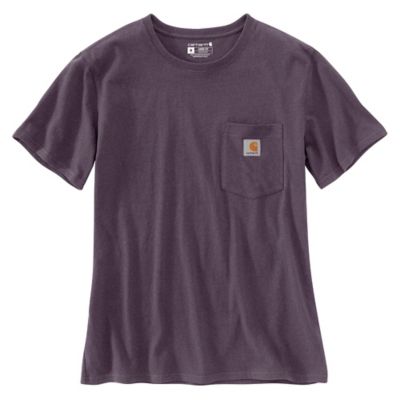
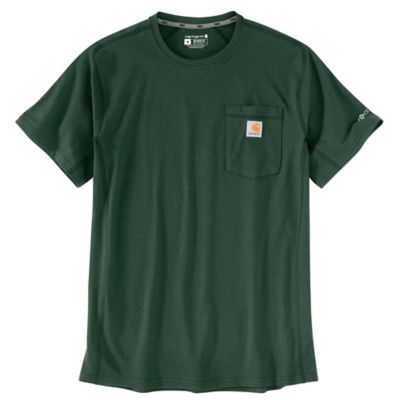
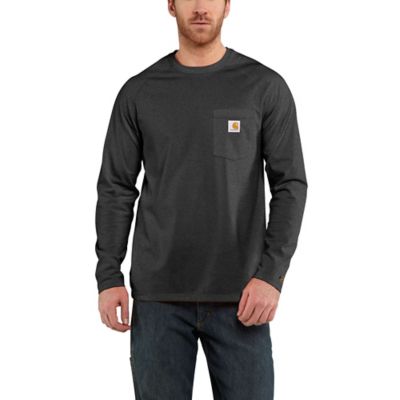
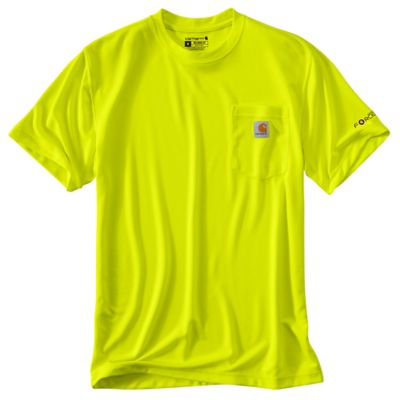
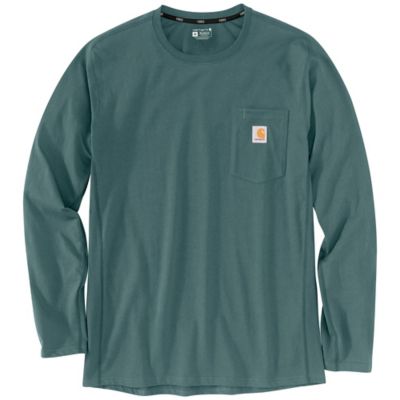
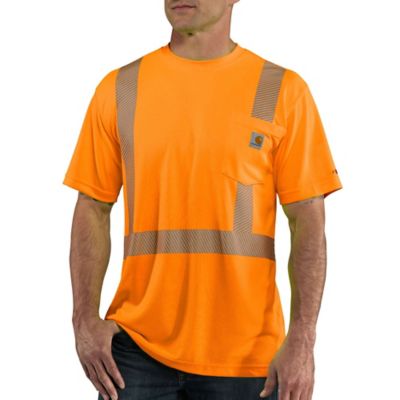
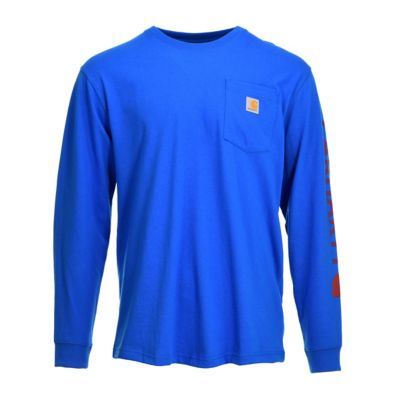
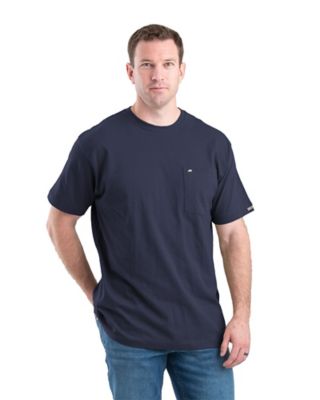
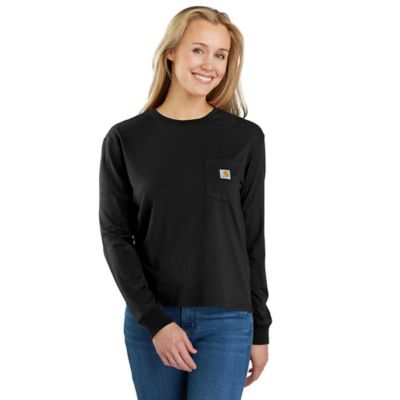
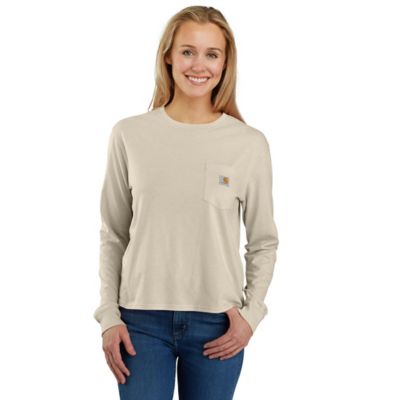
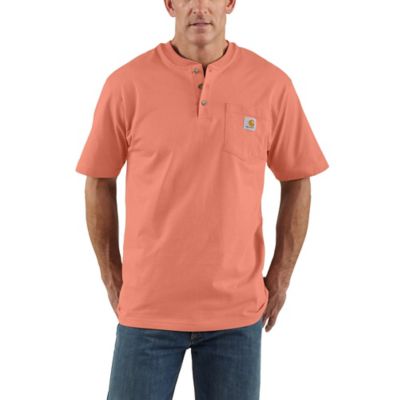
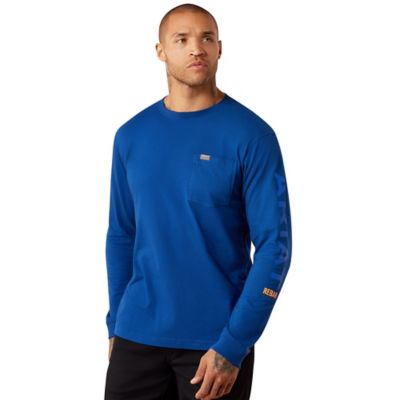
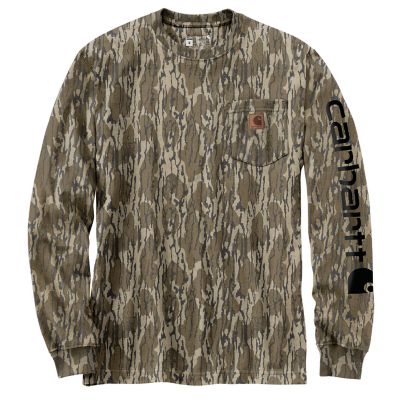
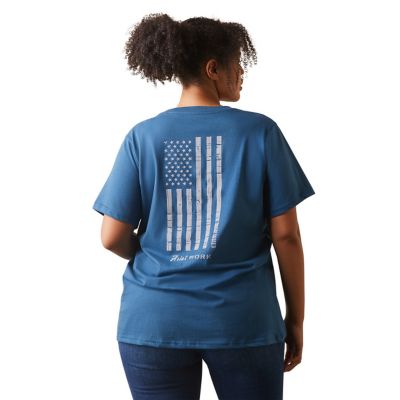
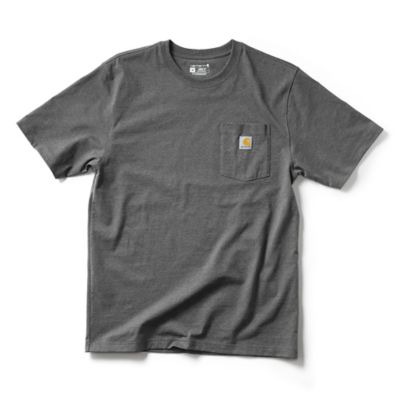
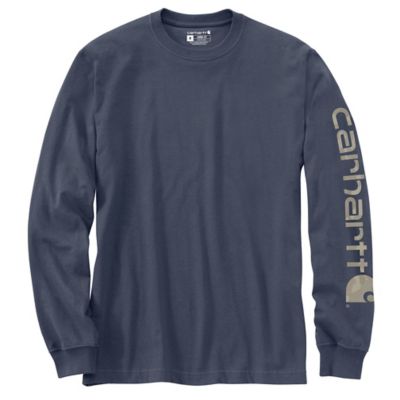
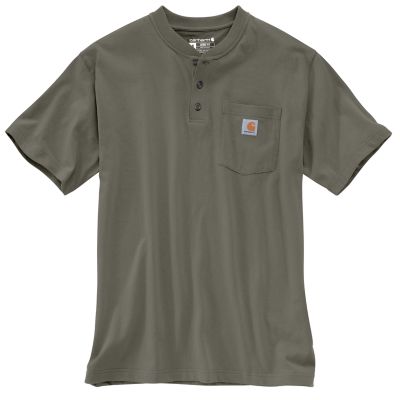
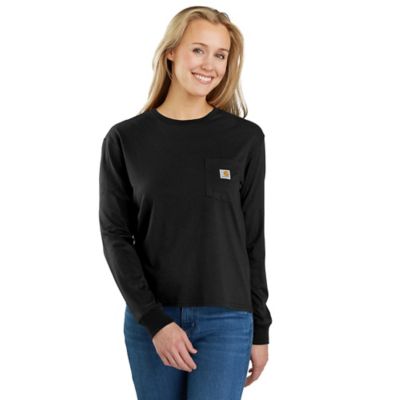
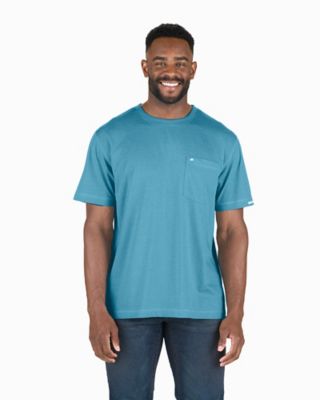
T-shirts with a pocket pair the easy feel of a knit tee with a small chest pocket for light essentials. That simple addition makes sense for everyday wear, whether the day involves checking fence lines, sweeping out the shop, running errands, or taking a break on the porch. The pocket usually sits on the left chest, where a pencil or folded note can stay close without filling a pants pocket. It is a handy spot, but not a substitute for a tool belt: heavy tools can pull the fabric out of shape, and anything that needs to stay secure belongs in a closure pocket or another suitable holder. Pocket tees range from lighter knits with an easy drape to heavier fabrics with a more substantial feel. Cotton is a familiar choice for its softness and ability to absorb moisture, while cotton-polyester blends can bring a different balance of drying time, shape retention, and stretch resistance. A small amount of elastane can add give, though the knit and cut also affect how freely a shirt moves. Fabric weight matters, but it does not tell the whole story. Yarn, stitching, and finishing all play a part in how a tee feels against the skin and holds up to repeated wear. Ring-spun cotton generally has a smoother feel than coarser yarn constructions, while a heavier jersey can feel more substantial without being stiff. Pocket corners take extra strain whenever something gets slipped inside, so reinforcement there serves a practical purpose. Even stitching, finished seams, and a neckline that lies flat contribute to a shirt that feels comfortable beyond its first wearing. For a pocket tee headed into regular rotation, those small construction details matter just as much as its color or sleeve length. The result is a familiar everyday shirt with a little extra function, rather than a complicated piece of work gear.
Fit gives pocket T-shirts much of their character, from a closer everyday cut to a roomy shape that leaves space through the chest and middle. A standard fit often works well with jeans or work pants without much extra fabric, while a relaxed fit can feel less restrictive when reaching across a workbench or bending to fill a feed pan. Neither fit should depend on sizing up several sizes to get comfortable. Shoulder seams, sleeve openings, and body length all affect the way a tee sits, and two shirts marked with the same size can fit differently. A size chart that includes garment measurements offers more useful context than the size letter alone. Comparing those measurements with a favorite shirt can help account for the room needed through the shoulders and torso. Length deserves attention, too. A longer body can stay tucked more easily during everyday chores, while a shorter untucked cut may sit more neatly over a waistband. Short sleeves leave the forearms clear for hands-on tasks; long sleeves provide more arm coverage without changing the straightforward feel of a tee. Around rotating equipment, loose sleeves and extra fabric can create a snagging risk, so task requirements matter more than a preferred silhouette. Pocket placement also changes with fit. A chest pocket should sit flat rather than stretch open or hang far below its intended position. Within the broader range of
Men's Shirts With Pockets, a pocket tee offers a casual alternative to a button-front shirt and pairs naturally with denim, canvas pants, or bib overalls. Solid colors keep the look straightforward, while heathered fabrics add a little visual texture. These are practical shirts for folks who like familiar clothes that do their job without much fuss. They can also make a useful gift for someone who reaches for a tee most days, especially when the size, fit, and fabric feel match a shirt already in regular rotation.
Care is part of keeping a pocket tee comfortable and holding its shape through the laundry basket, drawer, and back into the day’s work. The fiber label and care instructions are the best starting point because cotton, blends, stretch fabrics, and applied graphics can have different needs. Cotton may shrink with heat, and a blend is not automatically shrink-free. Washing and drying within the label’s directions helps limit surprises in body length, sleeve fit, and pocket shape. A lower dryer setting, when permitted, can reduce heat exposure, while taking a tee out promptly helps keep deep wrinkles from settling in. The pocket deserves a quick check before washing; a forgotten paper note can come apart across a load, and a pen can leave a much bigger problem than a little dirt. Emptying it also keeps small objects from rubbing against the fabric during the wash. For shirts that see shop dust, soil, or greasy fingerprints, treating marks with a fabric-appropriate method before drying can help, since dryer heat can make some stains harder to remove. Strong bleach is not suitable for every fiber or color, and more detergent does not necessarily mean a cleaner shirt. Good everyday care also includes giving seams and pocket corners a glance now and then. A loose thread is easier to address before repeated pulling opens a larger gap. How long a tee lasts depends on its construction, the work it sees, and how it is washed, not simply how thick it feels on the hanger. Rough surfaces, repeated friction from straps, and carrying too much in the chest pocket can all add wear. A few pocket tees in regular rotation let different fits and fabric weights suit different jobs, from chores around the place to a drive into town. With a comfortable cut, sensible pocket size, and care suited to the fabric, this simple shirt earns its place among the clothes that get reached for again and again.