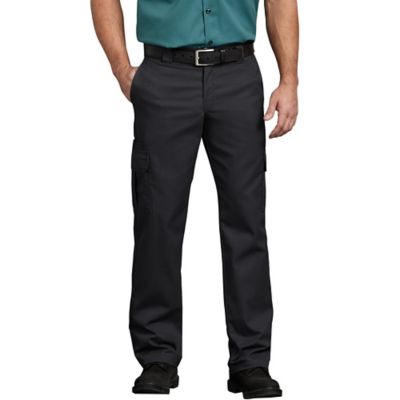
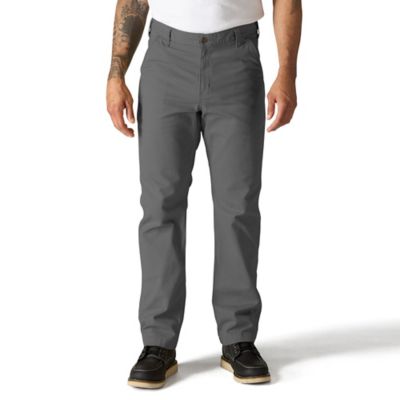
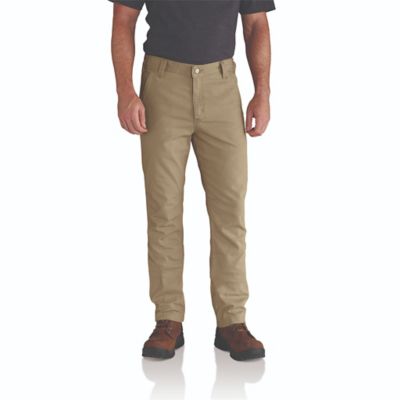
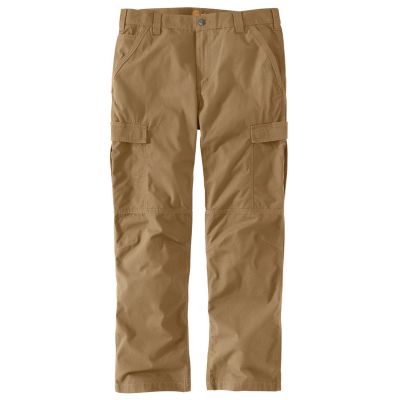
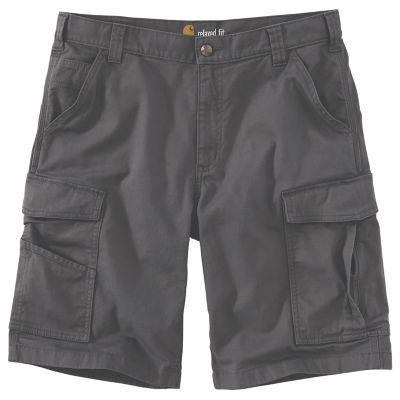
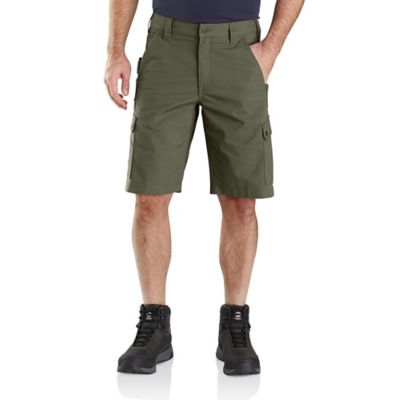
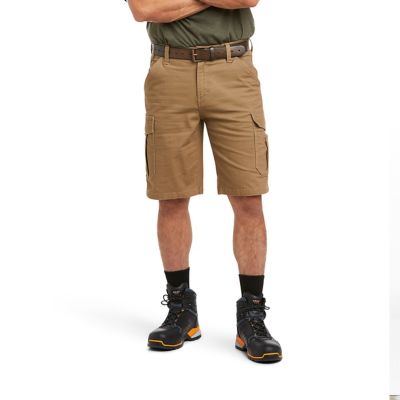
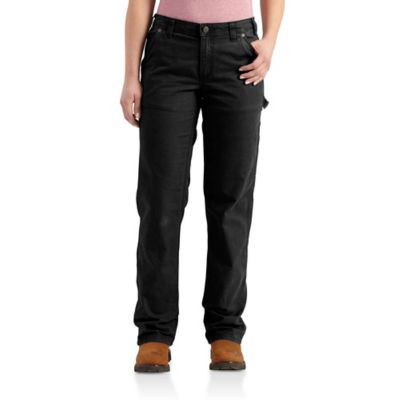
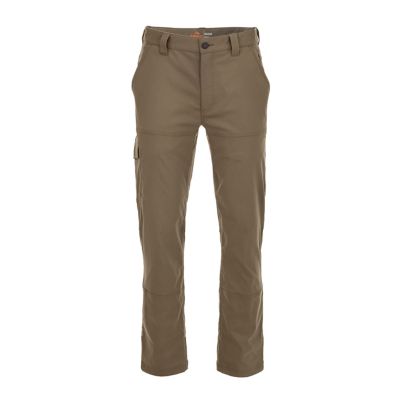
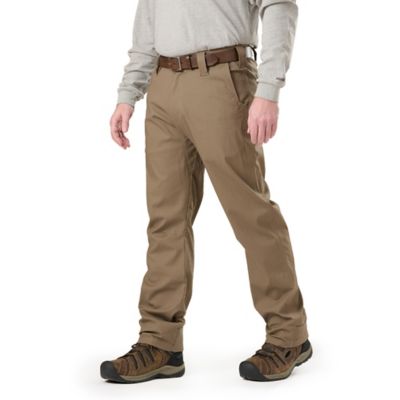
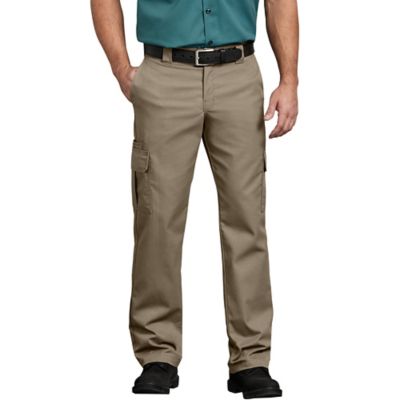
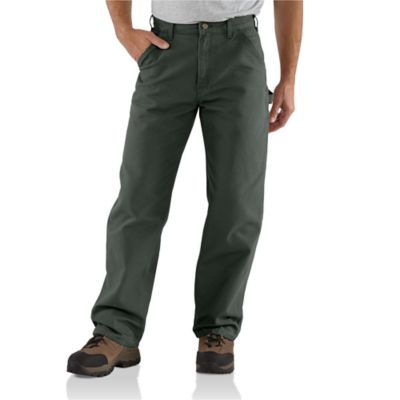
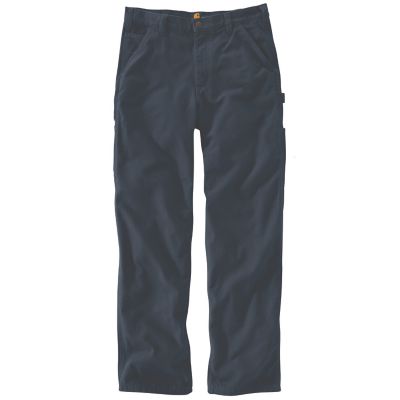
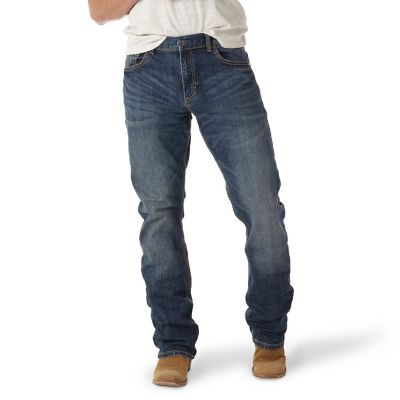
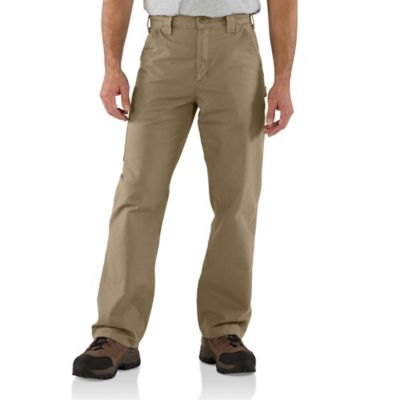
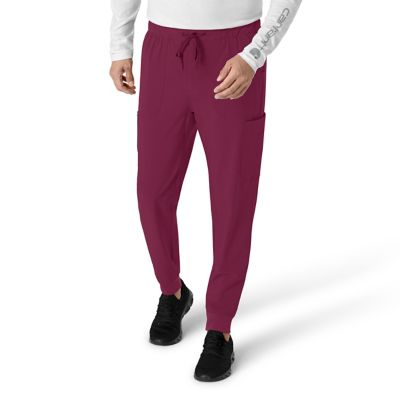
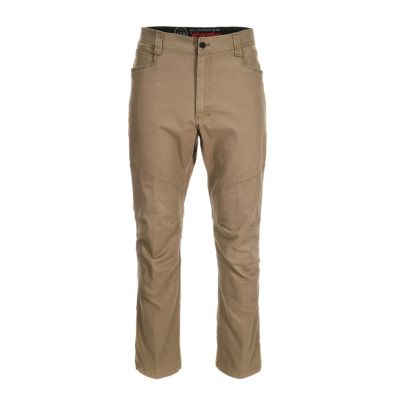
Stretch cargo pants pair the storage of cargo styling with fabric that gives as you bend, squat, reach, and sit. That extra movement comes in handy when you’re crouching beside a feed bin, stepping into a pickup, or spending a long afternoon fixing fence. Unlike pants that rely only on a roomy cut, stretch cargo pants can offer flexibility without as much extra fabric through the seat and legs. The amount of give depends on the fabric blend and construction. Cotton blended with a small amount of spandex or elastane can keep a familiar, substantial feel while adding flex. Polyester and nylon blends bring different textures and may help with shape retention or moisture handling, depending on how the material is made. Some fabrics get their stretch from the weave rather than an added elastic fiber, so the fiber label alone doesn’t tell the whole story. Two-way stretch generally flexes along one fabric direction, while four-way stretch flexes both lengthwise and crosswise. Neither description, by itself, tells you how thick the pants feel or how much room they have through the thighs. Those details matter just as much when the day involves repeated bending or long stretches behind the wheel. Twill has a recognizable diagonal weave and can provide a smooth, everyday feel. Stretch canvas tends to feel more substantial, while ripstop fabric has a reinforcing grid intended to help limit the spread of small tears. Ripstop still isn’t tearproof, and stretch doesn’t make every fabric suited to the same work. Fabric weight, weave, and reinforcement all affect how pants stand up to rubbing against a truck seat, brushing past fence posts, or kneeling on rough ground. The appeal is practical: room for everyday essentials, freedom to move, and a familiar pants style that fits into work around the property, a walk on the trail, or a trip into town.
Fit makes a big difference in how that flexibility feels throughout the day. A straight leg generally keeps a fairly consistent line below the knee, a tapered leg narrows toward the ankle, and a relaxed fit leaves more room through areas such as the seat and thighs. Those descriptions can vary between cuts, so measurements are more useful than the fit name alone. A close fit may feel tidy when standing but pull across the thighs when sitting, while too much extra room can leave loaded cargo pockets swinging against the legs. A comfortable waistband should stay put without digging in when you bend to pick something up. Stretch panels, elastic sections, and contoured waistbands offer different ways to accommodate movement, though waistband stretch and stretch through the rest of the pants aren’t always the same feature. Rise affects where the waistband sits, and inseam length affects how the hem falls over work boots or everyday shoes. Articulated knees and a gusseted crotch can also create room for movement through the cut, rather than asking the fabric to do all the work. Pocket layout deserves just as much attention. Side cargo pockets can separate gloves, a folded note, or a small tape measure from the things carried in front pockets. Flaps, snaps, hook-and-loop tabs, and zippers each offer a different balance of access and closure. Pocket depth and placement affect whether a phone stays comfortable when sitting in the truck, and bulky contents can pull on the fabric even when the waist fits well. More pockets aren’t automatically more useful; the best arrangement is one that keeps everyday carry manageable. Fabric weight is another consideration, and
Men's Lightweight Cargo Pants emphasize a lighter feel. Lightweight construction and stretch can overlap, but they describe different things: one concerns fabric weight, while the other concerns how the material flexes. Neither term replaces checking the cut, pocket arrangement, and fabric composition.
How stretch cargo pants hold up over time depends on more than fabric thickness. Reinforced pocket openings can help at spots that see repeated contact from hands and carried essentials, while extra stitching at stress points supports areas that take regular pulling. Knee panels may add another layer where kneeling creates friction, but their coverage and construction vary. Substantial fabric can make sense for chores involving rough surfaces; a softer, less weighty fabric may feel better for walking, driving, and everyday errands. Pants that work well for a farmhand moving between the barn and equipment shed may feel different from a pair chosen for trail walks or maintenance rounds. Someone who spends much of the day seated may care most about a forgiving waist and flat-feeling pocket placement, while someone who bends and kneels repeatedly may put more value on thigh room and knee shaping. For gifting, a familiar waist size, inseam, and preferred leg shape are a better starting point than guessing from appearance alone. Care also plays a part in keeping the fit and feel consistent. The care label takes priority because cotton-rich fabric, synthetic blends, stretch fibers, and applied finishes can have different washing requirements. Repeated high dryer settings can be hard on some stretch fibers, and washing methods that suit one blend may not suit another. Empty pockets and closed fasteners help keep loose contents and open closures from causing trouble in the wash. Dirt caught in cuffs and seams deserves attention, especially after chores around gravel, soil, or bedding. Over time, thinning fabric, loose stitching, and stretched pocket edges can show where pants are taking the most wear. Stretch cargo pants earn their place in an everyday rotation when the fabric, fit, and storage suit the person wearing them—not simply because they have extra pockets. A pair that moves comfortably from feeding animals to loading supplies to supper in town brings together the features that make this style useful.