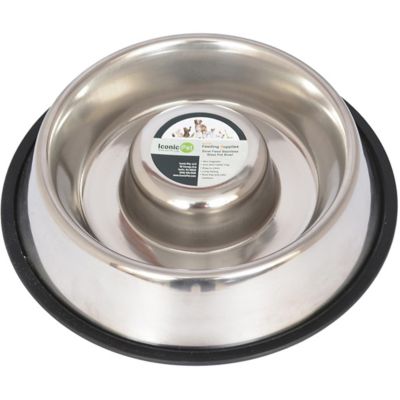
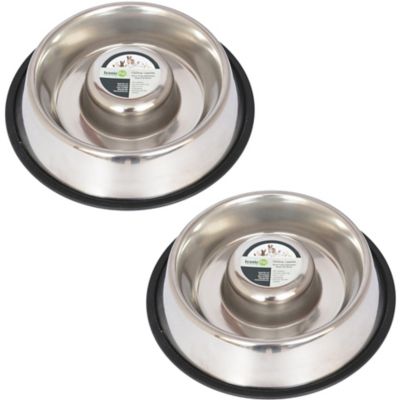
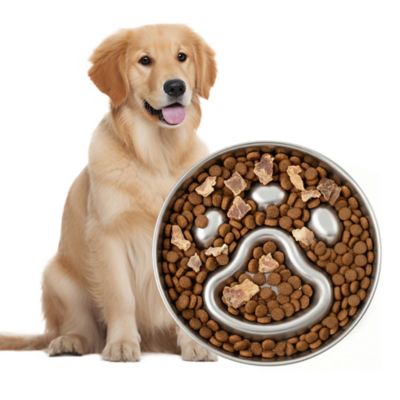
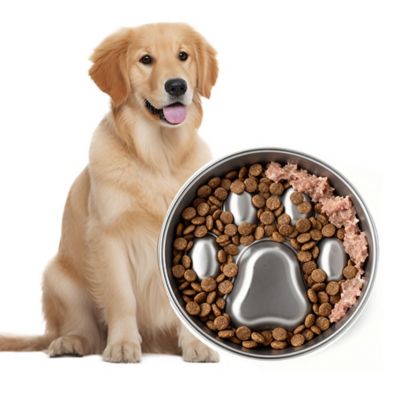
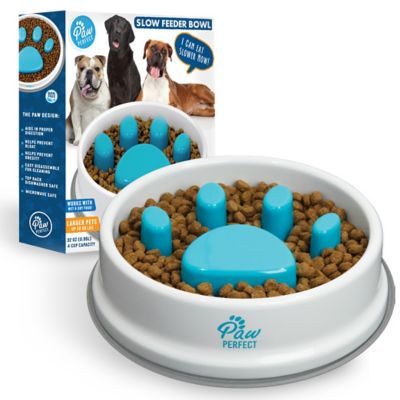
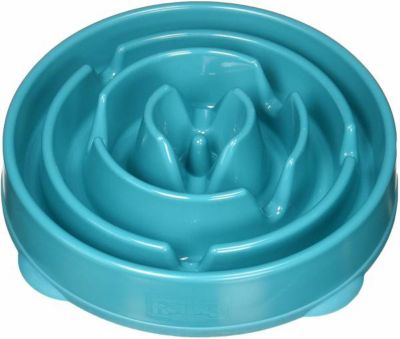
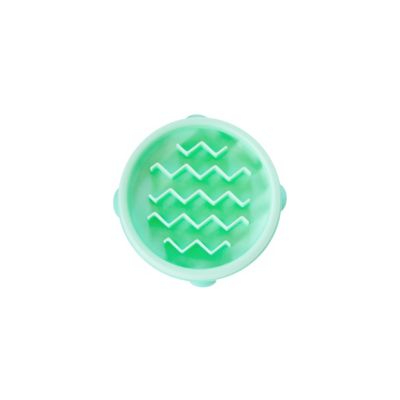
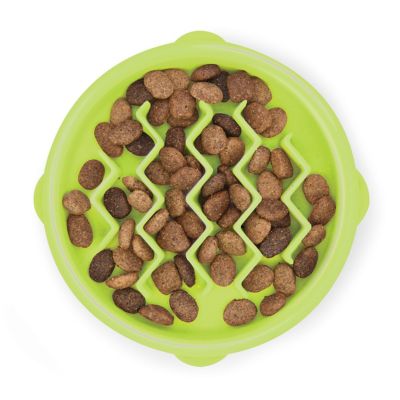
A stainless steel slow feeder pet bowl gives a fast eater a little more work to do between bites. Instead of leaving the whole meal in one open pile, a raised center, a set of rounded ridges, or a series of channels breaks up the food and gives a dog or cat several spots to eat from. A dog that normally scoops up half its kibble from the middle of a dish has to work around the raised sections, picking up smaller mouthfuls along the way. Some bowls have a single low mound with food spread around the edge, while others divide the meal into several smaller pockets. The difference matters if a pet tends to give up when food is hard to reach. A few broad openings can slow down an eager eater without turning supper into a puzzle it won’t finish. Stainless steel has a smooth, nonporous surface that doesn’t absorb food odors and is easy to wash. It resists rust and won’t chip like ceramic, though it can still pick up dents if it gets dropped on concrete or knocked around by a dog that likes to carry its bowl. A rolled rim gives the bowl a smooth edge and a place to grip when picking it up off the floor. Deep grooves give kibble more places to settle but also give bits of food more places to stick. For a pet that gets canned food, a shallow pattern with rounded corners makes it easier to spread a portion and easier for the pet to lick it out. A slow feeder is meant to change the pace of eating. It isn’t a treatment for swallowing trouble or a way to prevent bloat. Repeated gagging, coughing, or bringing food back up at meals is worth bringing up with a veterinarian.
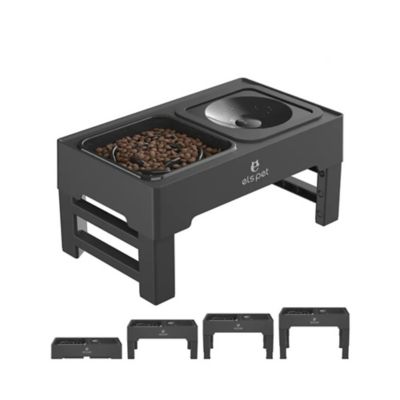
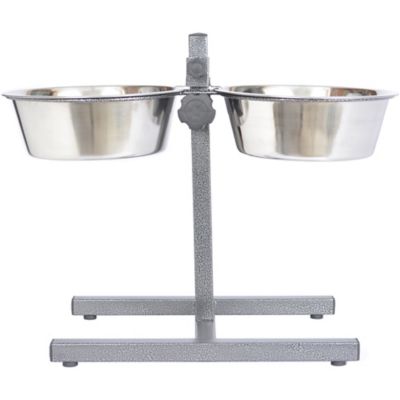
Fit has as much to do with the shape of a pet’s face as it does with the size of its dinner. A short-muzzled dog may do better with low ridges and open spaces, while a long-nosed dog can often reach between taller dividers. A cat that brushes its whiskers against the rim of a deep bowl may be more comfortable with a shallow dish that leaves room around the sides. The food matters, too. Small kibble can settle into narrow corners, while larger pieces may sit on top of closely spaced ridges instead of falling between them. Look at the space left for food once the raised sections are accounted for. If a full serving covers the ridges, a pet can take those first big bites much as it would from a regular dish. For a feeding spot on tile or a smooth mudroom floor, a wide base or a nonslip ring can help keep the bowl from scooting across the room with every nudge. Some rings come off for washing, which makes it easier to get at crumbs or moisture caught underneath. For a bowl that sits in a feeding stand, the rim needs to rest securely on the opening, with enough clearance for the bowl underneath. Two dishes that hold the same amount of food can have different rim widths, so the measurements of the stand matter more than the serving capacity alone. Pet owners setting up matching feeding spots can pair a slow feeder with
Metal Dog Food Bowls, keeping a regular dish for the dog that already eats at an easy pace. In a home with several pets, a little space between bowls can also help keep an eager eater from polishing off a housemate’s dinner.
The easiest slow feeder to live with is one that fits the way meals already happen at home. A morning scoop of dry kibble may leave little more than crumbs behind, but wet food can cling where a divider meets the bottom. A quick rinse can loosen what’s left, and a soft brush or sponge can reach the bends that a dishcloth might skip. Washing the bowl after meals helps keep old food and saliva from building up, especially along the rim and around the raised sections. If the bowl is marked dishwasher safe, check whether that applies to the base or grip ring as well as the steel dish. Letting the parts dry separately keeps moisture from sitting under the ring between meals. It’s worth looking over the rim and underside from time to time, especially if the bowl gets shoved around by a dog that checks for one last crumb. A bent edge, a spot of corrosion that won’t wash away, or a loose piece on the base is a good reason to replace it. A stainless steel slow feeder can make a practical gift for someone bringing home a new dog or for a pet owner who hears the food hit the bowl and then hears the bowl hit the wall a few seconds later. Knowing the pet’s usual portion and how it takes a bite is more useful than guessing by breed alone. The first few meals tell plenty: a pet that noses around the ridges and works its way through the serving is getting the hang of the dish, while one that keeps tipping it over or walking away with food still tucked in the corners may need a simpler shape. A good fit leaves the last few bites within reach and keeps the bowl steady as the pet works its way around it.