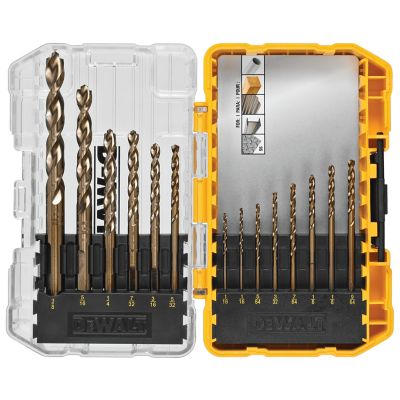
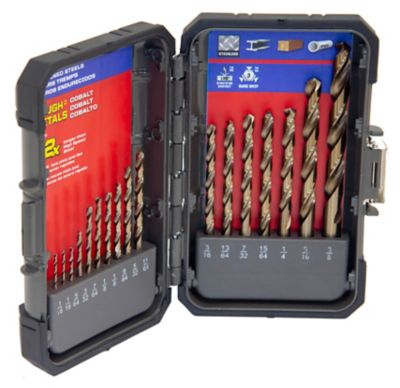
Stainless steel bits belong in the shop when the job calls for clean holes in corrosion-resistant metal, whether that means mounting a bracket on a wash station, repairing a stainless gate latch, or fitting hardware to a feed-room work surface. In this category, the name generally refers to drill bits intended to cut stainless steel, not bits made from stainless steel. That distinction matters because stainless can be tough to machine: it holds heat near the cutting edge and can work-harden when a bit rubs instead of cutting. Cobalt high-speed steel drill bits are a common choice for this work because their alloy maintains hardness at higher cutting temperatures than standard high-speed steel. Two familiar grades are M35, with about 5% cobalt, and M42, with about 8% cobalt. The cobalt runs throughout the alloy rather than forming only an outer coating, so proper sharpening does not remove that material advantage. A higher cobalt percentage is not automatically the better fit for every job, though. Resistance to heat comes with trade-offs, including greater brittleness, and a handheld drill that rocks sideways can put considerable strain on a small bit. Specialty coated high-speed steel bits can also suit stainless when their manufacturer lists that application. Coating color alone does not establish whether a bit is right for the metal on the bench; the underlying material, cutting geometry, and application rating all matter. Carbide offers another option for certain stainless drilling jobs, particularly with rigid machinery, but its sensitivity to movement makes setup especially important. For farm repair shops, fabricators, maintenance crews, and folks tackling their own equipment repairs, the best match is a bit that fits both the material and the equipment doing the work. A few holes through thin stainless sheet call for different features than repeated drilling through thick plate. Shoppers comparing
Drill Bits For Stainless Steel can narrow the choice by material rating, diameter, working length, and shank style rather than judging by appearance alone.
Fit starts with the hole the job requires, but it also includes the drill chuck, the workpiece thickness, and the room around the repair. A bolt clearance hole needs enough space for the fastener to pass through, while a hole intended for tapping needs a diameter matched to the thread specification. Fractional-inch, metric, and numbered sizes serve different purposes, so a close-looking substitute may not give the connection the fit it needs. Sets keep several diameters together for general shop work, while individual sizes make sense for repeated tasks or replacing the size that does most of the cutting. The shank must fit the chuck securely and fall within the tool’s capacity. A reduced shank can allow a larger cutting diameter to fit a smaller chuck, but it does not increase the drill’s power or change its operating limits. Round shanks are common, and flats or hex-shaped shanks can help resist slipping in compatible chucks. An impact driver is not a stand-in for a drill unless the bit manufacturer specifically permits that application. Length deserves the same attention as diameter. A shorter bit generally offers greater stiffness when access allows, while a longer bit can reach a recessed mounting point but is more vulnerable to bending and wandering. Split-point designs, often with a 135-degree point, are common among metal-cutting bits and can help the tip start with less walking on a smooth surface. They still benefit from a secure setup and suitable starting location. Twist bits cover many everyday holes, while step bits rated for stainless can suit sheet-metal work within their specified thickness limits. On a step bit, each step has a limited cutting depth, making material thickness an essential part of the match. A drill press can help maintain alignment for repeat holes in a removable bracket; a handheld drill may be the practical choice for a repair that cannot leave the equipment. In either case, bit selection works best when reach, rigidity, and hole size receive as much attention as the metal itself.
Service life depends on more than the alloy stamped on the package. Stainless drilling rewards a sharp cutting edge, controlled speed, appropriate cutting fluid, and steady pressure that allows the bit to cut rather than skid. There is no single drill speed that suits every stainless job: diameter, stainless grade, bit material, and machine setup all affect the proper range. Larger diameters generally call for lower rotational speeds, and the manufacturer’s cutting recommendations provide a better starting point than running a drill flat out. Firm, controlled feed helps maintain cutting action, but excessive force can snap a bit or cause trouble as the tip breaks through. Too little feed can leave the edge rubbing, generating heat and making the next attempt harder. Cutting fluid formulated for the application helps reduce friction and manage heat at the cutting zone; a general-purpose spray is not necessarily a substitute. These considerations matter on a single latch repair as much as they do on a row of mounting holes. Thin sheet can catch and spin when a bit breaks through, so clamping and suitable backing are important parts of the setup rather than extras. Eye protection belongs with any metal-drilling task, and sharp chips are better cleared with a brush after rotation stops than brushed away by hand. Between jobs, clean bits and dry storage help protect cutting edges and keep residue from building up. Separate compartments keep the tips from knocking together in a toolbox bouncing along in the truck. A dull edge, chipped point, or bent shank can mean rough holes, extra heat, and more strain on the drill; proper sharpening may restore some bits, while damaged ones need replacement. For anyone outfitting a farm shop or choosing a practical gift for someone who handles metal repairs, matching the recipient’s drill and usual projects matters more than gathering the largest assortment. A well-matched selection keeps the focus where it belongs: holes that fit the hardware, manageable cutting, and equipment ready for its next job.