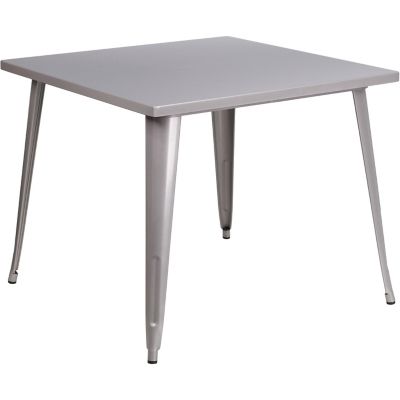
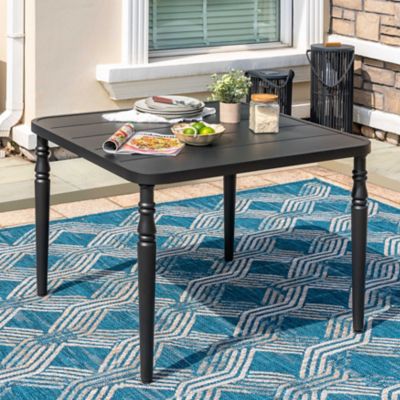
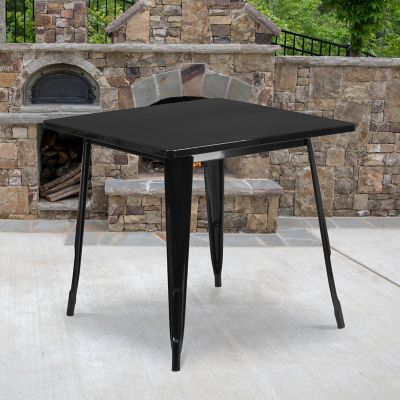
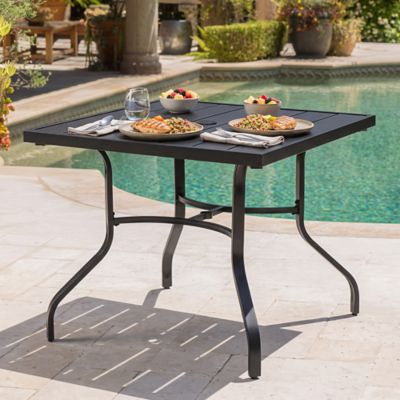
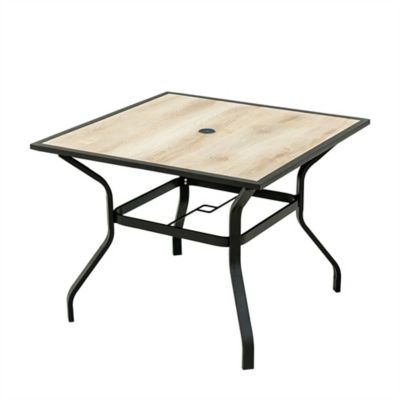
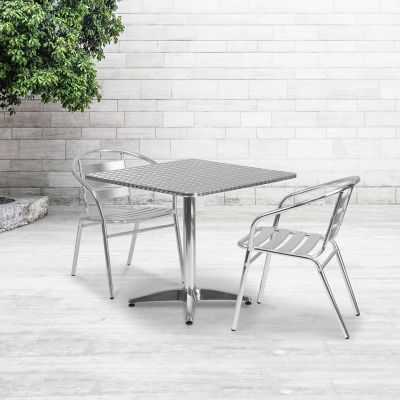
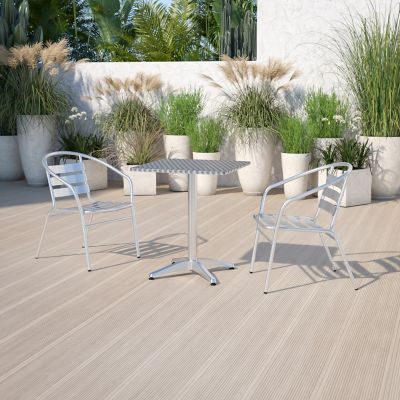
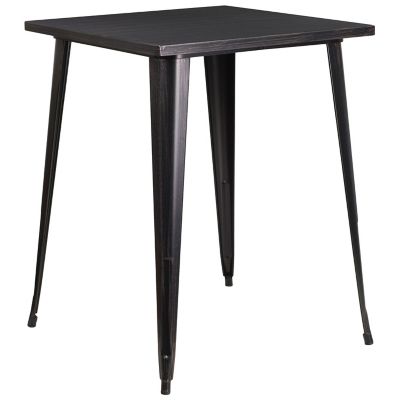
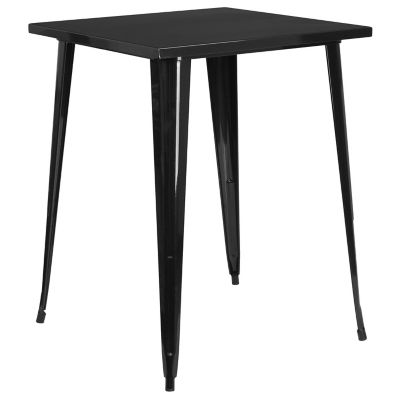
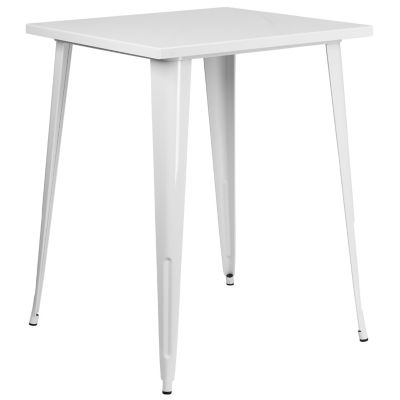
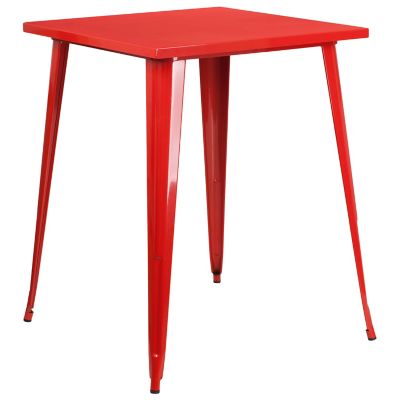
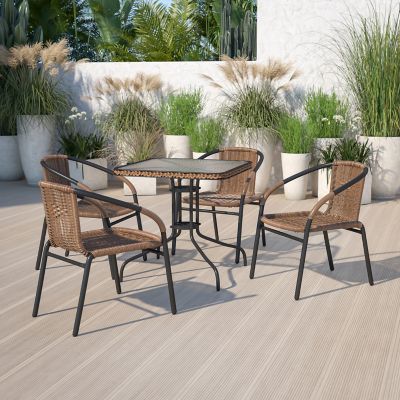
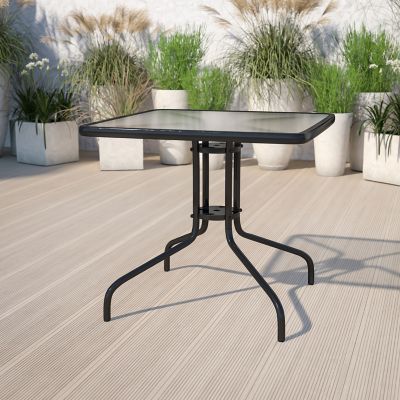
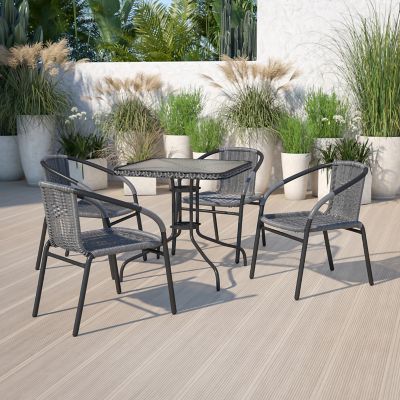
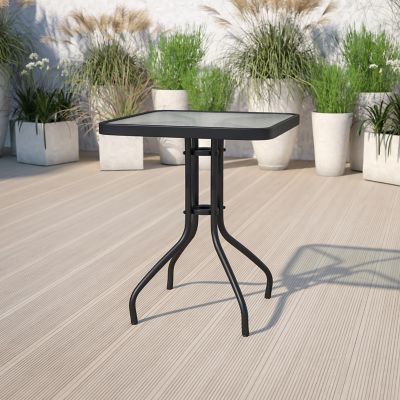
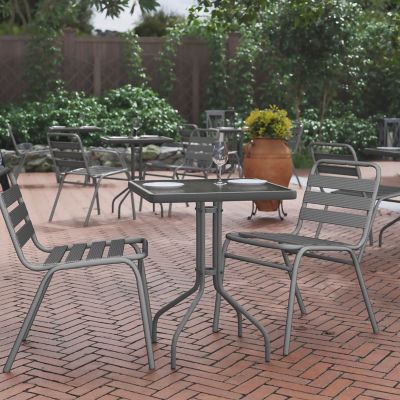
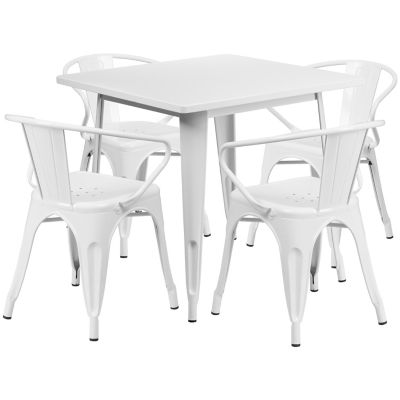
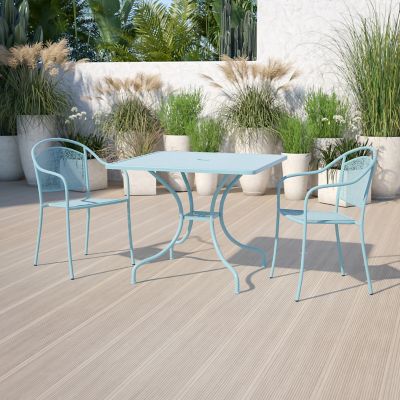
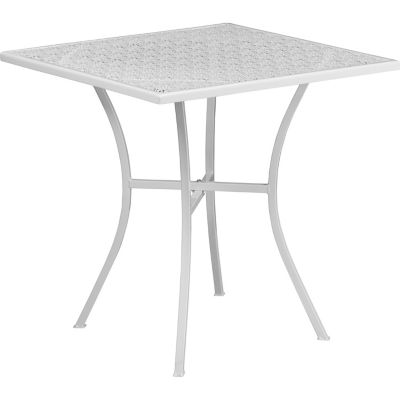
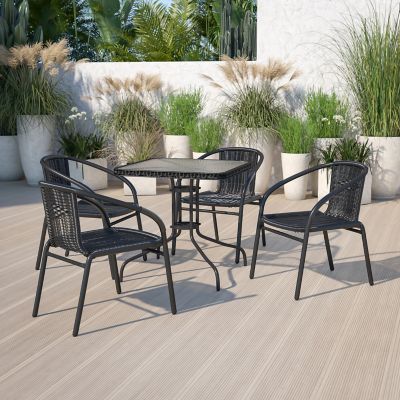
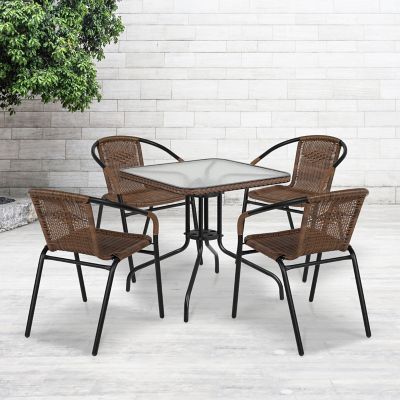
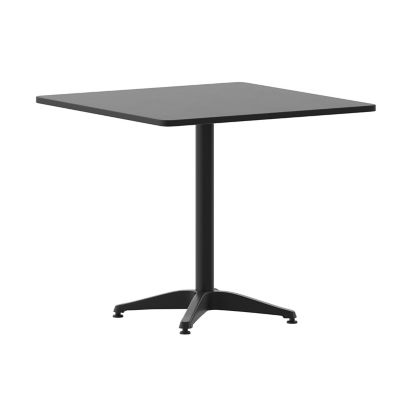
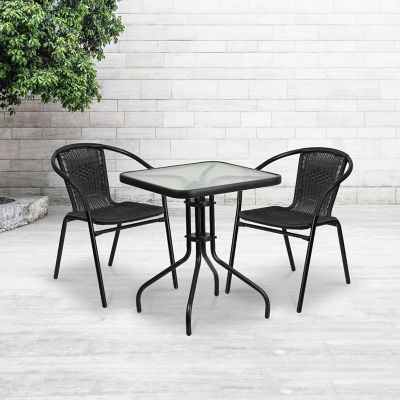
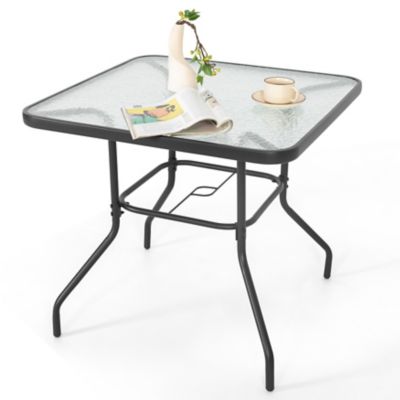
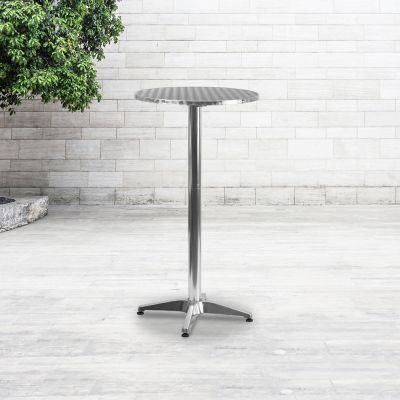
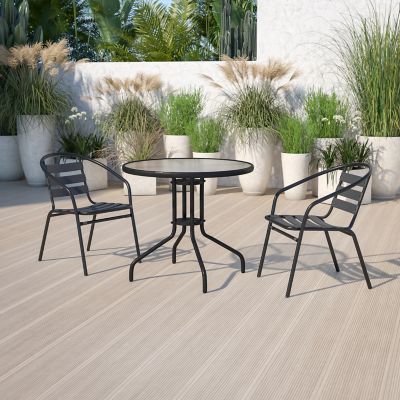
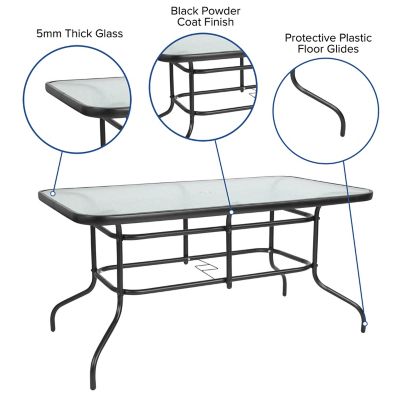
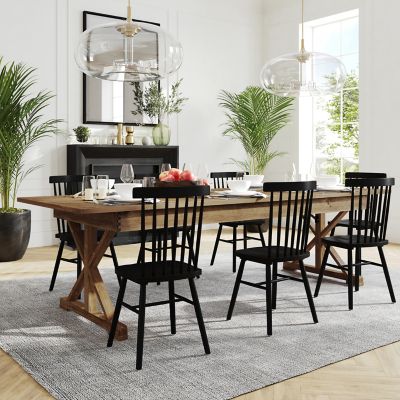
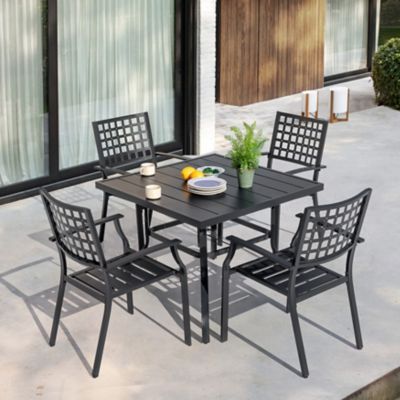
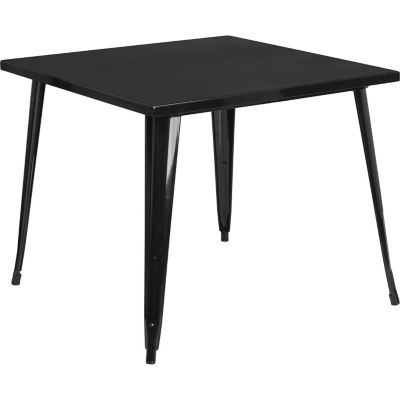
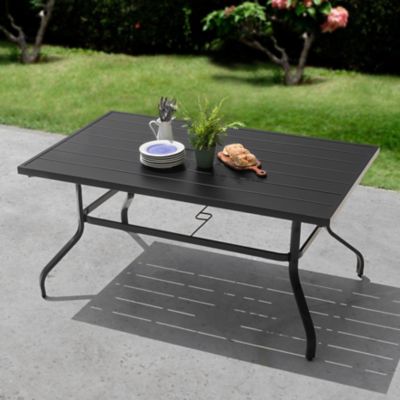
Square metal patio tables are outdoor tables with a square top and metal construction, ranging from compact bistro styles for two to dining tables that comfortably seat four. Their straight sides make them easy to arrange on a porch, deck, or backyard patio, and the balanced shape gives everyone a spot within reach of the serving bowl. A smaller table makes room for coffee before chores or a sandwich after a feed run without taking over the whole porch. A larger square table gives family and friends a place to sit down for supper, play cards, or linger over a second glass of tea. Metal construction can mean aluminum, steel, or iron, and those differences matter beyond appearance. Aluminum is generally lighter than steel or iron and naturally resists rust, making it a practical choice when the table needs to move between a sitting area and a dining spot. Steel typically brings more weight and a firm, substantial feel, while iron often suits a setting with heavier chairs and traditional lines. Protective finishes help shield steel and iron from moisture, though scratches and exposed edges still need attention. Powder-coated surfaces provide a finished look with a barrier between the metal and everyday exposure; they are not a promise that the table will never need care. Smooth tops offer an even surface for plates and writing, while mesh, slatted, or perforated tops let water pass through instead of collecting across a solid surface. The size of those openings can affect how steadily a narrow glass or small serving dish sits. Simple frames tend to blend with a range of outdoor seating, while open metalwork brings more detail without filling the space visually. A dark finish can sit comfortably alongside wood chairs and a brick wall, while a lighter finish can soften the look of a metal dining area. The best match depends on how the space works day to day, whether that means meals for two beside the back door or a regular gathering place just off the kitchen.
The square shape works especially well where a rectangular table would stretch too far into a doorway or walking path. Equal-length sides keep the footprint predictable, but room for chairs matters just as much as the tabletop measurement. A square patio dining table around 36 to 42 inches across often suits four place settings, depending on the width of the chairs, the base design, and how much serving space the meal calls for. Compact bistro tables generally leave less room for platters, making them a better fit for a couple of drinks or a small meal than a full spread. About 36 inches between the table edge and a nearby wall or railing gives chairs room to pull back, with more clearance helpful along a busy path. The route from the kitchen deserves extra thought when someone is carrying a tray or passing behind a seated guest. Dining-height tables commonly stand about 28 to 30 inches tall, so chair seat height and arm clearance should line up with the table rather than appearance alone. An apron beneath the tabletop can reduce knee space, and corner legs may limit how far a wide chair slides underneath. Pedestal bases free up some perimeter space, although the base still needs room for feet. Counter-height and bar-height tables create a different seating arrangement and call for chairs or stools of a matching height. For a table-and-chair arrangement planned together,
Metal Dining Table Sets offer another way to bring the dining area together. Even a coordinated arrangement benefits from a close look at chair arms, seat width, and the space beneath the top. On a small porch, chairs that tuck in neatly can leave the walkway open between meals. On a roomy patio, a broader top can hold everyday place settings and a serving dish without making the meal feel crowded. Square tables can also sit near a corner between gatherings, provided the legs remain supported and the surface underneath is level.
Everyday care plays a big part in how a metal patio table holds up, particularly around joints, fasteners, feet, and the edges of the top. Aluminum does not develop iron rust, but its finish can still scratch, and exposed metal may show oxidation. Steel and iron benefit from intact protective coatings, with any chips addressed according to the maker’s care directions. Mild soap, water, and a soft cloth are often enough for routine cleanup, followed by drying where moisture collects. Abrasive pads and harsh cleaners can damage a finish, so care directions matter more than an aggressive scrub. Spilled drinks, food residue, and grit are easier to handle before they settle into seams or textured surfaces. A table with mesh or slats may need attention underneath as well as across the top, especially where crumbs can catch. Checking bolts from time to time helps keep a table steady, and replacing worn foot caps can protect a deck surface while reducing scraping sounds. Adjustable feet can help with small surface variations, but a table still needs firm support rather than loose ground or an uneven edge. A properly fitted cover adds protection between gatherings, provided it allows the table to stay clean and dry rather than trapping moisture against the finish. Tables with an umbrella opening need a compatible pole and a properly sized, separately supported umbrella base; the opening alone does not hold an umbrella securely. For households that rearrange the patio often, manageable weight can matter more than an especially heavy frame. For a table that stays in one place, a substantial base and comfortable seating clearance may take priority. A square metal patio table can also make a practical housewarming or wedding gift when the recipient’s space and seating needs are known. Whether it holds a quiet breakfast, a pan of biscuits passed around at supper, or a deck of cards after the dishes are cleared, its value comes from fitting naturally into the way folks gather at home.