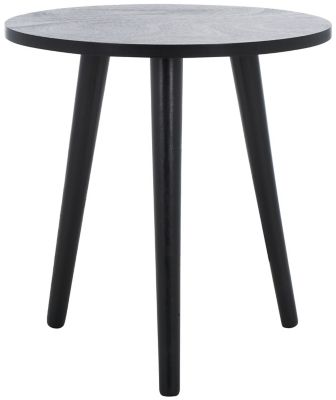
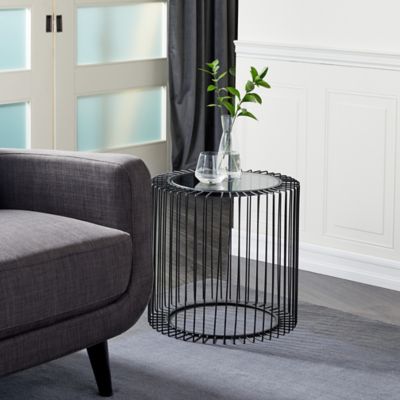
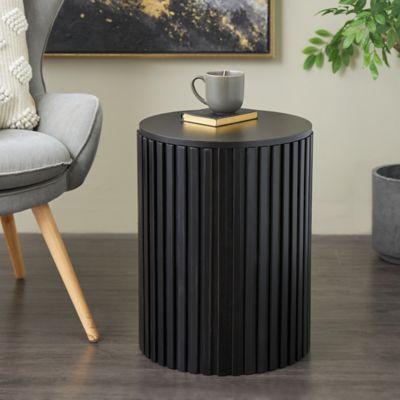
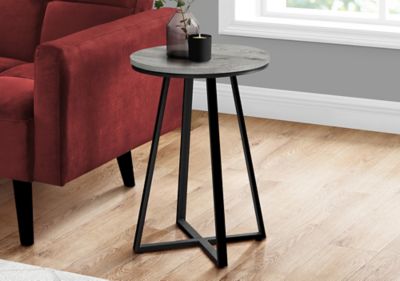
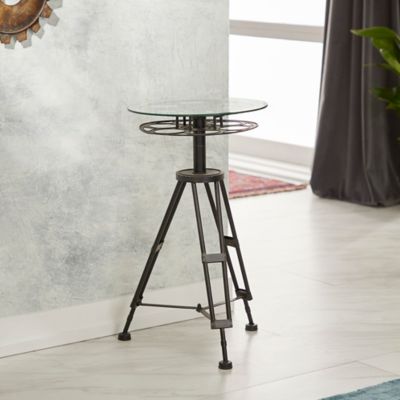
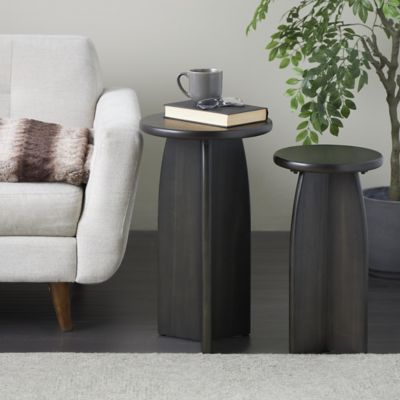
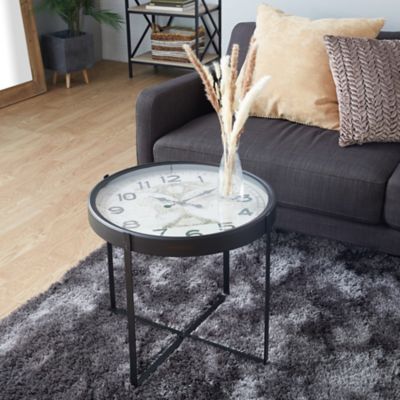
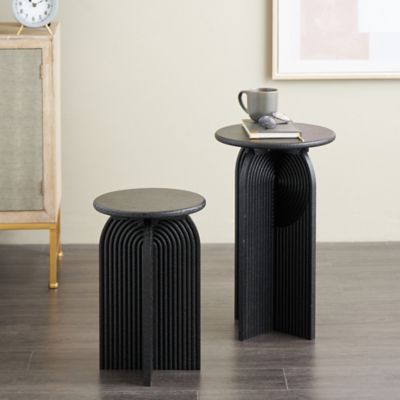
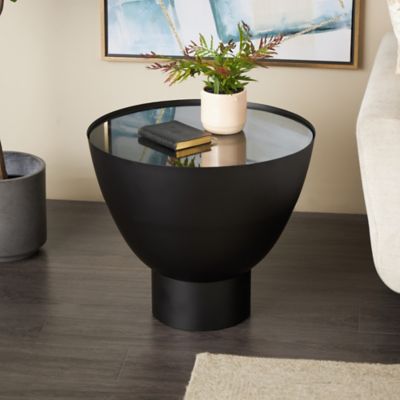
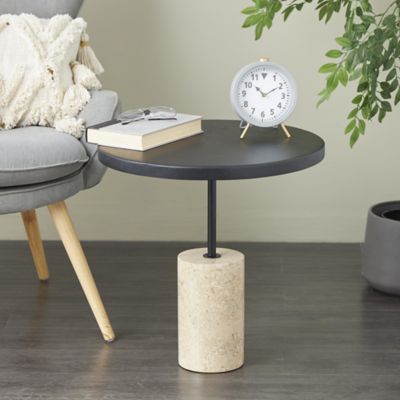
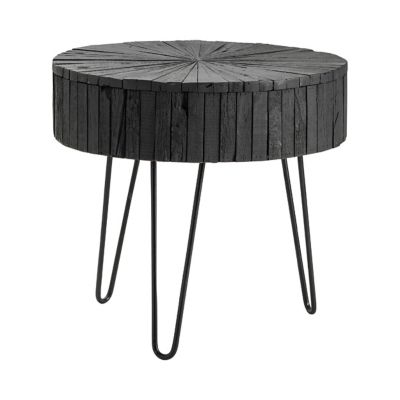
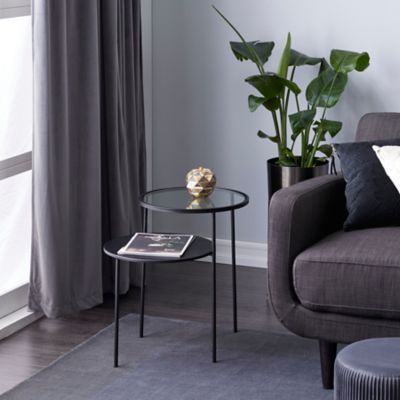
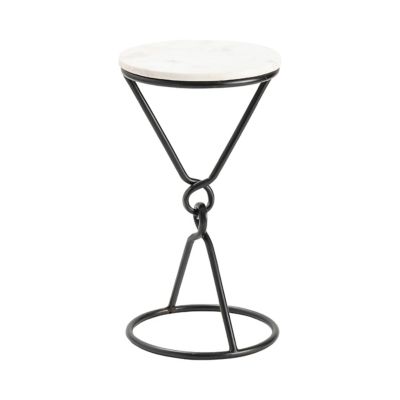
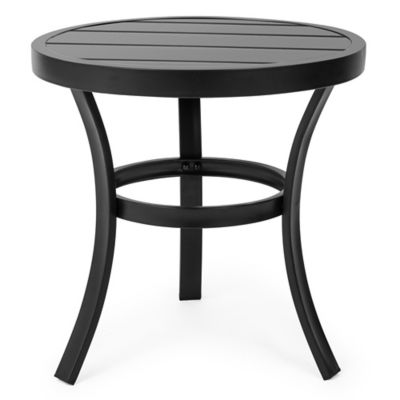
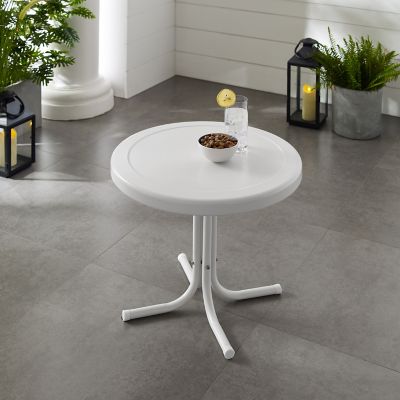
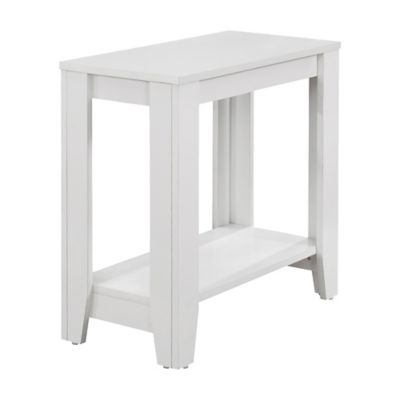
Round black accent tables are compact occasional tables that put a handy surface beside a sofa, reading chair, or bed without taking over the room. Their circular tops provide a spot for a lamp, a drink, or a book, while the black finish brings a clear outline to the space. Against a light-colored wall or a cream sofa, that darker shape stands out; alongside leather seating, natural wood, or iron hardware, it can help tie the room together. The look can lean farmhouse, industrial, or simple and understated, depending on the material, base, and finish. A slim metal frame leaves more floor visible, while a solid drum-shaped body has a stronger presence beside a substantial chair. Fit comes down to more than the tabletop diameter. The full footprint includes any legs or feet extending beyond the top, which matters beside a narrow walkway or between closely spaced seats. For a chair-side table, a surface near the height of the chair arm generally keeps a coffee cup or reading glasses within comfortable reach. Beside a bed, the mattress height gives a useful point of comparison. A low table can look right next to low seating but feel awkward alongside a tall armchair. Surface space matters, too: a lamp base needs enough room to sit securely without crowding everything else toward the edge. A round top that looks roomy on its own may feel much smaller once a lampshade, coaster, and stack of books enter the picture. In a compact living room, a modest footprint can leave room for everyday foot traffic, provided the table stays clear of doors and reclining footrests. Measuring the open space with nearby furniture in its normal position gives a better sense of how the table will fit into daily life. The right proportions let the table do its job without making the room feel packed.
Materials give round black accent tables much of their character and affect how they handle everyday wear. Steel and iron can create anything from a slender, open frame to a heavier base with a grounded feel. Metal thickness, connections, and the shape of the base all play a part in steadiness, so weight alone does not tell the whole story. Solid wood brings grain and natural variation, even beneath a dark stain, while an opaque black paint creates a more even appearance. Wood veneer over an engineered core offers another construction approach; the surface finish, edge treatment, and protection from standing moisture matter for keeping it looking neat. Glass tops leave the base visible and can help a small corner feel less crowded, though fingerprints and drink rings may call for more frequent wiping. Stone and stone-look surfaces bring a different feel, and their care needs depend on the actual material rather than appearance alone. A matte finish tends to soften reflections, while a glossy finish catches more light and may make smudges easier to spot. Black surfaces can also show pale dust, lint, and crumbs, making a soft, lint-free cloth useful for routine care. Spills are best wiped up promptly, with cleaners matched to the manufacturer’s directions. Coasters help protect the finish from drink rings, and a protective layer beneath a plant pot keeps trapped moisture away from the tabletop. On hard flooring, suitable foot pads can limit scuffs; on carpet, the base needs enough support to sit level rather than rock. Assembly details deserve attention as well, particularly where legs attach beneath the top. Secure fasteners, sound joints, and a stated weight limit suited to the intended load matter more than appearance alone. An accent table is meant to hold everyday belongings, not serve as a seat, step, or climbing spot.
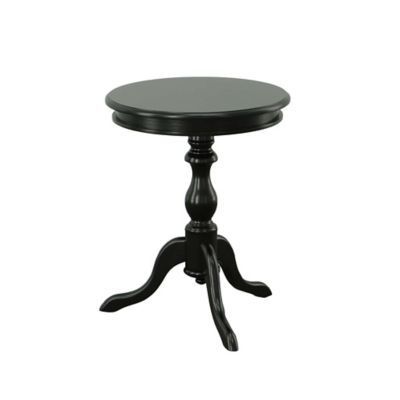
Different table layouts suit different routines, and the most useful choice often reflects what happens around the seat beside it. An open lower shelf gives books or a small basket a place to land without covering the top. A drawer can tuck away reading glasses, charging cords, or the television remote, while a plain tabletop keeps the whole piece visually quiet. Raised tray edges can help contain small belongings, although the inner surface measurement determines how much usable room remains. A pedestal base leaves a different amount of foot space than splayed legs, and either design needs a stable stance for the way the table will be handled. In a busy family room, a simple shape with accessible surfaces makes cleanup less of a chore. Beside a favorite reading chair, there may be more value in enough space for a lamp and a mug than in extra storage. In a bedroom, a round black accent table can stand in for a nightstand where drawers are not a priority, with charging access and bedside lighting helping determine placement. A pair can give opposite ends of a sofa a connected look without requiring every piece of furniture to match. Black also works as a repeating accent across a room, picking up the color of cabinet pulls, a fireplace screen, or picture frames. That connection can make an assortment of wood tones and upholstered pieces feel more settled together. For spaces arranged around stools rather than lounge seating,
Small Round Bar Tables serve a different purpose, with taller proportions suited to that setting. Accent tables remain the chair-side option for keeping smaller essentials close at hand. They can also make a thoughtful housewarming gift when the recipient’s measurements and preferences are known. Whether placed in a farmhouse sitting room, an apartment, or a guest bedroom, a well-proportioned round black accent table brings useful surface space and a straightforward finishing touch.