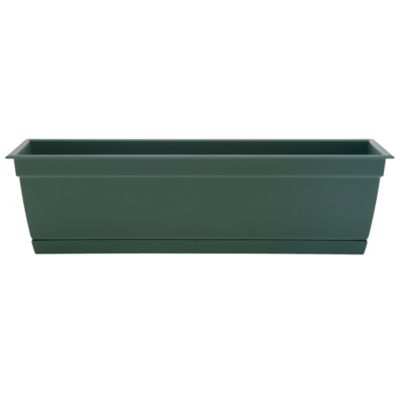
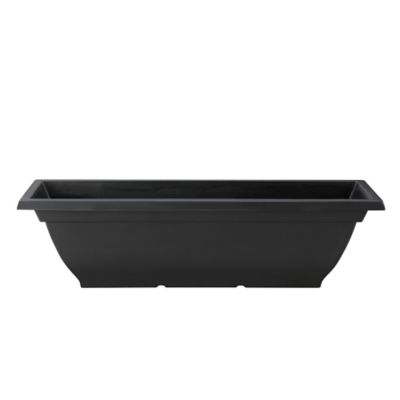
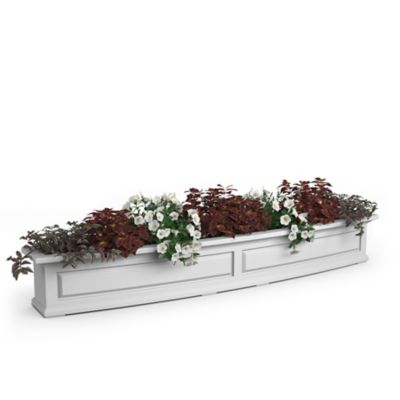
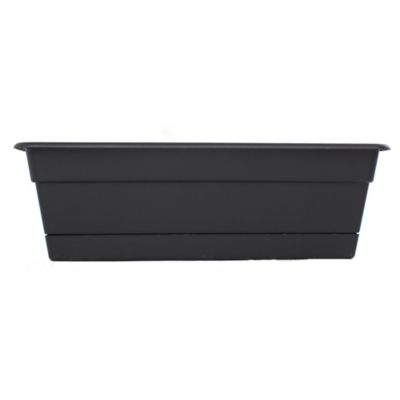
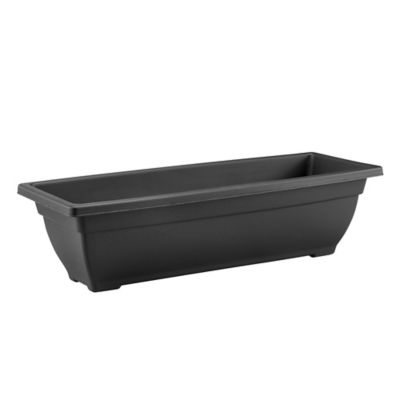
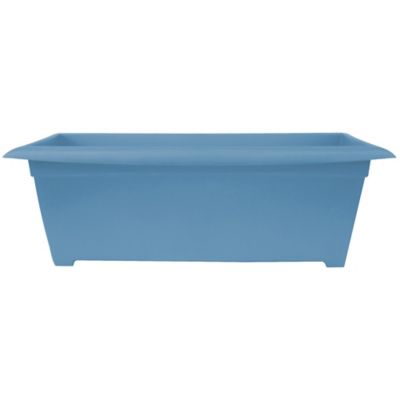
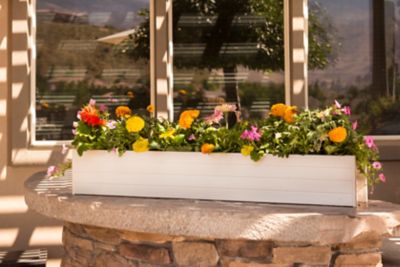
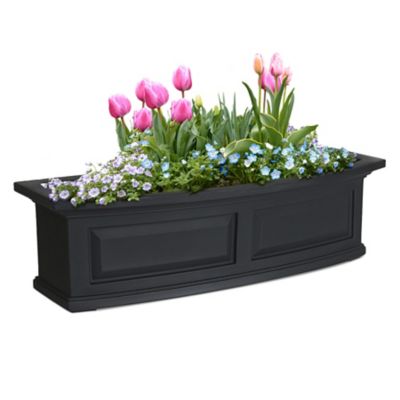
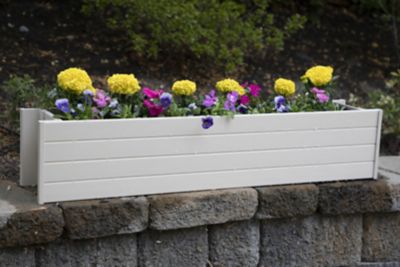
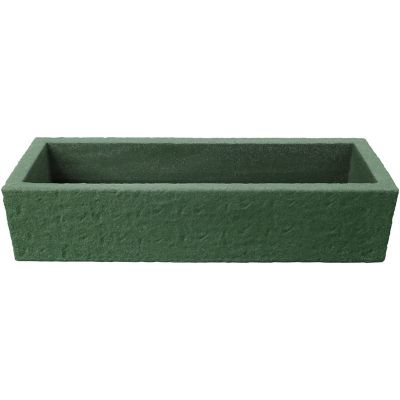
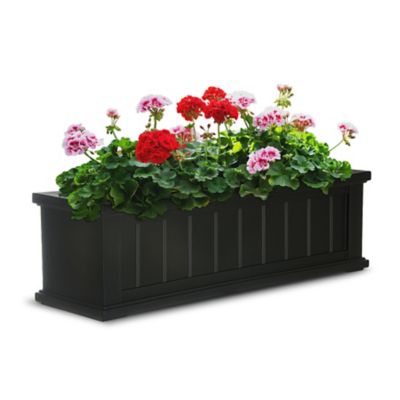
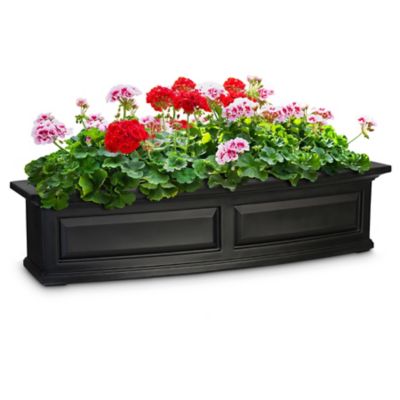
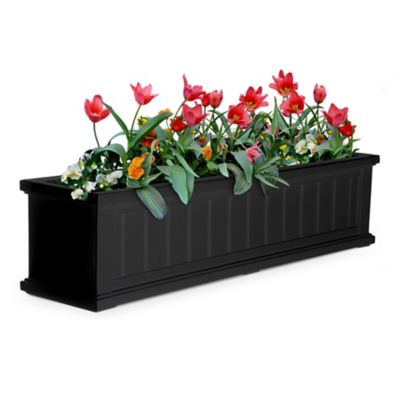
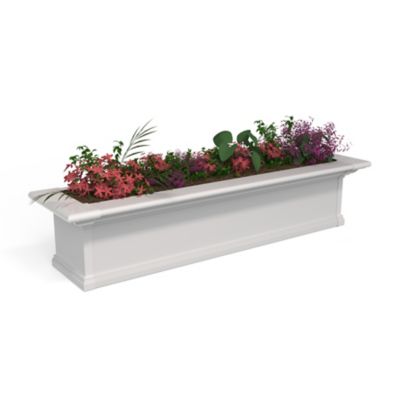
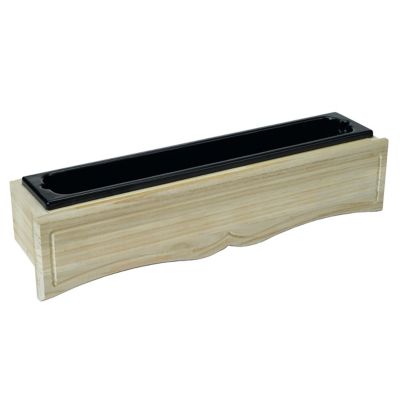
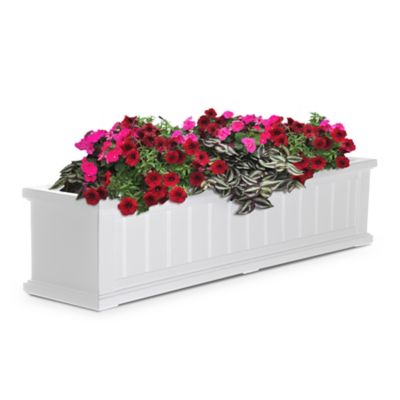
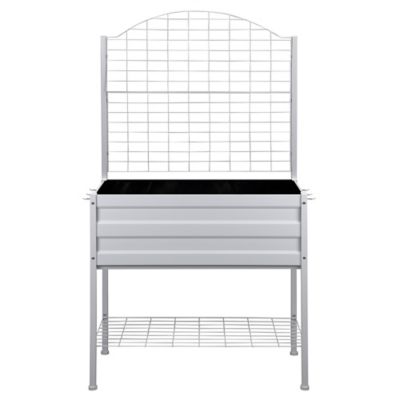
Plastic window box planters are lightweight containers for growing flowers, herbs, and compact vegetables along windowsills, porch rails, decks, and other narrow spaces. Their long shape makes room for several plants without taking up the floor space of a round pot, which comes in handy beside a back door or on a small porch. Plastic also holds moisture longer than unglazed clay, although watering needs still depend on the plants, potting mix, drainage, and location. An empty plastic box is generally easy to carry, making planting and cleaning more manageable before the container goes into place. These planters can bring greenery closer to a kitchen window, frame an entryway with flowers, or keep a few cooking herbs within easy reach. Shapes range from straight-sided boxes with simple edges to molded profiles with raised panels, rolled rims, or textured surfaces. A narrow profile can sit neatly beneath a window, while a deeper box gives roots more room and holds a larger amount of potting mix. Finish and color help tie the planting into its surroundings without making the container the center of attention. Light-colored boxes can blend with pale siding and porch trim, while darker finishes create a stronger outline against flowers and foliage. For a crisp contrast beside white trim, natural wood, or brick,
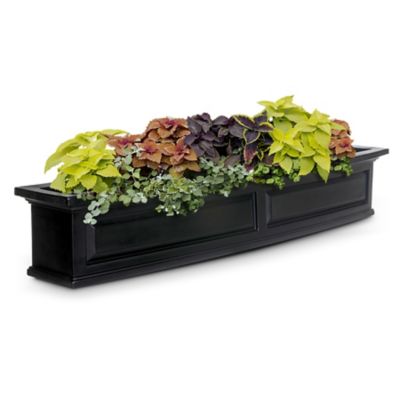
black window box planters offer a straightforward look that works with many plant colors. The container’s proportions matter just as much as its finish: a box that suits the width of the window and leaves room around shutters or trim tends to look settled into the space. For a railing or freestanding placement, the view from both sides matters, especially when the planter separates a seating area from a walkway. A plain back may sit unnoticed against siding but be more visible from a porch chair.
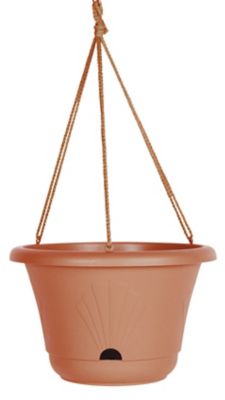
Fit involves more than the length printed in a planter’s dimensions. The top opening, base width, inside depth, and rim shape all affect where a window box can sit and what it can hold. A tapered box may fit a narrow support at its base while extending farther outward at the rim, and a wide lip can affect how a bracket grips the container. Outside measurements also do not always reflect the full planting space inside, especially with thick walls, built-in reservoirs, or removable inserts. Plastic construction varies, so wall thickness, reinforcing ribs, and the shape of the rim are worth comparing when considering how a box will hold its form under a load of damp potting mix. The plastic body will not rust, though any brackets, screws, or other mounting parts have their own care requirements. Some boxes serve as planting containers, while others act as outer holders for separate pots or liners; that distinction affects both drainage and watering. Drainage openings let excess water leave the root area, helping prevent the mix from staying saturated. Designs with marked knockout points need attention to the manufacturer’s directions before planting, rather than an assumption that the openings are already clear. A matching tray can help catch runoff on a sill or other protected surface, but standing water should not remain around roots that need free drainage. Self-watering designs may include a reservoir and an overflow outlet, with filling and upkeep requirements that differ from a standard box. Mounting deserves equal attention because a planter filled with wet mix weighs much more than an empty one. Brackets need to fit the box, match the railing or wall, and support the full planted weight according to their stated limits. Secure placement also leaves room for windows to open, doors to swing, and people to pass without brushing against stems or catching clothing on a projecting edge.
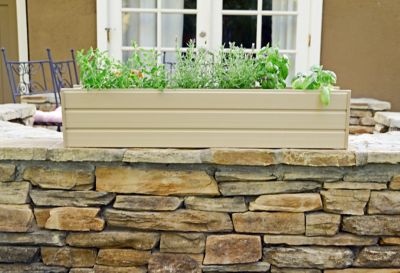
Plant choice gives a window box its purpose, whether that means a row of kitchen herbs or flowers spilling over a porch rail. Compact growth habits make the most of a long, limited root space, while plants with similar light and moisture needs are easier to manage together. Chives and parsley can suit a handy herb planting when the location provides the light they need; compact lettuce varieties offer another possibility where container depth and growing conditions fit. Larger vegetables and vigorous plants often need more root room and support than a shallow window box provides. For flowers, a mix of upright growth and trailing stems can soften the container’s edge without hiding the window behind it. Mature size matters here: a small transplant may eventually crowd its neighbors, block a view, or hang into a walking path. Container potting mix provides a more suitable root environment than dense soil taken straight from the yard, and enough space below the rim helps keep water from carrying mix over the edge. Because plastic does not absorb water like porous clay, checking the mix itself gives a better picture of watering needs than judging by the container’s outside surface. Even a box with a reservoir benefits from occasional checks of moisture, overflow openings, and root growth. Routine care is generally straightforward: loose soil can be brushed away, and an emptied planter can be washed with mild soap and water according to its care directions. Clear drainage passages, sound rims, and secure mounting points help keep the setup working as intended. A cracked box or weakened bracket calls for attention before the planter goes back into an elevated position. For someone who enjoys tending flowers but has little ground space, a plastic window box planter can make a thoughtful gift, particularly when its dimensions suit a known sill, rail, or stand. From a modest porch planting to a neatly arranged kitchen herb box, the best fit balances planting room, manageable upkeep, and secure placement.