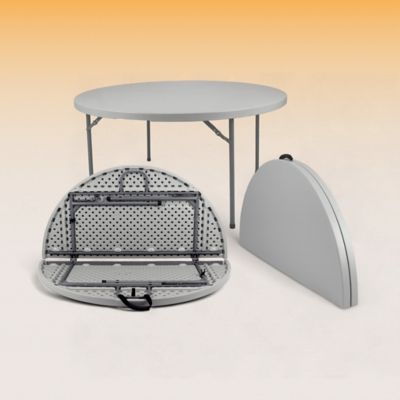
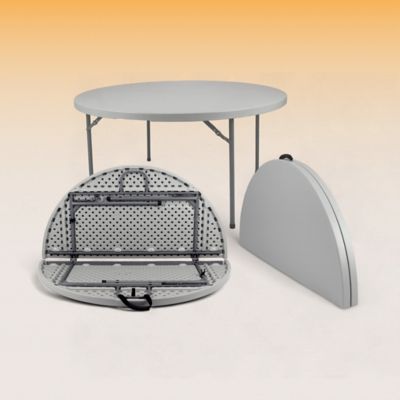
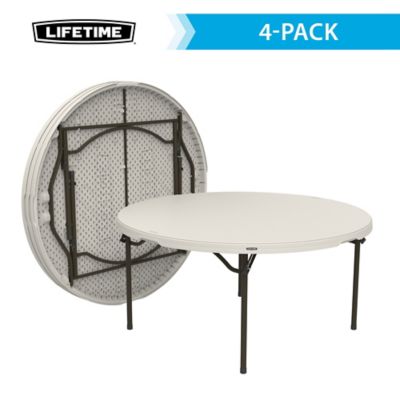
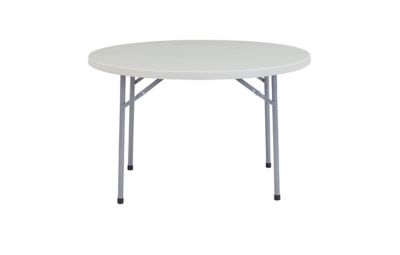
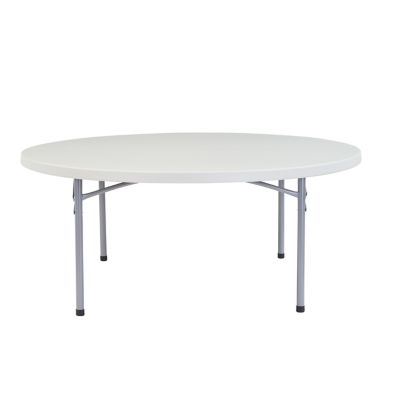
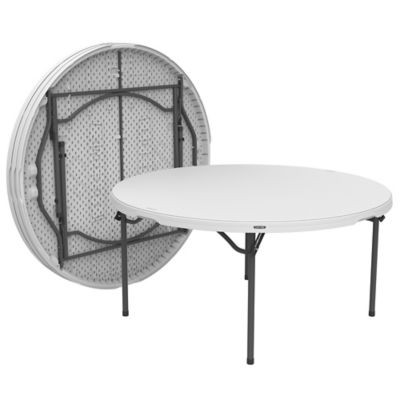
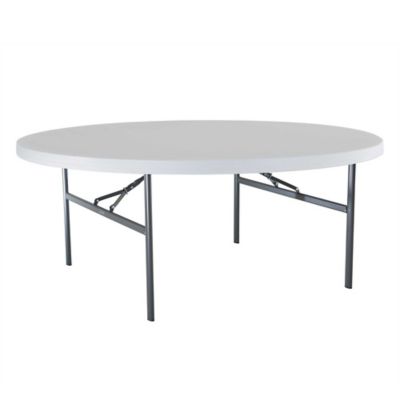
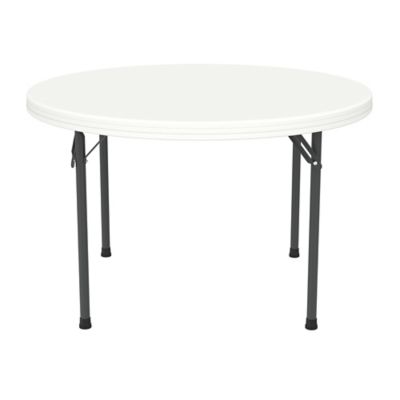
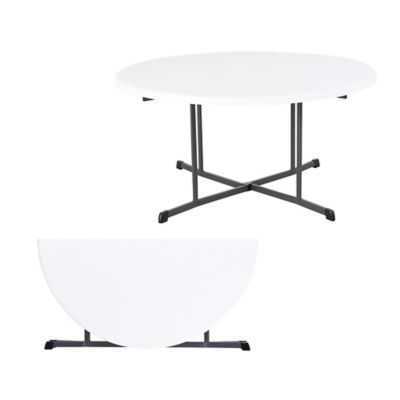
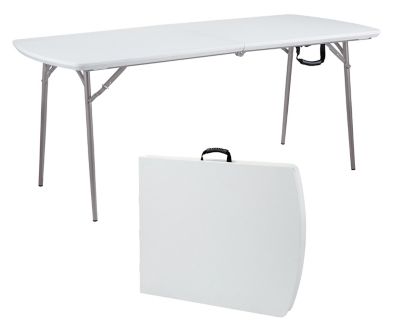
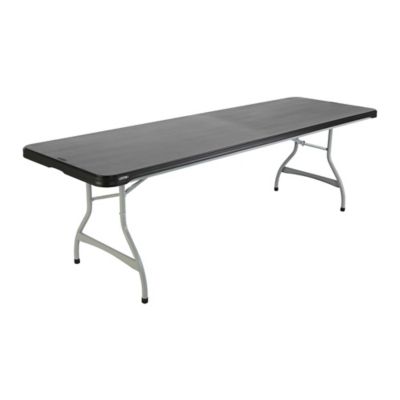
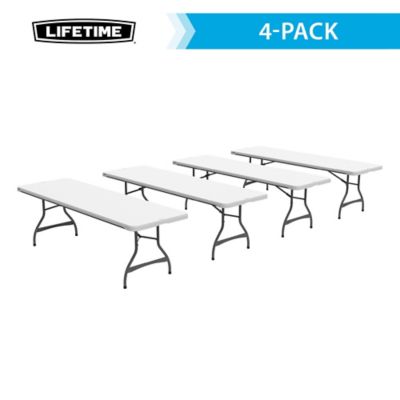
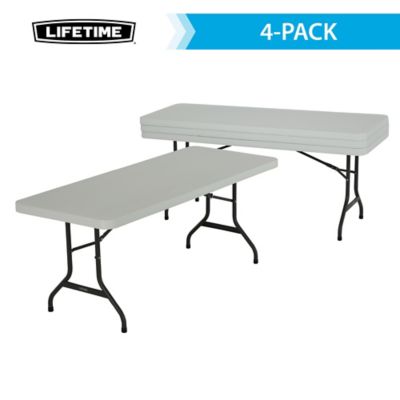
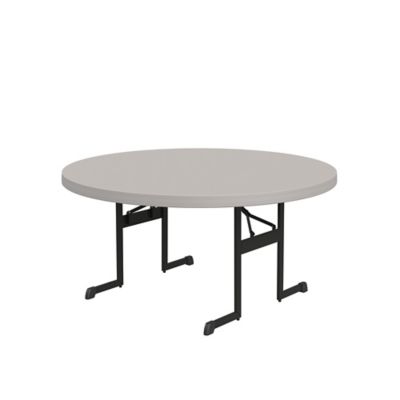
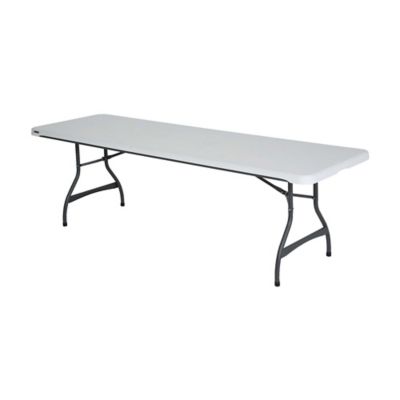
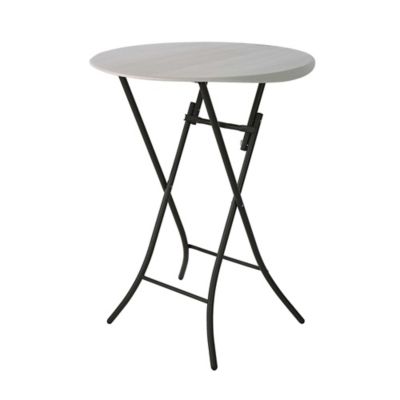
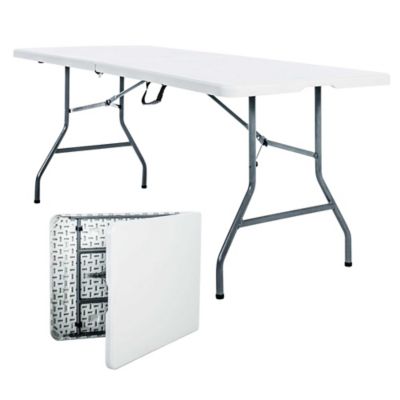
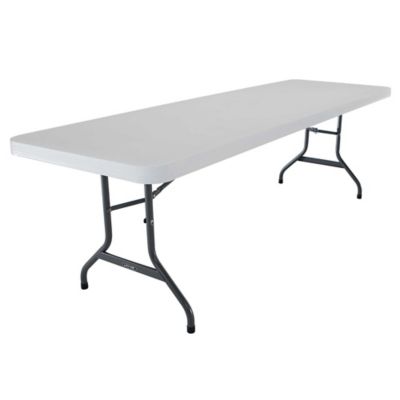
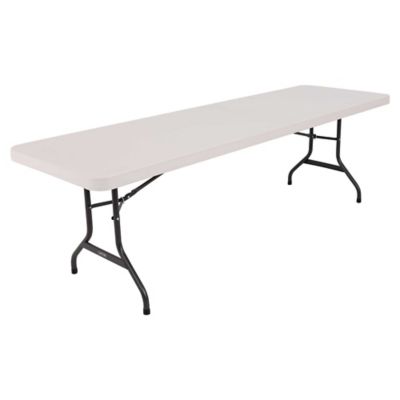
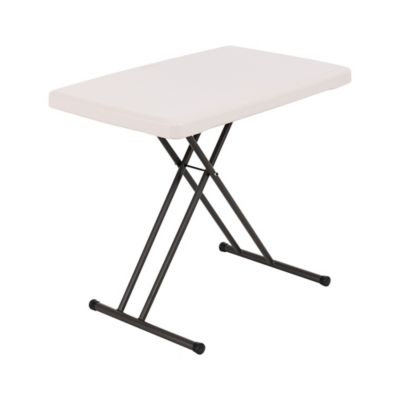
Plastic round folding tables make room for the whole crew without tying up floor space between gatherings. They fit naturally into a church fellowship hall, a community center, a family game room, or a farmhouse kitchen that needs another place for supper guests. The round shape keeps everyone facing one another, with no head of the table and no corners sticking into nearby walkways. That makes these tables handy for conversation, card games, birthday parties, potluck meals, and small-group activities. Many plastic folding tables have molded high-density polyethylene, often called HDPE, tops supported by steel frames and folding legs. The plastic provides a wipe-clean surface, while the frame carries the load and helps the table stay steady. Construction varies, so details such as frame bracing, leg placement, top thickness, and the manufacturer’s weight rating matter more than appearance alone. A powder-coated steel finish provides a protective layer, though scratches and exposed hardware still deserve attention over time. Some tables have a one-piece round top with legs that fold underneath; others have a top that folds in half for a smaller carrying footprint. A one-piece surface avoids a center seam, while a fold-in-half design can be easier to fit into a vehicle or a storage area. Surface texture is another practical difference. A lightly textured top can work well for meals and general activities, while writing, drawing, or playing cards may call for a mat or another smooth covering. For shared spaces, rounded edges and accessible folding mechanisms are worth a look, along with feet that suit the flooring. Plastic round folding tables work well as temporary dining and activity surfaces, but their intended use should always match their construction. A table meant for plates, place settings, and board games is not automatically suited to heavy tools, concentrated equipment loads, or standing on top. Choosing around the tasks that happen most often helps keep the table useful long after the first gathering.
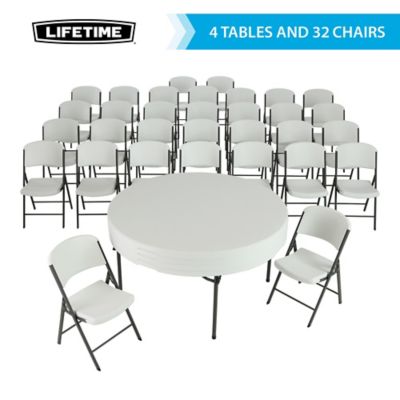
Table diameter is the starting point for seating, but it is not the whole story. Small round folding tables around 32 to 36 inches across often suit two to four people, depending on chair width and how much space each person needs. A 48-inch round table commonly accommodates four to six, while a 60-inch table often seats six to eight. Larger 72-inch round tables may seat eight to ten, though these are general planning ranges rather than seating guarantees. Wide chairs, generous place settings, serving bowls, and elbow room can all reduce the comfortable count. A table that feels roomy for a card game may feel crowded once dinner plates and a pitcher land in the middle. For family meals, leaving room for shared dishes helps everyone settle in without constant shuffling. For meetings or project nights, each seat may need space for papers, supplies, or a laptop instead. Leg placement also affects fit: a broad tabletop does not help much if a brace lands directly where someone needs to sit. Many dining-height folding tables stand roughly 28 to 30 inches tall, but checking the listed dimensions alongside chair seat height and armrest clearance helps prevent an awkward match. For gathering areas that extend outdoors,
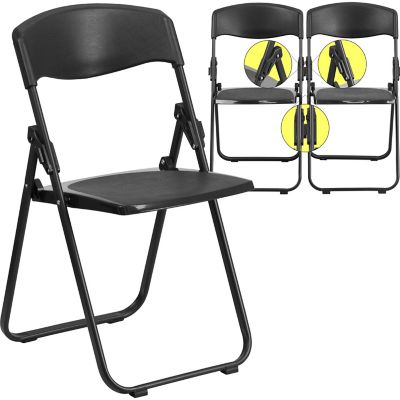
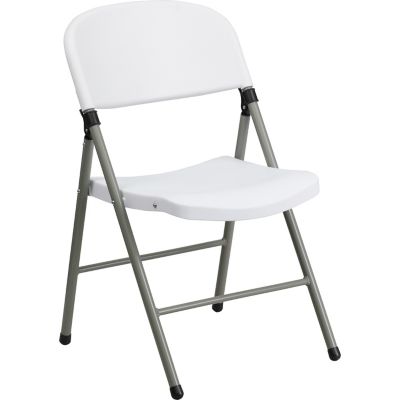
Outdoor Plastic Folding Chairs can provide companion seating when both the table and chairs are approved for that setting. Room planning goes beyond the tabletop itself. Allow space for people to pull out chairs, walk behind seated guests, and move between the table and nearby doors or serving areas. A round table can encourage easy conversation, yet a large diameter also takes up a broad patch of floor. In a smaller room, a modest table with comfortable clearance often serves better than a larger one squeezed against a wall. Measuring the setup area, doorway, and storage opening gives a clearer picture of how the table will fit through its full routine, not just while everyone is seated.
Folding and storage details make a real difference when a table comes out for gatherings and goes away afterward. A built-in handle can simplify carrying, but the table’s weight, folded thickness, and overall dimensions still determine whether one person can move it comfortably. A large round top may be awkward through a narrow doorway even when its legs fold flat. Fold-in-half tables reduce that broad outline, while their hinges, center supports, and closure latches add parts to check. Depending on the design, leg sleeves, locking rings, or latches help hold the table open; each mechanism should fully engage according to the manufacturer’s directions before anything goes on top. Fingers need clear space around hinges and folding braces, especially when children are nearby. On the floor, all feet should make firm contact with a level surface rather than straddle an uneven threshold or sink into soft ground. Protective foot caps can help limit floor marks, and missing caps or loose fasteners are worth addressing before the next setup. Weight limits also need a close read: a rating for an evenly distributed load does not mean the same weight belongs in one small spot at the center or edge. For cleanup, mild soap, a soft cloth, and the manufacturer’s recommended cleaning method are sensible starting points. Food spills are easier to manage before they dry, while abrasive pads or harsh solvents can damage some surfaces and finishes. Hot cookware needs a suitable heat barrier rather than direct contact with the plastic. After cleaning, drying the tabletop, hinges, and frame before folding helps keep trapped moisture out of storage. Tables stored upright need support so they cannot slide or tip, and carry handles should not be treated as hanging points unless the manufacturer allows it. For homes, meeting halls, and shared gathering spaces, the most practical choice balances seating room, manageable weight, straightforward cleaning, and a folding design that suits the space. Those everyday details help a plastic round folding table earn its place whenever another gathering calls for a few more seats.