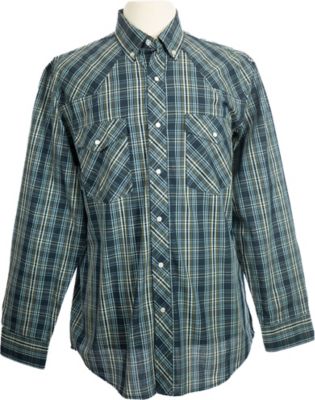
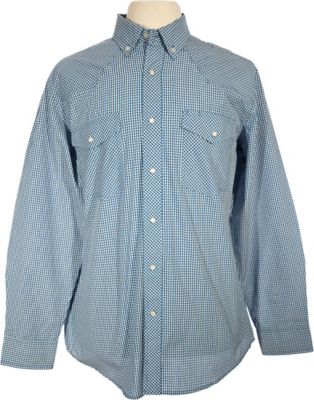
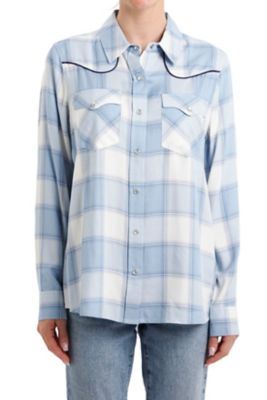
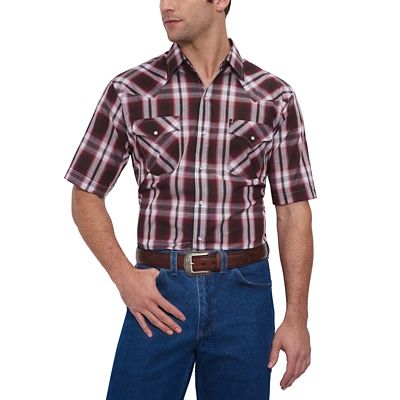
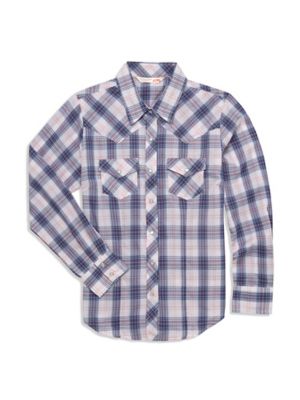
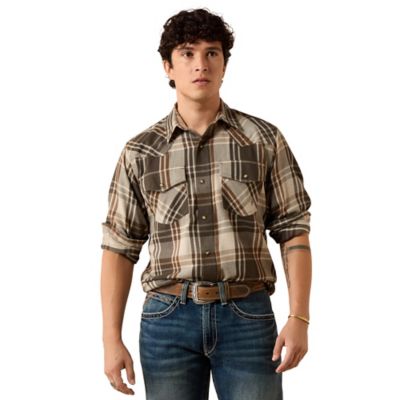
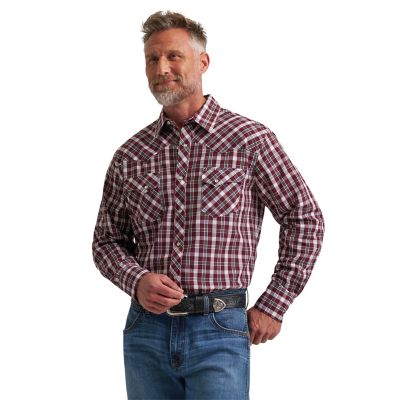
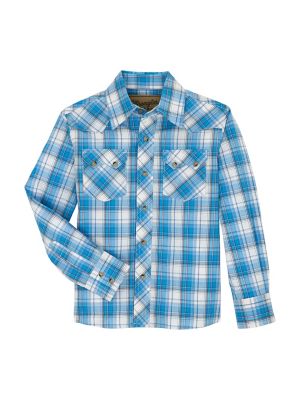
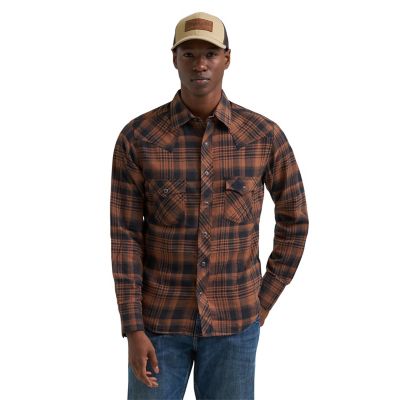
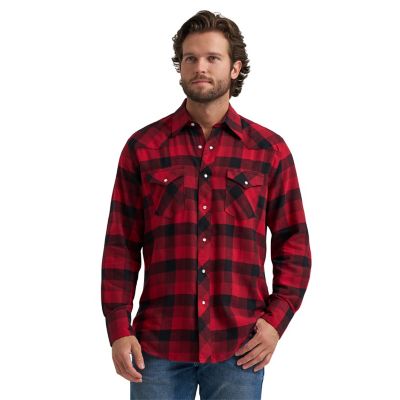
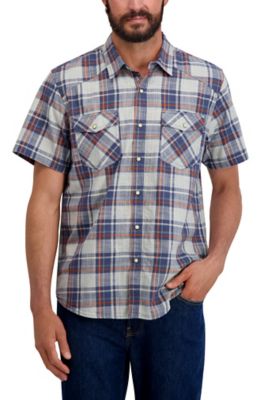
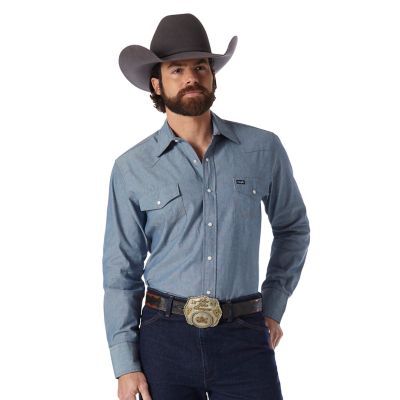
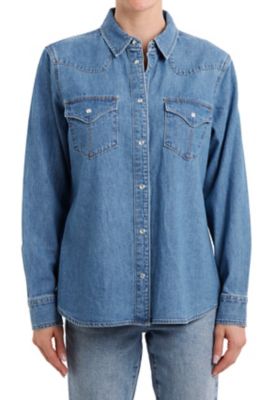
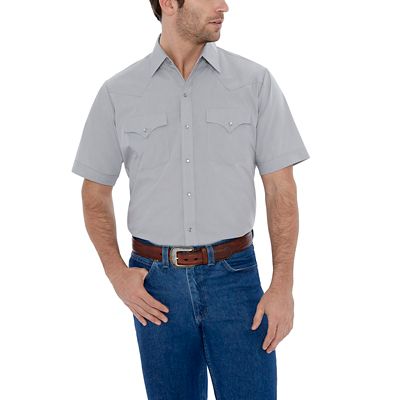
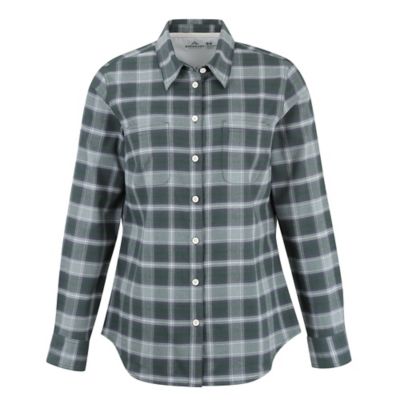
Plaid western shirts bring together a familiar checked pattern and the details that give Western clothing its character: shaped shoulder yokes, chest pockets, pointed collars and snap or button fronts. Plaid describes the pattern, while Western describes the shirt’s styling, so the two can take plenty of different forms. A small, closely spaced check has a quieter look, while broad intersecting stripes make a bolder statement. Red, blue, green and earth-tone combinations work naturally with jeans, canvas pants and leather boots, whether the day includes feeding livestock, heading to a county fair or sitting down for supper in town. The pattern can be woven into the fabric with different-colored yarns or applied to the surface, and that construction affects how the cloth looks on both sides. Western yokes add definition across the shoulders and back, while pointed pocket flaps and contrasting snaps give the front a recognizable finish. Not every shirt includes every detail, which leaves room for everything from straightforward workwear to a more dressed-up ranch look. Closures make a difference, too.
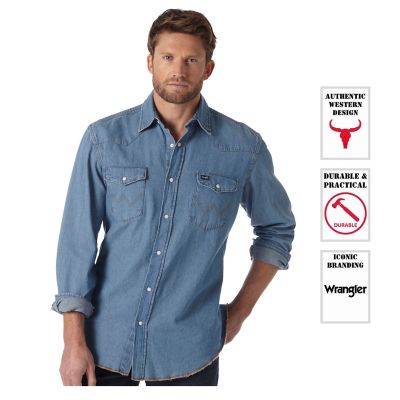
Western Snap Shirts feature a press-to-close fastening that sets them apart from traditional button-front styles. Snaps close without threading a button through a hole, while buttons offer a familiar fastening with a different look and feel. Chest pockets provide a place for a pen, folded note or other small essentials, though pocket depth and flap design determine what fits comfortably. Long sleeves keep forearms covered and give cuffs a place to sit beneath a jacket sleeve; short sleeves leave the arms free without the extra fabric. Either style can carry the same Western character. For ranch hands, horse owners, fair exhibitors and folks who simply like the look, a plaid western shirt can feel right at home beside a well-worn belt and a pair of everyday boots. It also works beyond the barn or arena, bringing a little country character to family pictures, community gatherings and a night out.
Fabric has a lot to do with how a plaid western shirt feels through a full day of wear. Cotton is familiar for its soft hand and ability to absorb moisture, with the weave and fabric weight influencing whether a shirt feels crisp, smooth or substantial. Poplin generally has a smooth surface and a neat appearance, while twill has a diagonal weave that gives it a different texture and drape. Brushed fabrics have a softer, slightly fuzzy surface, and blends that include polyester may help limit wrinkling and changes in shape. A small amount of stretch fiber can provide extra give when reaching for a gate latch, bending to fill a feed pan or moving around a saddle. Fiber content alone does not tell the whole story, though. Two cotton shirts can feel quite different because of yarn thickness, weave density and finishing. For frequent chores, the details worth noticing include secure stitching at the shoulders, firmly attached pocket corners and a front placket that lies flat rather than twisting. Areas that see repeated movement, such as elbows and underarms, benefit from enough room to move without constant pulling against the seams. Snaps and buttons should sit securely, and cuffs should fasten without digging into the wrist. Care requirements matter just as much as the first feel of the fabric. The care label provides the right direction for washing, drying and ironing, especially when a shirt includes stretch fibers, contrasting trim or a brushed finish. Washing with similar colors helps protect the look of the plaid, and closing fasteners before laundering can reduce catching on other clothing. High dryer heat can contribute to shrinkage in some fabrics, so following the stated drying method helps preserve the intended fit. Taking a shirt out promptly and smoothing the collar, pocket flaps and front placket can also reduce deep creases. For a crisp finish, ironing according to the label keeps attention on the plaid and Western details rather than rumpled edges. Checking an occasional loose thread or fastening before the next wear can keep a small repair from becoming a bigger interruption.
Fit ties all those details together, especially when a shirt needs to handle both physical work and time away from chores. A comfortable shoulder seam sits near the natural shoulder rather than pulling toward the neck or hanging far down the upper arm. Across the chest, the front should lie smoothly without gaps between fasteners when standing, sitting or reaching forward. Room through the upper back matters when carrying a feed sack, holding reins or stretching across a workbench. A trimmer cut follows the body more closely and can make tucking easier, while a roomier cut leaves more space through the chest and waist. Neither fit should require sizing so loosely that sleeves interfere with handwork. Sleeve length is best judged with the arms moving, not only hanging at the sides: cuffs that seem fine while standing still can pull back too far when reaching. Shirt length matters for the same reason. A longer, curved hem helps a tucked shirt stay in place when bending or climbing into a truck, while an untucked shirt should fall neatly without bunching around the hips or covering too much of the jeans. A tucked plaid western shirt with a leather belt gives a clean, put-together look for an arena event or family gathering; worn untucked with a suitable hem, it feels more relaxed for everyday errands. Layering over a plain T-shirt changes the feel without hiding the plaid, while wearing the shirt beneath a vest leaves the collar, sleeves and front pattern in view. For gifts, familiar details are often the most useful starting point: the recipient’s usual fit, preferred closure, favorite colors and habit of wearing shirts tucked or untucked. Someone who spends long days around horses may value freedom through the shoulders, while someone dressing for dances or community events may lean toward a closer fit and sharper collar. A plaid western shirt earns its place through that balance of character, comfort and practical details—a shirt that suits the person wearing it, wherever the day leads.