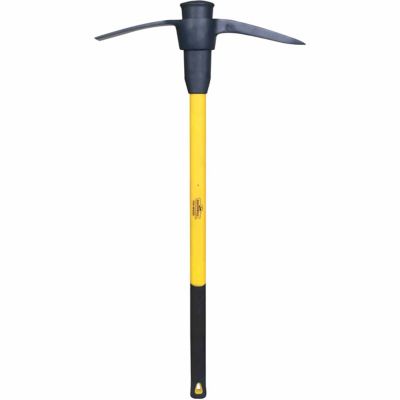
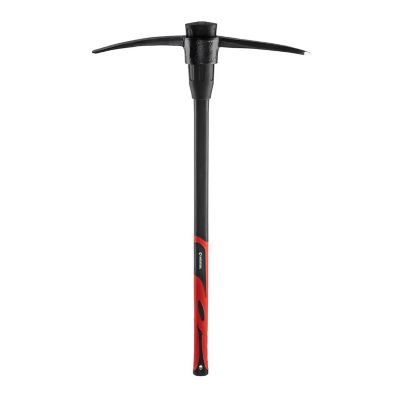
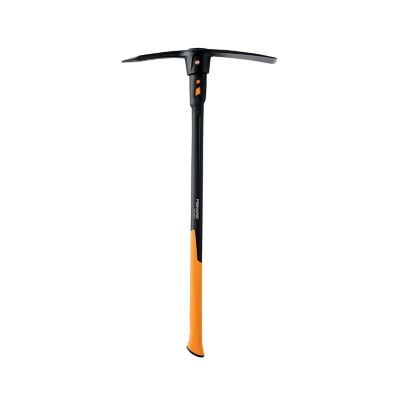
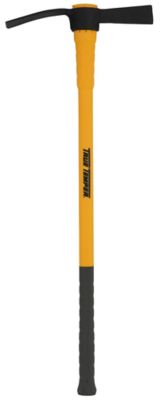
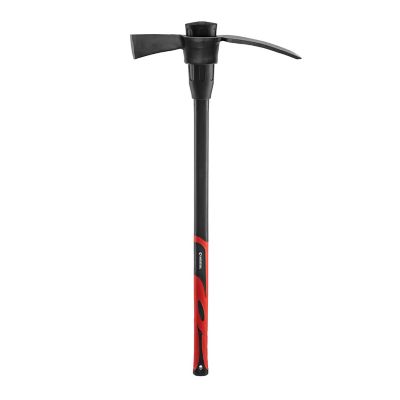
A pick mattock combines a pointed pick and a broad, horizontal adze blade on one head, giving you two ways to loosen stubborn ground. The pointed end concentrates force into a small area to break compacted soil and work around embedded stones, while the adze cuts across the ground to loosen clods, scrape shallow channels, and chop smaller roots. That combination makes pick mattocks practical digging tools for landowners, gardeners, fencing crews, and folks tackling property upkeep by hand. Along a fence line, a mattock can loosen packed earth before a shovel clears the hole. Around a planting bed, its broad blade can help break up ground that a spade struggles to enter. For a short drainage trench or a narrow stretch beside a walkway, the two ends let you switch between breaking and scraping without reaching for another striking tool. A pick mattock is different from a cutter mattock, which pairs an adze with an axe-like blade rather than a pointed pick. That distinction matters when matching the tool to the ground: the pick end suits compacted earth and rocky soil, while an axe-style end is geared more toward cutting roots. Neither design replaces a shovel for lifting loose material, and a pick mattock is not a substitute for demolition equipment or machinery on large excavation jobs. Its strength is controlled, localized digging where there is room to swing and a manageable amount of earth to move. Think of a stubborn ridge of clay across a garden expansion, packed ground beside a gate opening, or a small section of trench that needs loosening before the soil comes out. Around established trees, root cutting deserves extra care because damage can affect tree health and stability. Matching the head shape to the work helps keep a straightforward digging job from turning into a long stretch of swinging at ground that calls for a different approach.
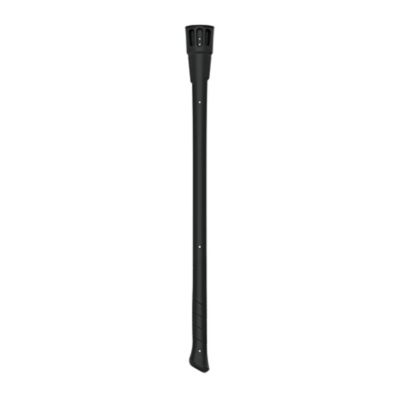
Head construction, handle material, and balance all affect how a pick mattock feels once the digging starts. Forged steel heads are common, and carbon steel offers the hardness and toughness needed for repeated contact with soil and buried stones when properly heat-treated. The pick’s taper influences how it enters packed ground, while the width and shape of the adze affect how much soil it loosens with each stroke. A broader blade can work a wider strip, but it also meets more resistance in tightly packed earth. Head weight matters just as much as blade shape. A heavier head carries more force through a swing, but that extra weight also takes more effort to lift, slow, and redirect. A lighter tool may be easier to manage for smaller planting areas, shallow work, or longer stretches of repeated digging. Listed head weight and total tool weight are not necessarily the same, so both measurements deserve attention when comparing designs. Handle length changes reach and leverage, and the best fit depends on the person swinging the tool as well as the space around the job. A long handle offers reach in an open patch of ground, while a shorter design can be easier to maneuver where a full swing is impractical. Traditional wood handles, often hickory, provide some flex and can be replaced on heads designed for that connection. Fiberglass handles resist rot, and grip coverings can make the tool easier to hold with work gloves. Neither material makes a mattock electrically insulated unless it carries a specific rating for that purpose. Grip shape, handle thickness, and the transition near the head also influence comfort and control. For a tool that will see regular fence, garden, or acreage work, a secure head connection and a handle that suits your reach matter more than simply choosing the heaviest option. Replacement handles need to match the head’s eye shape, dimensions, and attachment method; a close-looking fit is not enough.
A pick mattock earns its place alongside other digging tools rather than doing every part of the job alone.
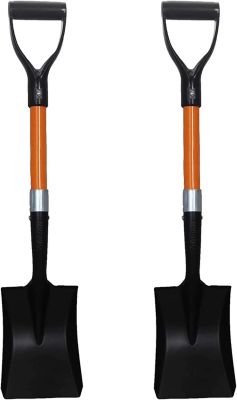
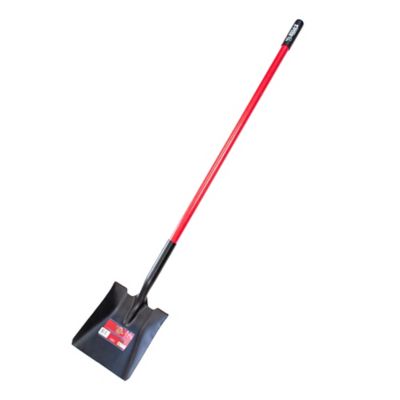
Small Shovels help lift loosened earth from planting holes and narrow trenches, while a mattock handles the breaking and scraping that comes first. A digging bar may be better suited to concentrated prying around a stubborn stone, and pruning tools offer more control where a root needs a deliberate cut. The mattock handle should not serve as a pry bar, since heavy sideways leverage can damage the handle or loosen its connection to the head. Before digging, contacting 811 and waiting for utility markings is an important part of the job; private lines may require a separate locating service. Marked utilities still call for clearance and digging practices that follow local requirements. Eye protection, work gloves, substantial footwear, and enough clear space for the entire swing help address the hazards of flying chips, slipping grips, and nearby obstacles. Bystanders and animals belong well outside that working area. Manageable strokes give better control than an overhead swing that pulls you off balance, especially when the pick encounters a buried stone instead of soil. Between jobs, removing caked-on earth makes it easier to spot cracks, a bent point, splintering, or movement where the handle meets the head. A loose head or damaged handle calls for repair or replacement before more digging. Clean, dry storage and a light protective oil on exposed steel help limit rust, while blade and point maintenance should follow the tool maker’s directions rather than grinding the steel into an overly thin edge. Wood handles benefit from care suited to their finish, and fiberglass handles need inspection for cracks or exposed fibers. Keeping the head secured and the edges protected also makes storage safer around a busy shed or garage. With a manageable weight, a comfortable handle, and the right head shape, a pick mattock brings useful breaking and digging power to the stretches of ground that a shovel alone cannot easily tackle.