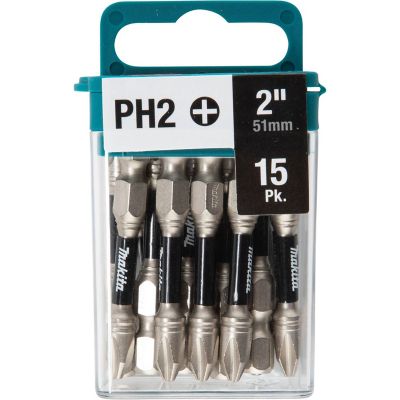
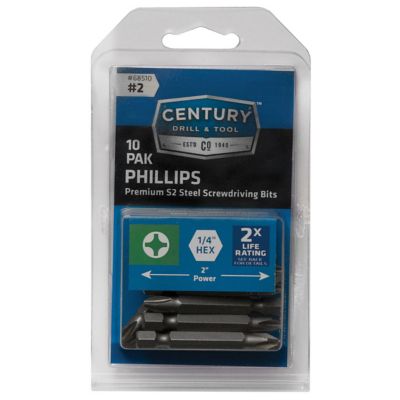
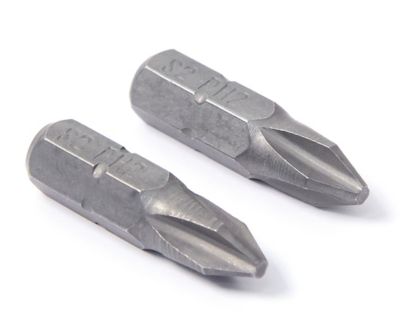
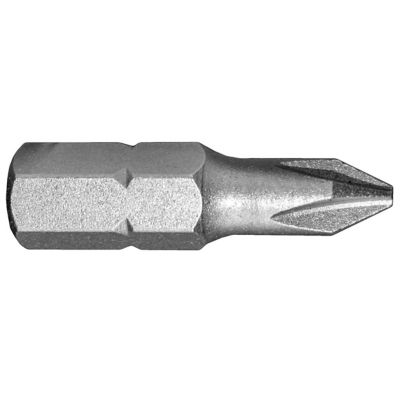
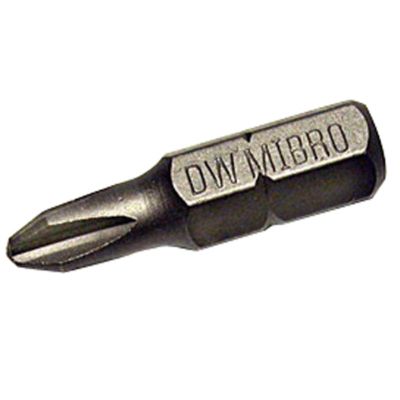
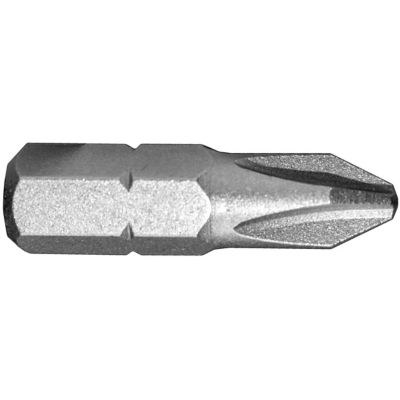
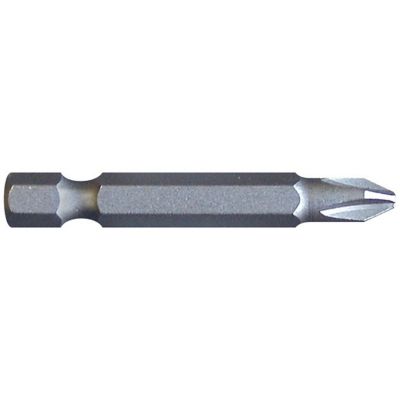
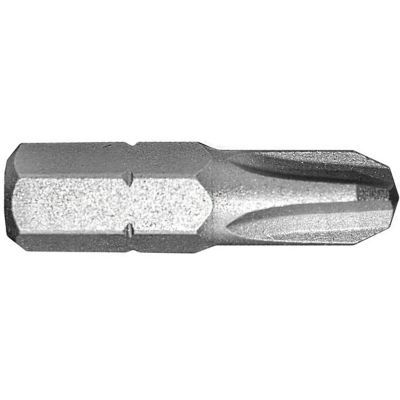
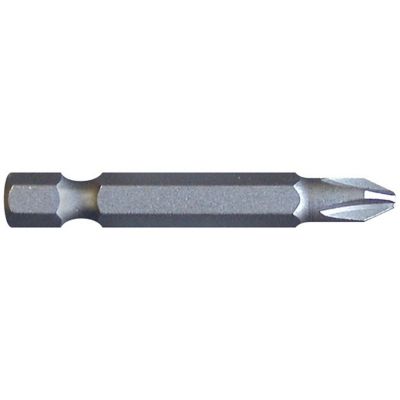
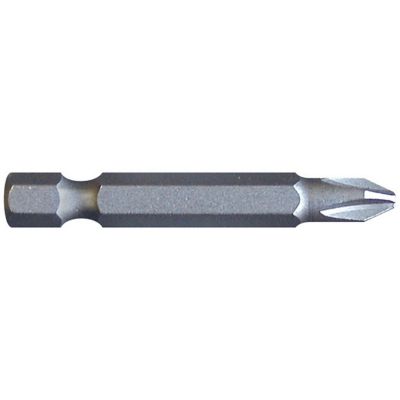
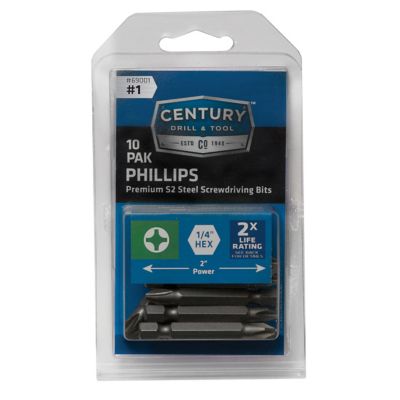
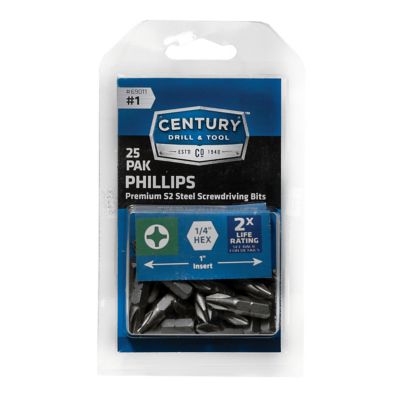
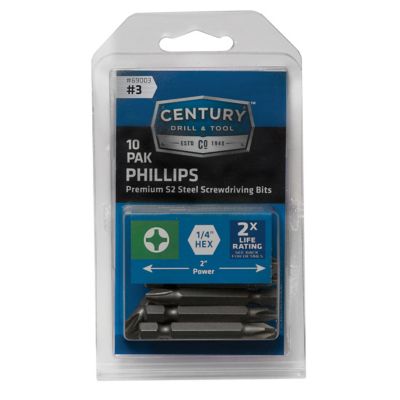
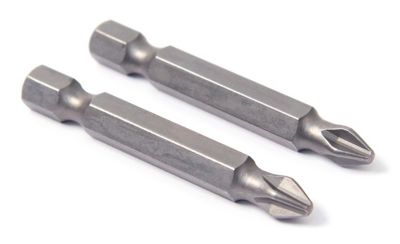
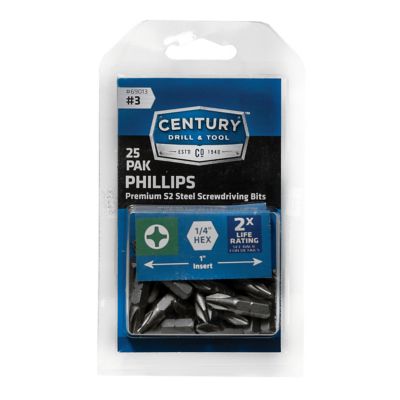
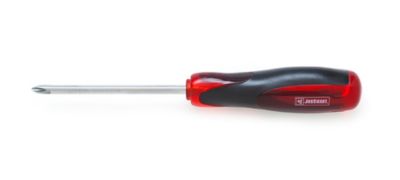
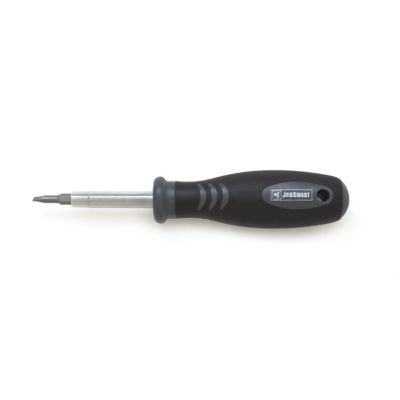
Phillips bits are cross-shaped driver tips that fit the matching cross recess in Phillips head screws. They connect to compatible screwdrivers, bit holders, drills, and impact drivers to handle fastening jobs around the house, shop, barn, and garage. From fastening a cabinet hinge to putting together a workbench, the right fit helps keep the bit seated and the screw head intact. The familiar cross shape helps center the tip, but Phillips bits come in several sizes, and those sizes are not interchangeable. PH1 generally fits smaller Phillips screws on light hardware, small hinges, and some electrical device housings. PH2 is a common size for household repairs, furniture assembly, drywall fastening, and many shop projects. PH3 fits larger Phillips recesses, which may appear on substantial hinges, equipment hardware, and construction fasteners. These markings describe the driver tip size, not the screw’s length or thread diameter. A long screw can have a smaller recess than a short one, so the screw head itself determines the match. A well-fitting bit settles fully into the recess with little play instead of rocking or catching only at the upper edges. That contact matters when a hinge needs to sit flush or a bracket needs to pull snug without chewing up the fastener. Phillips and Pozidriv screw heads can look alike at a glance, but they call for different bits. Pozidriv heads typically have four extra marks between the main cross slots, while a standard Phillips recess has the simpler cross pattern. Substituting one tip style for the other can reduce contact and damage the recess. For jobs that call for turning screws by hand,
Phillips head screwdrivers provide a dedicated hand-tool option. Interchangeable Phillips bits suit folks who want several tip sizes close by without carrying a separate full-length driver for every screw they encounter.
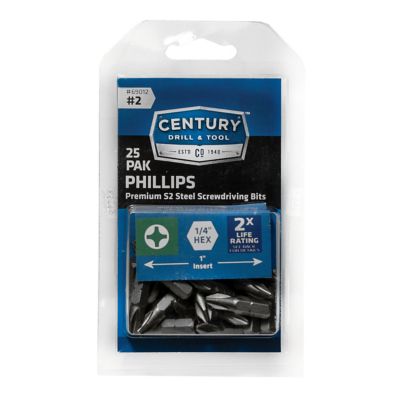
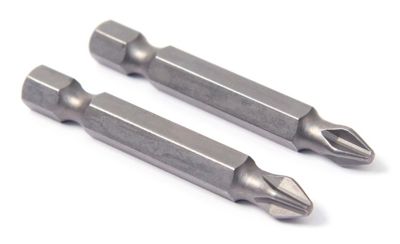
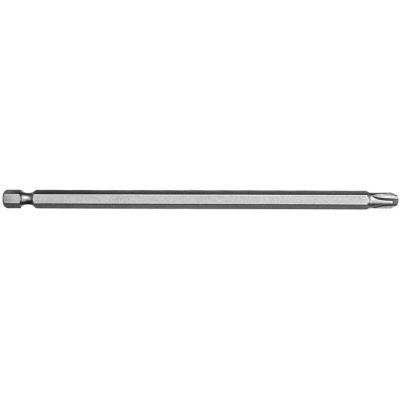
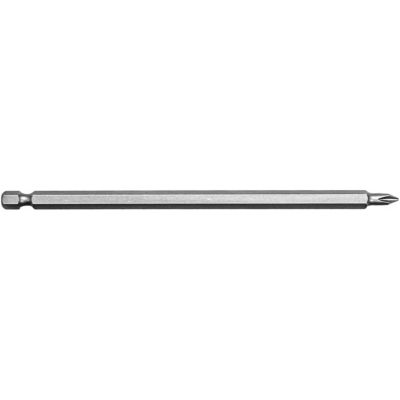
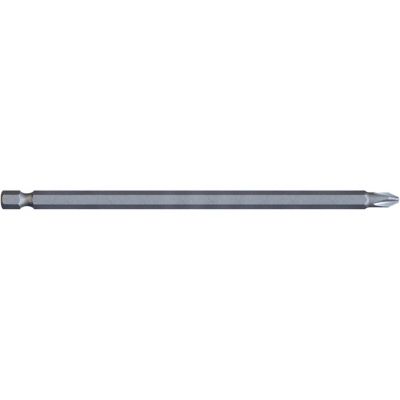
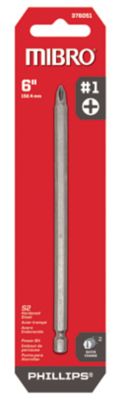
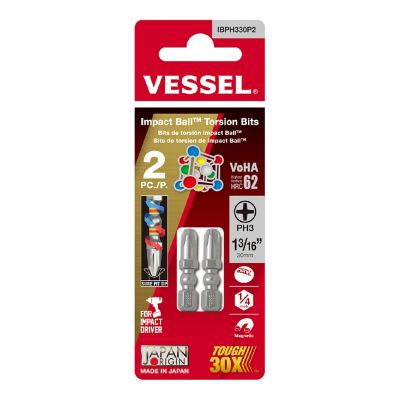
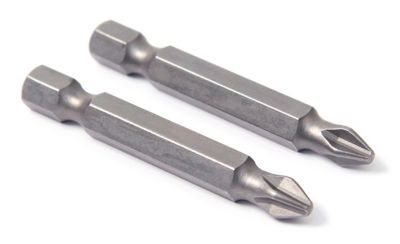
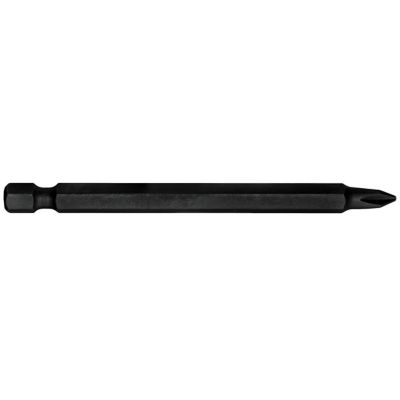
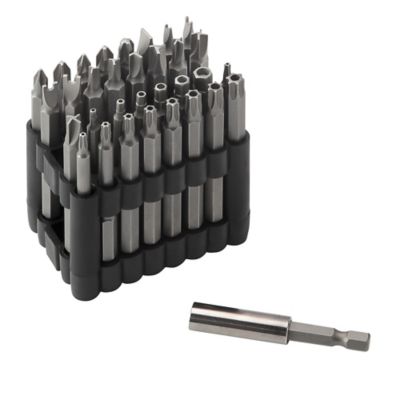
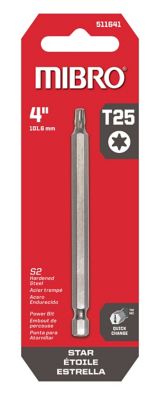
The steel, heat treatment, and shape of a Phillips bit all influence how it handles repeated fastening. Hardened tool steel helps the working edges resist wear, while alloy choices such as S2 steel appear in bits intended for demanding driving work. The material name alone does not tell the whole story; tip geometry, heat treatment, and suitability for the tool matter, too. Bits marked for impact driving are built to handle the repeated rotational blows of an impact driver. Some have a torsion section that flexes under load to help manage that stress. Standard drill-driver bits and impact-rated bits should not be treated as interchangeable just because both fit the same holder. Most power-tool Phillips bits have a 1/4-inch hex shank, but the tool’s chuck or holder requirements still need to match the bit’s shank style and length. Short insert bits commonly work with a separate bit holder, while longer power bits can offer more reach and may connect directly to a compatible tool. A short setup is handy inside a cabinet or between closely spaced parts, where every inch of clearance counts. Extra length can help reach a recessed screw or keep the drill body clear of a shelf edge, though a longer bit does not automatically provide better control. Magnetic tips and magnetic holders can help retain steel screws while someone positions a hinge or lines up a mounting bracket. Magnetism does not secure every fastener material, and it cannot make up for a loose tip fit. Double-ended bits put two working tips in one piece, but their compatibility depends on the holder. A case with clearly marked spaces makes size changes less of a hunt, especially when a job involves several kinds of hardware. For a farm maintenance kit, household toolbox, or truck tool bag, a practical assortment follows the fasteners and tools that actually see work rather than simply adding more pieces.
Phillips bits earn their place in routine repairs because so many everyday assemblies have Phillips screws, from drawer slides and access covers to shelving brackets and light-duty shop fixtures. Their usefulness depends as much on control as on reach or steel composition. The sloped contact surfaces of a Phillips recess can push the bit outward under torque, a condition called cam-out. Although sometimes described as a way to prevent overtightening, cam-out is not a dependable stopping mechanism: it can round the screw recess, wear the bit, and leave a scratch across the surrounding surface. A matching tip, straight alignment, steady inward pressure, and a suitable drill clutch setting help limit slipping. A screw going into a pilot hole in wood presents a different load from a machine screw threading into metal, so one speed or torque setting will not suit every task. For small hardware, controlled hand pressure can offer a better feel for the final turn than a powered tool. Around a painted cabinet face or a finished bench top, that last bit of control helps protect the work as well as the screw. Bit condition matters here, too. Rounded wings, chipped edges, or a twisted tip signal that a bit should come out of service rather than tackle another stubborn fastener. Continued slipping can turn a simple hinge adjustment into a screw-removal chore. Basic care is straightforward: wipe away grit, clear debris from the tip, and store bits dry in a holder or case where their size markings remain easy to read. Magnetic holders may collect metal shavings, which need clearing so the next screw can seat properly. Eye protection belongs with powered fastening work, especially where damaged hardware or broken tips could throw fragments. Phillips bits also make a practical addition to a tool gift for someone setting up a first workshop, maintaining property, or handling household repairs, provided the sizes and shanks suit that person’s equipment. With the right match between bit, screw, and driver, a small piece of steel helps keep plenty of everyday work moving.