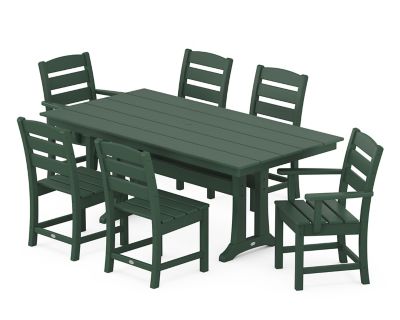
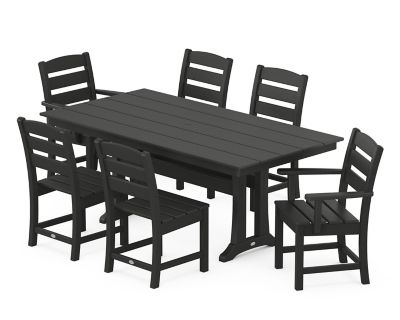
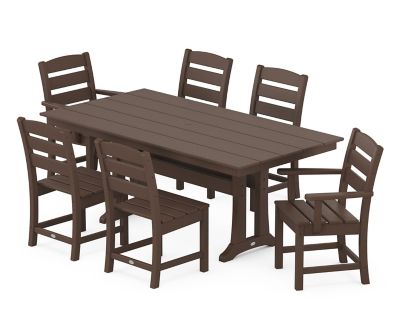
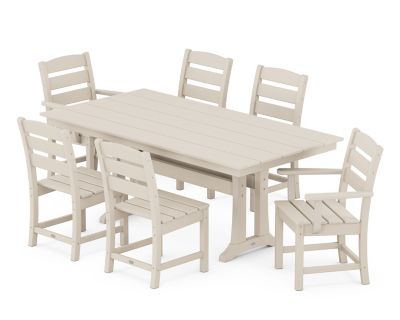
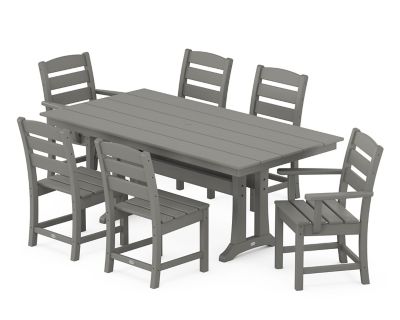
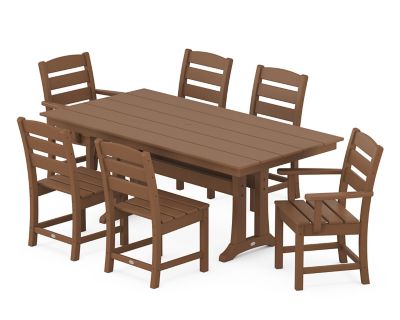
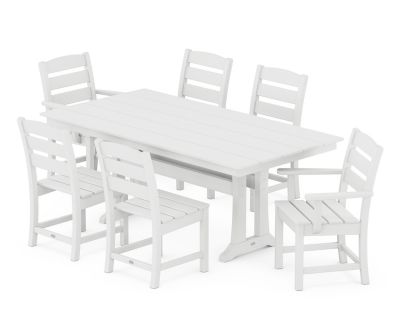
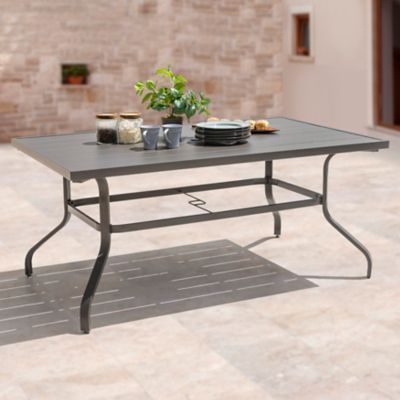
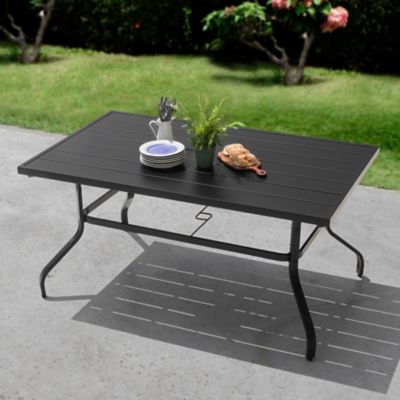
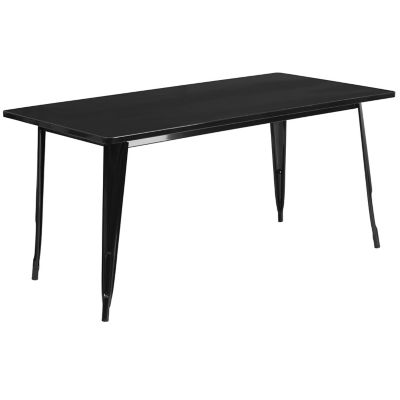
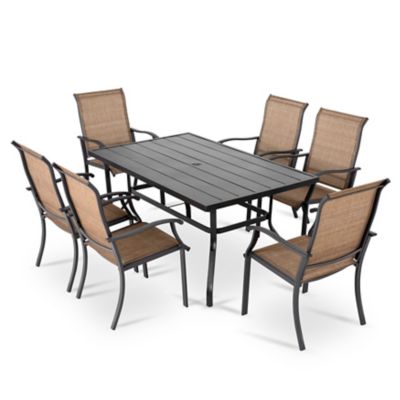
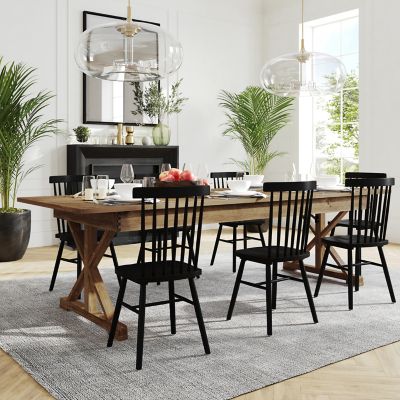
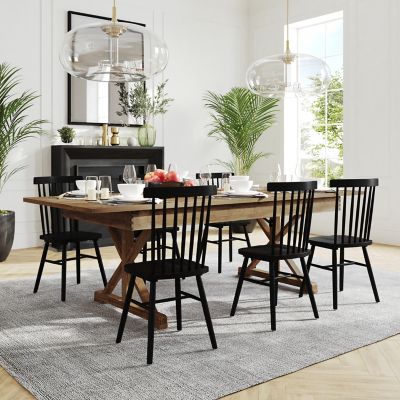
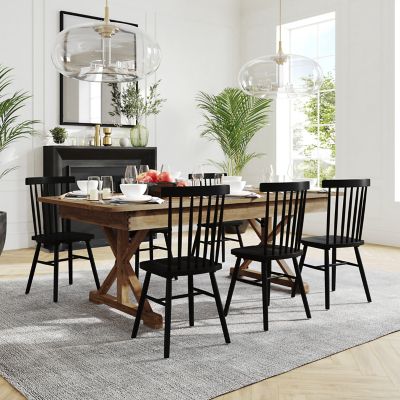
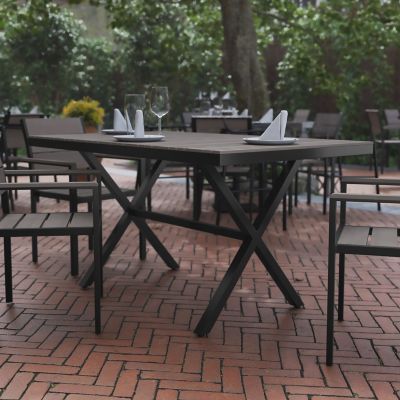
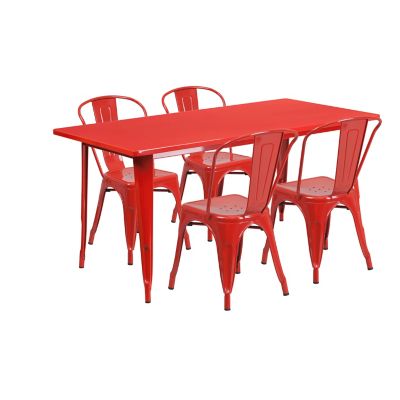
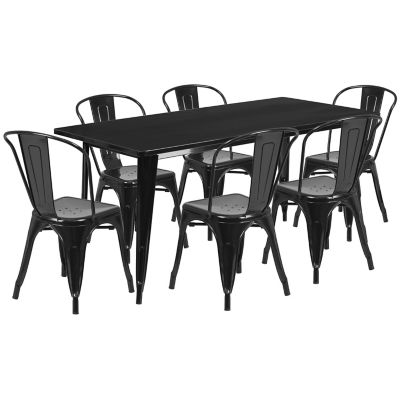
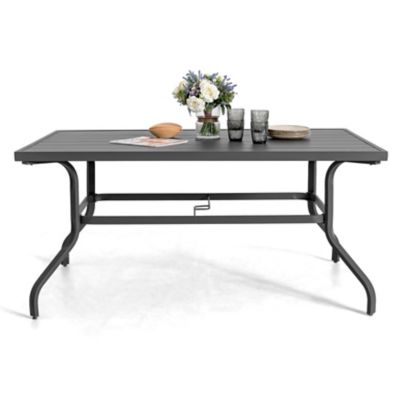
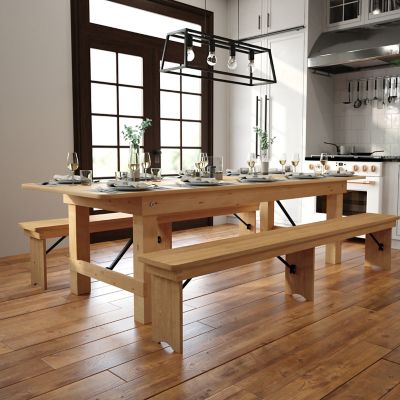
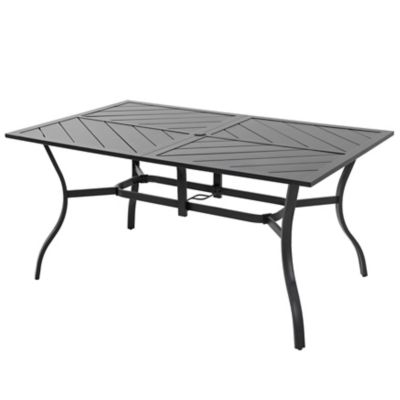
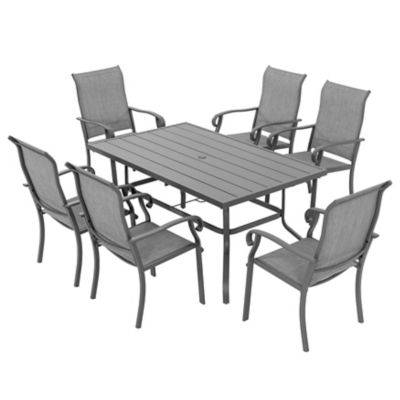
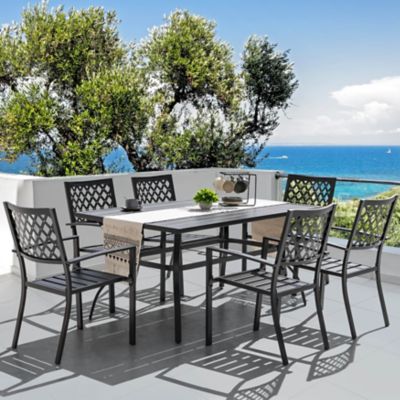
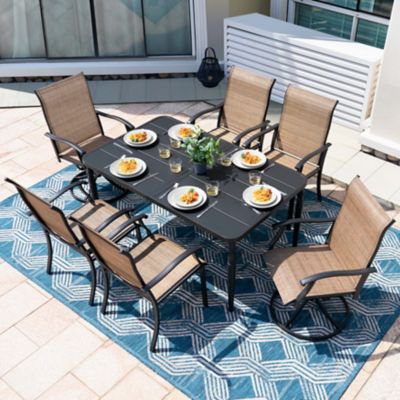
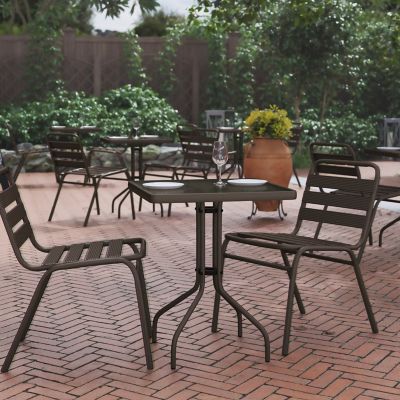
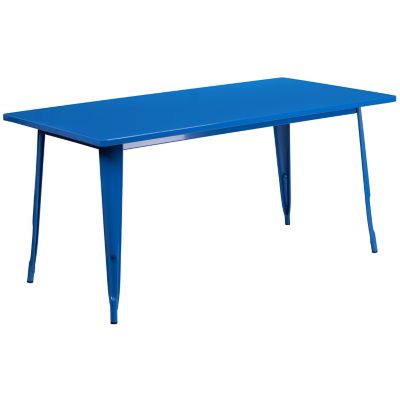
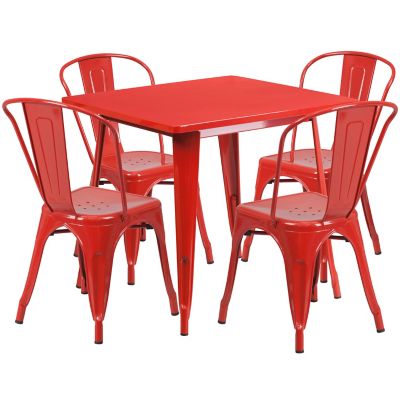
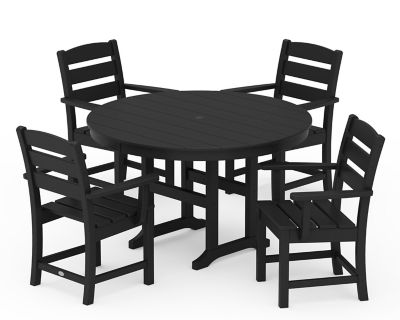
Rectangular outdoor dining sets bring a familiar kitchen-table feel to the patio, with room for supper plates, a pitcher of tea, and the folks who tend to stay awhile. Their long, straight shape works well with the edges of a deck, a porch, or a paved gathering spot beside the house. Many sets seat four, six, or eight people, though the actual fit depends on the tabletop dimensions, chair width, and placement of the table legs. A four-seat arrangement can give a smaller household a comfortable place for everyday meals, while a longer table makes room for family dinners and neighbors stopping by after chores. The rectangular layout puts serving dishes down the middle and keeps place settings along the sides, which helps when passing a bowl of potatoes or making space for a second helping. Table width matters as much as length: a narrow top may hold dinner plates just fine but leave less room for shared platters. Around 24 inches of table edge per person is a useful starting point, with more space needed for broad armchairs or generous place settings. Beyond the tabletop, the seating area needs enough clearance for chairs to pull out without catching a railing or blocking a doorway. About 36 inches from the table edge to an obstruction is a common planning allowance, and a main walking route may need more. That extra breathing room makes a difference when someone is carrying a tray from the kitchen or heading past the table to the yard. For households that regularly gather a bigger group,
Large Outdoor Dining Sets offer another way to focus on seating capacity and table space. The best fit leaves room for both the meal and the everyday traffic around it, rather than filling every inch of the patio.
Materials give rectangular patio dining sets much of their character and shape the care they need over time. Aluminum frames are generally lighter than steel, making them easier to move when sweeping the patio or rearranging chairs. Aluminum does not develop iron rust, although its finish and hardware still benefit from routine cleaning and inspection. Steel offers a heavier feel, and a powder-coated finish provides a protective barrier; scratches or chips deserve attention because exposed steel can rust. Wood brings visible grain and a warmer look to an outdoor eating area, with maintenance needs that vary by species and finish. Teak, for example, contains natural oils and can develop a silver-gray appearance when left untreated, while keeping its original color calls for care suited to that wood. Other wood furniture may need periodic sealing or refinishing according to the manufacturer's directions. High-density polyethylene, often called HDPE, offers a nonporous alternative that does not need staining, though fasteners and joints still need occasional checks. Woven resin seating brings texture to the arrangement, and its long-term performance depends partly on the frame beneath the weave and the material's resistance to sunlight. Tabletops also change the feel of daily meals. Slatted surfaces allow water to drain between the boards or rails, but small crumbs can collect in the gaps. A glass top has a smooth surface that wipes clean, while fingerprints, water spots, and grit may call for more frequent attention. Any glass surface needs the handling and temperature precautions listed by its manufacturer. For families who eat outdoors often, straightforward upkeep can matter more than a fancy finish. Mild soap, water, and a soft cloth suit many outdoor surfaces, but the product's care directions should always come first. Harsh cleaners and abrasive scrubbers can damage protective coatings. Covers, sheltered storage where practical, and prompt attention to loose hardware help protect the set between meals. Cushions need their own care, including enough drying time before they are put away.
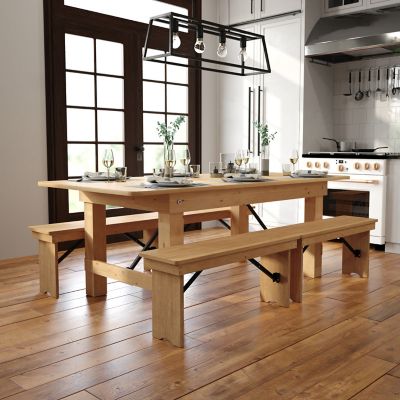
Chair style and table construction determine how comfortable a rectangular outdoor dining set feels once everyone sits down. Armchairs provide a place to rest elbows during a long conversation, but their overall width and arm height affect how neatly they tuck beneath the table. Armless chairs can make it easier to slide in from the side and may leave more usable seating room along a long edge. Benches offer a casual, farmhouse feel and can tuck away neatly when their dimensions fit between the table legs, though getting up from the middle can be less convenient than leaving an individual chair. A backrest is worth considering for anyone who likes to linger over coffee after a meal. Swivel or rocking seats need room for their movement as well as clearance from the table, nearby walls, and neighboring chairs. Seat height, cushion thickness, and the space below the tabletop should work together so knees are not crowded against an apron or support rail. A table's listed length tells only part of that story; corner legs, cross braces, and trestle supports can affect where a person can sit comfortably. These details matter for grandparents joining Sunday lunch, children settling in for sandwiches, or friends gathering for an evening of cards. A firm, level surface also helps keep plates steady and chairs from wobbling, especially on patios with wide paver joints. Where an umbrella opening is part of the table design, its diameter and under-table clearance need to match the umbrella setup, and a suitable base is still necessary. Folding or stacking chairs can simplify putting seating away, while heavier fixed-frame pieces may better suit a dining area that stays arranged for regular meals. Assembly requirements, chair weight limits, replacement cushion dimensions, and access to care information are all practical details worth checking. With enough elbow room, seating that suits the household, and materials that match the attention they will receive, a rectangular outdoor dining set becomes an easy gathering place for meals, conversation, and a well-earned break from the day's work.