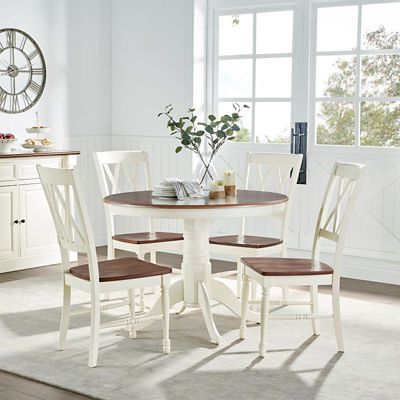
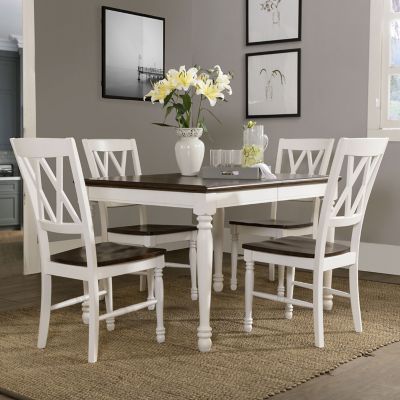
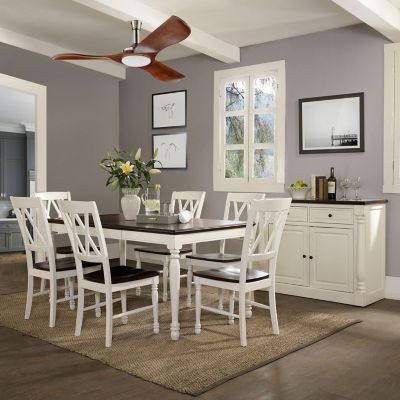
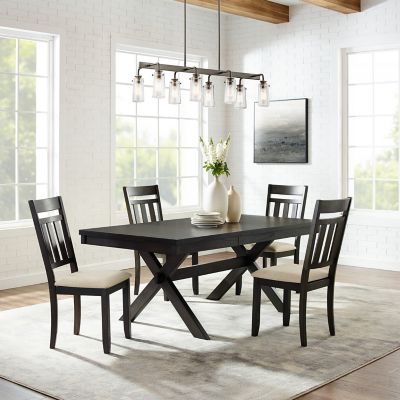
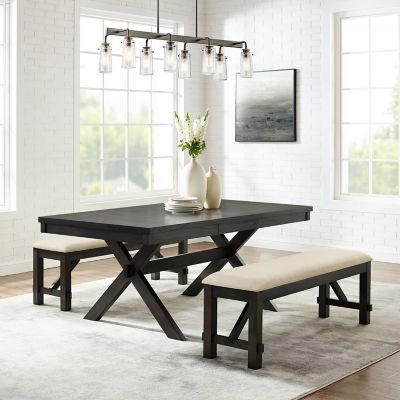
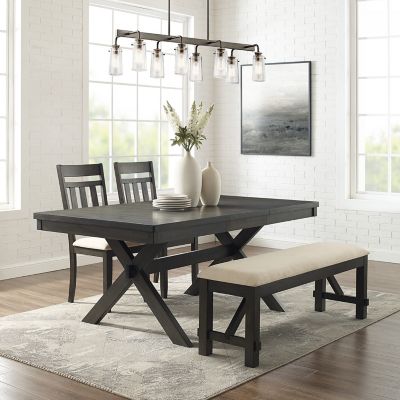
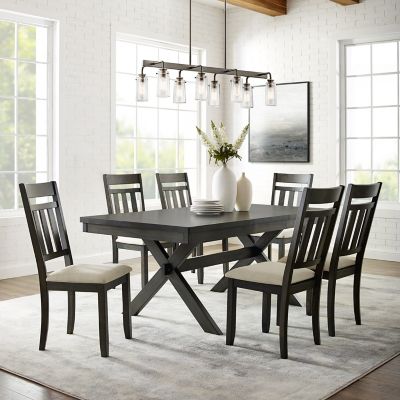
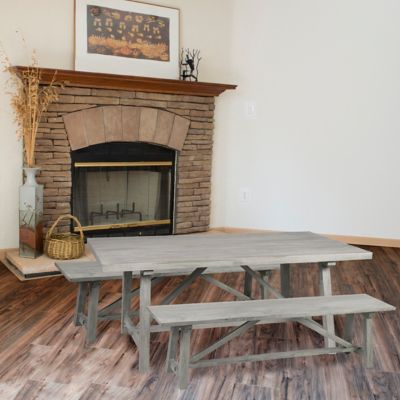
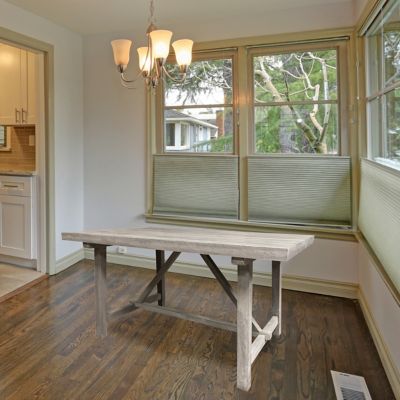
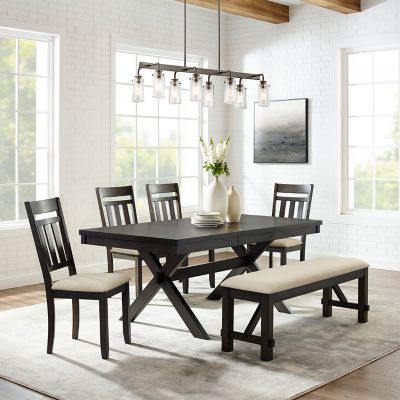
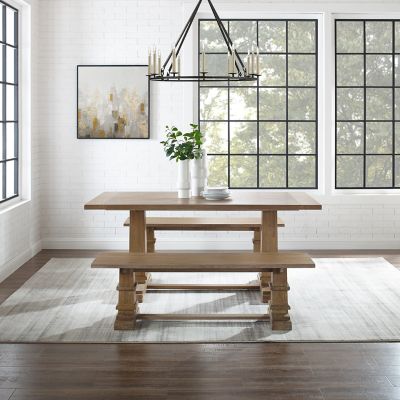
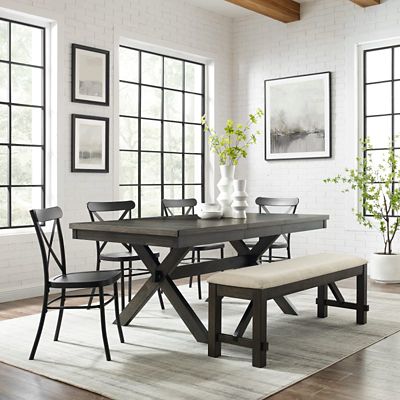
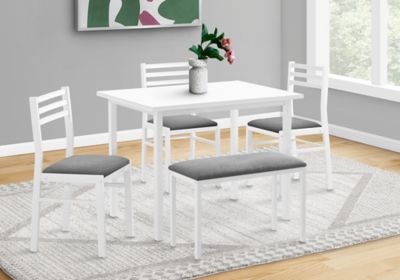
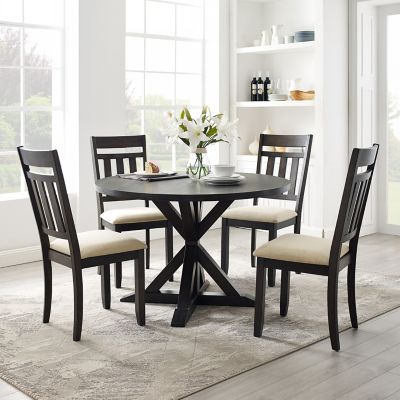
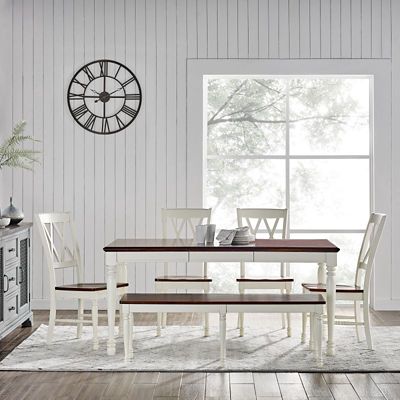
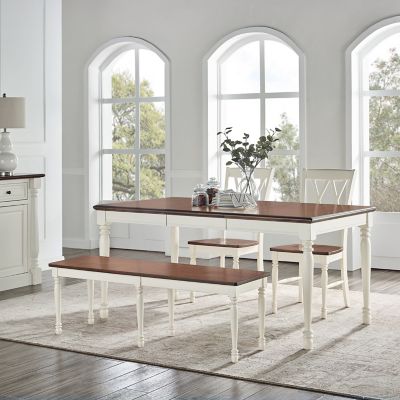
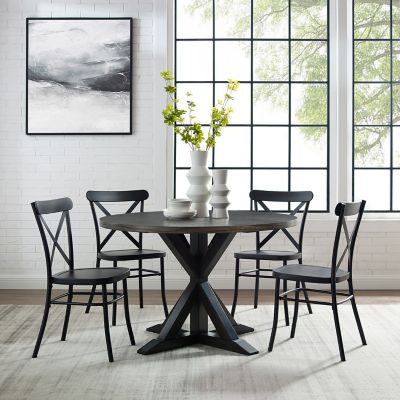
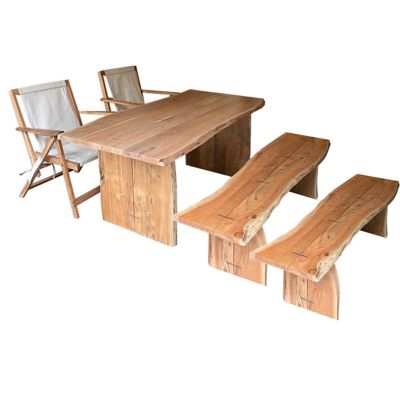
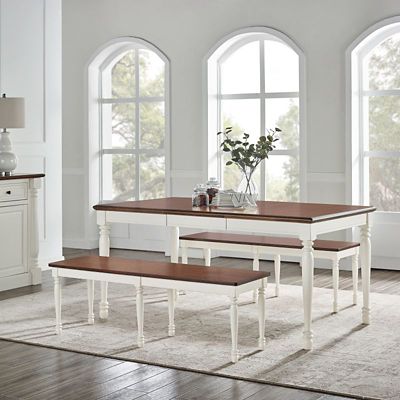
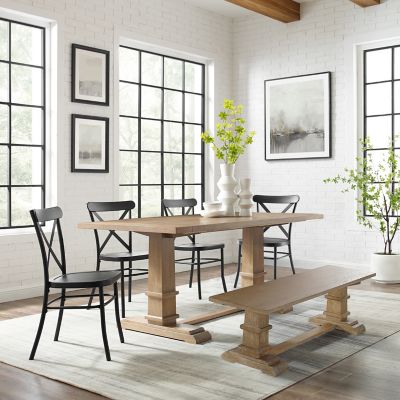
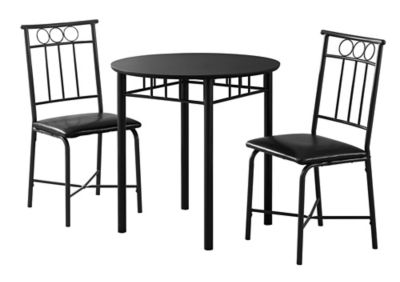
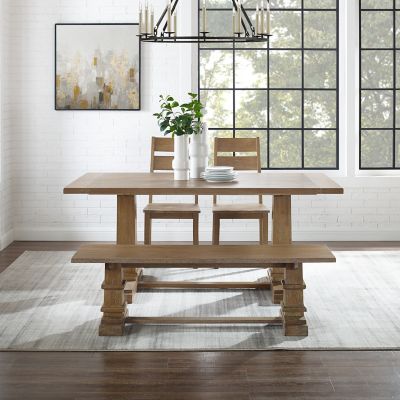
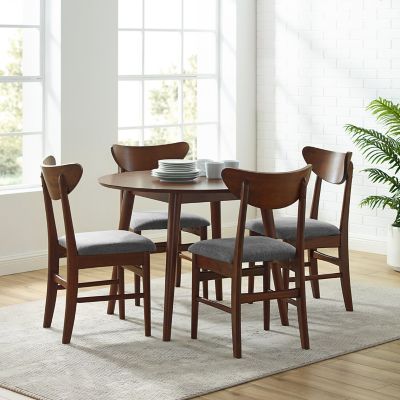
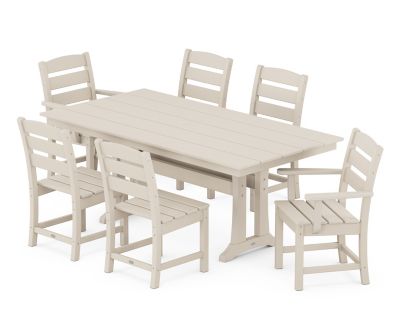
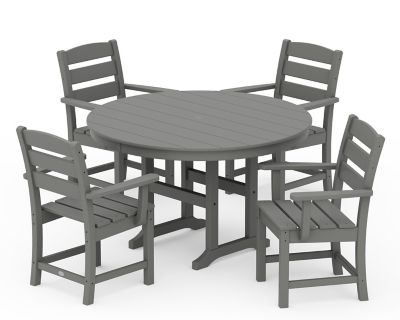
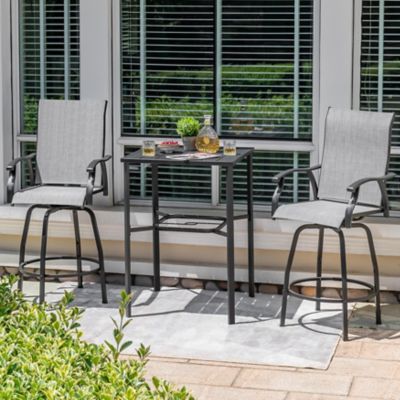
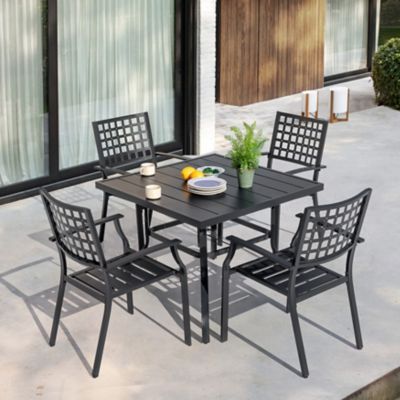
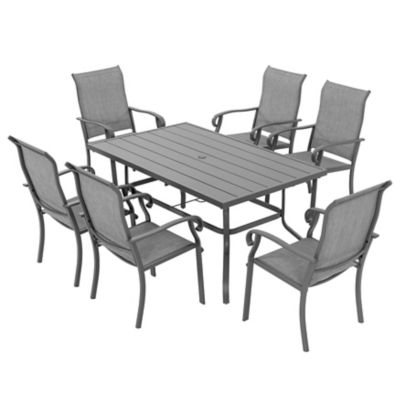
Dining table sets bring a table and coordinated seating together, giving family meals, morning coffee and visits with neighbors a comfortable place to land. A set may pair the table with chairs, benches or a mix of both, so the piece count matters when comparing seating arrangements. A five-piece dining set generally includes one table and four chairs, while a seven-piece set commonly includes one table and six chairs. Sets with benches work differently because one bench may accommodate more than one person; the listed seating capacity and dimensions tell more than the piece count alone. For a farmhouse kitchen, a separate dining room or a small eating nook, the right fit depends on both the number of people at the table and the space around it. Round dining tables make conversation easy and remove sharp corners from tight layouts, although chairs still need room to pull out. A round tabletop measuring about 36 to 48 inches across can suit four diners, depending on the base and chair width. Square tables work well in square rooms and compact breakfast areas, while rectangular dining table sets follow the shape of longer rooms and provide a straightforward arrangement for larger households. Rectangular tables around 60 to 72 inches long often seat six, but leg placement, chair size and the stated seating capacity should guide expectations. Oval tables offer a longer eating surface with rounded ends, a helpful combination where people pass close by. Extendable dining tables add flexibility for company without taking up the full floor space every day. Their open dimensions, leaf storage needs and seating layout all deserve a look, especially when extra chairs must fit between table legs. A pedestal base can leave more freedom for chair placement, while a four-leg base puts supports near the corners. Neither arrangement guarantees more seats; the full layout determines whether everyone has comfortable elbow room and a clear place for their feet.
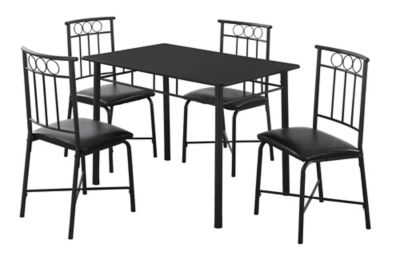
Room measurements help show how a dining table set will feel once supper is on the table and everyone is seated. About 36 inches between the table edge and a wall or nearby furniture is a common starting point for pulling out chairs, while 42 to 48 inches offers more breathing room along a busy walkway. That extra space matters when someone needs to pass behind a seated diner carrying a serving bowl. Allow roughly 24 inches of table edge per person as a starting point, with more space for wide chairs or seats with arms. A chair that looks compact in a photo may have splayed legs or a curved back that takes up additional floor space. Standard dining tables are generally about 28 to 30 inches tall, paired with seats around 17 to 19 inches high. Counter-height dining sets commonly have tables around 34 to 36 inches tall and seats around 24 to 26 inches high. A seat-to-tabletop difference of about 10 to 12 inches is a common comfort reference, though an apron beneath the tabletop can reduce thigh clearance. Standard-height seating often makes a practical gathering spot for a household with different ages and mobility needs. Taller seating may suit a counter-height eating area, but seat access and foot support are worth considering. Materials affect the feel of the room and the care involved, too. Solid wood brings natural grain and variation, with oak, acacia and rubberwood offering different colors and grain patterns. Wood veneer gives a surface the appearance of real wood over another core material, while engineered wood construction varies by thickness, finish and assembly. Metal frames can add a simple, sturdy look, and glass tops keep sightlines open but show fingerprints readily. Laminated surfaces may simplify everyday wiping, provided their seams and edges stay protected from standing moisture. The finish, construction and care directions matter just as much as the material name.
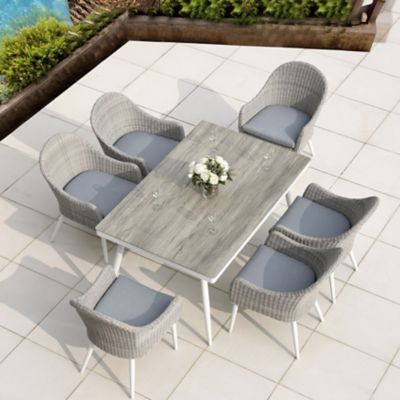
Dining chairs and benches deserve as much attention as the tabletop because comfort affects how long folks want to linger after a meal. A supportive back, a seat with enough depth and a front edge that does not press behind the knees can make a noticeable difference. Upholstered dining chairs add cushioning and texture, while wood or molded seats offer surfaces that are generally straightforward to wipe down. Fabric care varies, so a busy household benefits from checking whether a seat requires spot cleaning and whether any covers are removable. Benches offer flexible seating and can slide beneath some tables, but backless benches provide less support, and a person seated in the middle may need others to move before getting up. Construction details also matter for everyday wear: secure joints, properly installed braces and hardware that stays snug help keep the set steady. Follow the assembly directions, avoid overtightening fasteners and check connections periodically, particularly after moving the furniture. Lifting a table rather than dragging it helps protect its joints and the floor beneath it. For routine care, wipe spills promptly with a soft cloth, follow the specified cleaning method and avoid soaking wood surfaces or exposed edges. Coasters, placemats and heat-resistant trivets help shield the tabletop from drink rings, scratches and hot serving dishes. Direct contact with hot cookware can damage a finish even when the table feels substantial. Beyond care, the set should suit the way the room works: a compact arrangement can serve a first apartment or a couple’s kitchen, while a longer table gives a larger household room for supper, homework and a board game afterward. Farmhouse dining sets often pair visible wood grain with simple lines, while streamlined frames can fit just as comfortably beside a country kitchen. For a porch or patio eating area,
Outdoor Round Dining Sets offer a separate category to consider, with each set’s stated placement and care requirements taking priority over an indoor dining arrangement.