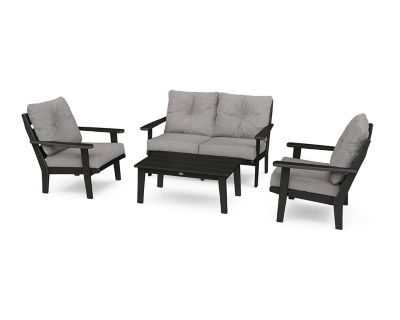
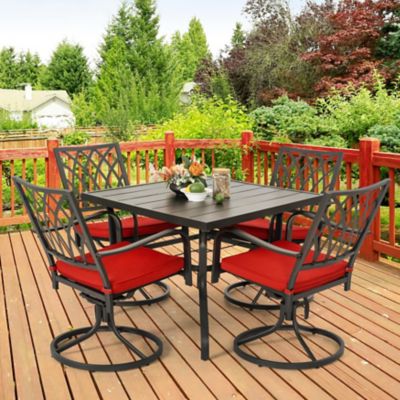
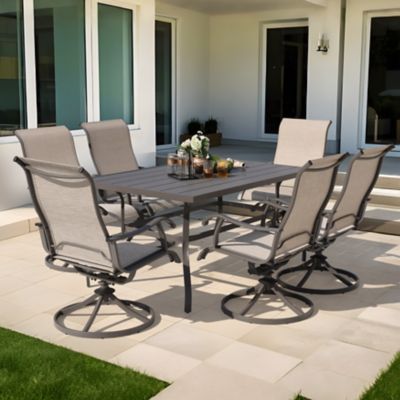
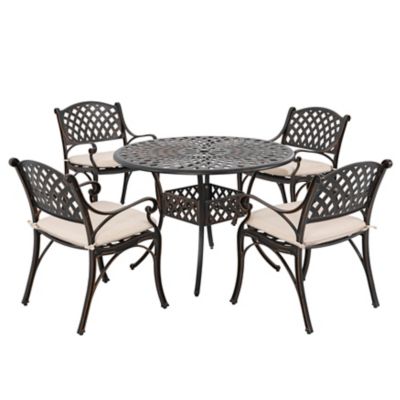
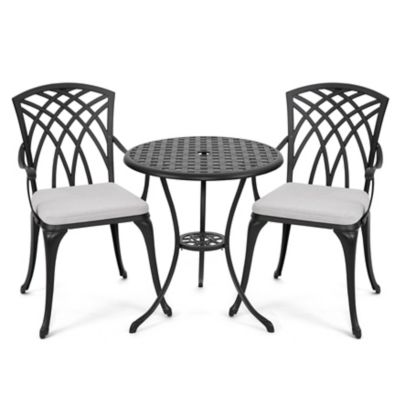
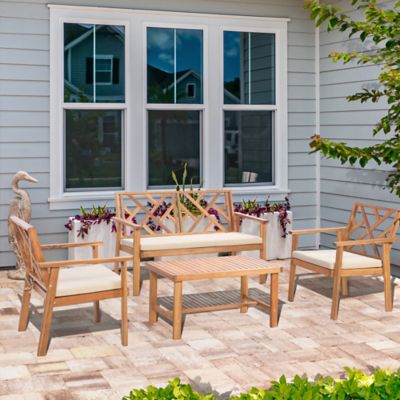
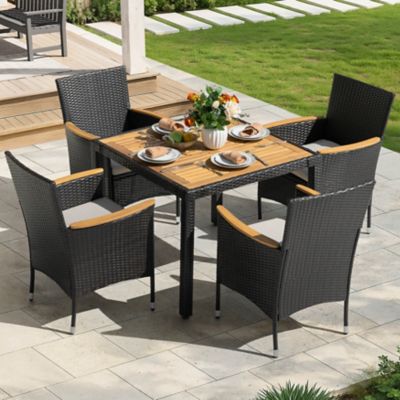
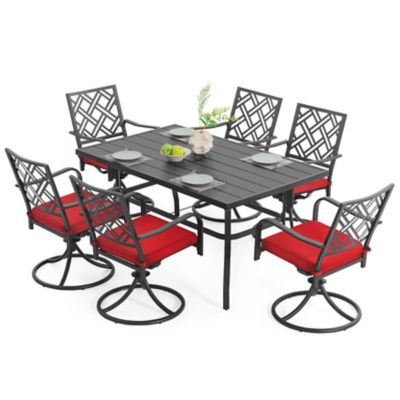
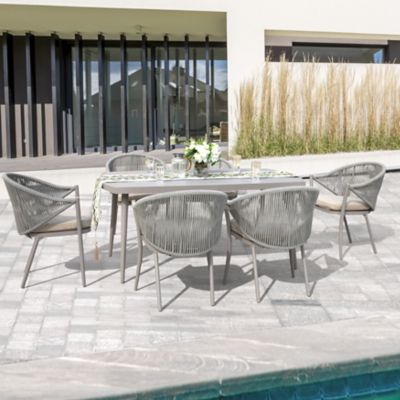
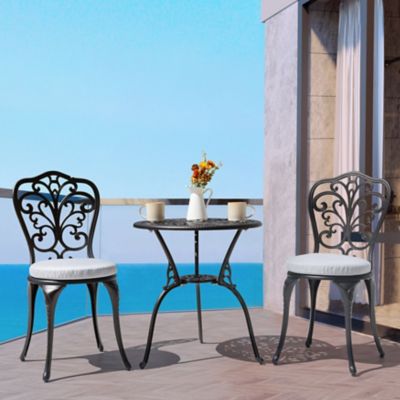
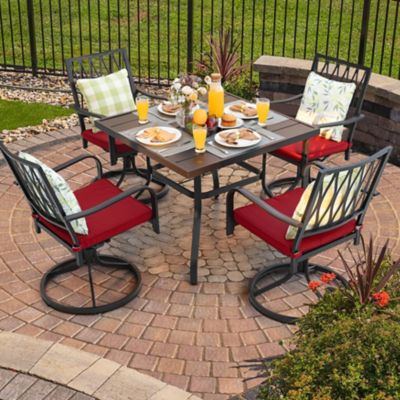
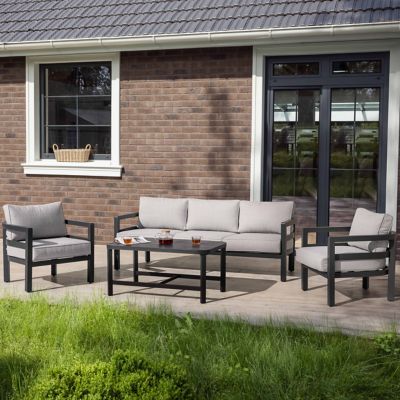
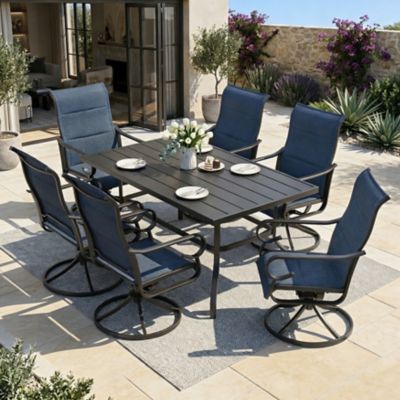
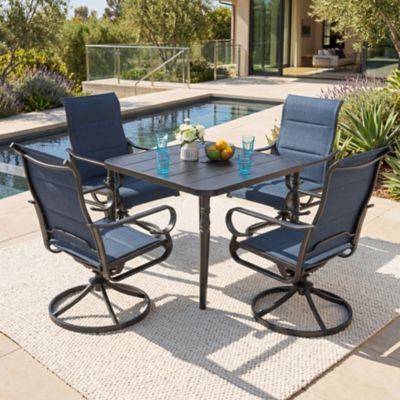
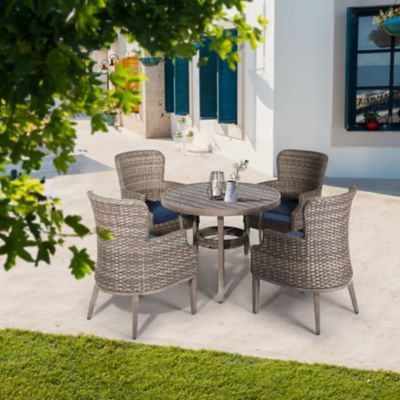
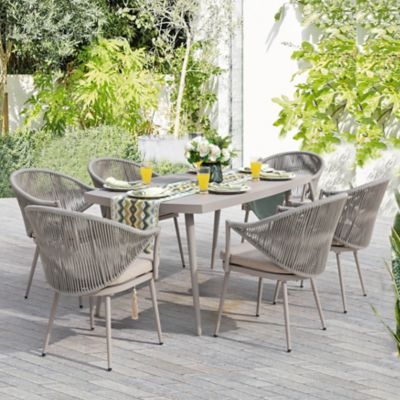
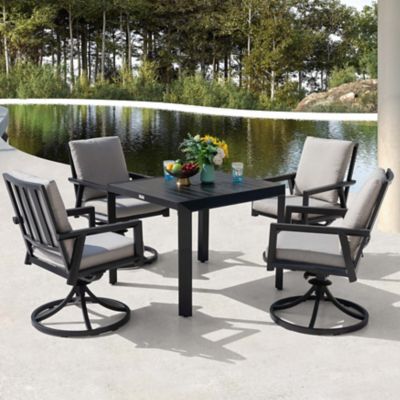
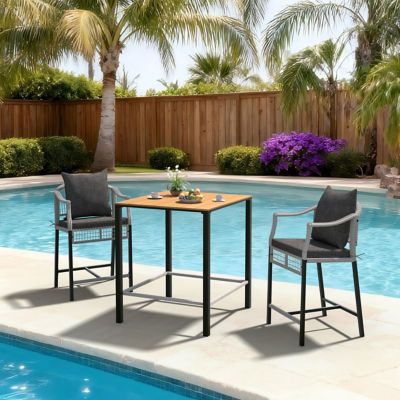
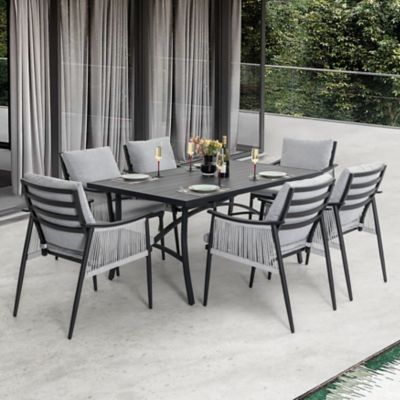
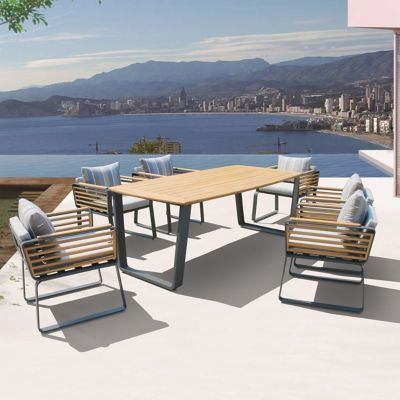
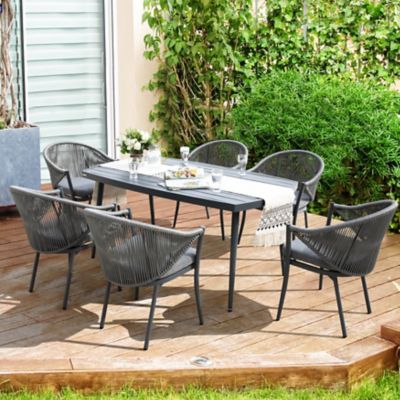
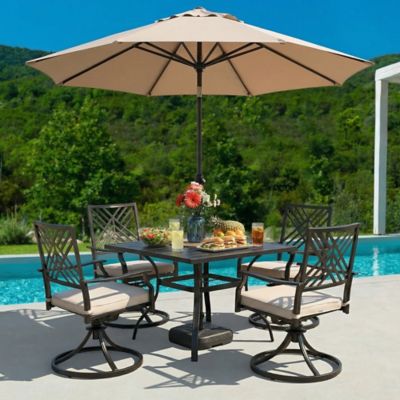
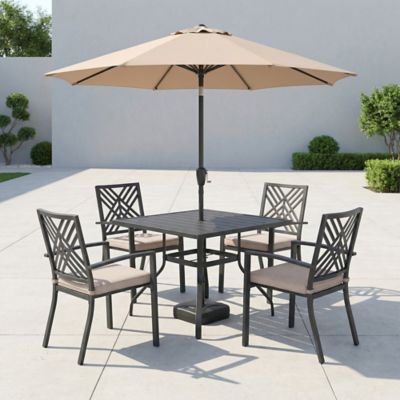
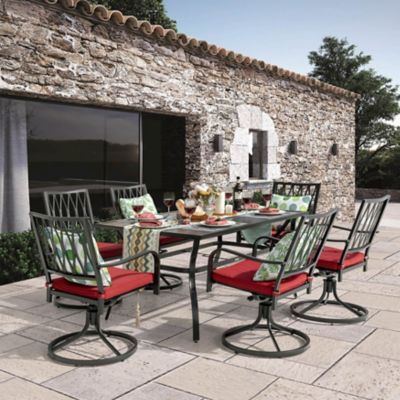
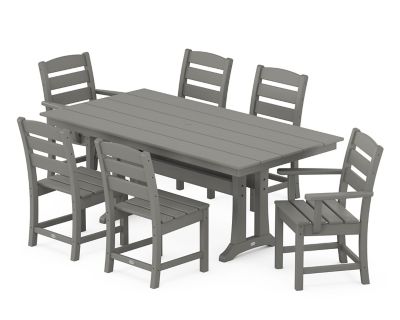
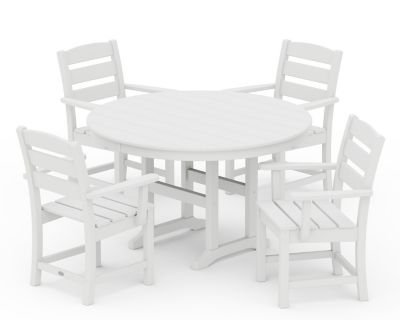
Outdoor dining sets with cushions bring the table, seating and a little extra comfort together, giving a porch, patio or backyard a place for more than a quick bite. A cushioned seat makes a difference when breakfast stretches into a second cup of coffee or supper turns into an evening of catching up after chores. These sets pair outdoor furniture frames with padded seating, and some include back cushions for support beyond the seat itself. The right fit depends on how many people gather regularly, how much room surrounds the table and how exposed the space is to sun, rain and wind. Four-person dining sets suit smaller households and compact patios, while six-person arrangements offer room for family meals and an extra place or two. Eight-person sets make sense for larger households and folks who often feed a crowd, provided the deck or patio has enough space to move around comfortably. Seating capacity is only part of the picture: the table also needs room for plates, glasses and serving dishes without making everyone tuck their elbows in. As a planning allowance, about 36 inches between the table edge and a wall or railing gives chairs room to pull out; busy walkways may need more clearance. Measurements should account for porch posts, door swings and the route from the kitchen, especially when someone is carrying a full platter. Table shape matters, too. Rectangular tables often work well on long decks, while
Outdoor Round Dining Sets can suit square patios and keep conversation easy across the table. A round tabletop has no corners to navigate, though its full footprint still needs checking with chairs pulled out. For everyday meals, standard dining-height tables and chairs offer a familiar feel. Taller seating creates a different setup and may be less convenient for young children or anyone who finds climbing onto a chair uncomfortable. A well-matched set makes eating outdoors feel as straightforward as sitting down at the kitchen table.
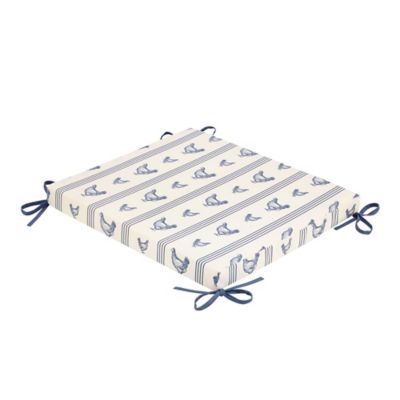
Frame construction helps determine how an outdoor cushioned dining set handles its surroundings and how much upkeep comes with it. Aluminum resists rust and is often easier to move than heavier frame materials, which is handy when clearing the patio or putting furniture away. Cast aluminum generally has more heft than lightweight tubular aluminum, although the actual weight varies by construction. Steel can provide a solid feel, but its protective finish needs attention because exposed areas may rust if moisture reaches the metal. All-weather wicker usually refers to synthetic strands woven over a supporting frame, so both the weave and the metal beneath it matter. Natural wicker is a different material and generally belongs in sheltered settings rather than out in the weather. Wood brings warmth and visible grain to an outdoor eating area, with care needs that depend on the species and finish. Teak, for example, can develop a silver-gray surface as it weathers; maintaining its original color takes a different care routine than allowing that change. For an open deck facing a field, furniture weight and secure cushion attachments deserve attention because breezes have plenty of room to build. Under a covered porch, protection from overhead rain helps, but windblown moisture can still reach the seats. Cushions add another layer to the purchase decision. Seat thickness alone does not tell the whole comfort story: supportive fill, cushion fit, seat depth and back angle all affect how a chair feels through a meal. A soft, deep seat may be pleasant for lingering but awkward if it places someone too low against the tabletop. Check chair dimensions and weight limits, along with whether armrests fit beneath the table. Ties, straps or other attachments help keep cushions in place as people sit down and stand up, and can limit shifting in a breeze. For households with children or frequent visitors, stable seating and enough space between chairs matter just as much as a coordinated appearance.
Cushion fabric and filling deserve a close look because outdoor dining brings spilled drinks, crumbs, pollen and the occasional muddy paw within reach of the table. Water-resistant fabric can shed light moisture, but it is not the same as waterproof construction, and a cushion may still take on water through seams or prolonged exposure. Quick-draining fill can help moisture escape, though drying time also depends on airflow, humidity and the cushion cover. Fabrics rated for outdoor use may offer resistance to fading and moisture; the stated care instructions and performance details are worth checking rather than assuming every outdoor cushion behaves alike. Removable zippered covers make access easier, but a zipper does not necessarily mean the cover can go in the washing machine. Follow the care label for washing, spot cleaning and drying, and let cushions dry completely before storing them. A nearby dry storage space makes that routine simpler, especially during the cooler months when long damp spells can cut outdoor meals short. Breathable furniture covers can help protect frames and tabletops between gatherings, but they should fit securely and allow ventilation rather than trap moisture against the furniture. Where freezing weather is common, storage recommendations from the manufacturer are especially important. Beyond upkeep, color and texture help a set feel at home beside porch siding, deck boards or a gravel-edged patio. Midtone fabrics and subtle patterns can make everyday marks less noticeable, while lighter shades create a softer contrast against dark frames. Families may put easy cleaning first; a couple furnishing a quiet back porch may care more about supportive backs and a table big enough for dinner and a shared serving bowl. Cushioned outdoor dining sets can also make a thoughtful housewarming or wedding gift when the recipients’ space, seating needs and storage options are known. Whether the occasion is a weekend potluck or a simple bowl of soup outside on a mild afternoon, the appeal is practical: a comfortable place to gather, eat and enjoy the view beyond the back door.