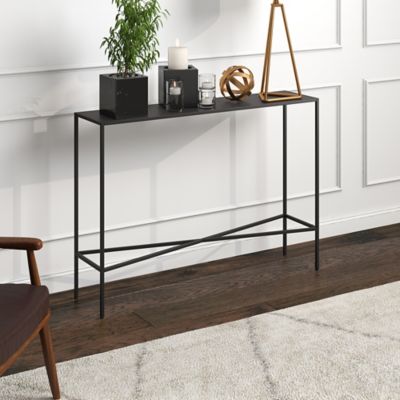
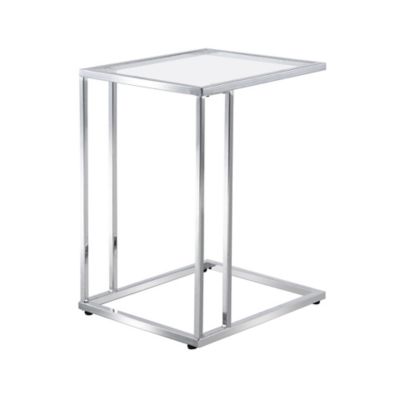
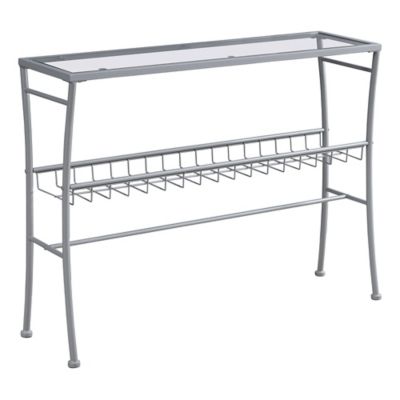
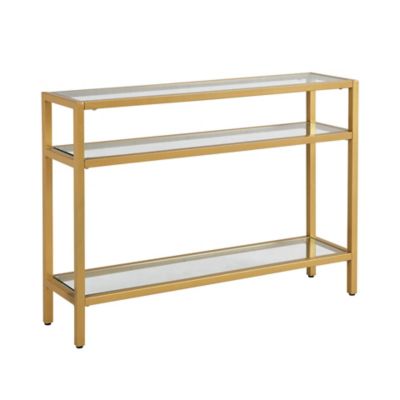
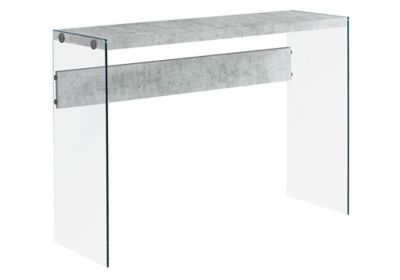
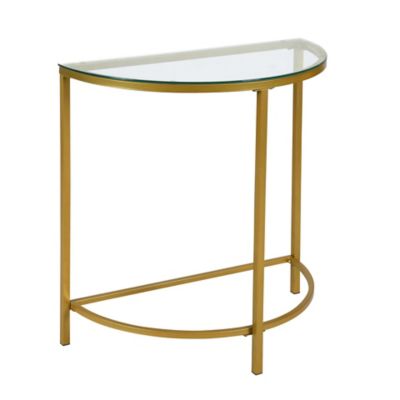
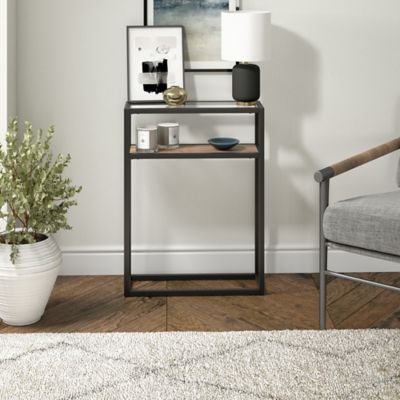
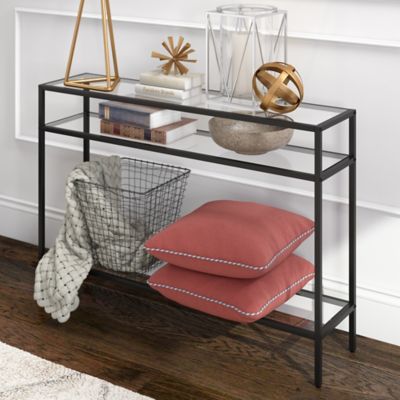
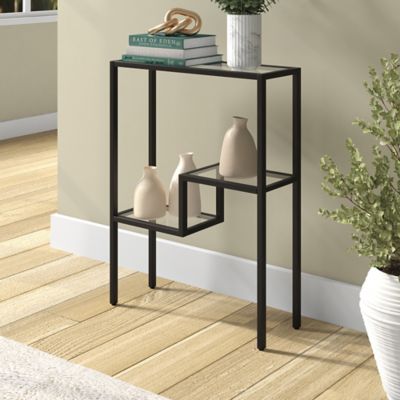
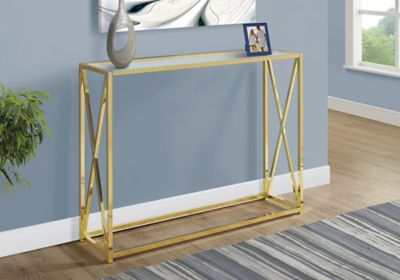
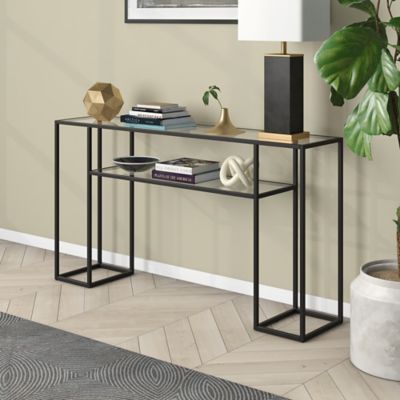
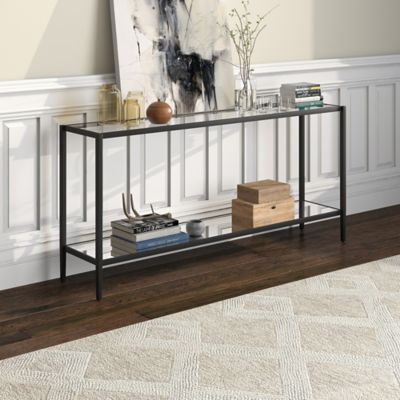
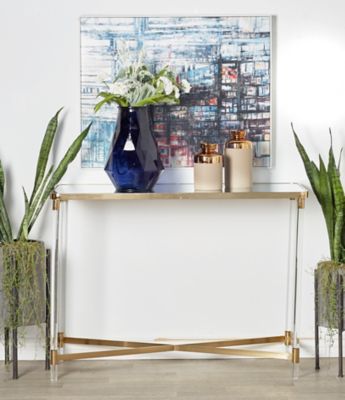
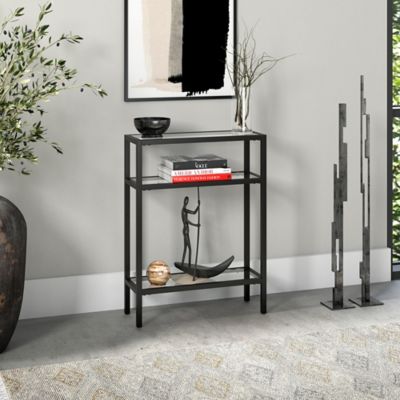
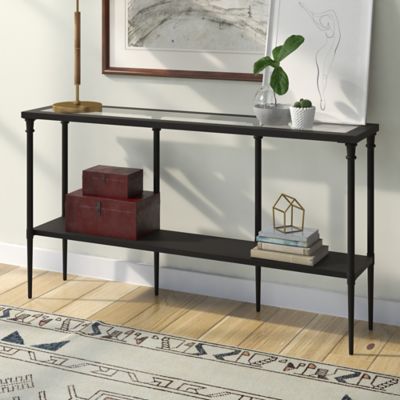
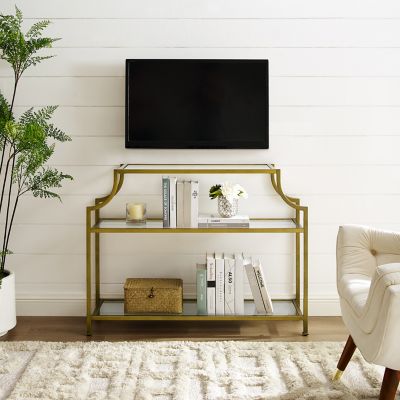
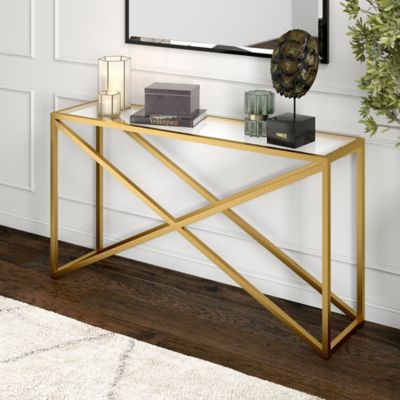
Modern glass console tables are narrow accent tables with glass tops or all-glass bodies, made to sit along a wall, behind a sofa, or near an entryway without visually closing off the room. Their clean lines and light-catching surfaces work well in a country home, a small apartment, or a living room that mixes wood furniture with metal accents. Clear glass keeps wall colors, flooring, and the shape of the base in view, while smoked glass adds a deeper tone without the solid appearance of a wood top. Frosted and fluted glass soften the view through the surface and bring a little texture to a simple silhouette. Glass-and-metal console tables often combine a glass top with straight legs, crossed supports, or a geometric base. Black metal gives the outline a crisp look, while brushed or polished finishes reflect more light. Glass paired with wood adds warmth, especially alongside oak floors, pine trim, or a well-loved leather chair. All-glass waterfall console tables have a continuous profile, with the top curving down into the sides, though the glass type and construction vary by design. Multi-tier console tables add lower shelves for baskets, books, or everyday essentials, keeping more things within reach without taking up a larger patch of floor. Compared with solid-front designs in the broader family of
Modern Console Tables, glass tops and open frames leave more of the room in view. That can help a tight entry feel less crowded or let a patterned rug remain part of the setting. Rectangular shapes offer a straightforward fit along a wall or sofa, while half-moon tops bring a curved front edge to a smaller landing spot. The overall effect depends as much on the base as the glass: slim legs feel understated, a substantial wood frame feels grounded, and a sculptural metal support makes the table more of a focal point.
A good fit comes down to the table’s depth, height, and position in the room, not just how much empty wall is available. In an entryway, a shallow glass console table can hold a tray for keys, a small lamp, and the mail without reaching far into the walking path. There still needs to be room to carry groceries, pull on boots, and open nearby doors without bumping the top. Measuring with doors fully open helps catch tight spots that are easy to miss on an empty floor. Behind a sofa, a console generally looks settled when its top sits at or just below the sofa back, though the right height depends on the furniture and the intended purpose. A lamp placed there should have a base that fits fully on the surface, with its cord kept out of the walkway. Along a dining room wall, a console can provide a place for serving pieces, but it needs enough clearance for chairs to slide back comfortably. Longer tops offer more room to spread things out; shorter tables may suit a small stretch of wall between openings. Lower shelves add practical space for baskets holding chargers, gloves, or other loose belongings, while an open base can leave room for a tucked-in stool if the dimensions allow. A glass shelf also keeps the arrangement visually light, but its weight limit matters just as much as the top’s. Rounded corners can soften the outline where people pass close by, though glass furniture still calls for care around active children and pets. Clear edges can be harder to notice than solid wood, especially in a busy household. For a housewarming gift, a console table makes the most sense when the recipient’s room measurements and preferred finishes are already known. It is a piece that needs to fit everyday routines as well as the space itself.
Glass console tables stay looking their best with simple, regular care and attention to how weight rests on the surface. Dust and fingerprints show readily on clear glass, especially where daylight falls across the top, so a soft microfiber cloth is handy for quick touch-ups. For a more thorough cleaning, follow the maker’s care directions and apply a suitable cleaner to the cloth rather than spraying near joints, wood trim, or metal hardware. Abrasive pads and gritty cloths can scratch glass or damage surrounding finishes. Coasters under drinks, felt pads beneath hard-bottomed objects, and a protective layer under a key tray help limit everyday marks. Hot serving dishes belong on a suitable heat barrier, not directly on the glass. Tempered glass, when specified, has greater strength than ordinary annealed glass, but it is not scratchproof or shatterproof. Glass thickness alone does not establish a table’s weight capacity; the supports, attachment points, and overall construction matter, too. Heavy planters, stacks of books, and other concentrated loads need to stay within the stated limits for each surface. A console table is not a seat, step, or climbing surface, and anchoring hardware should be installed whenever the manufacturer calls for it. During a move, lifting the table according to its instructions helps protect the frame and glass connections; dragging can strain joints or catch a leg on the floor. Chips, cracks, or loose fittings deserve attention before anything goes back on top. For everyday display, a few well-spaced pieces let the glass remain part of the look: a lamp at one end, a framed family photo, and a shallow bowl for pocket change can be plenty. Keeping the arrangement balanced leaves room for the table’s practical job, whether that is catching keys after chores or giving the living room a useful surface behind the couch.