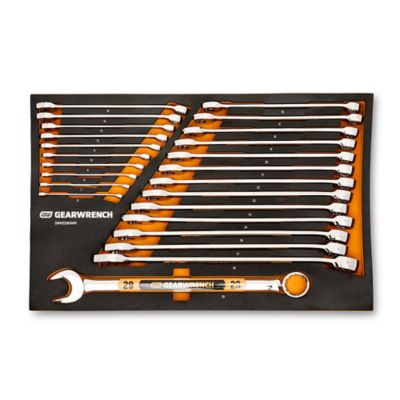
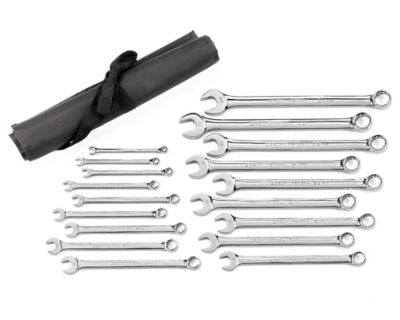
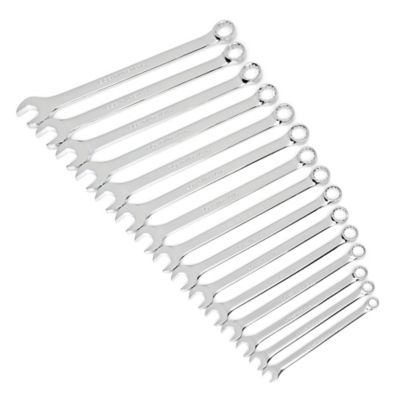
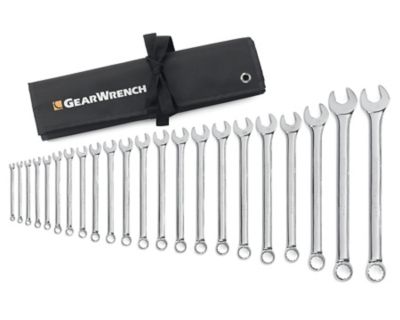
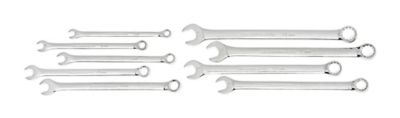
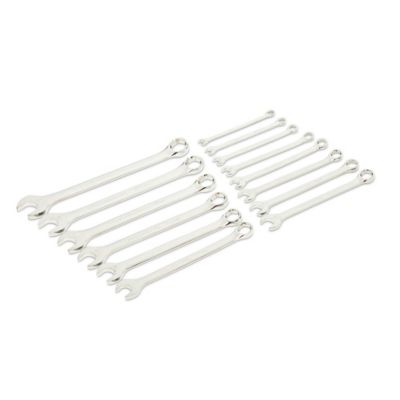
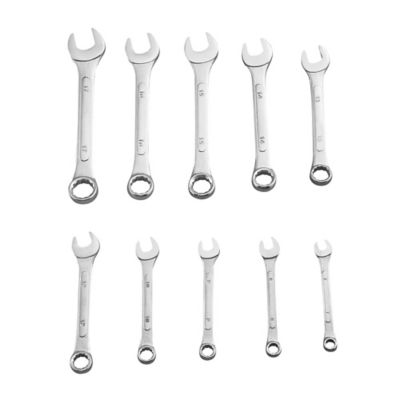
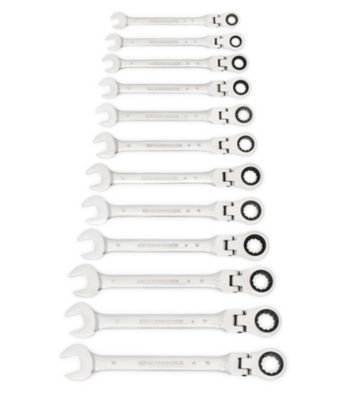
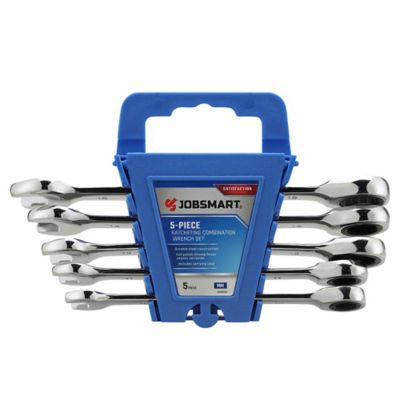
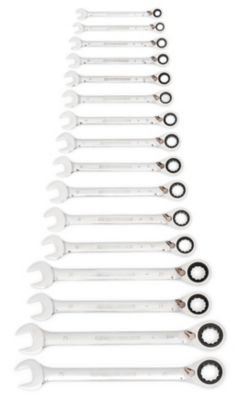
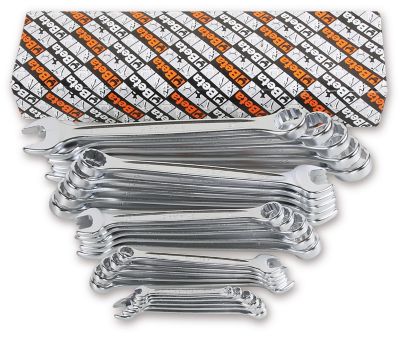
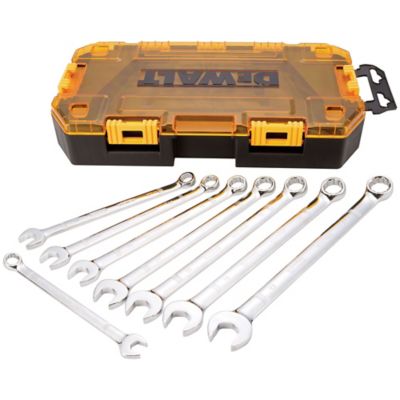
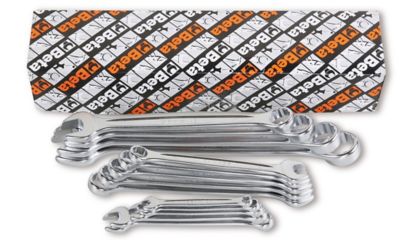
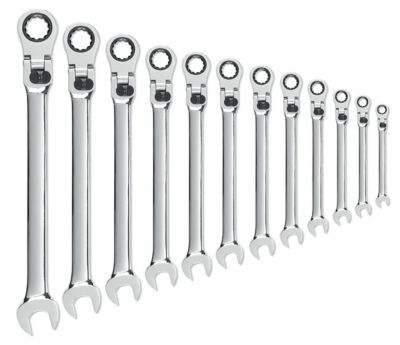
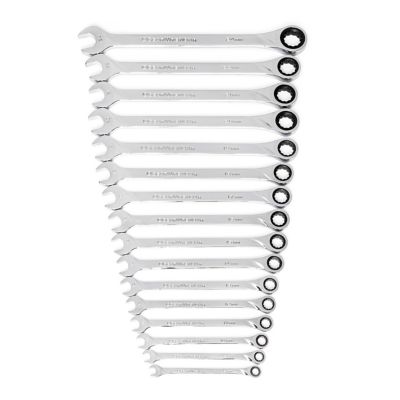
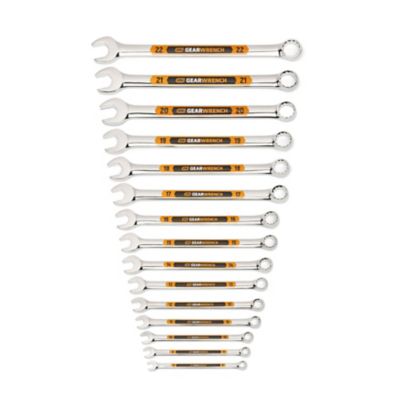
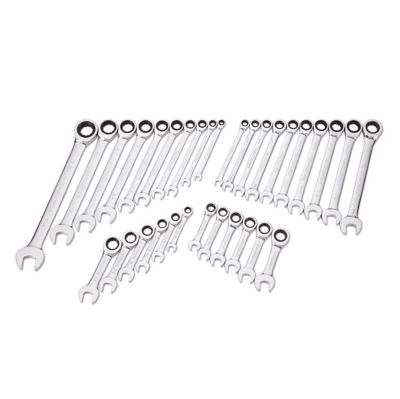
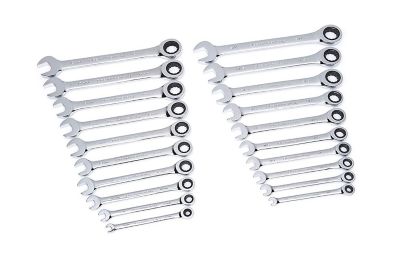
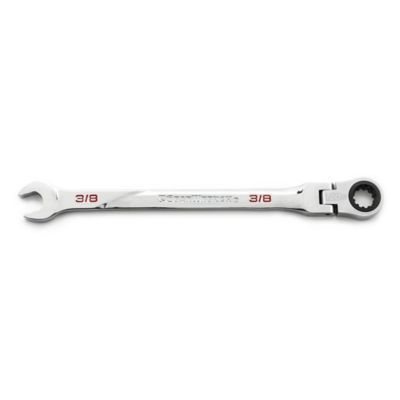
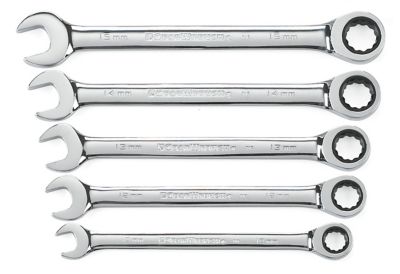
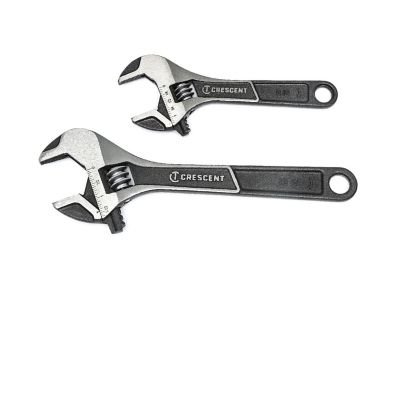
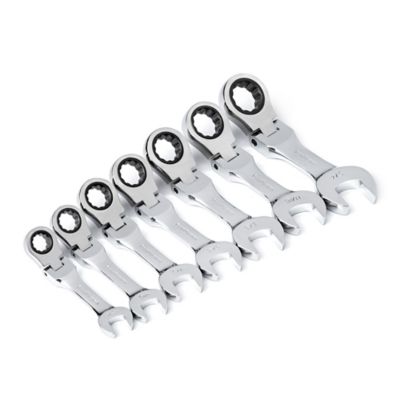
Metric combination wrench sets cover the millimeter sizes found on a lot of the equipment that comes through a farm shop or home garage, from mowers and utility trailers to tractors and pickups. A combination wrench has an open jaw at one end and a closed ring, called the box end, at the other. Both ends fit the same size nut or bolt head, so turning the wrench around changes how it grips, not what size it fits. The open end slips onto a fastener from the side, handy when there’s a bracket directly above it. The box end slips over the top and surrounds the head, giving a better grip when it’s time to break a snug bolt loose. For instance, the open end might be the only one that reaches a nut tucked under a mower’s belt guard, while the box end can hold the bolt on the other side so it doesn’t turn. The number stamped on the wrench refers to the distance across the flat sides of the fastener head, not the diameter of the bolt threads. A nearby SAE size may feel close, but that little bit of play can round the corners when the wrench is under load. A smaller set that covers sizes around 8 to 19 mm can handle plenty of bench work and routine repairs, while a wider range that extends into the 20s or 30s can make sense for larger equipment. The number of wrenches in a set doesn’t always tell the whole story. Two sets with the same smallest and largest sizes can cover different sizes in between. Checking the full run matters when a frequently serviced machine has a 15 or 18 mm fastener, for example. The equipment manual, the markings on a wrench that already fits well, or a measurement across the flats can help determine which sizes belong in the drawer.
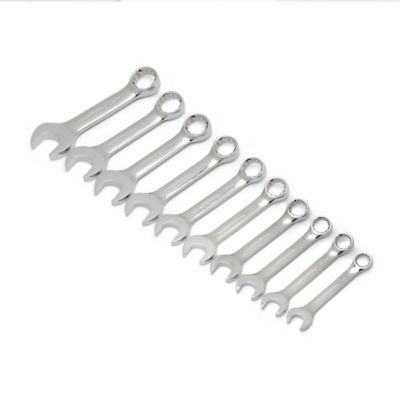
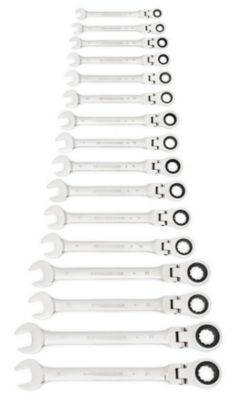
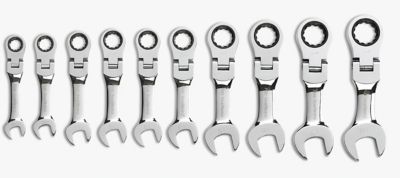
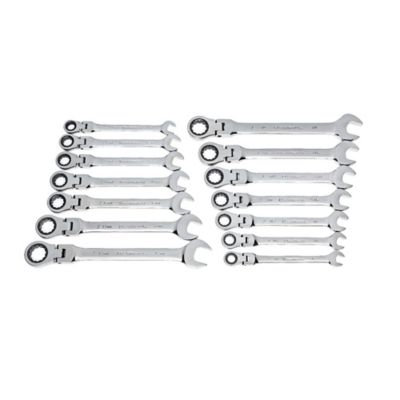
Handle length and head shape make just as much difference as size when something’s tucked behind a frame rail. A stubby wrench fits between parts that leave no room for a full-length handle, while a longer handle adds leverage on tight fasteners where there’s room to swing it. A slim head can reach between closely spaced nuts, and a box end with an offset can leave room for knuckles above a flat mounting plate. A straight profile may fit better when clearance above the fastener is tight. On a hex head, a six-point box end is a good match when grip matters, especially on a stubborn nut that still has sound flats. A 12-point box end offers more positions for slipping the wrench onto the head, which comes in handy when the handle can only start at a certain angle. A standard box end has no moving parts, but it has to come off and go back on for each short turn. A ratcheting box end can stay on the fastener while the handle swings back, saving some fiddling when there’s only a narrow arc of travel. Material and finish matter over years of shop work, too. Chrome vanadium steel is a common alloy for wrench bodies, and chrome plating helps protect the surface against corrosion. A smooth polish wipes clean easily after a greasy job, while a satin finish cuts glare under a bright work light. Even with a protective finish, jaws and box ends take the brunt of the work. Wrenches with spread jaws, chipped edges, or rounded contact surfaces can slip when the pressure comes on. A snug fit and full contact on the fastener are worth more than extra leverage from a pipe slipped over the handle. And where equipment calls for a specific tightening torque, a torque wrench is the tool for the final pass.
A metric wrench set earns its drawer space on jobs where a socket is too tall, a handle needs to reach past an obstruction, or a nut has to stay still while the bolt turns. It also pairs well with
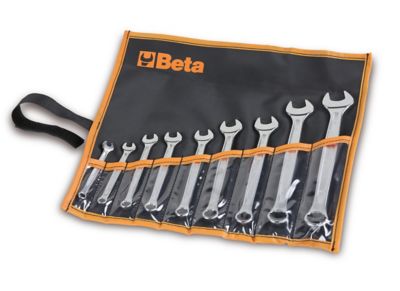
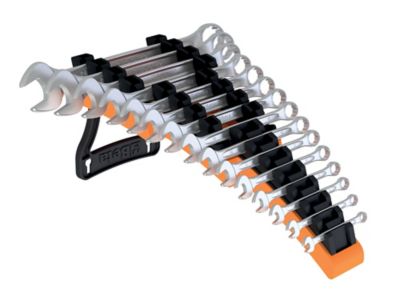
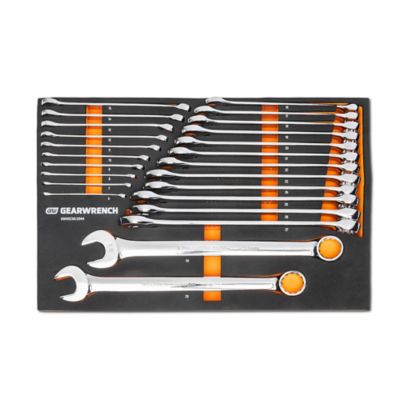
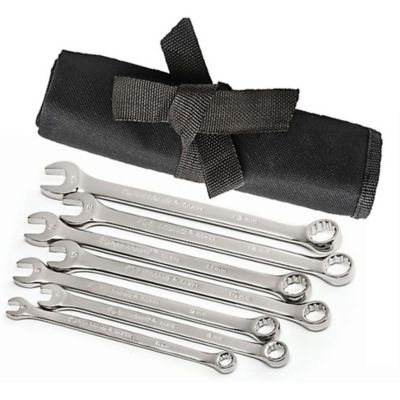
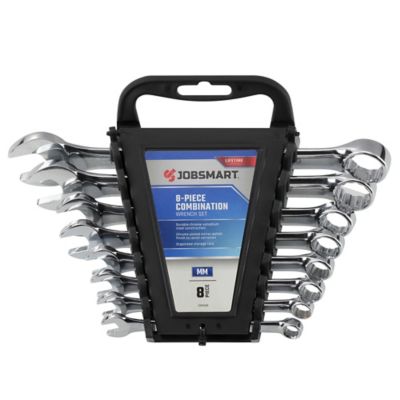
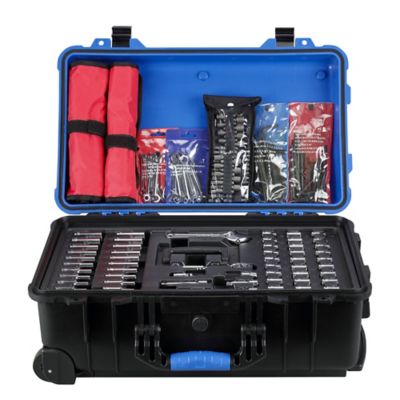
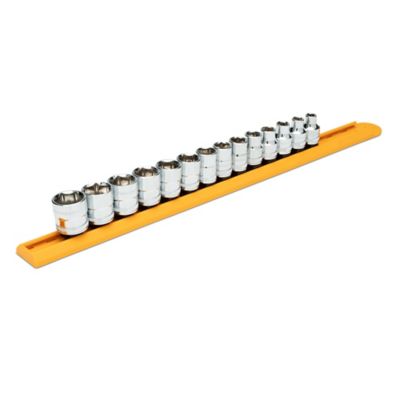
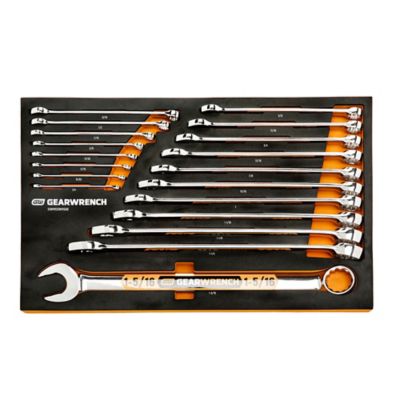
Metric Socket Sets when there’s a mix of open and tight spots on the same machine. On a trailer bracket, for example, a combination wrench can hold the nut behind the frame while a socket and ratchet turn the bolt from the side with more room. Around a mower deck, the wrench may fit flat against a bracket where the socket and ratchet won’t clear the housing. A roll-up pouch makes sense for a tool bag that goes between the barn and the shop, while a tray with a spot for each size makes it easy to see what’s missing before closing the toolbox. Either way, a quick wipe with a shop rag takes off grit and grease before the tools go back in their slots. Putting them away dry helps keep rust from getting a foothold, and keeping them in size order saves the trouble of sorting through a handful of nearly identical wrenches when there’s a job half done. A set makes a practical gift for someone putting together a first toolbox, maintaining acreage equipment, or learning to work on a pickup. A smaller range can suit someone who mostly works on a mower and a few pieces of yard equipment, while someone who works on a mix of vehicles and machinery may appreciate more sizes and a choice of handle lengths. In a shared shop, legible size markings and an organizer can matter as much as the number of wrenches in the set. When the right size is easy to spot and there’s enough room to get it seated squarely, there’s less fumbling under the machine and less chance of turning a routine repair into a fight with a rounded bolt.