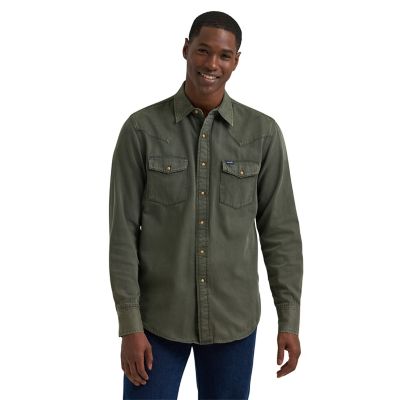
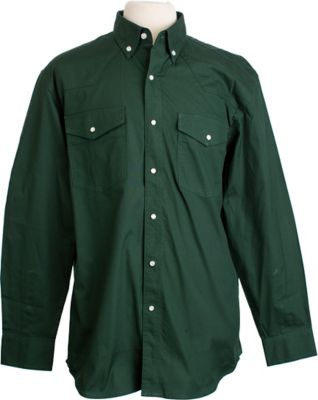
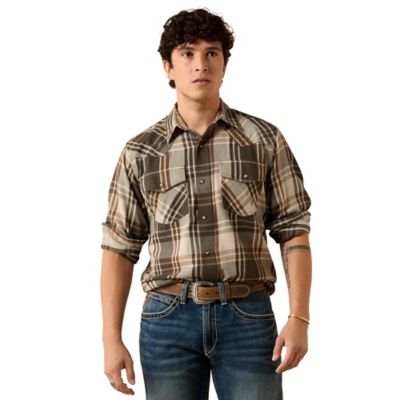
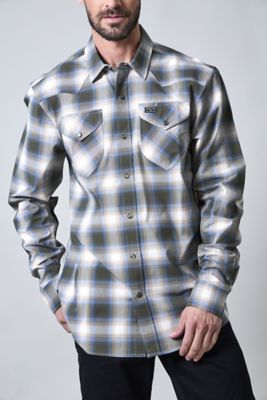
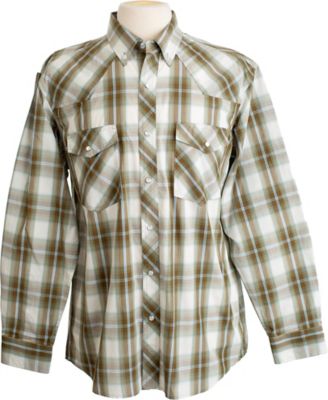
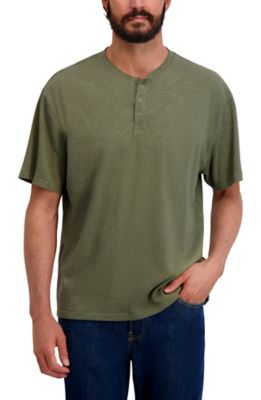
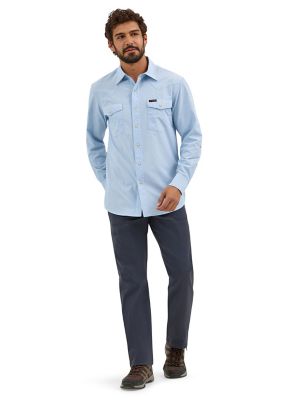
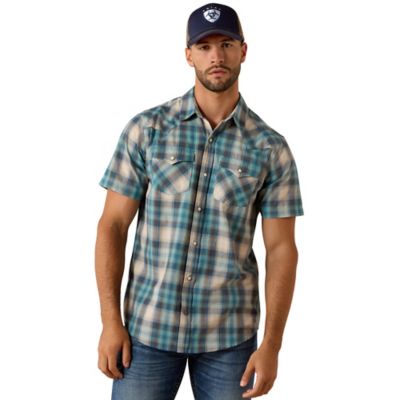
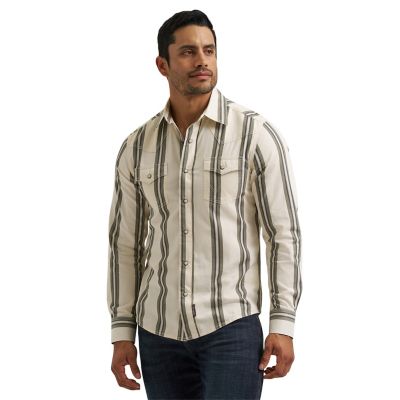
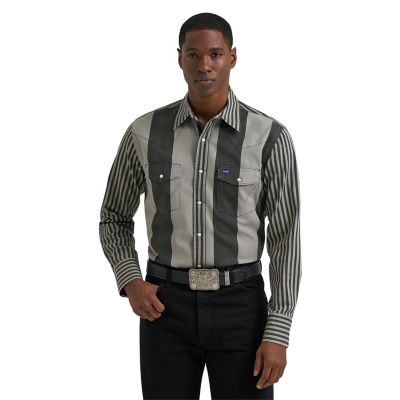
Men's green western shirts bring together green fabrics and familiar western details, including pointed yokes, chest pockets and snap or button fronts. The color gives a traditional cowboy shirt a different feel without straying far from the look that works with denim, boots and a belt. Olive and moss green have an earthy, understated character, while forest green brings a deeper color to a solid shirt or woven plaid. Brighter greens make more of a statement, especially against dark jeans or a plain vest. A solid fabric lets the stitching, pockets and yoke shape stand out; checks, stripes and plaids add pattern while keeping that western outline. Those details have practical value, too. Chest pockets provide a handy place for a small notepad, and flaps help keep pocket contents covered while bending or reaching. Snap fronts are a familiar part of western styling, often paired with matching snaps at the pockets and cuffs. Traditional buttons give the shirt a different finish that can move easily between ranch work and a meal in town. Fabric makes just as much difference as color. Cotton is a common choice for its comfortable feel, with poplin generally offering a smooth surface and twill showing a diagonal weave. Heavier twill has more substance, while lighter woven fabrics tend to drape more loosely. Cotton-polyester blends can help reduce wrinkling, though the feel and care requirements depend on the fabric blend and construction. A small amount of stretch can give a shirt extra give across the shoulders and elbows, useful when reaching for a gate latch or lifting a feed sack. Seams, pocket attachments and the fabric around closures also matter for repeated wear. Neat stitching and reinforcement at stress points help a shirt stand up to the pulling and movement that come with an active day. These differences let a green western shirt lean toward a workwear feel, a crisp going-out look or something comfortably in between.
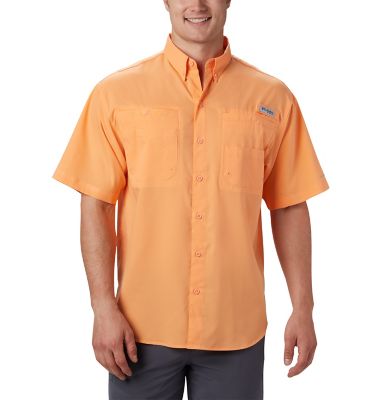
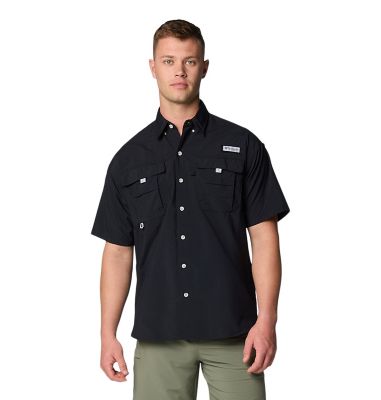
Fit determines how that shirt feels once the day gets moving. A close-cut western shirt follows the body through the chest and waist, giving a cleaner outline beneath a vest or jacket. A roomier cut leaves more space through the torso and can feel less restrictive when sitting in a truck, working at a bench or spending time in the saddle. Neither fit needs to pull across the buttons or snaps when the arms reach forward. Shoulder seams that sit near the natural shoulder help the sleeves hang properly, while enough room through the upper back makes everyday movement easier. Size labels alone do not tell the whole story, since cuts differ, so chest, neck and sleeve measurements are useful points of comparison. Shirt length matters just as much. Longer tails help a tucked shirt stay in place through bending and reaching, particularly with jeans worn at the natural waist. An untucked shirt generally looks more balanced when the hem sits around the middle of the fly rather than extending well down the leg. Long sleeves bring the full cuff-and-snap western look, and adjustable cuffs can help keep the wrist opening from feeling loose or tight. For a different sleeve length,
Men's Western Short Sleeve Shirts offer another take on the same familiar style. Collar shape changes the overall impression as well. A spread collar works with an open neckline or a bolo tie, while a button-down collar holds its points in place for a tidy finish. Green is easy to work into an everyday outfit without matching everything exactly. Olive pairs naturally with blue denim, tan pants and brown leather. Dark green works well with black jeans and a simple belt, while green plaid can pick up colors already present in boots or a jacket. For a rodeo, county fair or evening at the dance hall, a tucked shirt and clean boots keep the outfit grounded in western tradition without making it feel like a costume.
Care plays a big part in keeping men's green western shirts looking good through regular wear. The care label is the best starting point because cotton, blended fabrics and stretch materials do not always need the same treatment. Some cotton shirts can shrink with high heat, and dark green fabrics may lose color faster with harsh washing or excessive drying. Washing with similar colors, choosing the recommended cycle and taking the shirt out promptly can help preserve its appearance. Mud at the hem, feed dust at the cuffs and a mark along the collar are ordinary parts of a working day; treating a stain according to the fabric instructions before laundering gives it a better chance of coming out. A crisp poplin shirt may benefit from ironing, while some blends need little more than smoothing and hanging after washing. Snaps and buttons deserve a glance now and then, especially at cuffs and pockets that get opened often. Pulling a snap apart close to the fastener, rather than tugging from the edge of the fabric, puts less strain on the surrounding material. Small repairs to a loose button or an opening seam can keep a favorite shirt in the regular rotation. The best match comes down to how the wearer spends the day and likes to dress. Someone handling daily chores may favor a forgiving fit, substantial fabric and useful pockets. Someone heading to church, a family gathering or a casual dinner may prefer a smoother fabric and a sharper tuck. A green western shirt can also make a thoughtful gift for a rancher, horse owner, rodeo fan or anyone who already reaches for western wear. Familiar sleeve length, preferred closure and an existing shirt's measurements are more helpful than guessing from appearance alone. With the right combination of shade, fabric and fit, it can become an easy choice for both everyday routines and time away from the chores.