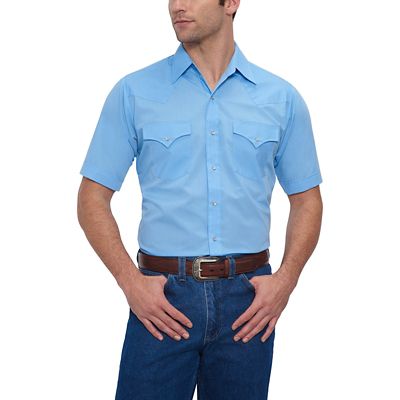
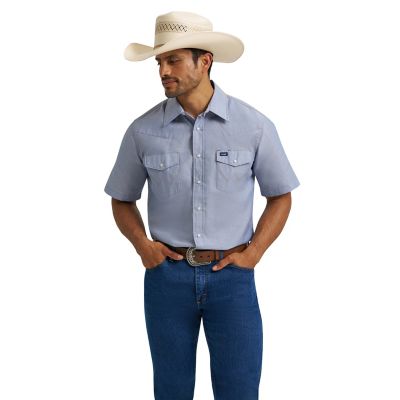
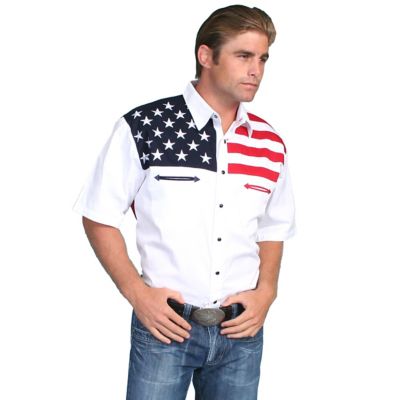
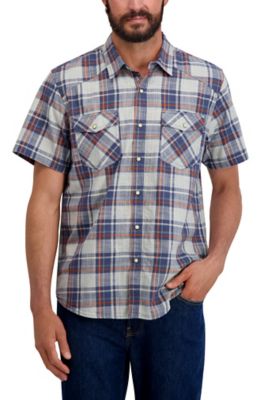
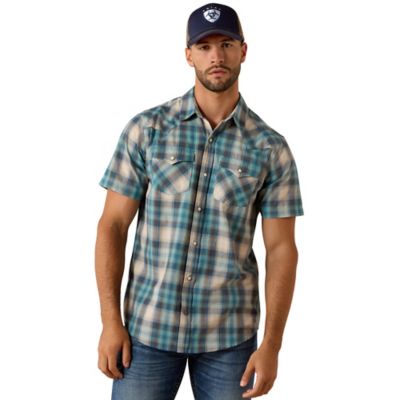
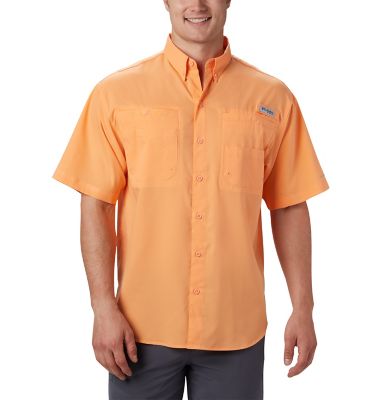
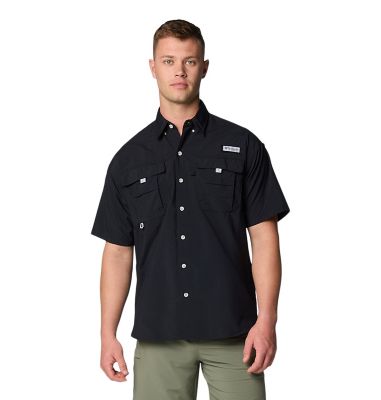
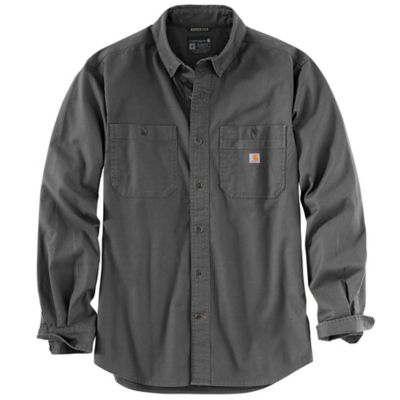
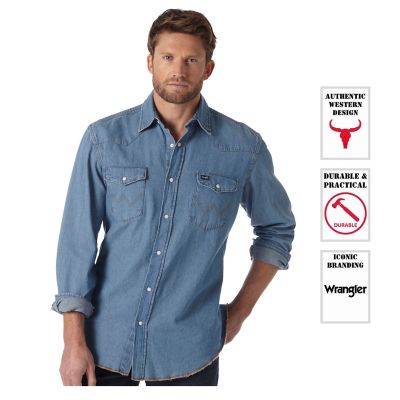
Men's western short sleeve shirts bring classic ranch-shirt details to an easygoing cut, often combining pointed front and back yokes, snap or button closures, and two chest pockets with flaps. Pearl-style snaps are a familiar part of the look, though pocket shapes, stitching, and yoke designs vary. Those details help distinguish a western shirt from an everyday woven shirt without making it something reserved for the rodeo. A solid shirt with subtle stitching can fit a day of errands, a church supper, or dinner after chores, while bold checks, stripes, and printed patterns bring more personality to a concert or a night at the dance hall. The western look has roots in ranch and rodeo clothing, but it works just as well for folks who spend more time behind a counter or at a desk than in a saddle. Short sleeves leave the forearms uncovered and keep cuffs out of the way when handling everyday tasks. A straight hem generally lends itself to an untucked look, while longer, curved shirttails provide more fabric to tuck into jeans. Some styles have a close, shaped profile; others leave more room through the chest and waist. That range makes the category useful for both workday outfits and occasions that call for a little more polish than a T-shirt. Pattern and trim make a difference, too. Smaller checks can read almost like a solid from a distance, while broad plaids and large prints stand out across an arena or dance floor. Contrast stitching draws attention to the yokes and pockets, and matching thread keeps those same features understated. Whether paired with straight-leg jeans and boots or clean-cut pants for a family gathering, a short sleeve western shirt offers a recognizable look without requiring a head-to-toe cowboy outfit.
Fabric and fit have a lot to do with how a western shirt feels after several hours of wear. Cotton fabrics offer a familiar feel, with texture that ranges from crisp woven surfaces to softer finishes. Cotton-polyester blends can balance that feel with easier wrinkle management, although the exact blend and care directions matter. Performance fabrics may include moisture-wicking properties that help move perspiration away from the skin during active tasks. Stretch blends add give, but a little stretch does not replace enough room across the shoulders or through the upper arms. Fabric weight and weave also affect the way a shirt hangs: a firmer fabric can hold a sharp pocket flap, while a softer one tends to drape closer to the body. For a comfortable fit, shoulder seams generally sit near the edge of the shoulder rather than pulling toward the neck or dropping far down the arm. Reaching forward to hold a steering wheel, lifting an arm toward a shelf, and sitting down all reveal more about fit than standing still in front of a mirror. A shirt that pulls between the front fasteners may need more room through the chest or stomach. Sleeve openings should allow easy movement without pinching the upper arm, and a tucked shirt needs enough length to stay put through ordinary bending and reaching. Size labels alone do not tell the whole story, since a relaxed cut and a fitted cut can feel quite different in the same marked size. Construction deserves attention alongside the measurements. Even stitching, neatly finished seams, firmly attached buttons, and reinforcement around pocket corners all contribute to how well a shirt stands up to repeated wear. Snaps should line up cleanly, and pocket flaps should lie flat rather than curling or pulling. Chest pockets can keep a pen or folded note close by, though heavy objects may stretch the fabric or change the way the shirt hangs. For tasks around moving machinery, loose shirttails and roomy fabric need the same care as any other clothing.
Keeping men's short sleeve western shirts looking good starts with the care label, especially when different fibers, printed fabrics, or special finishes are involved. Cotton can shrink under some washing and drying conditions, while blends may call for a different routine. Sorting dark colors, fastening closures as directed, and avoiding an overloaded washer can help limit tangling and unnecessary rubbing. A stained collar or pocket edge benefits from prompt attention with a treatment suited to the fabric; rubbing hard can spread a stain or disturb the surface. Removing shirts promptly when the drying cycle ends helps keep deep creases from settling in. If pressing is allowed, the iron setting should match the fabric, with care around snaps, buttons, and printed details. Pulling a snap shirt open by yanking at the fabric puts strain on the areas around the fasteners. Opening each snap close to its attachment point is gentler on the shirt. Hanging shirts with space between them helps preserve the collar and keeps pocket flaps from getting folded under. For everyday outfits, a patterned western shirt usually needs little more than plain jeans, a belt, and footwear suited to the day's plans. A solid shirt leaves more room for a patterned belt or a standout buckle without making the outfit feel busy. Shoppers who prefer a traditional button front can also explore
Men's Button Up Western Shirts. As a gift, a short sleeve western shirt can suit a dad, brother, partner, or friend who already reaches for western clothing, whether for ranch work, casual outings, or time at the arena. Knowing the recipient's usual fit, favorite colors, and preference for snaps or buttons makes the choice more personal. A shirt that feels right across the shoulders, fits the occasion, and fits into an ordinary laundry routine has a good chance of becoming part of the regular rotation.