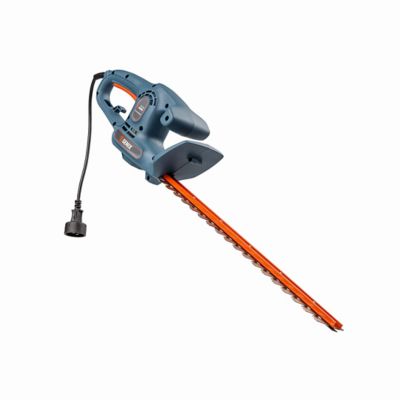
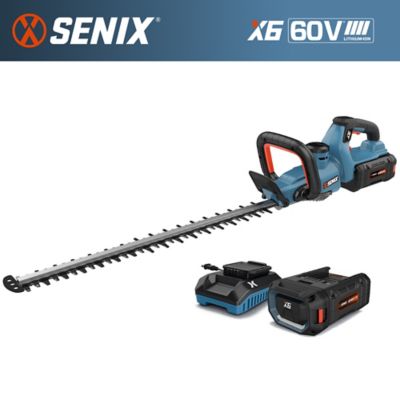
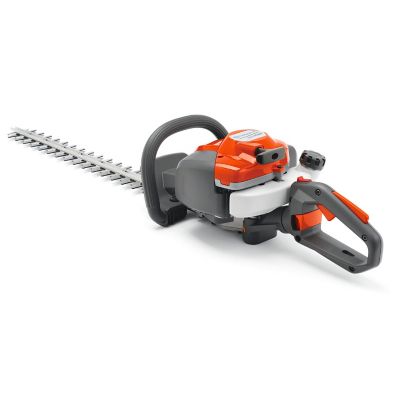
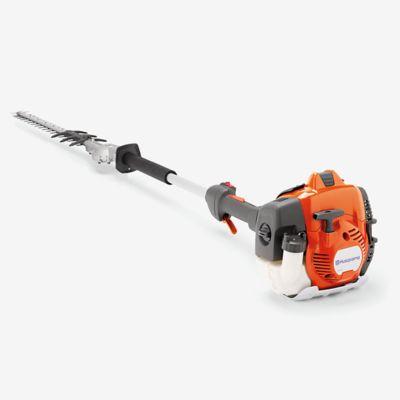
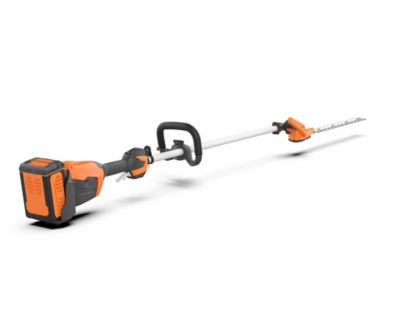
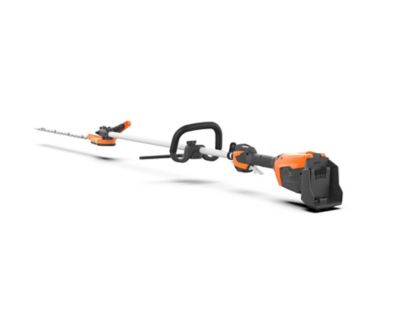
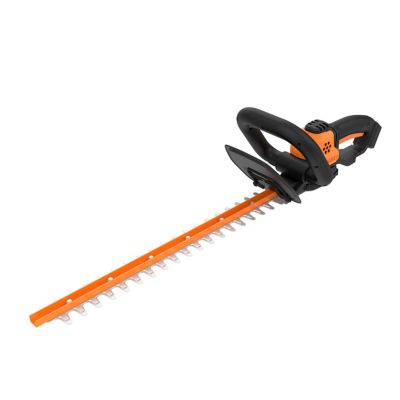
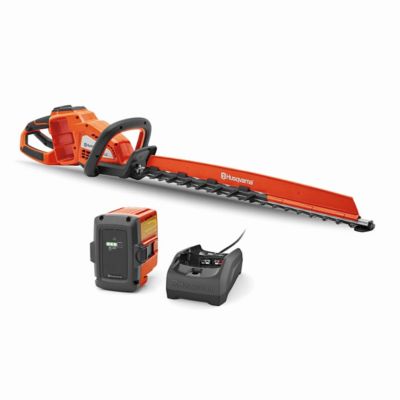
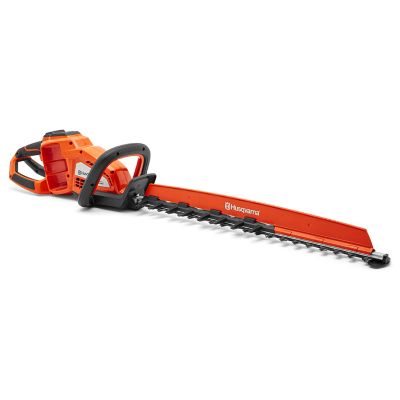
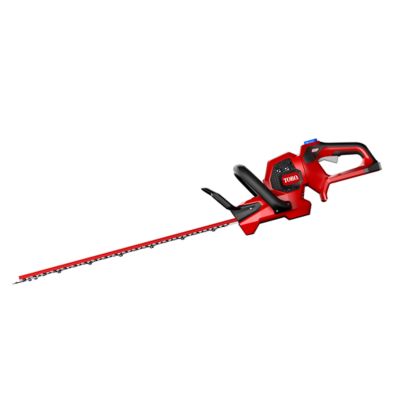
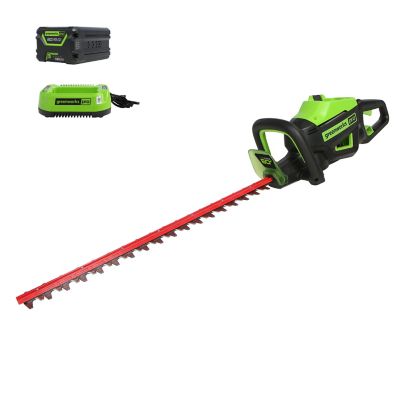
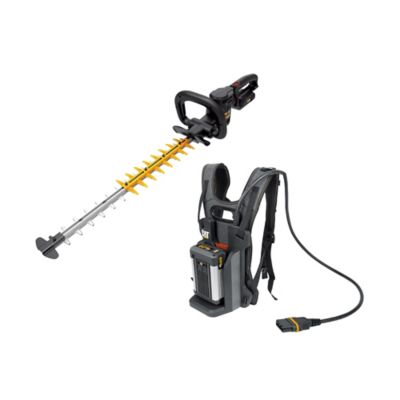
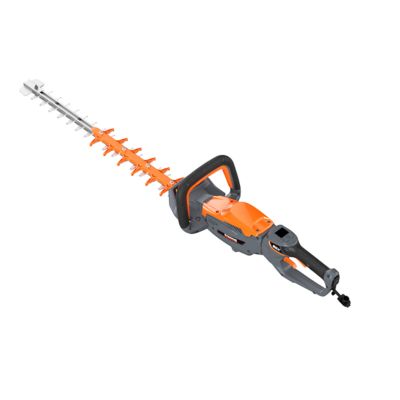
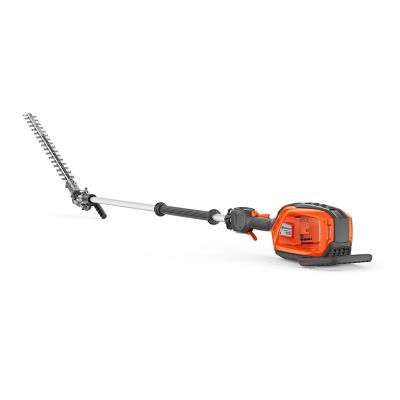
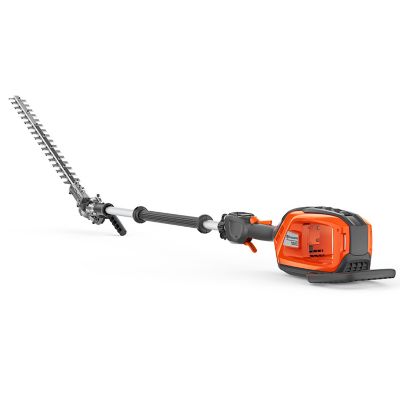
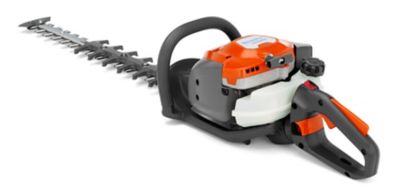
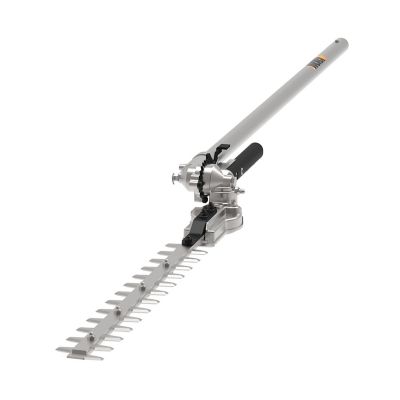
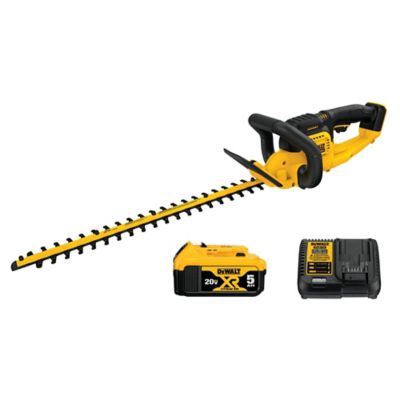
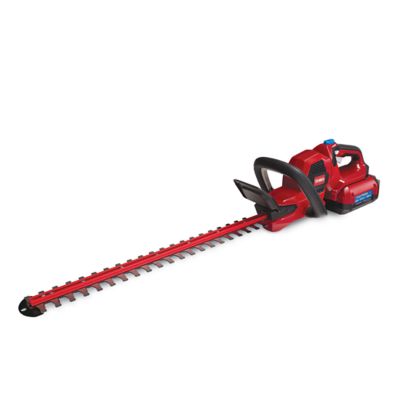
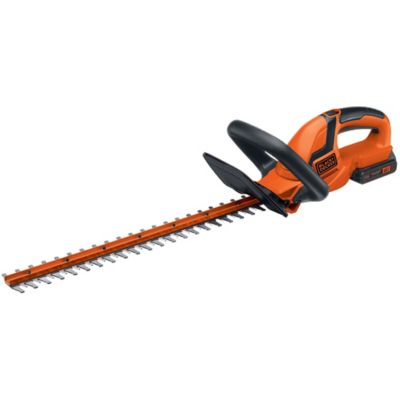
Long blade hedge trimmers make broad, even passes across hedge tops and sides, helping keep a long stretch of greenery looking tidy without as many overlapping cuts. Their longer cutting bars suit wide shrubs, established boundary hedges, and straight runs beside driveways or fence lines. Blades around 22 to 30 inches are common among longer-blade designs, although there is no single length that defines the category. Blade length and working reach are different measurements: a longer blade covers more foliage in each pass, while a pole or extended shaft increases the distance between the handles and cutting head. A long blade alone does not turn a handheld tool into a high-reach trimmer. For a broad hedge along a gravel lane, cutting coverage may matter most; for taller growth behind a planting bed, shaft length and head adjustment become bigger considerations. Pole hedge trimmers with pivoting heads can help address tops and angled surfaces from a suitable position on the ground, within the tool’s operating limits. More length also means more blade to maneuver around gateposts, porch rails, and neighboring plants. A shorter cutting bar can be easier to control in those tight spots, even when a longer one makes better sense along an open hedge. Branch thickness matters just as much as hedge size. The tooth spacing and stated cutting capacity determine which stems a trimmer can handle, and those specifications vary by model. Ratings around 1/2 to 3/4 inch are common, but the manufacturer’s stated limit is the one to follow. Thick, established limbs call for pruning tools suited to that work rather than forcing them between the trimmer’s teeth. These tools are primarily for shaping leafy growth and smaller stems, not clearing brush or cutting fence wire. That distinction helps match the equipment to the job, whether the task is keeping a front-yard hedge squared up or maintaining a planted screen between the house and an outbuilding.
Power source, balance, and handle layout all affect how a long blade hedge trimmer feels after the first few passes. Cordless hedge trimmers offer movement around scattered shrubs without an extension cord trailing through the planting bed. Battery compatibility, operating voltage, battery capacity, and charger requirements deserve a close look, especially when a property already has battery-powered outdoor equipment. A larger battery can provide more operating time, but it also adds weight, and actual runtime depends on the tool, battery, and cutting conditions. Corded electric designs suit work within reach of a suitable outlet, with an outdoor-rated extension cord sized according to the manufacturer’s requirements. The cord needs a clear route away from the cutting path, gates, and other snag points. Gas hedge trimmers provide mobility without a power cord or battery changes, along with engine maintenance, fuel requirements, exhaust, and more noise to account for. For any power type, the listed weight is only part of the story. A long cutting bar places weight farther from the hands, while a pole design extends that leverage even more. Handle spacing, grip shape, and the location of the motor or battery influence control when moving from a hedge’s broad side to its upper edge. Rotating rear handles on some designs help maintain a more comfortable wrist position during vertical cuts. Adjustable heads serve a different purpose, changing the cutting angle on compatible long-reach tools. Dual-action blades have two moving cutting elements and can reduce vibration compared with a single-action mechanism; double-sided teeth describe cutting edges on both sides of the bar. Those terms are not interchangeable. For shrubs within comfortable reach, the
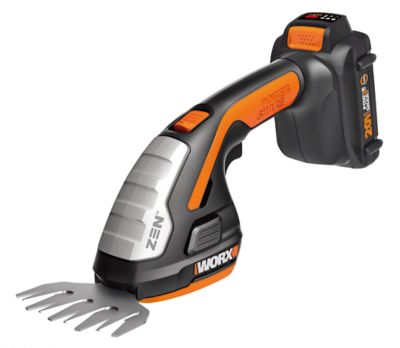
Handheld Hedge Trimmer category offers a useful point of comparison when weighing compact handling against extended reach. The right fit leaves room for a steady two-handed grip, secure footing, and controlled movement rather than stretching to finish a pass.
Blade construction and regular care help keep a long hedge trimmer cutting cleanly over time. Hardened steel teeth, precision-ground cutting edges, and protective blade coatings are features worth noting in the specifications, though materials and finishes differ across designs. Clean, sharp edges cut smaller stems more cleanly than nicked or neglected ones, and reduced sap buildup helps the moving parts travel freely. Branches that look crushed, torn, or repeatedly caught between the teeth can point to a maintenance need or material beyond the tool’s capacity. The owner’s manual sets the requirements for lubrication, sharpening, blade adjustment, and replacement parts. Before cleaning, clearing a jam, or handling the cutting assembly, the tool needs to be shut down and isolated from its power source as directed by the manufacturer, with all blade movement stopped. Gas-powered equipment may require additional precautions before service. A blade sheath protects the cutting edges during storage and transport, while a dry storage spot helps limit corrosion. Housing condition, secure fasteners, and intact guards matter alongside blade care, particularly on equipment that travels between the shed, truck, and different parts of a property. A long bar can catch on nearby objects during carrying, so its extra length deserves room even when the tool is off. During operation, eye protection, hearing protection where required, suitable footwear, and the other protective gear specified in the manual belong with the task. People and animals need to stay clear of the work area, and overhead electrical lines are a serious hazard for extended-reach equipment. A hedge’s hidden contents matter, too: wire, twine, plant supports, and nesting wildlife can be tucked behind an otherwise ordinary wall of leaves. Long blade hedge trimmers earn their place where there is plenty of hedge surface to maintain, but manageable weight and control matter more than the longest measurement on the label. Matched to the planting and the person handling it, a longer cutting bar can make a broad hedge face easier to keep even, from the stretch beside the driveway to the screen along the yard.