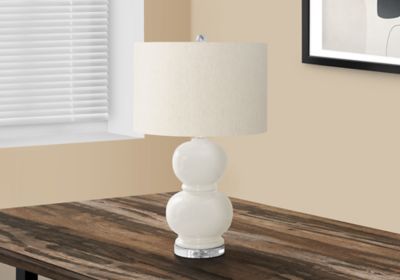
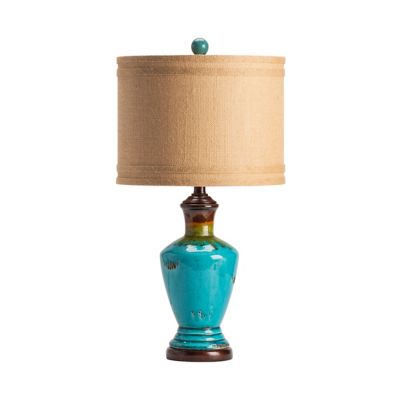
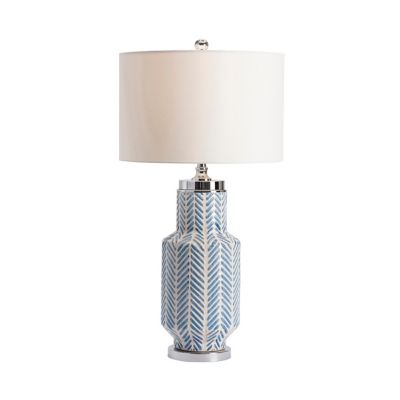
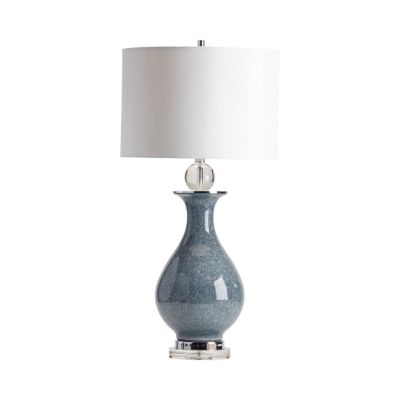
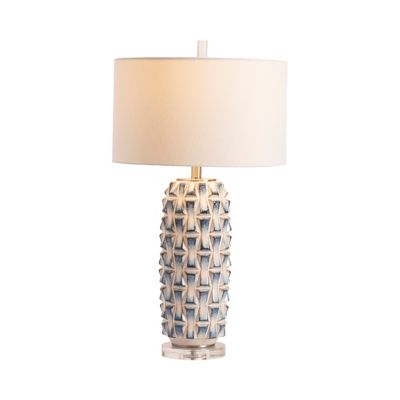
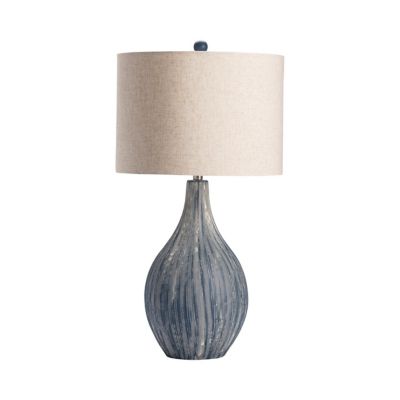
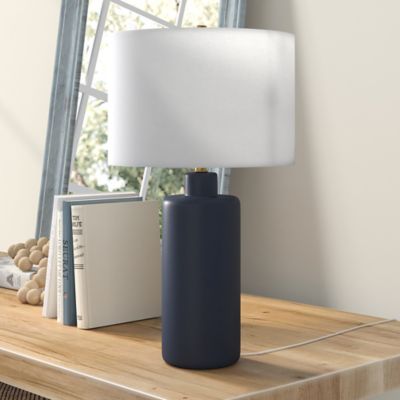
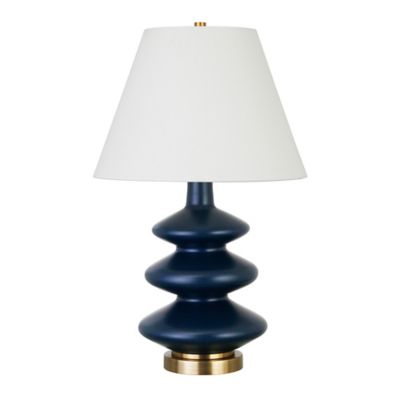
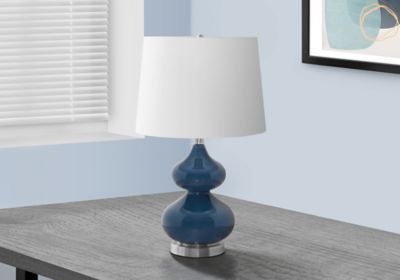
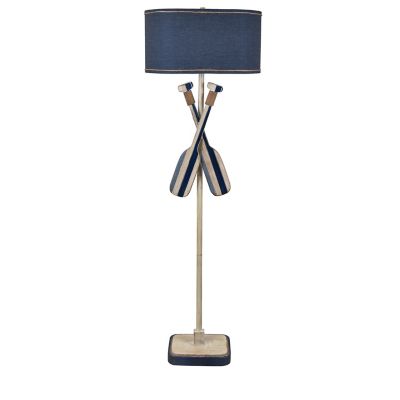
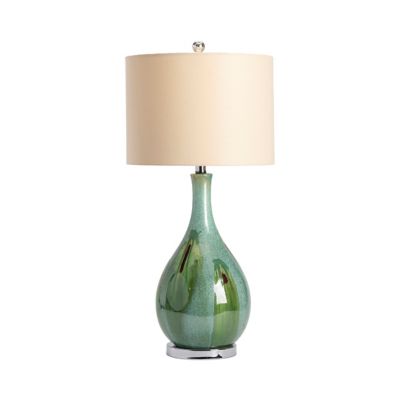
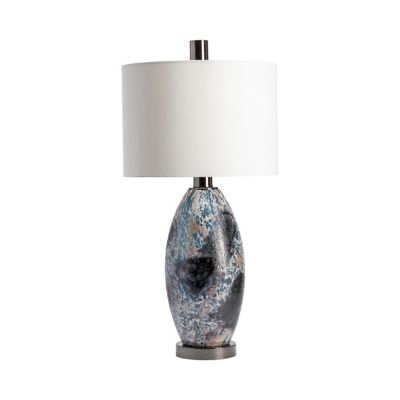
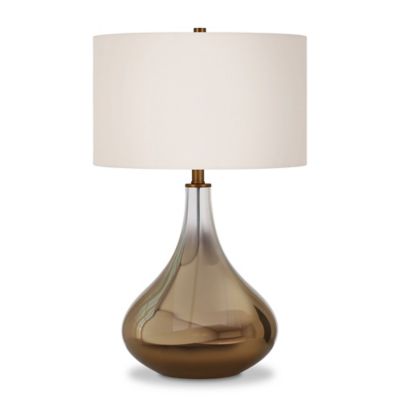
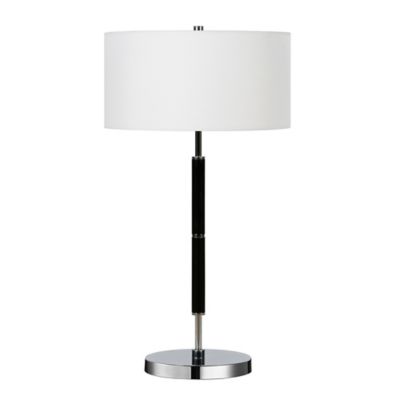
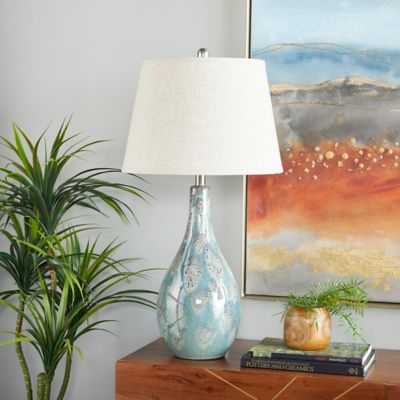
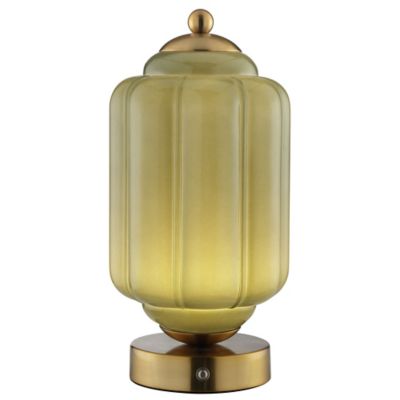
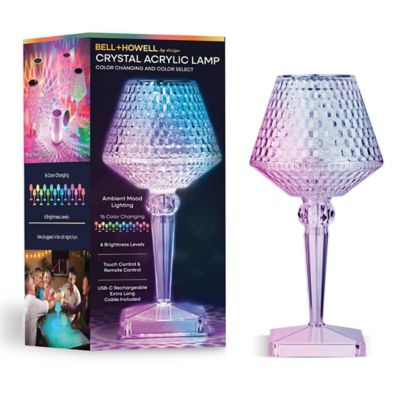
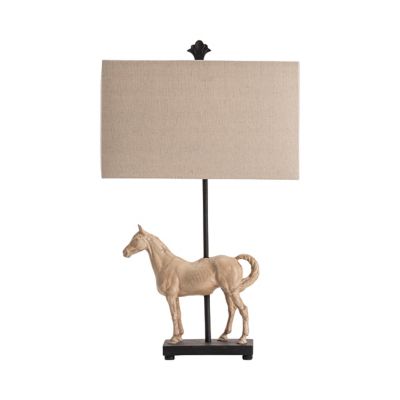
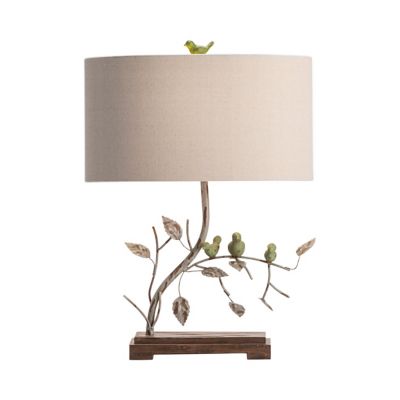
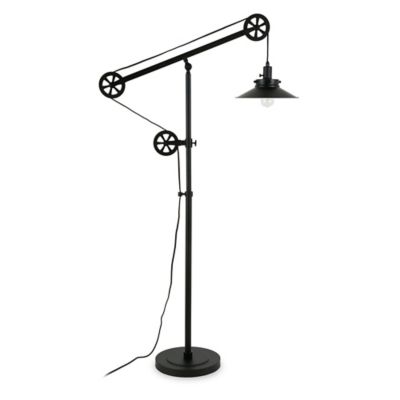
Living room blue table lamps bring together two jobs that matter in a comfortable home: adding a dependable glow and bringing a little color to the room. Blue works across a wide range of decorating styles, from a deep navy that gives a neutral space a tailored, settled look to pale blue and aqua shades that feel easygoing and airy. Teal and cobalt can make a livelier statement beside gray upholstery, white walls, leather seating or warm wood furniture, while dusty blue blends softly into farmhouse, cottage and coastal-inspired rooms. A lamp with a blue base can serve as a small accent piece even when it is turned off, then cast a warm pool of light across a book, end table or nearby chair when evening rolls in. This makes blue table lamps a practical choice for living rooms that need more than one overhead light source. A pair can frame a sofa, fireplace or media cabinet with balanced color, while a single lamp can brighten an overlooked corner without making the room feel crowded. They also make thoughtful gifts for someone settling into a new house, refreshing a guest room or building a cozy reading spot, since a useful lamp adds personality without requiring a major change to the rest of the decor. For a look that leans earthy and relaxed, you can also browse
Modern Rustic Table Lamps for ideas that pair naturally with wood, woven textures, aged finishes and everyday living spaces.
Before choosing a living room blue table lamp, take a close look at the table or surface where it will sit. A short side table usually looks best with a medium-height lamp that keeps the shade near eye level when you are seated, helping the light spread across the chair or sofa without shining directly into your eyes. Many living room settings work well with lamps in the roughly 22- to 27-inch range, while a taller lamp, often around 28 to 31 inches, can hold its own on a console table, behind a sofa or along a long wall. The furniture should still have enough visible surface around the base for a drink, remote, book or small plant, so measure the tabletop before ordering and consider the lamp’s full width as well as its height. Shade shape makes a difference, too. A drum shade gives a clean, updated appearance and sends light up and down in a controlled way, while a tapered shade can feel more traditional and direct light toward the table. Blue glass bases catch daylight and reflect a bit of sparkle in a bright room, especially near a window, while matte ceramic offers a grounded, handcrafted look. Metal bases tend to bring a little more structure and may suit industrial, lodge or farmhouse rooms. Think about the blue already present in the space, including throw pillows, curtains, rugs, artwork and painted built-ins. Matching every shade exactly is not necessary; a navy lamp can sit comfortably with denim, slate or soft gray, and an aqua lamp can pick up the cooler notes in white oak, stone or woven baskets. The goal is a pleasing connection rather than a room full of identical color.
Light output and everyday use deserve just as much attention as appearance. A living room lamp may be used for reading, visiting, sorting mail, working on a craft project or adding a soft glow while the television is on, so look for a compatible bulb and a shade that provides the amount of diffusion you prefer. Warm white bulbs generally create a welcoming atmosphere during the cooler months, while a brighter bulb can be helpful beside a reading chair or in a room with limited natural light. A three-way or dimmable setup gives you more flexibility, allowing a low setting for quiet evenings and a stronger setting for detailed tasks. Check the lamp’s socket and electrical requirements, and use the proper bulb wattage listed by the manufacturer. Cord length matters in older homes, open floor plans and rooms where outlets sit behind heavy furniture; a lamp that can reach the wall without a stretched cord is safer and easier to live with. Place cords where they will not cross walkways, and keep lamps on stable, level surfaces away from damp areas, curious pets and playful children. During late summer, a blue lamp can add a calm wash of color beside a breezy window or porch-facing seating area, then remain useful as daylight fades earlier and the household spends more time indoors. In a busy family room, it can soften the hard light from overhead fixtures. In a quieter sitting room, it can create a welcoming corner for coffee, conversation and a worn-in paperback. Whether your taste runs toward polished navy, soft powder blue, bright teal or textured blue ceramic, the right living room blue table lamp should feel like it belongs with the furniture you already use and provide steady, comfortable light for the routines that make the room feel like home.